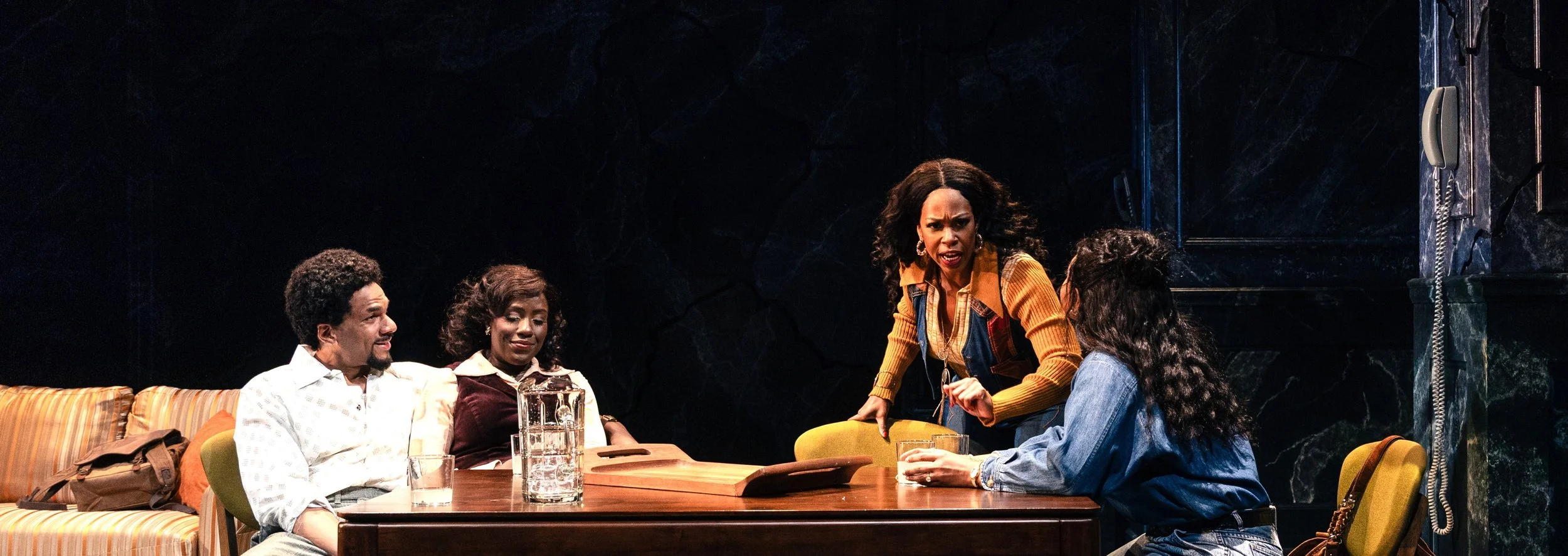
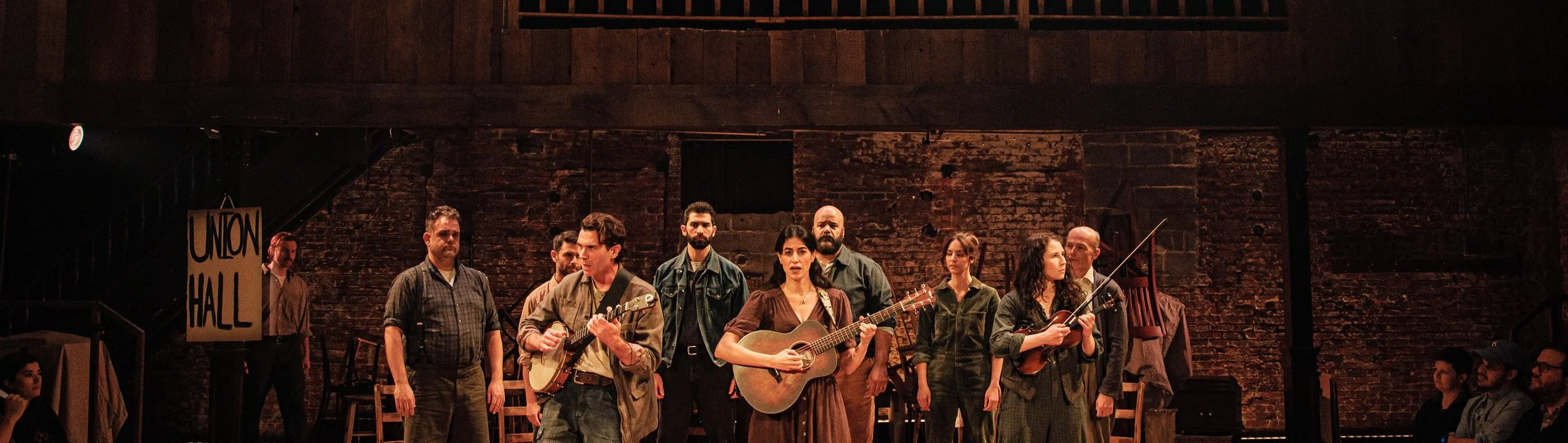
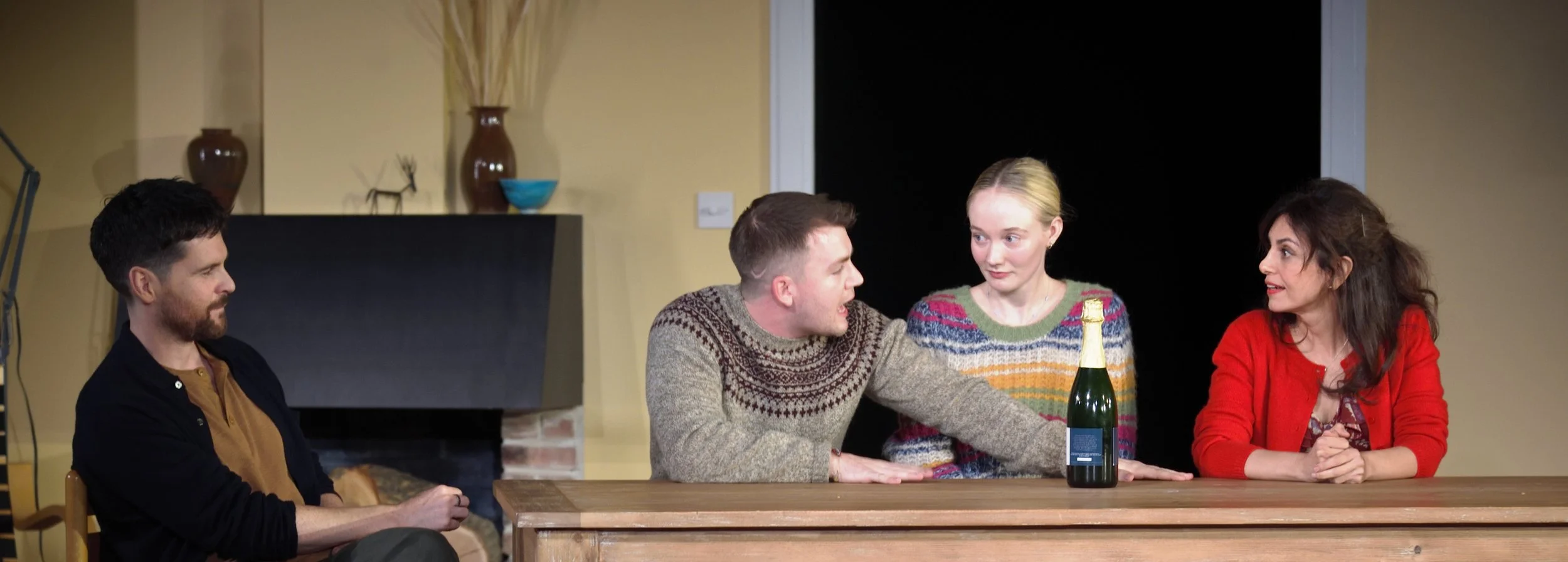
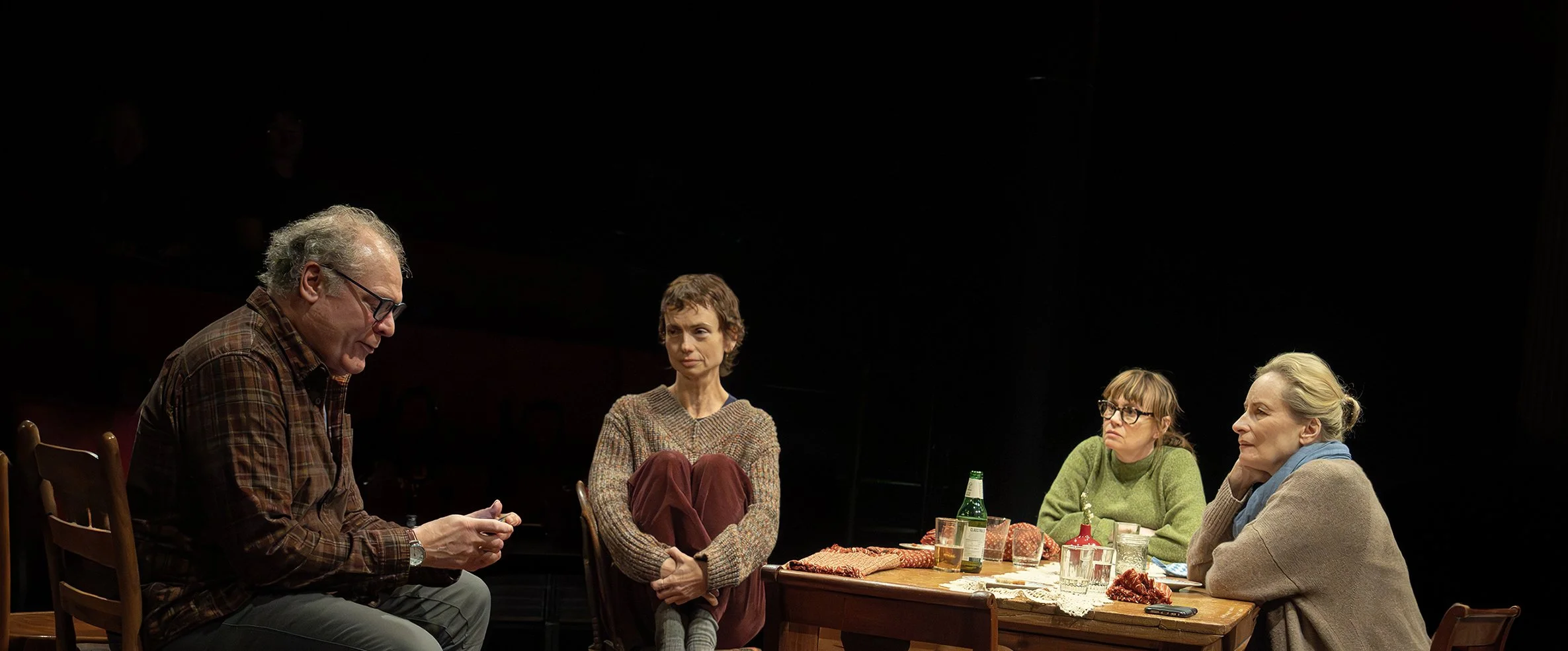
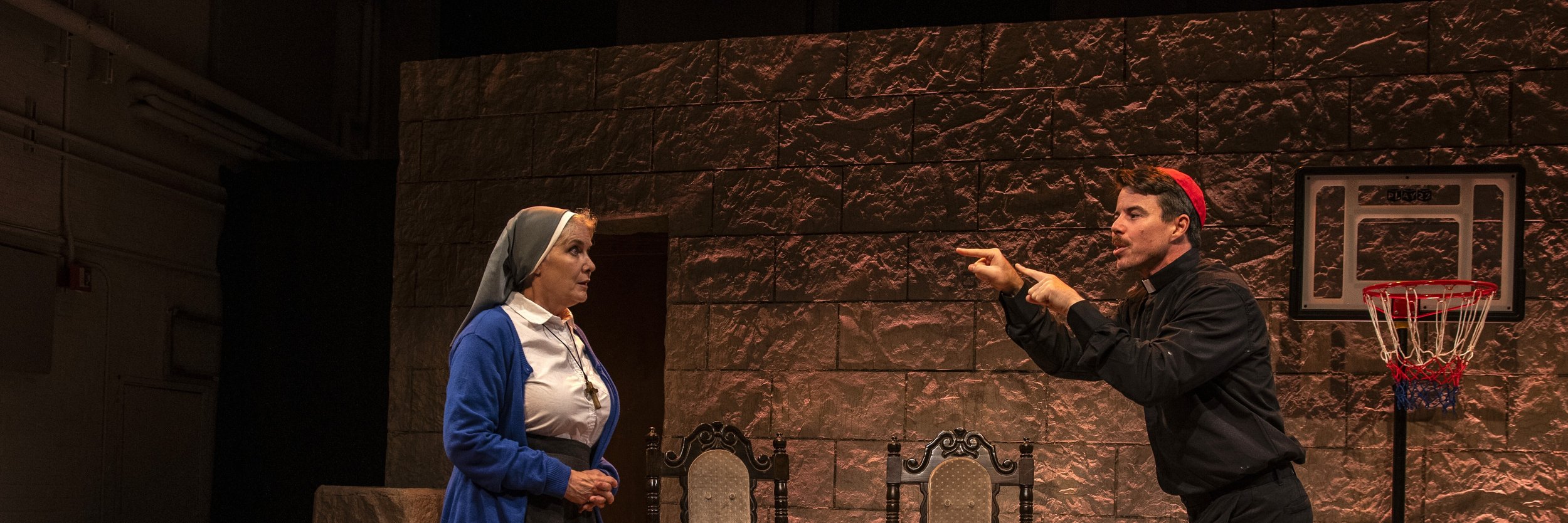
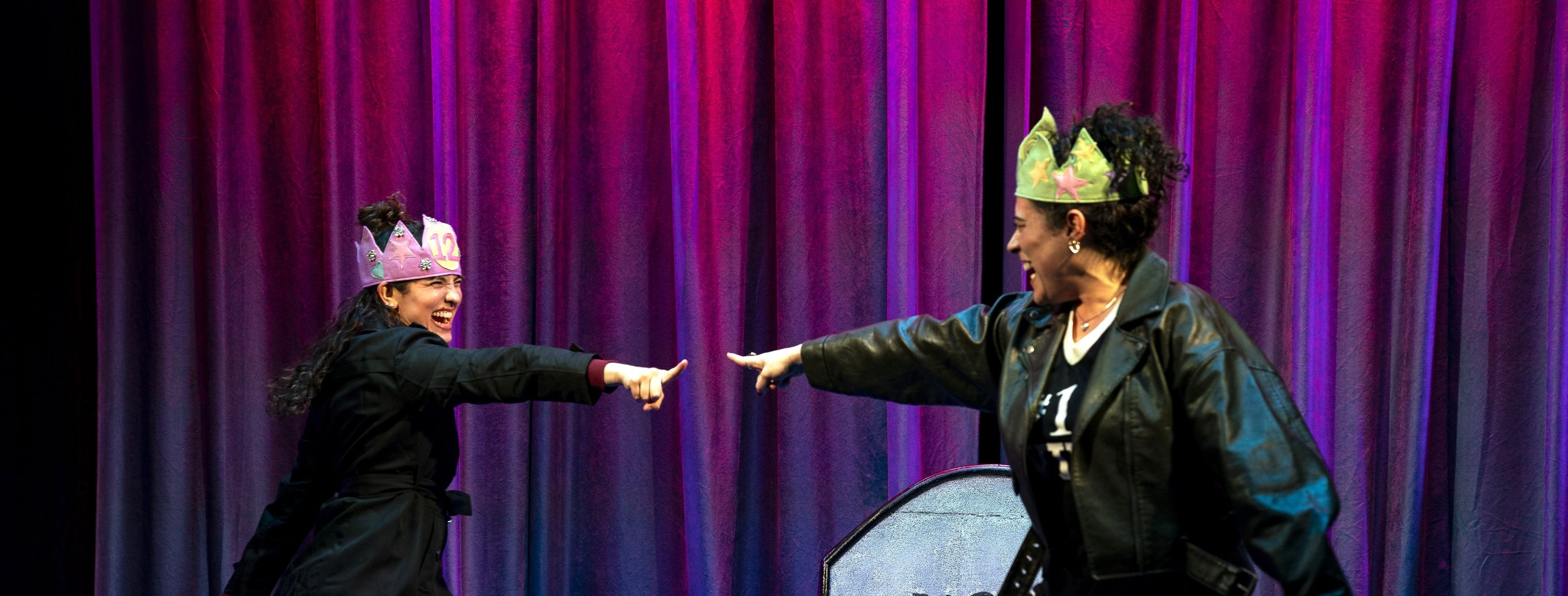
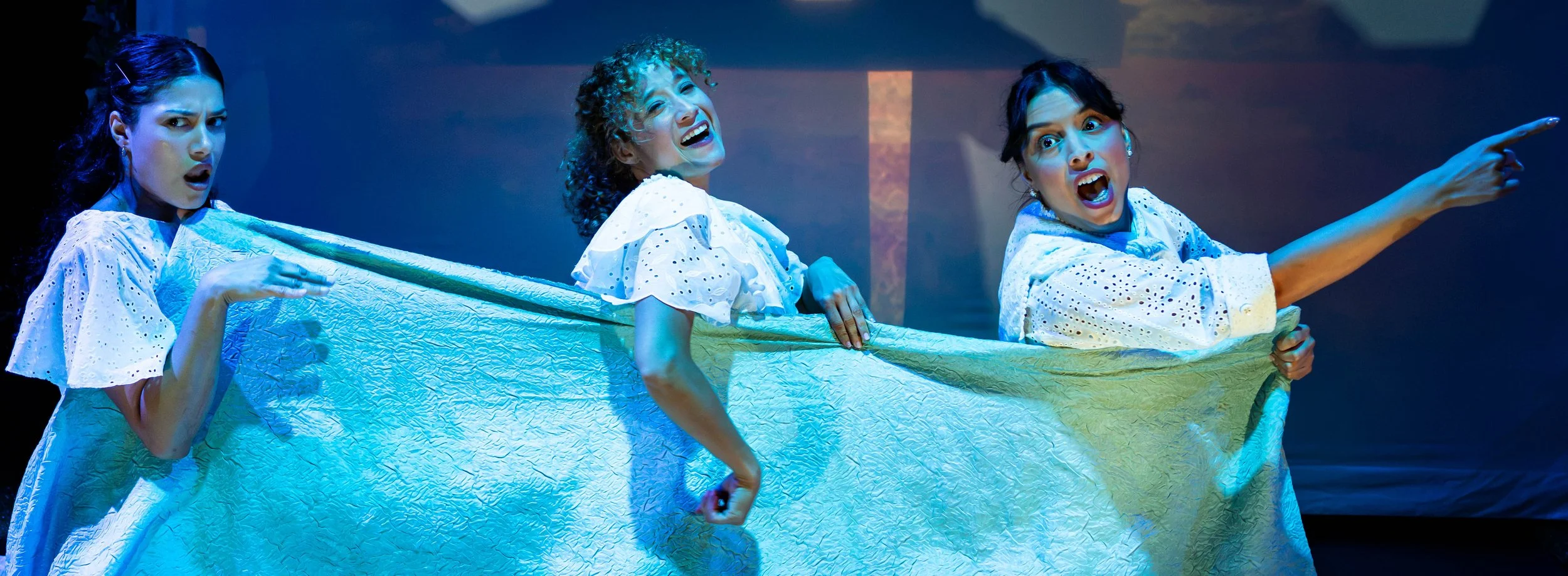
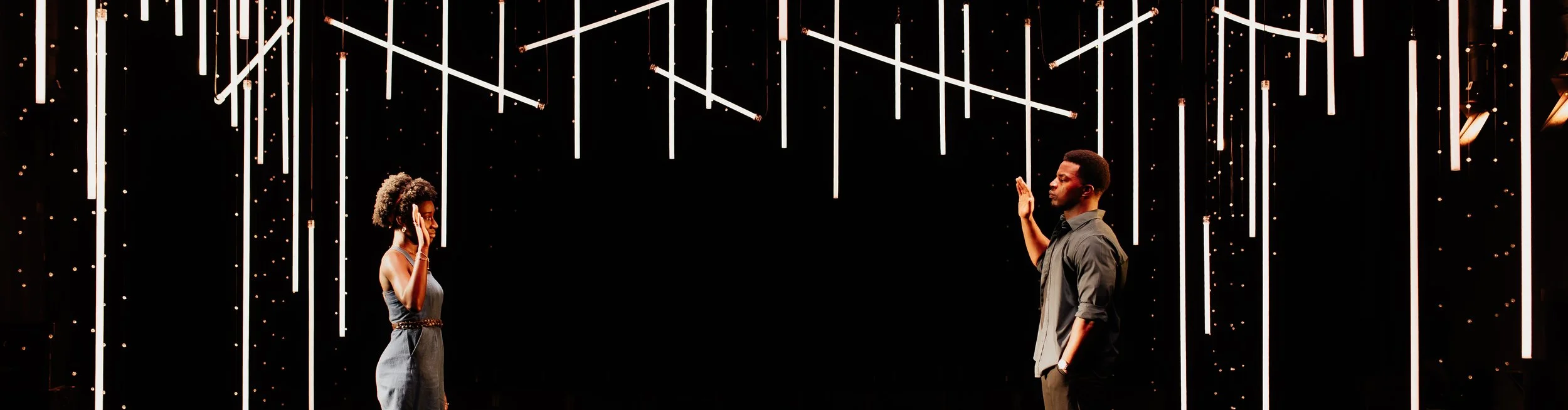
In The Body of Mary: A Play in Three Acts (of God), Katie Cappiello reimagines the Virgin Mary’s origin story to examine the struggle over women’s bodies, reproduction, and who controls the narrative. Written and directed by Cappiello, this comedy brings together three women named Mary whose lives, separated by centuries, illuminate the forces of patriarchal control, violence, and repression.
Very Blue Light
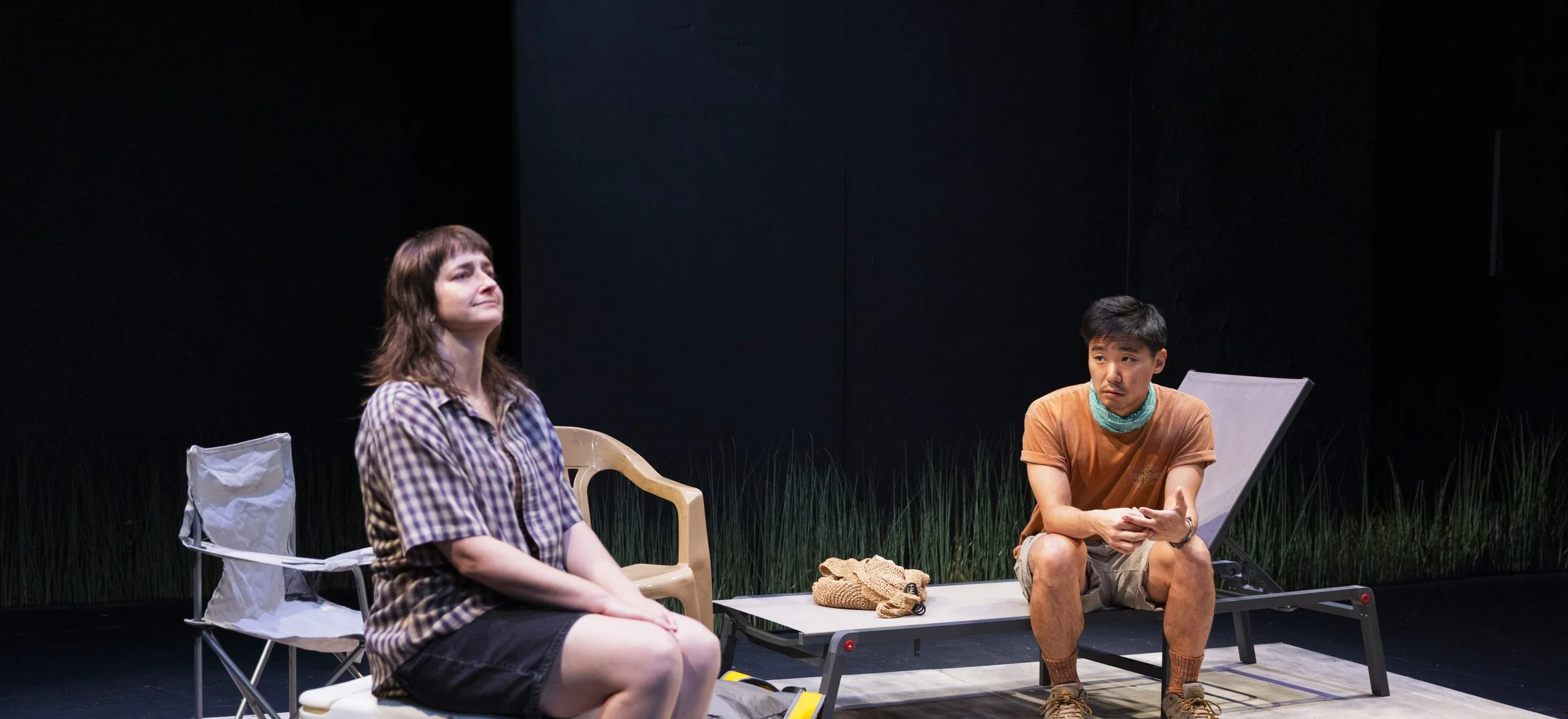
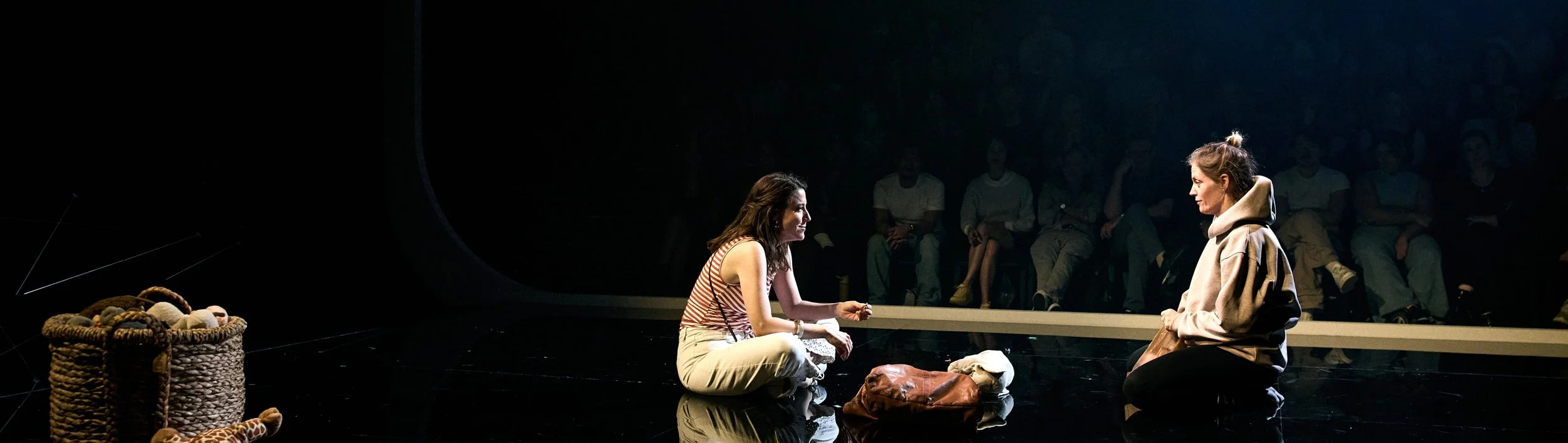
Marfa, Texas, the shooting locale for the George Stevens epic film Giant 70 years ago, is known as a dot of cultural sophistication, big on minimalist art, amid hundreds of miles of Texas brush and desert. It’s also renowned for the Marfa Lights, a nocturnal phenomenon of distant brightness that can appear orange, yellow, blue, red. It’s not known as a hangout for anxious thirtysomethings yapping about politics, gender, and muddled friendships, but that’s the upshot of Very Blue Light, Daphne Silbiger’s new drama at The Tank. That it plays as well as it does is a tribute to Silbiger’s clever invocation of familiar themes, and a beguiling cast of four up-and-coming actors.
Don Juan
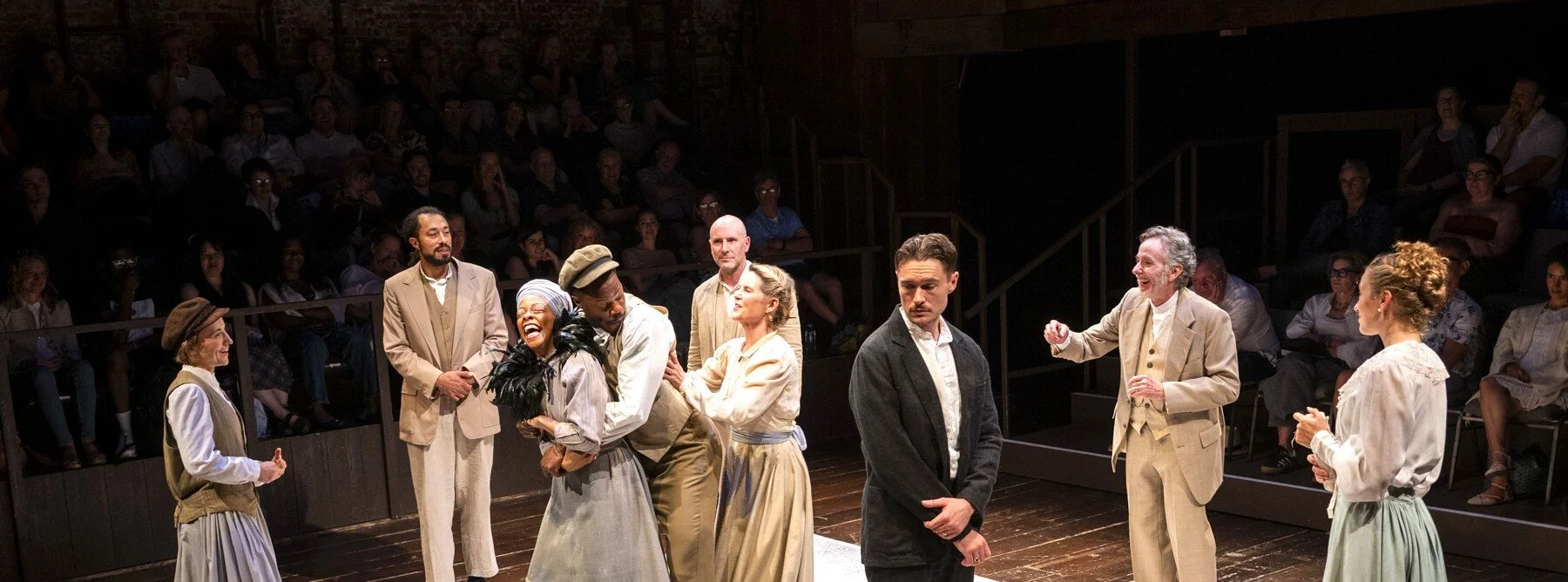
Molière’s Don Juan takes audiences on a feverish journey from seduction to reckoning, blending farce, tragedy, and the supernatural in a provocative examination of hypocrisy, morality, and the consequences of unchecked desire. In the free outdoor production by Molière in the Park (MIP), this darkly comic masterpiece proves as entertaining as it is unsettling, holding up a mirror to human folly while leaving audiences to determine where they stand.
Garry Starr: Classic Penguins
Crikey! Garry Starr: Classic Penguins makes one wonder what the Aussies are consuming besides cold ones. A quarter century after Puppetry of the Penis, the lunatic 2001 production from Down Under that introduced “genital origami,” comes this brash, loopy clown show, written and performed by Garry Starr (the stage persona of Damien Warren-Smith).
To Have and To Hold
Although the renowned 20th-century poet W. H. Auden dismissed The Taming of the Shrew as “the only play of Shakespeare’s that is a complete failure,” Laura Lapidus proves there is still plenty of life in the old comedy with To Have and To Hold, her contemporary reimagining that explores sisterhood, romantic love and the difficult business of coming into one’s own. Smartly directed by Zoë Adams and featuring a top-notch ensemble, this 85-minute romp through modern romance is both deliciously entertaining and unexpectedly poignant.
The Real Ivanov: A Comedy About Despair
Laura Strausfeld, adaptor and director of The Real Ivanov: A Comedy About Despair, describes her production as a “faithful adaptation of [Anton] Chekhov’s Ivanov.” In 100 minutes without an intermission, an 11-member cast touches the principal plot points of the Russian master’s first full-length drama; but little remains of the dramatic craftsmanship that gives each scene of a genuine Chekhov play the aura of lived experience. The script of the so-called Real Ivanov summons to mind Reader’s Digest Condensed Books: more has been discarded than left intact.
The House of the Negro Insane
Terence Anthony’s The House of the Negro Insane, set in 1935 inside Central State Hospital, a psychiatric institution built to confine “insane and idiotic negroes,” is a searing drama about confinement, despair, and the possibility of freedom. Structured in seven scenes, the play has a surreal texture that director Daniel Carlton brings to vivid life—a world in which even those resigned to death may dare to imagine freedom beyond the walls.
The Bathroom Attendant
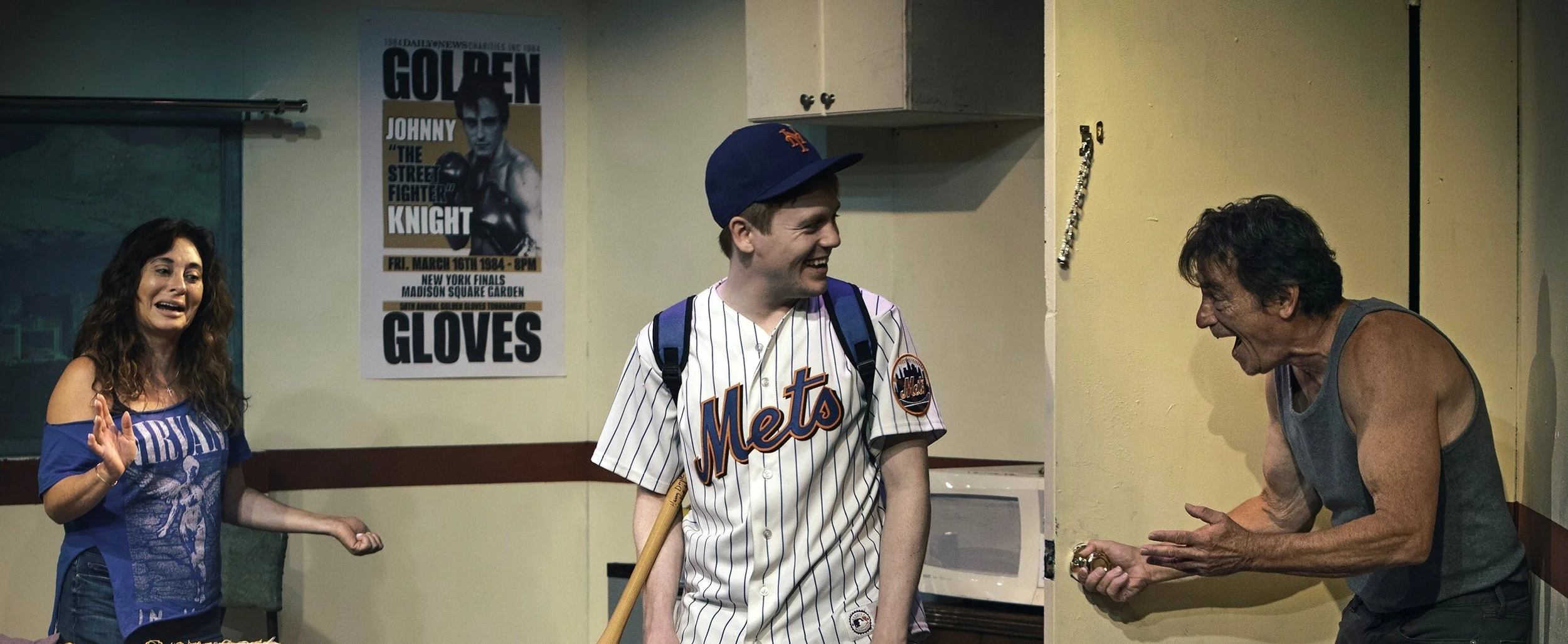
TThe Bathroom Attendant, by Tom Kelly, centers on Johnny (Dan Patrick Brady), an affable ex-prizefighter who is down on his luck in Las Vegas. Living in a rundown housing block on the outskirts of the city, Johnny currently works as a restroom attendant at the city’s Mob Museum, but he believes his fortune is just one winning hand away—if only he can scrape together enough cash to play.
Benevolent
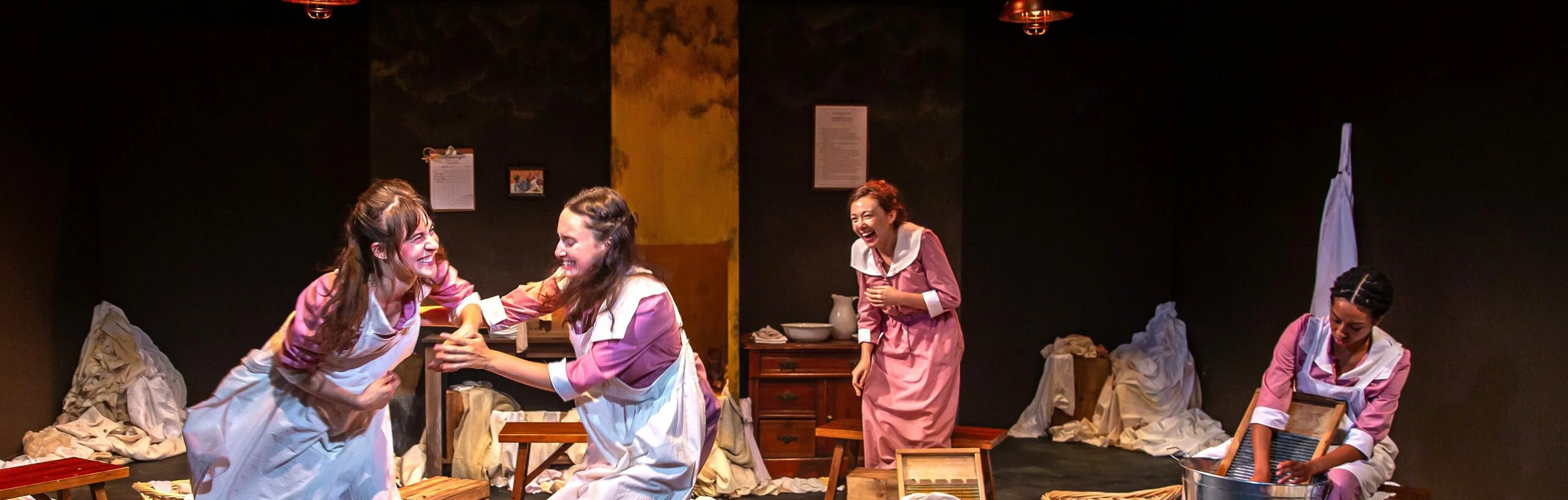
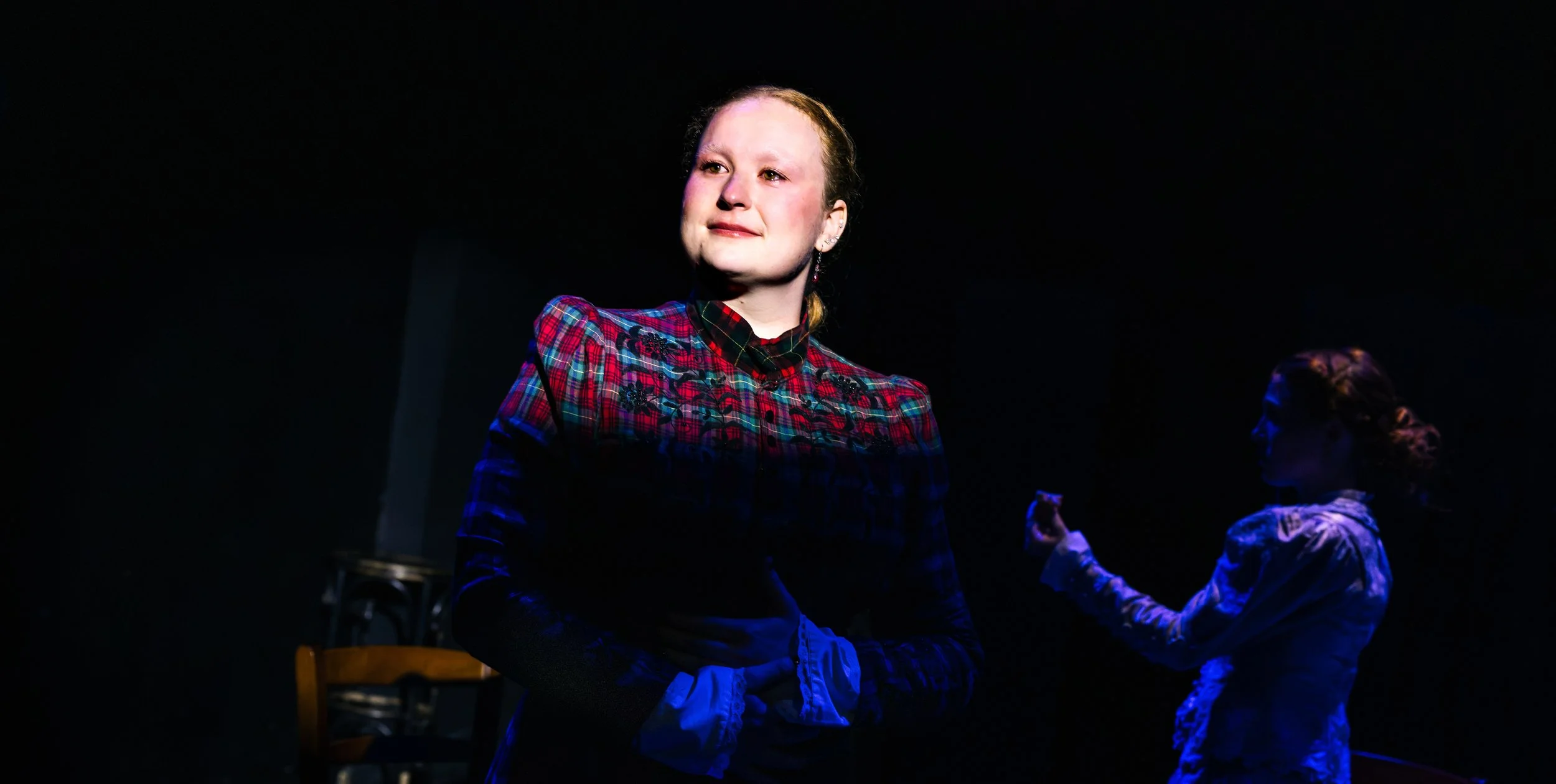
In Sophie McIntosh’s new play benevolent, four young women in 1917 New York endure life inside the Inwood Benevolent Home, an ostensibly charitable reformatory for “fallen girls.” More specifically, the work is set in the basement laundry room, where the women wash soiled sheets, toiling over basins with washboards and helpings of borax. McIntosh uses this setting to explore issues of class, gender, and desire, all rooted in the relationships among the four residents.
An American Daughter
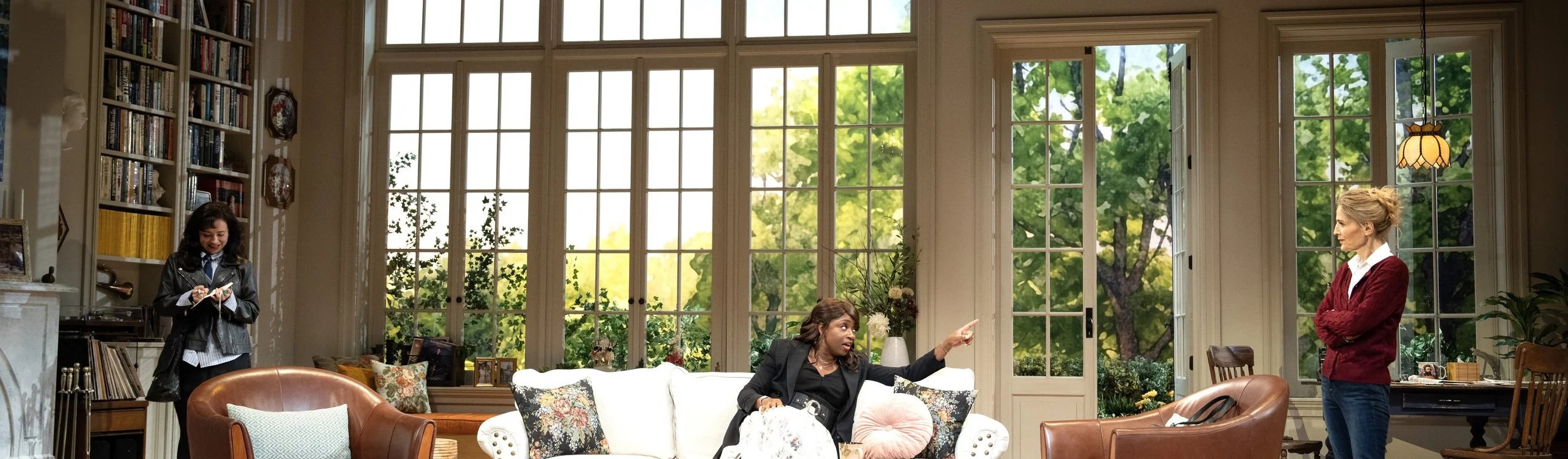
La Femme Theatre Productions, dedicated to “exploring the female experience through classic and contemporary plays,” is presenting the first New York revival of Wendy Wasserstein’s An American Daughter. This largely forgotten play premiered on Broadway in 1997 with a first-rate cast, including the late Lynne Thigpen, who won a Tony Award for her superb performance as the protagonist’s best friend Judith. It closed after a paltry 89 performances. The revival, directed by Sarna Lapine, utilizes post-Broadway revisions by Wasserstein, who died in 2006 at age 55. The script-tinkering hasn’t fixed the problems of the original, and it undermines what Wasserstein accomplished in this not-so-bad high comedy, which, in the late 1990s, was timely and diverting (though it fell far short of the political heft she had intended).
Isla
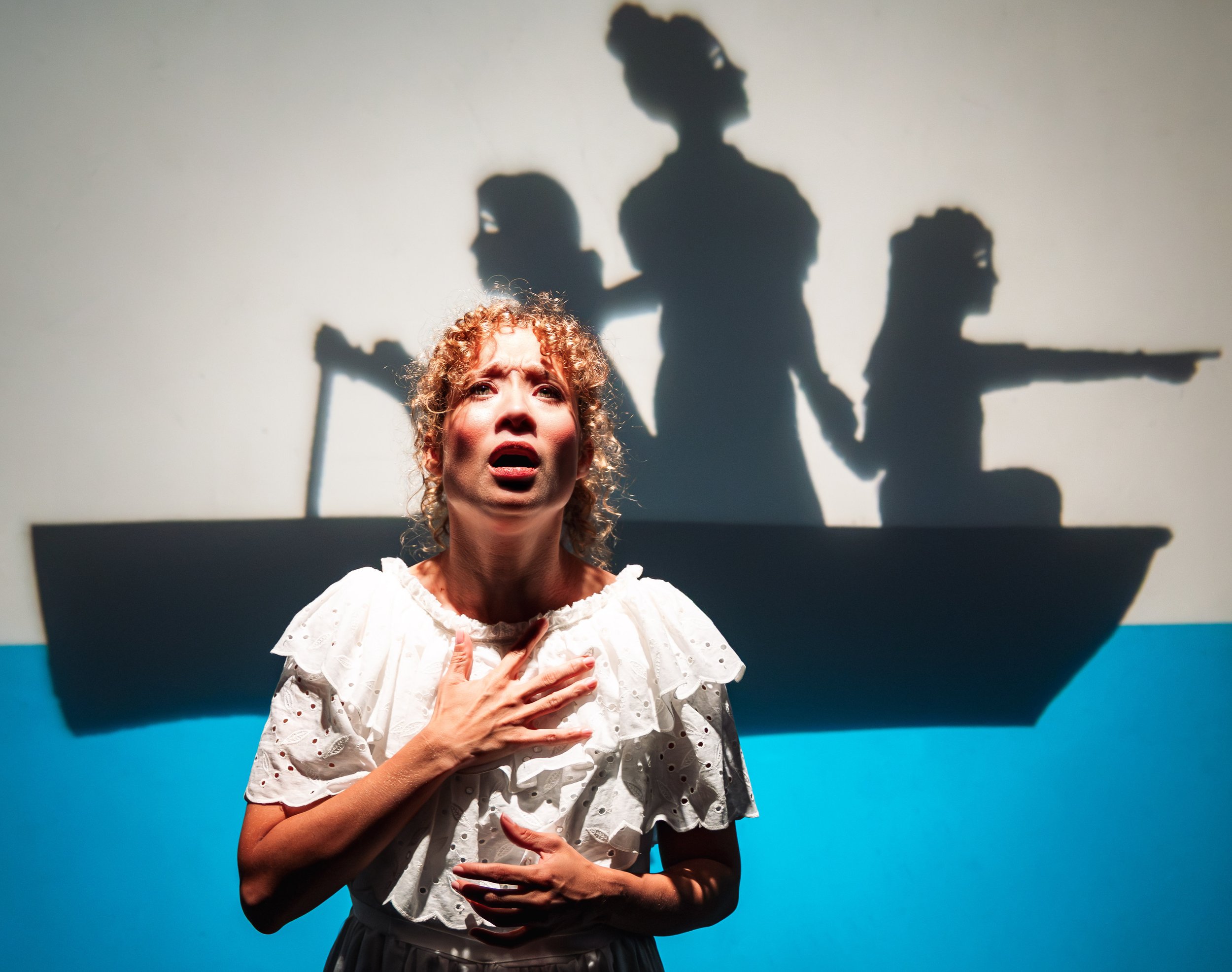
Samantha Blain as Lulu recounts her family’s journey from Cuba to the United States.
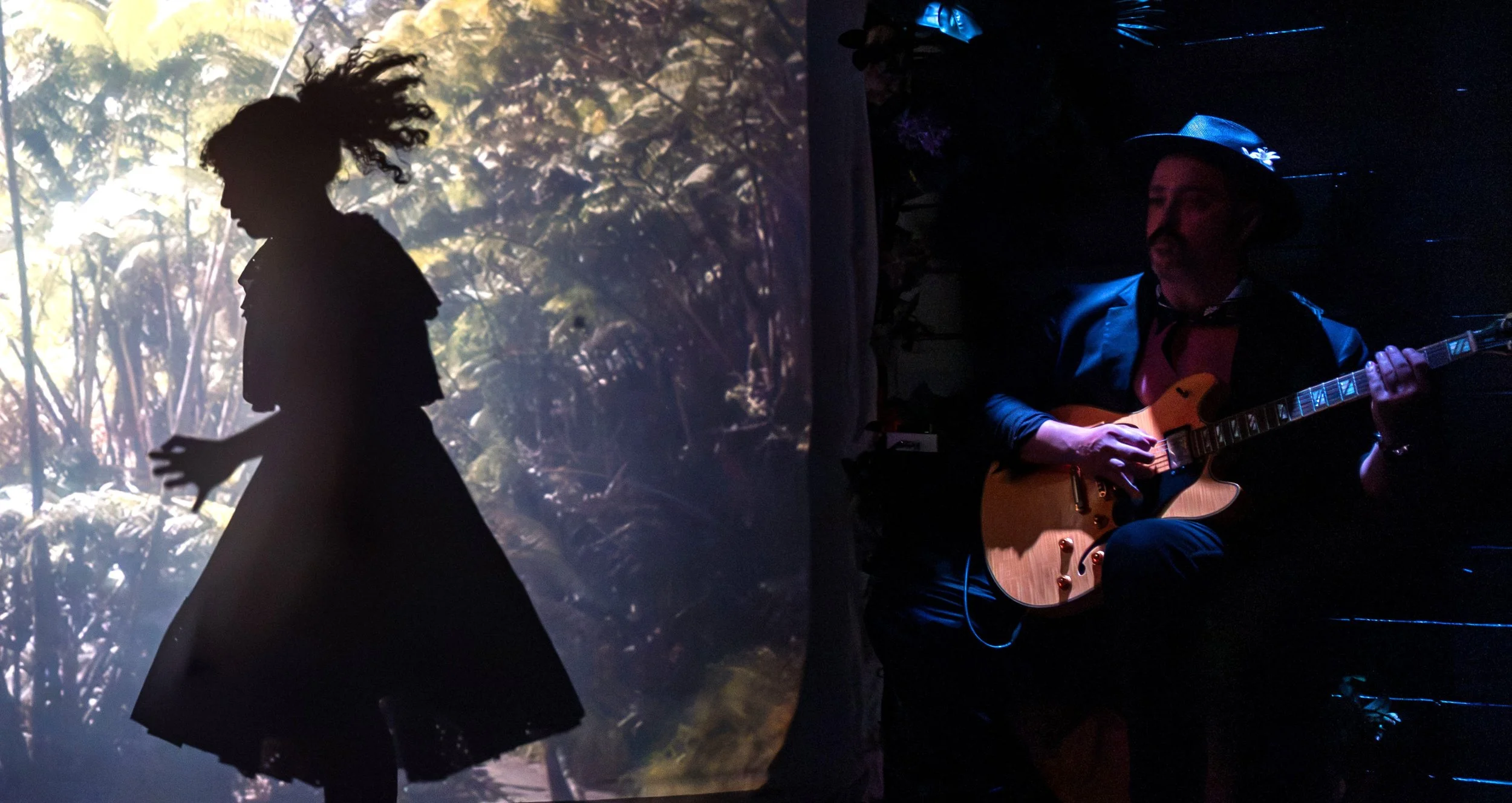
Even a powerful story can become more compelling when told through the traditions of its culture. Such is the case with Samantha Blain’s new play Isla, which embraces puppetry, music and magical realism to tell, in 75 minutes, a story of how Blain’s family fled Cuba. The world premiere production is a bilingual shadow play with beautiful, lilting songs, accompanied by guitarist Claron Hayden. All the artistic elements come together in a wonderful, multifaceted production.
The story unfolds in four parts: The Return, in which personal remembrances introduce the playwright’s family; The Vision, featuring dream sequences of birds, creatures, and flora; The Decline, showing changes in the lives of the characters before and after the Cuban revolution of 1959; and The Departure, capturing the emotional turmoil facing the country and the sisters as they emigrate to the United States.
Throughout these sequences, the sisters—Blain as LuLu, Daniela Delahuerta as Carmen, and Tiffany Iris as Alina—are the key characters. The women perform as a trio. They sing in harmony and glide gracefully barefoot about the stage and behind the triptych. They “fight” playfully, tugging at fabric, and at other times wrap themselves in a warm embrace, showing the strength of their bond.
Daniela Delahuerta (Carmen) expresses her doubts about leaving Cuba and family.
The Return introduces the family through personal remembrances, as in the song “Mi Isla”:
Mi Corazon es me familia
Support and love, not
Unfamiliar
Just watch me.
Directors Roman Sanchez and Mikayla Stanley brilliantly use shadow puppetry to complement and enhance the story, illustrating and animating the action of the script.
Puppetry is a traditional art form in Latin culture; in Cuba it was supported by the government after the revolution, leading to the creation of the Teatro Nacional de Guiñol (TNG), or National Puppet Theater. The play’s creators wisely recognize its importance.
In The Decline segment, for instance, the shadow puppets project the grim realities of the revolution of 1959, showing changes in the lives of the characters before and after it:
Everything went into decay. It was as if uh...if uh...
You couldn’t bring any money. God forbid, you have money, you’re in trouble, you get arrested.
But if you don’t pay, you gotta leave.
The segments feature marching armies, bombs and explosions, rotting fruit, children forced to work in fields, and the sisters sailing away from their home in a tiny boat. Although somewhat cartoonish, the puppets powerfully capture the emotional toll of forced emigration. So essential is the puppetry that Isla’s puppeteers—Casey Scott Leach, Erica Knight, and Jessie March—take a well-deserved curtain call.
Three sisters, Tiffany Iris (Alina), Samantha Blain (Lulu) and Daniela Delahuerta (Carmen) harmonize about their sisterhood. Photographs by Rebecca J. Michelson.
The other Latin element used to great effect is magical realism, most notably associated with Nobel Prize–winning Colombian novelist Gabriel García Márquez and his One Hundred Years of Solitude. Isla exists in a place where crocodiles are used to disarm weapons and creatures scamper about, stealing pencils and a notebook.
In addition to recorded interviews with family members, a tapestry of images is projected onto a wide screen divided into a triptych. At times, three-dimensional puppets scamper across the stage and then appear as two-dimensional projections of themselves. Then the cast steps behind the triptych and joins the two-dimensional world. As magical realism dictates, this transformation is perfectly natural and unexplained as part of the story. It just is.
Guitarist Claron Hayden adds soulful accompaniment to Isla’s story.
The final segment, The Departures, reflects the emotional turmoil facing the country and the sisters as they emigrate to the United States. In a recorded interview, they recall their feelings:
I had big trauma. I left my home, I left my country, my parents.
Let’s put it this way, praise the lord that nothing ever happened to us. Pfft.
Terror. Political terror. Personal terror.
All these elements—music, cast performances, recorded interviews with family members, lighting that captures and shifts moods, multimedia projections, silhouettes of family and the cast, and flowing fabric used to create the illusion of waves as the girls sail away—blend joyfully into a shared vision.
As Blain explained at the start, her wish was to share her stories with her daughter, which she did. Thankfully, she also shared her story with the audience.
Hit the Lights! Company’s production of Isla runs through Aug. 29 at WP Theater (2162 Broadway at 76th). Evening performances are at 7 p.m. Wednesday through Sunday (no performance Aug. 20); matinees are at 2 p.m. Sundays; an additional youth performance is set for 2 p.m. Aug. 1. For tickets and additional information, visit their program here.
Creators: Hit The Lights! Company & Samantha Blain
Directors: Roman Sanchez & Mikayla Stanley
Composers: Samantha Blain & Claron Hayden
Puppetry: Casey Scott Leach, Erica Knight & Jessie March
Lighting design: Vittoria Orlando
Costume design: L.A. Clevenson
If you enjoyed this review, please click on the Like icon below.

The Winter’s Tale
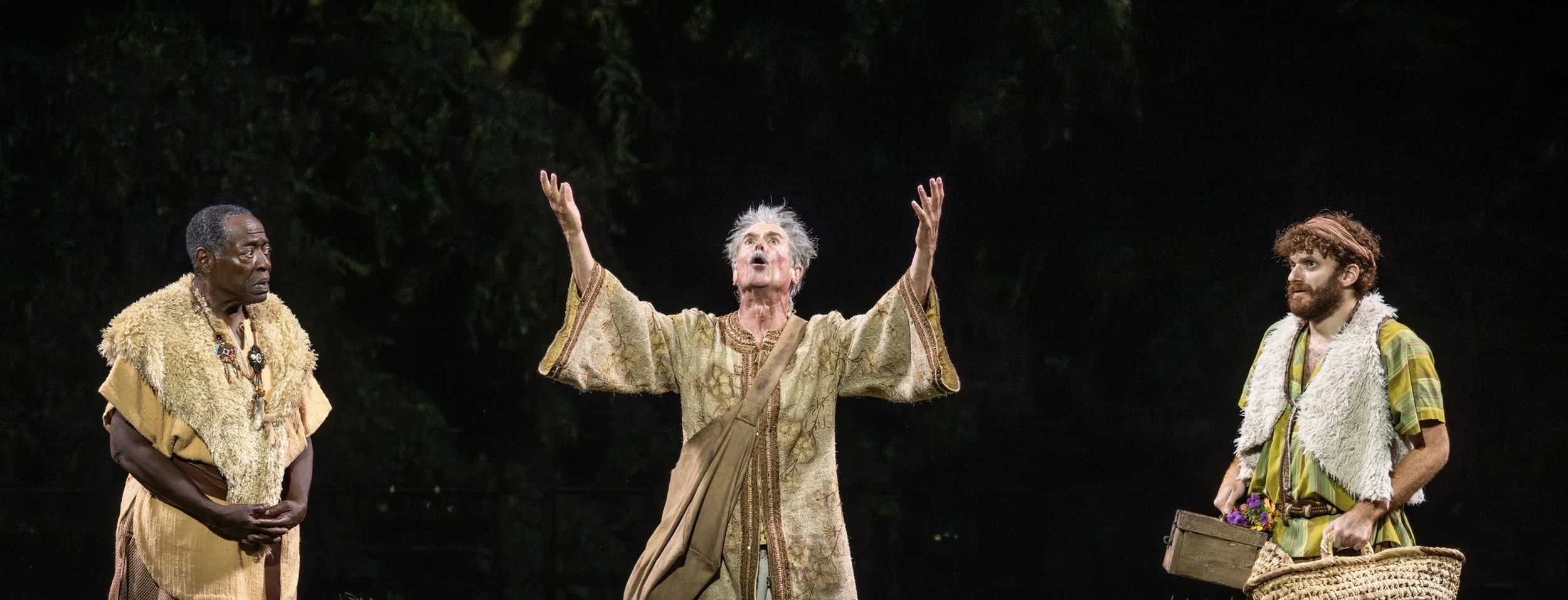
“A sad tale’s best for winter,” says Mamillius, the young son of Leontes and Hermione, king and queen of Sicilia, in Shakespeare’s late play The Winter’s Tale (ca. 1610). Mamillius may be right, but a sad tale can also work on a sweltering night in Central Park, as Daniel Sullivan’s no-frills, emotionally intense staging demonstrates.
The Pass
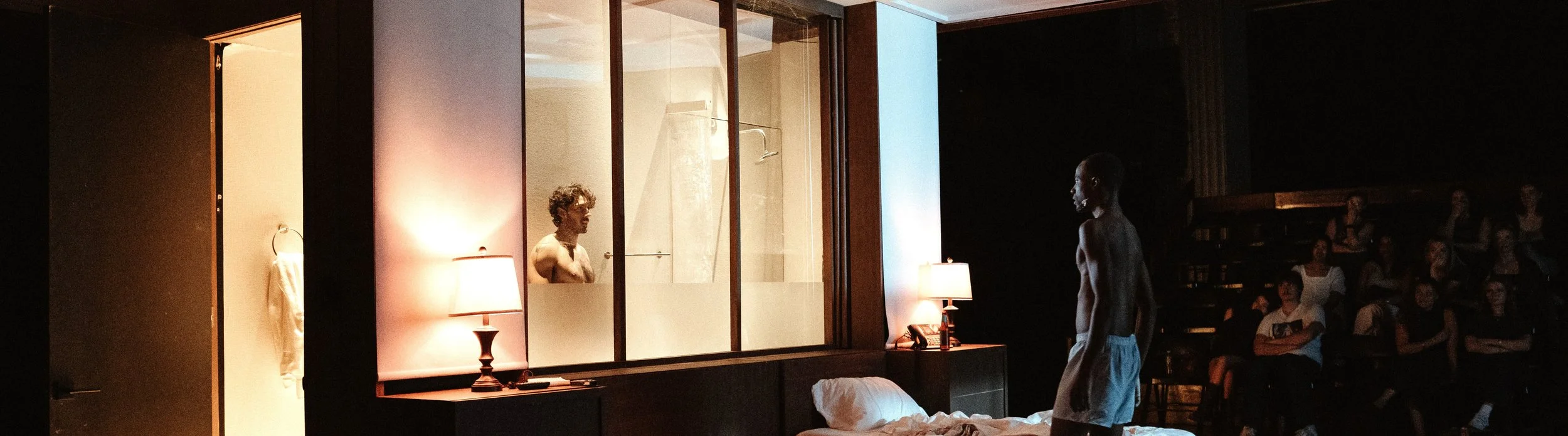
In John Donnelly’s The Pass, directed by Max Hunter, two rising British soccer stars confront the volatile intersection of masculinity, desire, and celebrity when a hotel-room encounter threatens to upend their carefully constructed futures. Spanning 12 years and three hotel rooms, this provocative drama tackles the high stakes of being young, ambitious, and closeted in a world where the pressure to perform extends far beyond the playing field.
The Saviors
Well, I’ll Let You Go, Bubba Weiler’s drama of grief and Midwestern angst, opened Off-Broadway a year ago this month, elevating the author from yeoman actor to New York’s most prominent emerging playwright. The Saviors, Weiler’s second play (now at the Atlantic’s Linda Gross Theater) substantiates his promise, extending and arguably deepening his collaboration with director Jack Serio.
The Vessel
“A combination of the Eiffel Tower and the Rockefeller Center Christmas tree.” “Upside-down pineapple. Honeycomb spaceship/shawarma.” These descriptions of Vessel, the tourist attraction in Manhattan’s Hudson Yards, are the most memorable lines in Brendan George’s well-intentioned play The Vessel, which has a lot to say but doesn’t say most of it in a theatrically exciting manner.
Disruption
Enter a complex query into an AI chatbot, and the computer program will ruminate. Employing a proprietary algorithm, actions will be taken, decisions will be explained, and the sometimes unexpected results will arrive in due course, with little regard as to whether a satisfying answer is justification for the steps taken to reach it. This process is the metaphorical framework for Andrew Stein’s new and disturbing think piece, Disruption. Set in a New York defined more by its data sets than its landmarks, three couples provide the input for a calculating friend who employs an omniscient technology to rewire all of their lives.
Broad Strokes
Comedian and stroke survivor Cat Cohen named her solo show Broad Strokes for the puns, but the titular phrase may be more appropriate in another, unintended sense. Cohen tells her story in such broad strokes that, while she succeeds in making her serious medical condition funny, the lack of depth and detail makes it seem not that serious.
Hungry Women
What if men suddenly disappeared from the planet? Melissa Maney’s darkly comic Hungry Women, directed by Daniella Caggiano, imaginatively explores that provocative question across two centuries, using absurdism, macabre humor, and a feminist lens to examine how women might reconstruct society—and what they might ultimately discover they are most hungry for.
Shifters
For its third mainstage production under new owners A24, Cherry Lane Theatre brings in a London success—Benedict Lombe’s romantic two-hander Shifters, directed by Lynette Linton—with some boldface names on its U.S. producing team, including actors Idris Elba and Danai Gurira and rapper Little Simz.
Hershey Felder: The Piano and Me
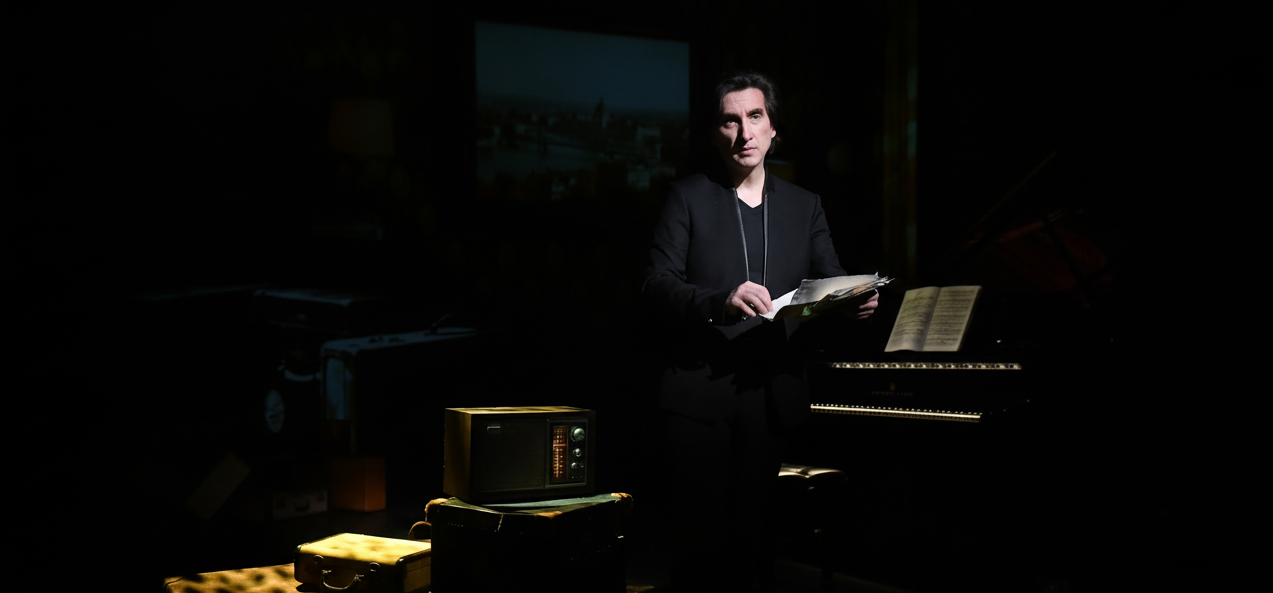
After spending decades bringing history’s greatest composers to vivid theatrical life, Hershey Felder turns his storytelling gifts inward in Hershey Felder: The Piano and Me. The result is an intimate and deeply affecting autobiographical portrait that reveals how music shaped not only an extraordinary career but also an extraordinary life.