Comedy

Burnout Paradise

Burnout Paradise

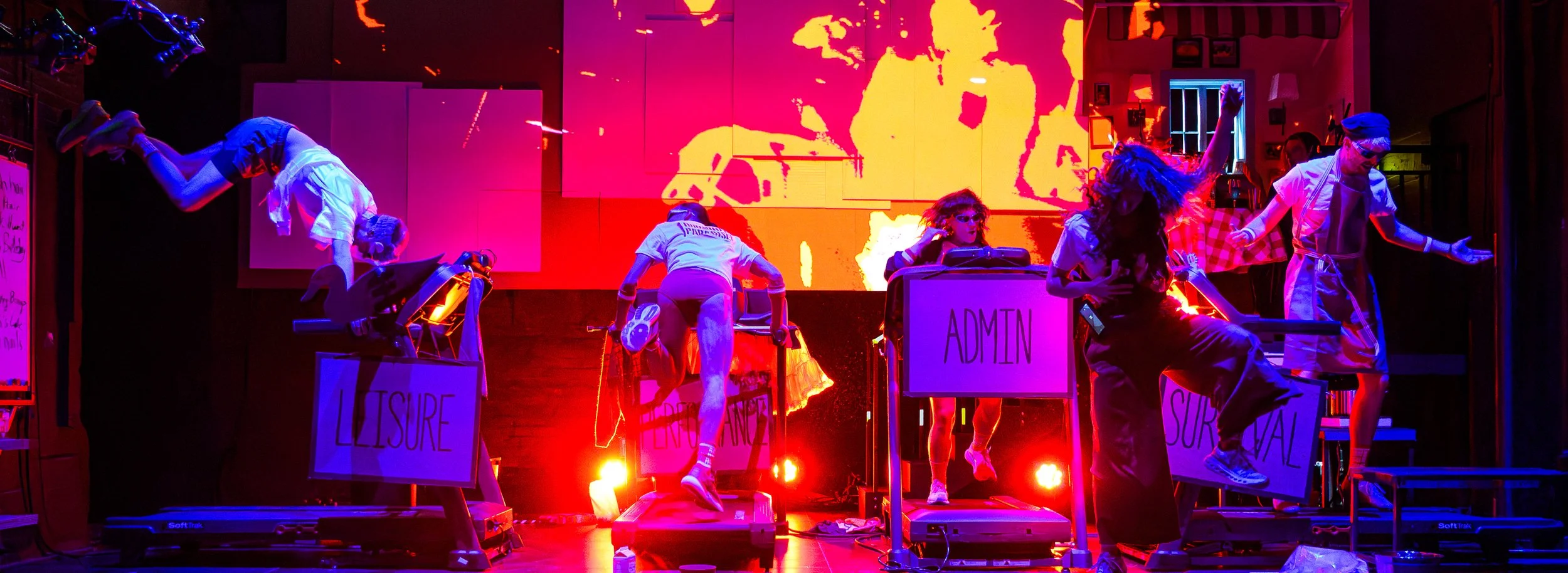
Pony Cam’s Burnout Paradise is a madcap smorgasbord of actions that are tied together by a final aim: complete a number of tasks in a certain amount of time, all while walking on a treadmill. Part performance art, part physical theater, the show opens with four performers—Claire Bird, William Strom, Dominic Weintraub and Hugo Williams—on treadmills under a large screen displaying the words “Warm Up.” A soft, muttering soundscape (created by the ensemble) floats through the air, offering thoughts on greatness—“If greatness doesn’t come knocking on your door, you should go knocking on its door.” 

Click for print friendly PDF version of this blog post

Trash

Trash

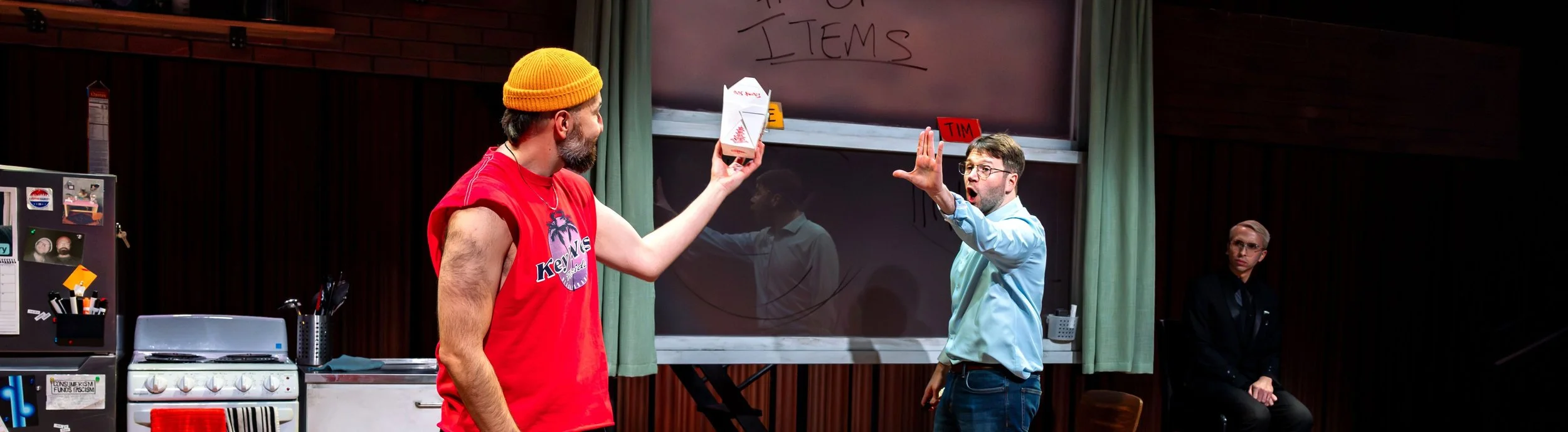
The engaging Trash embellishes a common New York story of two roommates in conflict by adding an important twist, as well as a variety of theatrical tricks, including audience participation. The Deaf creators and lead performers, James Caverly and Andrew Morrill, hold out occasional lifelines to a hearing audience via projections, a talking jukebox, and a character who isn’t Deaf, but just as often they speak in American Sign Language (ASL). Lest anyone balk at that, a good deal of the ASL portions are no more challenging than interpreting gestures in a silent film.

Click for print friendly PDF version of this blog post

Calf Scramble

Calf Scramble

Calf Scramble, the title of Libby Carr’s dynamic new work, is a double entendre. On one hand, it is an event, familiar to many a rodeo goer, that features teens chasing and roping calves to take home and raise as potentially profitable livestock. On the other hand, it is a fitting description of the play’s intent. Five high school girls find themselves as penned in by their circumstances as the calves are by their metal fences. The animalism of humans becomes jumbled with the humanity of animals, and if, at times, Carr lays on the symbolism with a heavy hoof, one must remember that the play is set in Texas, where everything is bigger, including the metaphors.

Click for print friendly PDF version of this blog post

The Amazing Sex Life of Rabbits

The Amazing Sex Life of Rabbits

Many elements of Michael Shaw Fisher’s comedy The Amazing Sex Life of Rabbits remind one of other works that use the familiar trope of a childless couple, unable to conceive, going to extreme lengths to become parents. Here, the factors that decide the deal are typical of the darker riff on the Golden Rule—i.e., “Whoever has the gold, makes the rules.” In Fisher’s 75-minute show at the Fringe Encore Series, fanciful variations on the trope provide enough laughs to forget today’s economic disparities.

Click for print friendly PDF version of this blog post

Our House

Our House

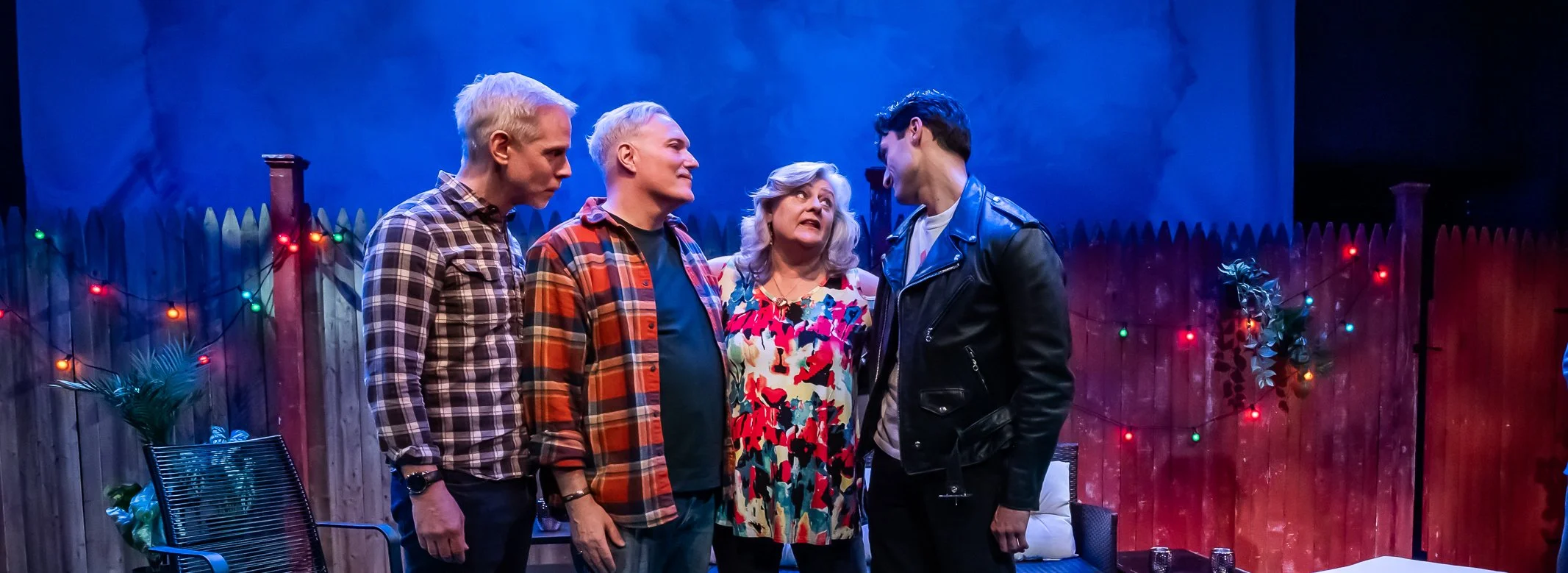
Barry Boehm’s play Our House deals partly with family strife—a staple of American drama for a century—with the added difference that four of the six characters are gay. A long night of drinking and drug-taking puts it squarely in the vein of Long Day’s Journey into Night and Who’s Afraid of Virginia Woolf?, a show in which one of Boehm’s characters happens to be starring, in a community theater production. More particularly, the primarily gay characters echo any number of engaging dramas, from The Boys in the Band to Love! Valour! Compassion! to My Night with Reg.

Click for print friendly PDF version of this blog post

Chinese Republicans

Chinese Republicans

Four employees of investment bank Friedman Wallace gather for an “affinity group” meeting. Their affinity? They are women of Chinese descent. Yet Alex Lin chose to name her new play Chinese Republicans. Consider it the first sign of dissonance in Lin’s ineffectual script.

Click for print friendly PDF version of this blog post

The Reservoir

The Reservoir

Josh, protagonist of Jake Brasch’s The Reservoir, is a New York University drama student and veteran blackout drunk. Careless and self-centered, Josh spreads pandemonium wherever he goes. Irksome as this conduct may be for those around him—especially his long-suffering mother (Heidi Armbruster), Josh is an audience charmer. Credit for that goes to Brasch’s wit and an adroit performance by leading-actor Noah Galvin. Yet the achievement of this production owes less to the comic capital of the central character than to the heartfelt depiction of Josh’s grandparents, embodied by four notable veterans of the New York stage: Caroline Aaron, Peter Maloney, Mary Beth Peil, and Chip Zien.

Click for print friendly PDF version of this blog post

You Got Older

You Got Older

Clare Barron’s 2014 You Got Older is a comedy of many colors. In this revival at the handsomely renovated Cherry Lane Theatre, Freudian fantasy shares the stage with elements of a traditional rom-com, while gross-out jokes demand equal time against moments of heartwarming family humor. But primarily the intermissionless play is a bittersweet buddy comedy, a keenly observed tale of a sick father and the grown daughter who comes home to see him through his illness. Their sporadic bouts of bonding and awkward conversations provide comfort and support, even as their physical bodies and emotional losses betray them.

Click for print friendly PDF version of this blog post

Meat Suit

Meat Suit

No one in Aya Ogawa’s Meat Suit ever speaks or explains the title phrase, but based on its use in fantasy literature and a Netflix documentary, it refers to a human body inhabited by a demon or alien. The play’s subtitle, The Shitshow of Motherhood, also conjures a negative impression of motherhood. So, too, does almost everything in the show—and in exhaustingly absurdist fashion. The play may not turn anyone off to motherhood, but it could turn people off to any future theatrical explorations of it.

Click for print friendly PDF version of this blog post

Hold On to Your Butts

Hold On to Your Butts

Hold On to Your Butts, directed by Kristin McCarthy Parker, proves that epic spectacle can be conjured from little more than bodies, sound effects, and boundless imagination, as two actors and a sound-effects artist recreate Jurassic Park shot for shot, live onstage. The result is an exuberant collision of physical comedy, sound, and affectionate parody—a love letter to both movies and theater.

Click for print friendly PDF version of this blog post

An Ideal Husband

An Ideal Husband

“Behind every great fortune lies a great crime” is a quotation attributed to French novelist Honoré de Balzac, but it applies directly to the plot of Oscar Wilde’s An Ideal Husband (1895). Written close to Wilde’s peak—it opened just a month before The Importance of Being EarnestHusband fizzes with epigrams and uses heightened language to expose hypocrisy. The Storm Theatre is brave to tackle the work, packed both with melodrama and wit, but to succeed, as Sir Peter Hall did with his Broadway production 30 years ago, requires skills and experience that it can’t altogether muster.

Click for print friendly PDF version of this blog post

I Wish My Life Were Like a Musical

I Wish My Life Were Like a Musical

In I Wish My Life Were Like a Musical, written by Alexander S. Bermange and directed by Eamon Foley, four talented performers share their love of musicals—even though their show has just closed unexpectedly. The plucky quartet spends the ensuing 75 minutes delightfully recounting their personal reasons for loving theater while spoofing some of the most popular musicals of all time. Their commitment to the genre is infectious. And even though their love is  temporarily unrequited, they wave the banner of devotion like Jean Valjean from Les Misérables, one of the many shows parodied.

Click for print friendly PDF version of this blog post

Ulysses

Ulysses

Gatz, the signature creation of downtown theater troupe Elevator Repair Service (ERS), included every sentence of F. Scott Fitzgerald’s 1924 novel The Great Gatsby, with each performance running a whopping eight hours (including intermissions and dinner break). At the Public Theater these days (16 years after Gatz premiered there), ERS is offering its take on Ulysses, the ravishingly innovative novel—serialized in 1918, published in book form in 1922—that secured James Joyce’s position as preeminent pioneer of stream-of-consciousness narrative in English. As with Gatz, the script of Ulysses consists entirely of the novelist’s original prose; this time, though, there are numerous elisions, permitting each performance to clock in at a mere two hours and 40 minutes.

Click for print friendly PDF version of this blog post

The Bookstore

The Bookstore

Michael Walek’s The Bookstore is a cozy, unprepossessing play about the power of literature to change one’s life and the importance of both writing and reading. It is also about the people who do one or the other, and those who try to do both, and it’s peppered with nuggets about writers, readers, and the spectrum of human experience.

Click for print friendly PDF version of this blog post

Juxtapose | A Theatrical Shadow Box

Juxtapose | A Theatrical Shadow Box

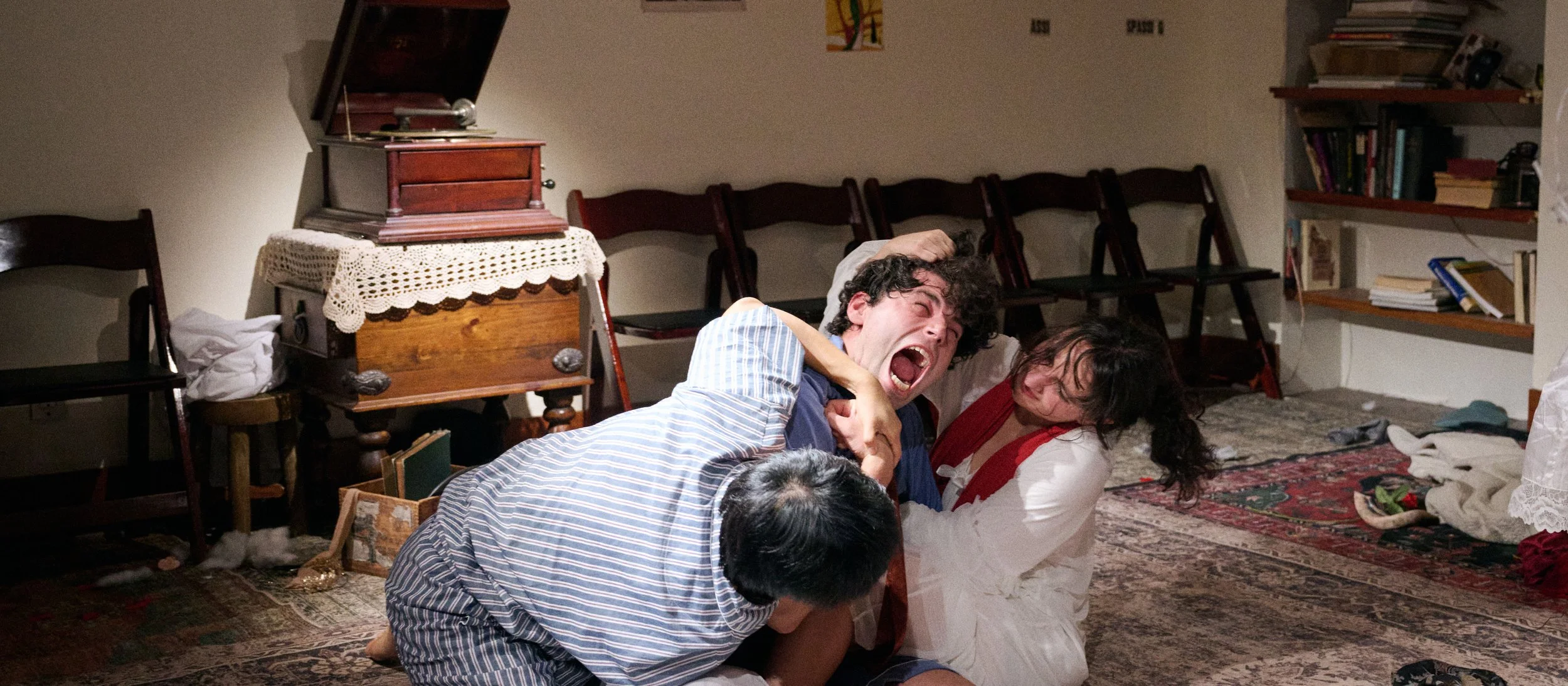
A work that has been collaboratively devised by members of the Happenstance Theater troupe, Juxtapose | A Theatrical Shadow Box cites as its influences the artworks of Joseph Cornell and the French films Amélie (2001) and Mon Oncle (1958). The play, directed by Mark Jaster and Sabrina Selma Mandell, explores randomness and dissimilarity and focuses on the lives of tenants in a French apartment house through a series of scenes that can be identified from their artistic influences or simply enjoyed as charming vignettes arranged in visually striking tableaux. Either way, the result is a multilayered and curious work that is both thought-provoking and delightful.

Click for print friendly PDF version of this blog post

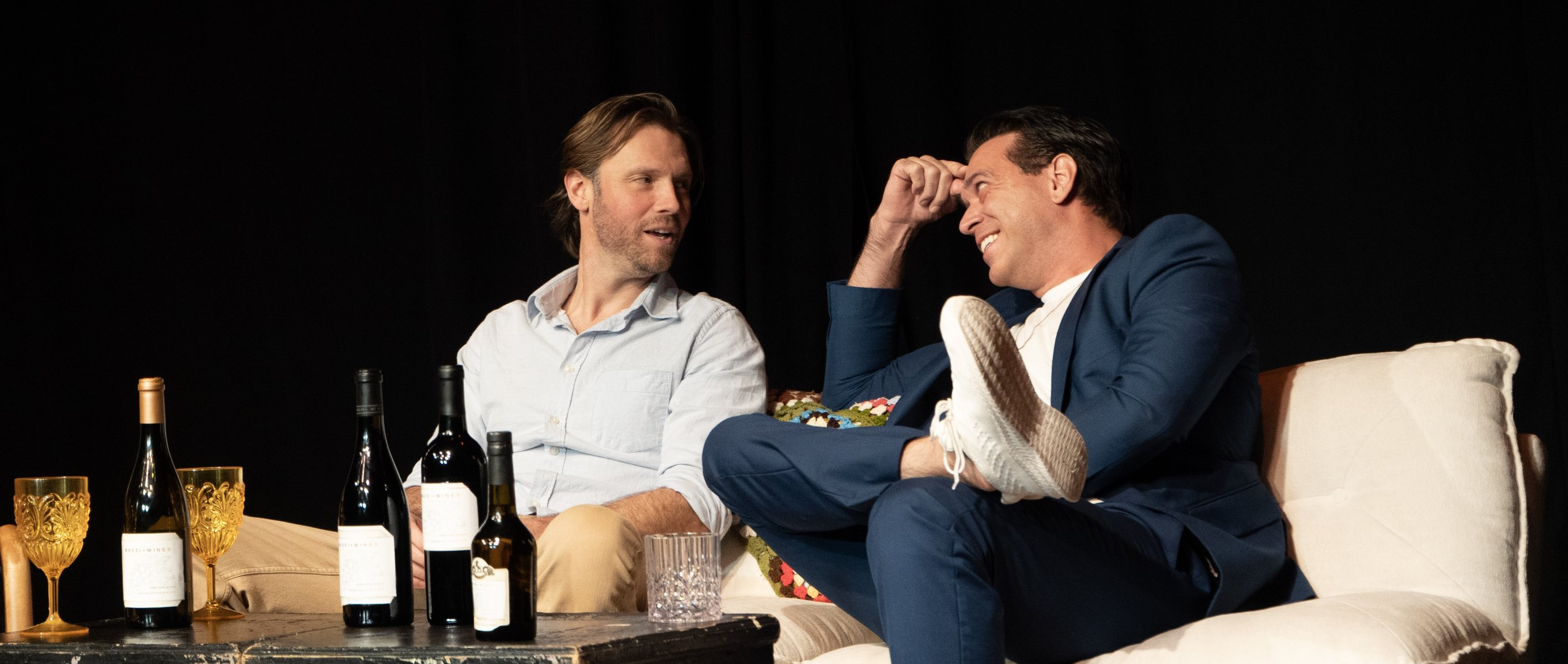
Tartuffe

Tartuffe

Molière’s Tartuffe is robustly reimagined by Lucas Hnath in a randy new version directed by Sarah Benson, turning the classic comedy of hypocrisy into a breathless, contemporary satire. With choreography by Raja Feather Kelly and a fearless cast led by Matthew Broderick and David Cross, the production unleashes ferocious wit and gleeful buffoonery.

Click for print friendly PDF version of this blog post

It’s a Wonderful Life! A Live Radio Play

It’s a Wonderful Life! A Live Radio Play

When Frank Capra’s It’s a Wonderful Life premiered a few days before Christmas in 1946, New York Times reviewer Bosley Crowther was not exactly filled with glad tidings. “The weakness of this picture,” he bah-humbugged, “is the sentimentality of it—its illusory concept of life.” He observed that the small-town denizens represented in the film, “all resemble theatrical attitudes rather than average realities.” In a return engagement of Irish Repertory Theatre’s It’s a Wonderful Life! A Live Radio Play, Anthony E. Palermo’s adaptation of the film’s screenplay unapologetically leans into the sentimentality and accentuates the theatrical attitudes to deliver a sparkling and joyful Yuletide delight.

Click for print friendly PDF version of this blog post

Laowang: A Chinatown King Lear

Laowang: A Chinatown King Lear

Titles, even subtitles, sway playgoers’ expectations. Take, for instance, a recent press performance of Laowang: A Chinatown King Lear. Alex Lin’s new farcical melodrama zips relentlessly around jocose hairpin turns. The dialogue, stylishly delivered by a first-rate cast, is witty, urbane, and frequently arch. Yet the audience—presumably anticipating King Lear or something akin to that monumental tragedy—sat in suspended, churchlike repose throughout the play’s early scenes.

Click for print friendly PDF version of this blog post

What If They Ate the Baby?

What If They Ate the Baby?

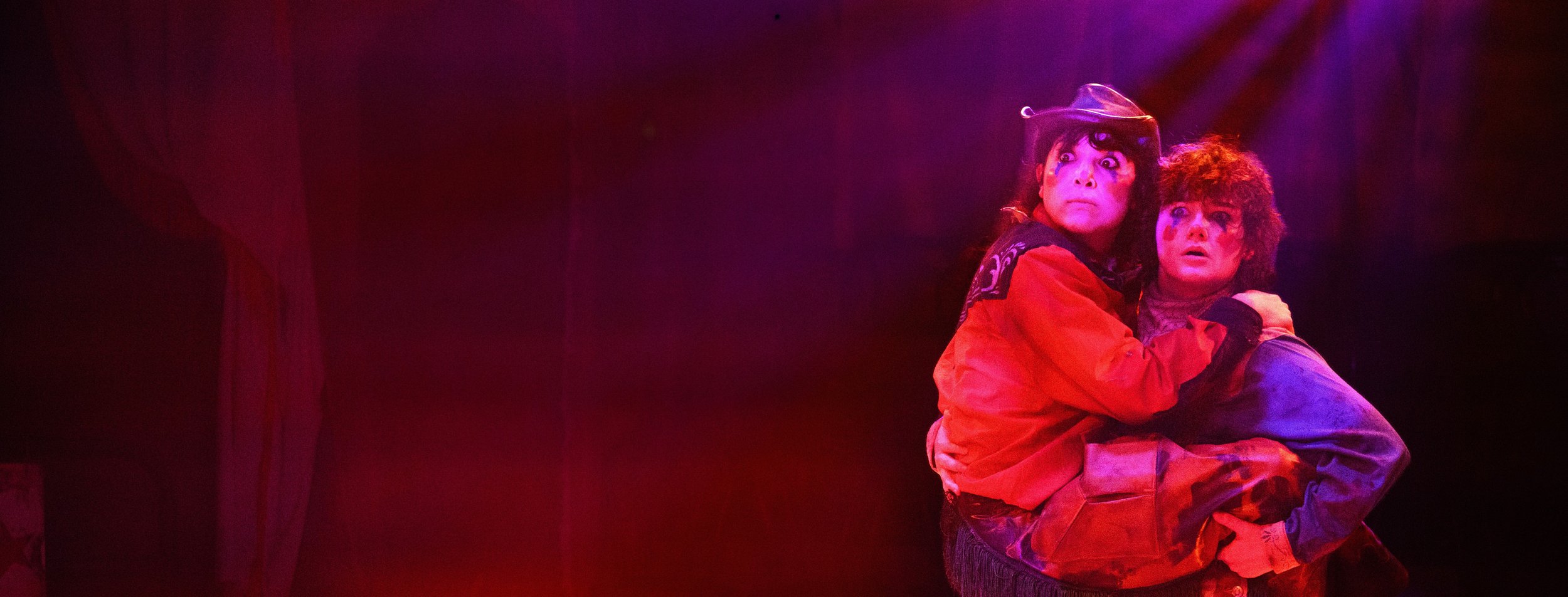
In the U.S. premiere of What If They Ate the Baby? writer-performers Xhloe Rice and Natasha Roland spin a seemingly polite 1950s housewife visit into a hilariously sinister dance of casseroles, secrets, and suburban dread. This queer clown two-hander uses absurdist comedy to probe surveillance, paranoia, and the pressures of American womanhood.

Click for print friendly PDF version of this blog post

Gruesome Playground Injuries

Gruesome Playground Injuries

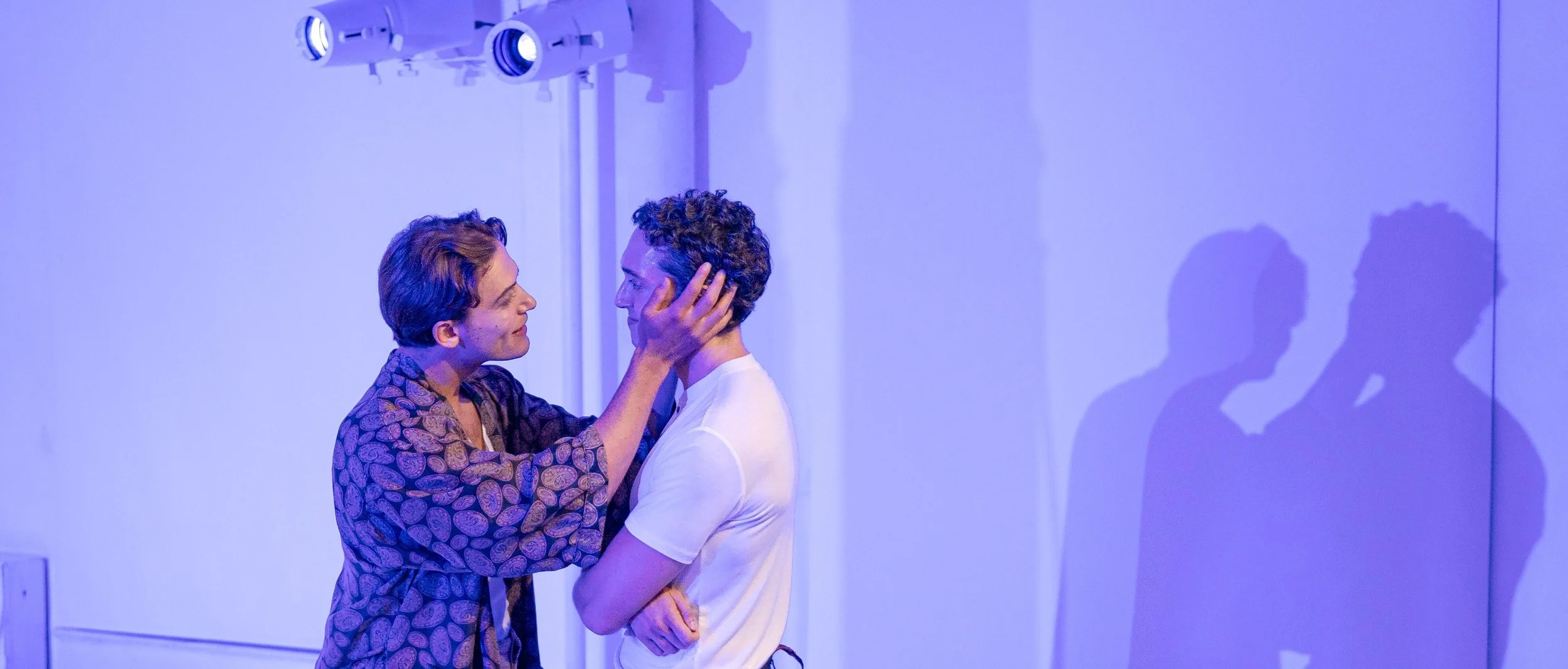
Put two single beds side by side, and the stage is set for a romantic comedy. But what if they are hospital beds? Could a depressing drama be on tap? Not to worry. Rajiv Joseph’s 2009 oddity, Gruesome Playground Injuries, returns to Off-Broadway with plenty of laughs, missed connections, and fleeting kisses. And when things do, on occasion, turn grim, the solid acting, ample stage blood, and traces of vomit make this piece more of a shocker than a bummer. In the reliable hands of veteran director Neil Pepe, it’s a slice-of-life one-act with the emphasis on slice.

Click for print friendly PDF version of this blog post