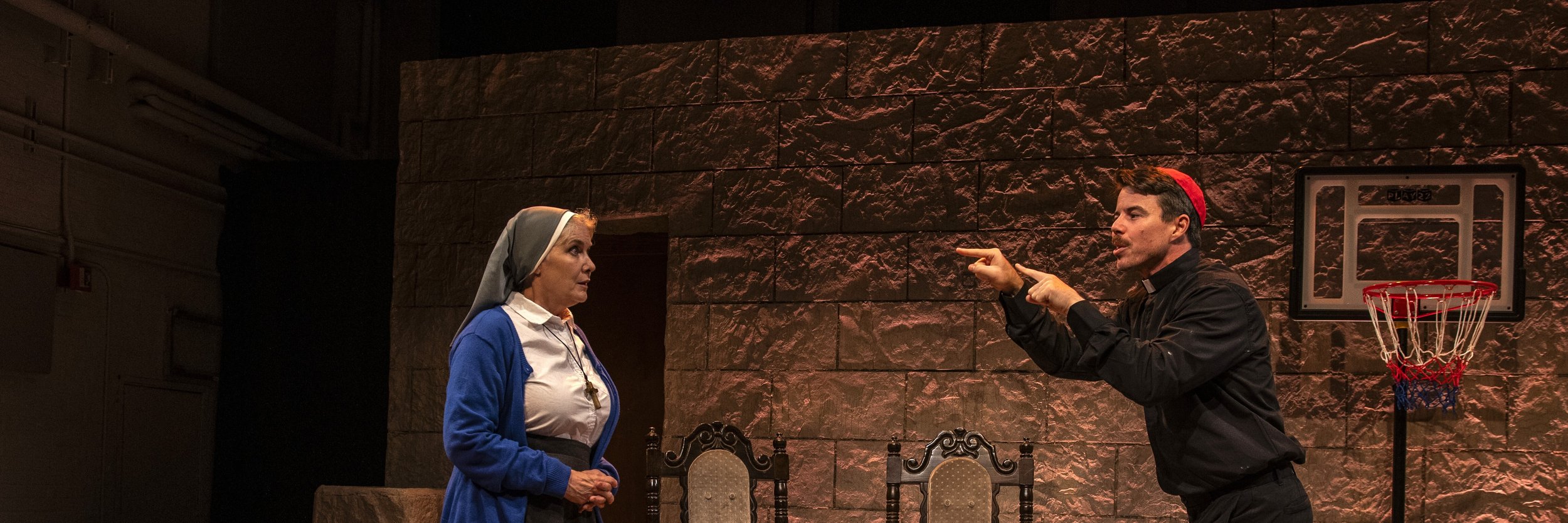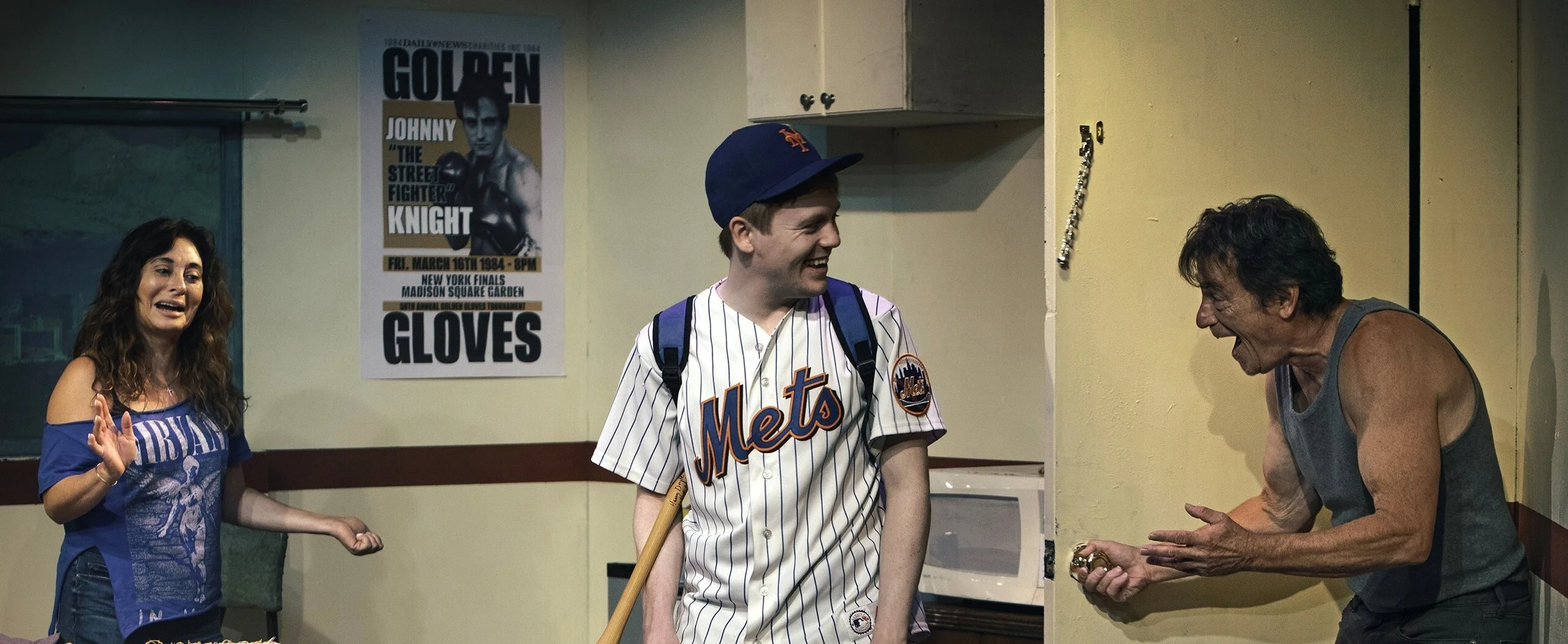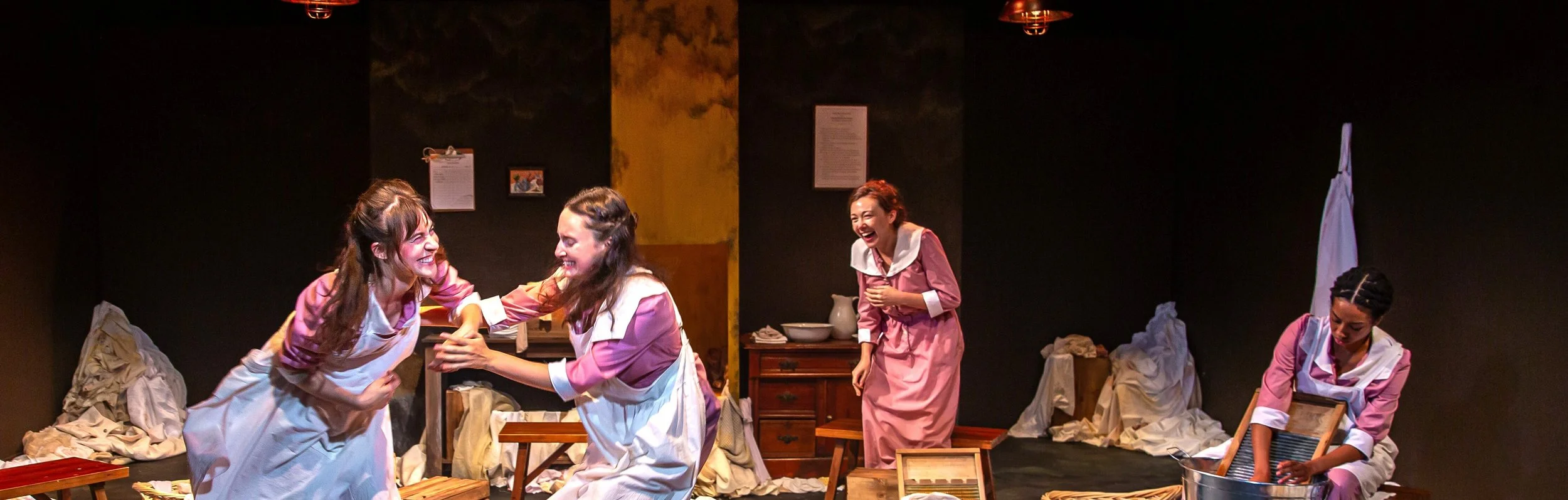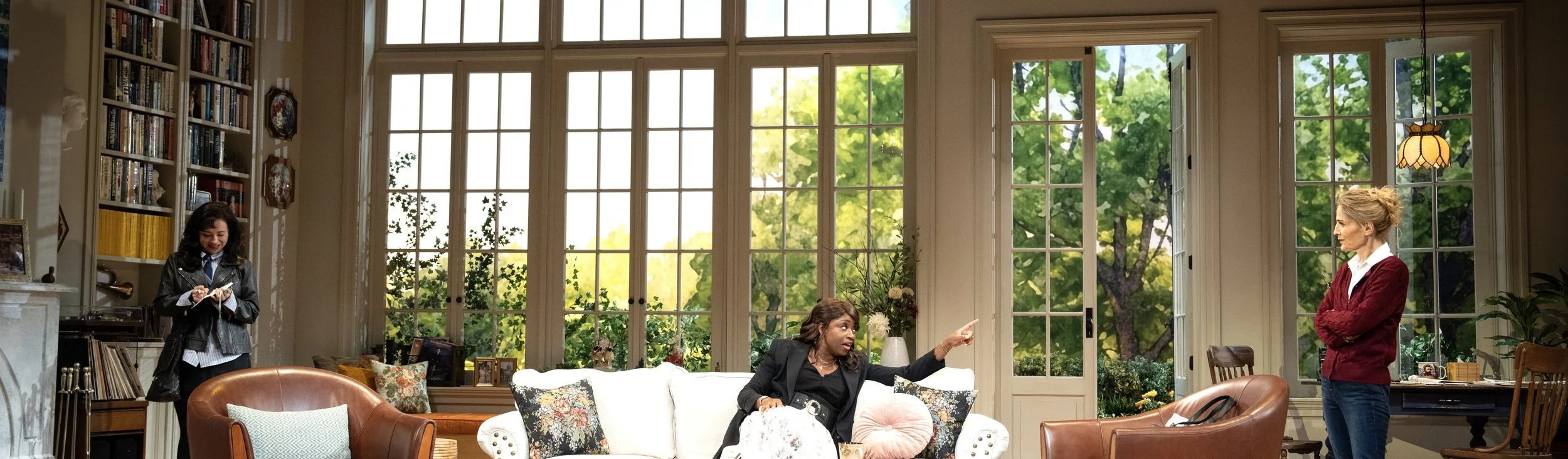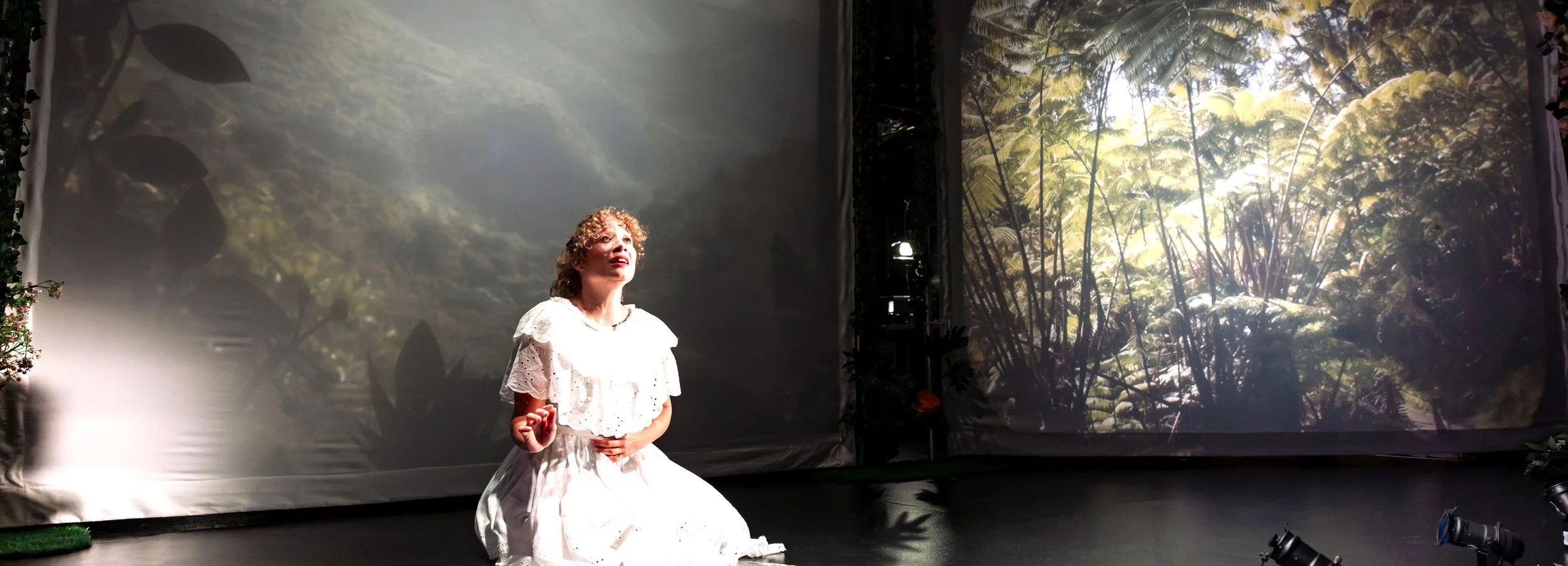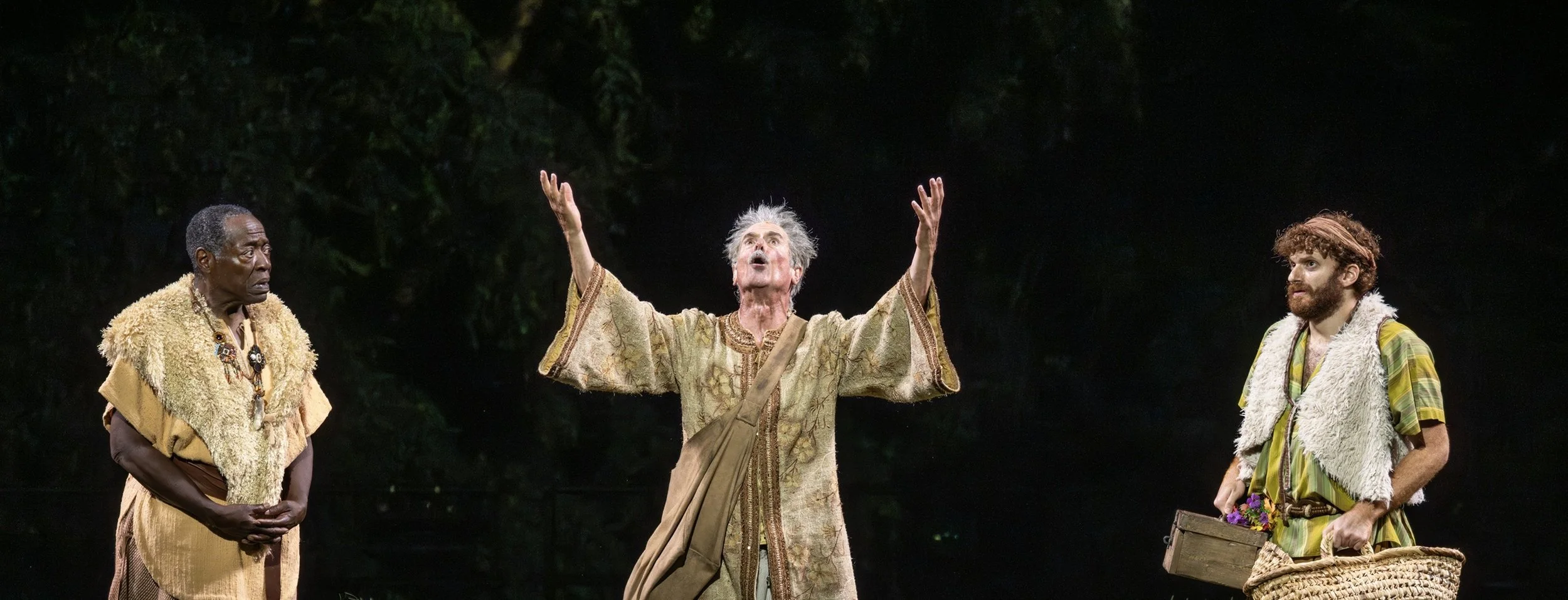


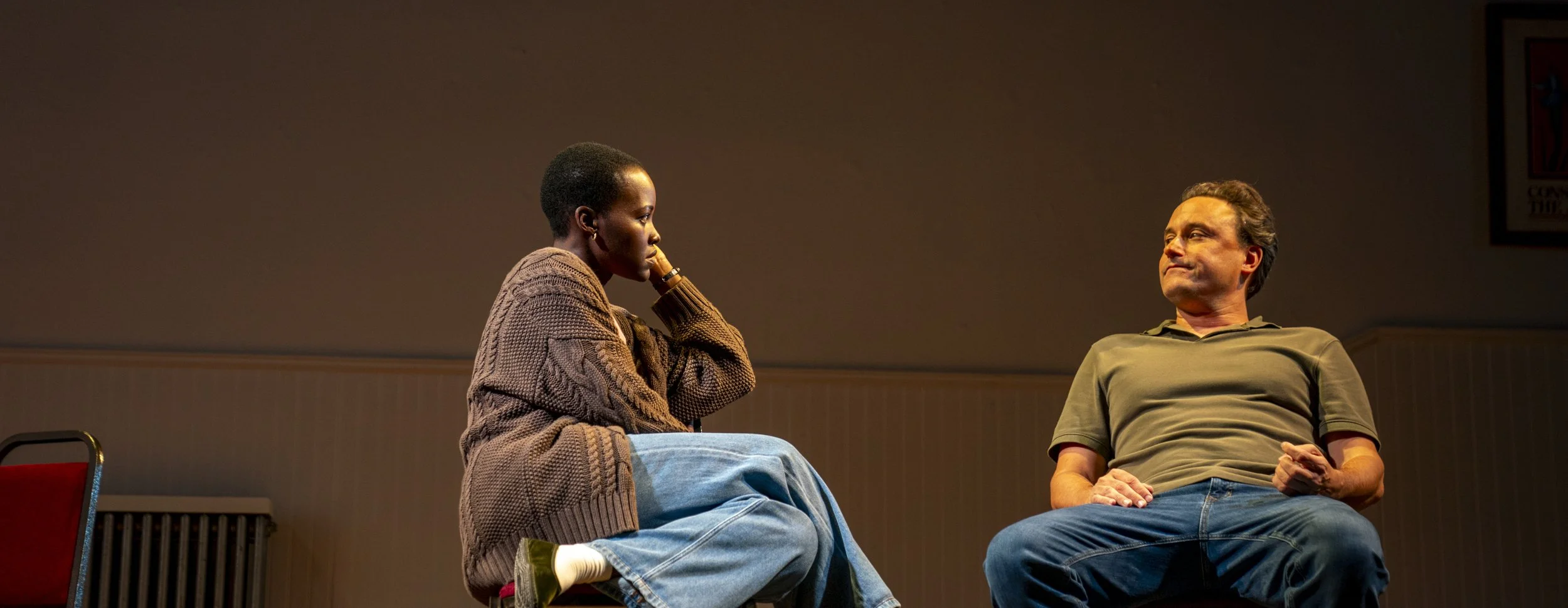
“My goal is to write plays with exciting stories, smart characters and sharp dialogue. The reviewers report that my plays are full of philosophical ideas. So be it. I’m tired of plays about dysfunctional families and jumbled identities. For me, ideas are more exciting.” So goes the program bio of Douglas Lackey, author of Hans Litten: The Jew Who Cross-Examined Hitler, a new historical drama at Theater Row. And he’s true to his words, or at least two of them: “philosophical ideas” dominate, sometimes at the expense of character development, tension, and atmosphere. What’s onstage isn’t uninvolving or unmoving, but one is very aware of what’s missing.
Anonymous
Playwright Nick Thomas’s powerful Anonymous centers on a weekly meeting of an addiction support group. Skillfully crafted to highlight the strength of community and recovery, Anonymous focuses on diverse characters who speak about their lives while seeking support from their fellow addicts. All the participants have secrets, protecting themselves until powerful disclosures transform an ordinary weekly meeting into something extraordinary.
Data
With Data, playwright Matthew Libby has crafted both a techno-thriller and an indictment of Big Tech, in all its mercenariness and disregard for personal privacy and security. Whereas tech-themed dramas typically portray futuristic scenarios, Data’s story of a Silicon Valley company aiding in a federal immigration crackdown seems ripped from this week’s headlines.
Ulysses
Gatz, the signature creation of downtown theater troupe Elevator Repair Service (ERS), included every sentence of F. Scott Fitzgerald’s 1924 novel The Great Gatsby, with each performance running a whopping eight hours (including intermissions and dinner break). At the Public Theater these days (16 years after Gatz premiered there), ERS is offering its take on Ulysses, the ravishingly innovative novel—serialized in 1918, published in book form in 1922—that secured James Joyce’s position as preeminent pioneer of stream-of-consciousness narrative in English. As with Gatz, the script of Ulysses consists entirely of the novelist’s original prose; this time, though, there are numerous elisions, permitting each performance to clock in at a mere two hours and 40 minutes.
The Bookstore
Michael Walek’s The Bookstore is a cozy, unprepossessing play about the power of literature to change one’s life and the importance of both writing and reading. It is also about the people who do one or the other, and those who try to do both, and it’s peppered with nuggets about writers, readers, and the spectrum of human experience.
The Disappear
The Disappear feels like an incomplete puzzle: Its pieces don’t fit together. This new play, written and directed by Erica Schmidt, is overloaded with undercooked melodramatics and ideas.
Night Stories
The Holocaust is never light fare for anyone, and it may be presumptuous to say, but its darkness is no more acutely felt than by those who survived it. The Congress for Jewish Culture’s production of Night Stories: Four Tales of Reanimation dramatizes the Yiddish poems of Avrom Sutzkever, widely acknowledged as the most eloquent Holocaust poet. Sutzkever’s poems, which depict the ghetto in Vilnius, Lithuania, under Nazi occupation, reflect the emotional roller coaster of its residents’ existence, pivoting among horror, humor, and an ambivalent desire for both death and redemption.
Predictor
Playwright Jennifer Blackmer takes great pains to jazz up a history lesson in Predictor, her tribute to the unheralded woman who created the home pregnancy test, Meg Crane. The chronological account of Crane’s invention is interspersed with musical and joky skits, as well as scenes representing Crane’s thoughts or flashbacks in her life.
Anna Christie
Anna Christie,Eugene O’Neill’s 1922 Pulitzer Prize drama, has been overshadowed by his late, great behemoths: Long Day’s Journey into Night and The Iceman Cometh are more often seen than the briefer play. Yet Thomas Kail’s enthralling production at St. Ann’s Warehouse makes a strong case for this neglected earlier work.
Everything Is Here
Peggy Stafford’s Everything Is Here explores the later stage of the life cycle—what some call the golden years, and others call the twilight years—by focusing on three women in their 70s: Bev (Jan Leslie Harding), Bonnie (Petronia Paley) and Janice (Mia Katigbak). Living in senior housing, they find their days are punctuated by the visiting nurse, Nikki (Suzannah Millonzi), who has a sadness beneath her cheerful demeanor, and the lanky and handsome Grant (Pete Simpson), who leads meditation and mindfulness classes at the home while he auditions for acting roles.
Diversion
Playwright Scott Organ excels at creating characters whose mistakes in their jobs and relationships lead to agonizing consequences. His 2020 drama, 17 Minutes, was a harrowing tale of a sheriff’s deputy in a crumbling marriage who failed to stop a mass shooting. For his new work, Diversion, Organ reunites with director Seth Barrish and the Barrow Group to focus on a close-knit nursing unit on the verge of unraveling. This quiet and absorbing think piece examines the hardship of opioid addiction and the post-traumatic stress of the COVID-19 pandemic.
The Surgeon and Her Daughters
Set in New York City—specifically Times Square and Ozone Park, Queens—The Surgeon and Her Daughters presents a powerful story of seemingly unrelated people whose lives are upended as they struggle with insecurity and grief. Chris Gabo’s script artfully follows characters who struggle, deceive, fight, joke, and hope while reckoning with what their lives have become. Director Adrienne Campbell-Holt skillfully guides the production for maximum cathartic effect.
Meet the Cartozians
Two different views of immigration and assimilation hold sway in Talene Monahon’s Meet the Cartozians. Directed and expertly cast by David Cromer, the first half of Monahon’s play finds a naturalized Armenian American defending his citizenship in a landmark court case in 1925. In the second part, set a century later, the Armenian community has both thrived and splintered.
Practice
In his play Practice, Nazareth Hassan delivers an uncomfortable yet unflinching depiction of what it takes for an artist to achieve his vision, allowing director Keenan Tyler Oliphant to stage a powerful production that the script fully earns. The story follows a group of actors and an ascendant theater star, Asa Leon, who subjects them to a rigorous development process for his next project. Asa pursues his vision with messianic dedication, drawing his actors into that vision without regret or apology. The result is distressing, at times brutal, and ultimately thrilling.
Wake
Grief is very personal, and everyone processes it in their own way and in their own time. Elisabeth Kübler-Ross identified five stages of grief: denial, anger, bargaining, depression, and acceptance. Wake, written by Leon Ingulsbrud and Brooke Shilling, explores the contours of these stages through music, dialogue, musings, reflections, and poetry.
Archduke
If the title of Rajiv Joseph’s latest play, Archduke, conjures up Franz Ferdinand, the most famous archduke of all, that’s exactly what’s intended. But Joseph is less concerned with the death of the Serbian monarch whose assassination in 1914 sparked World War I than he is with the social and historical forces that helped radicalize the three principal killers: Gavrilo Princip, Nedeljko Čabrinović, and Trifko Grabez.
Pygmalion
In his current revival of Pygmalion, director David Staller does more than remount Shaw’s 1912 comedy—he alters the play’s architecture by adding a mythic framing device led by four Olympian gods who introduce and comment on the action. This addition is not found in the published script, and theatergoers expecting a traditional revival may consider it a provocation. But Staller positions it as a reclamation rather than an invention.
The Burning Cauldron of Fiery Fire
Anne Washburn’s The Burning Cauldron of Fiery Fire, making its world premiere at the Vineyard Theatre, defies categorization. The offbeat exploration of an agrarian California commune bordering on a cult might also defy comprehension; your mileage may vary depending on your tolerance for unknowable mysteries. There is something mesmerizing about Burning Cauldron, beautifully strange and compelling, with silliness and menace existing so comfortably side by side. Who needs easy answers when the questions are this much fun?
Richard II
The Red Bull Theater production of Shakespeare’s Richard II (1595) is welcome, if only because it is so rarely staged. A Public Theater production scheduled for 2020 was presented online because of COVID; the last Delacorte production was in 1987. In the 2000s, BAM has hosted two major British productions: Ralph Fiennes in 2000, and David Tennant in 2016.
Kyoto
Joe Murphy and Joe Robertson’s Kyoto, now playing at Lincoln Center after runs in Stratford-upon-Avon and London, opens by breaking the fourth wall and reminding the audience that “the times you live in are fucking awful.” The statement, delivered by the play’s narrator, Don Pearlman (Stephen Kunken), a right-wing Department of Energy lawyer during the Reagan administration and now a climate change–denying crusader, is preceded by video projections (designed by Akhila Krishnan) of Americans acting violently, including the Jan. 6 terrorists storming the Capitol. For Pearlman, the 1990s, the period on which the play concentrates, “were freakin’ glorious” by comparison.