
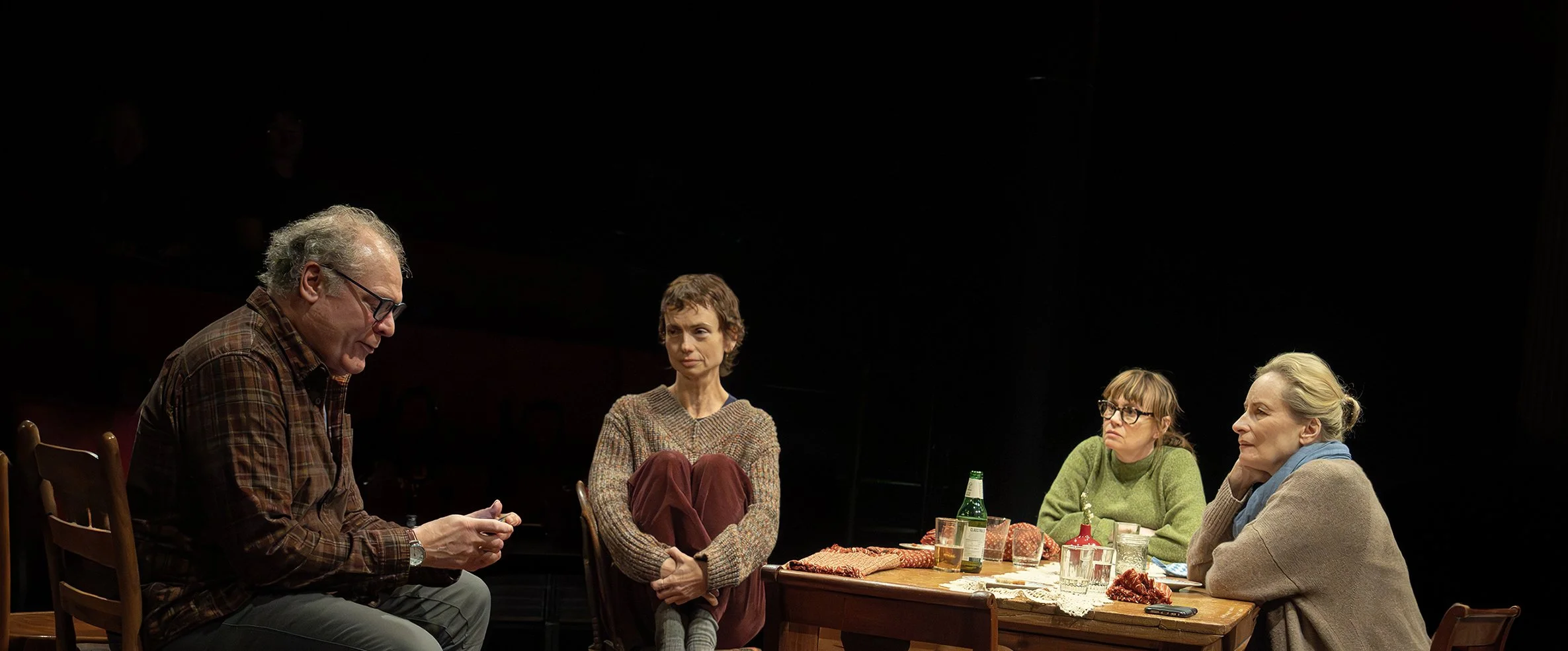
Richard Nelson’s Apple family returns to the Public Theater: from left to right, siblings Richard (Jay O. Sanders), Marian (Laila Robins), Barbara (Maryann Plunkett), and Jane (Sally Murphy).
Since 2010’s That Hopey Changey Thing, Off-Broadway theatergoers have fretted over American politics alongside the Apple family, denizens of the Hudson Valley village of Rhinebeck. With We’ll See now at the Public Theater, playwright and director Richard Nelson presents the 13th installment of his “Rhinebeck Panorama” and his eighth Apple play (counting three COVID live streams). Thanks to a familiar and remarkable ensemble, and Nelson’s signature fly-on-the-wall naturalism, We’ll See achieves its quiet, bittersweet power by placing larger political concerns alongside the hyper-specific and finely drawn relationships of its characters.
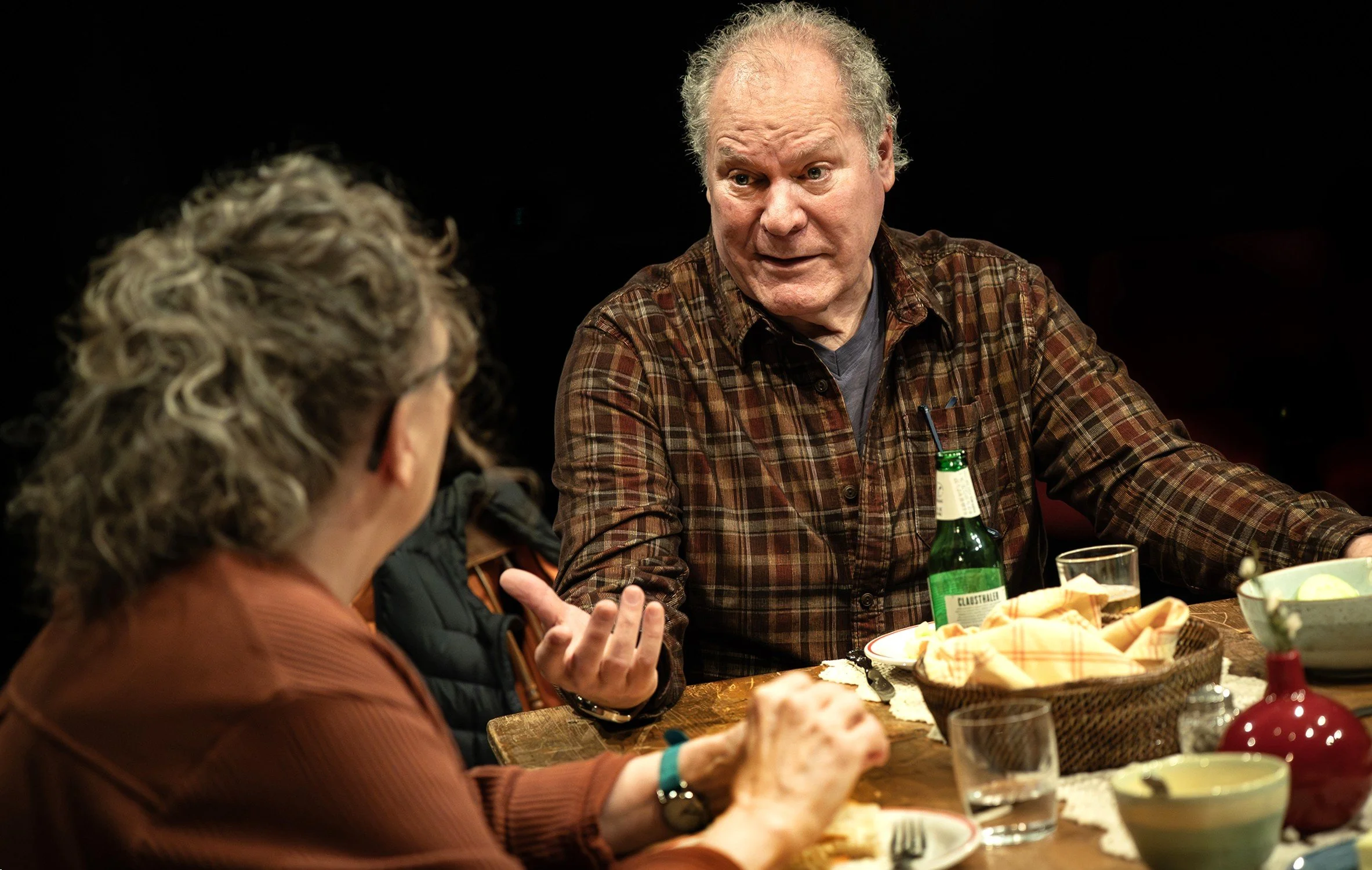
Plunkett (left) and Sanders have been part of Richard Nelson’s Apple plays since the beginning.
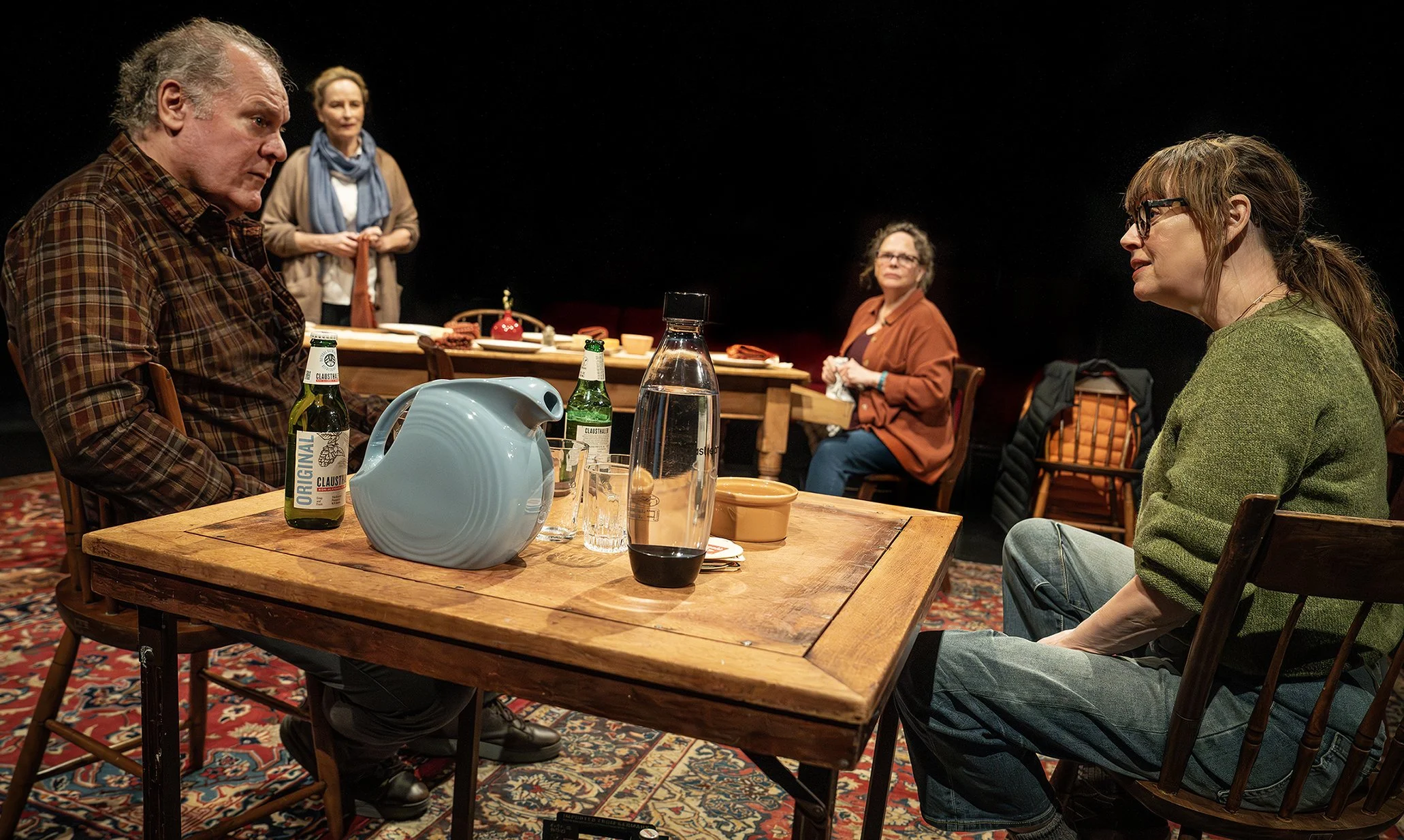
Fans of the Richard Nelson Non-Cinematic Rhinebeck Universe will feel a twinge of excitement at the customary opening sequence—the actors arranging furniture and tableware as music plays. These plays almost always take place around a meal, this time on election night 2026 at the home shared by schoolteacher sisters Barbara (Maryann Plunkett) and Marian (Laila Robins). We’ll See opened the night of the midterms, so it has played to audiences before, during, and after the blue tsunami. The night I attended, after results were in, the audience was giddy at each nervous mention of how things might turn out.
Joining Barbara and Marian for dinner are younger sister Jane (Sally Murphy) and brother Richard (Jay O. Sanders); Richard’s partner Yvonne (Yvonne Woods) is running late from the city. Talk meanders or veers off on tangents, while sibling dynamics emerge from small reactions and jokes. Periodically, Jennifer Tipton’s lights dim and music plays (sound design by Scott Lehrer); when the lights come back up, a few minutes have passed and the family is in the midst of a new conversation:
Richard: Barbara, what are you going to do in your retirement? Oh I know…
Barbara: What?
Jane: Don’t listen to him. It’s a joke. Look at his face.
Richard: The same as you do now. Tell everyone else what to do. But always in a nice way.
Marian: Richard.
Barbara: Marian was asked to run for the Town Board. They didn’t ask me.
Richard: She wrote me about this. [Smiles]
Marian: Why is that funny?
Richard: I couldn’t control my mouth.
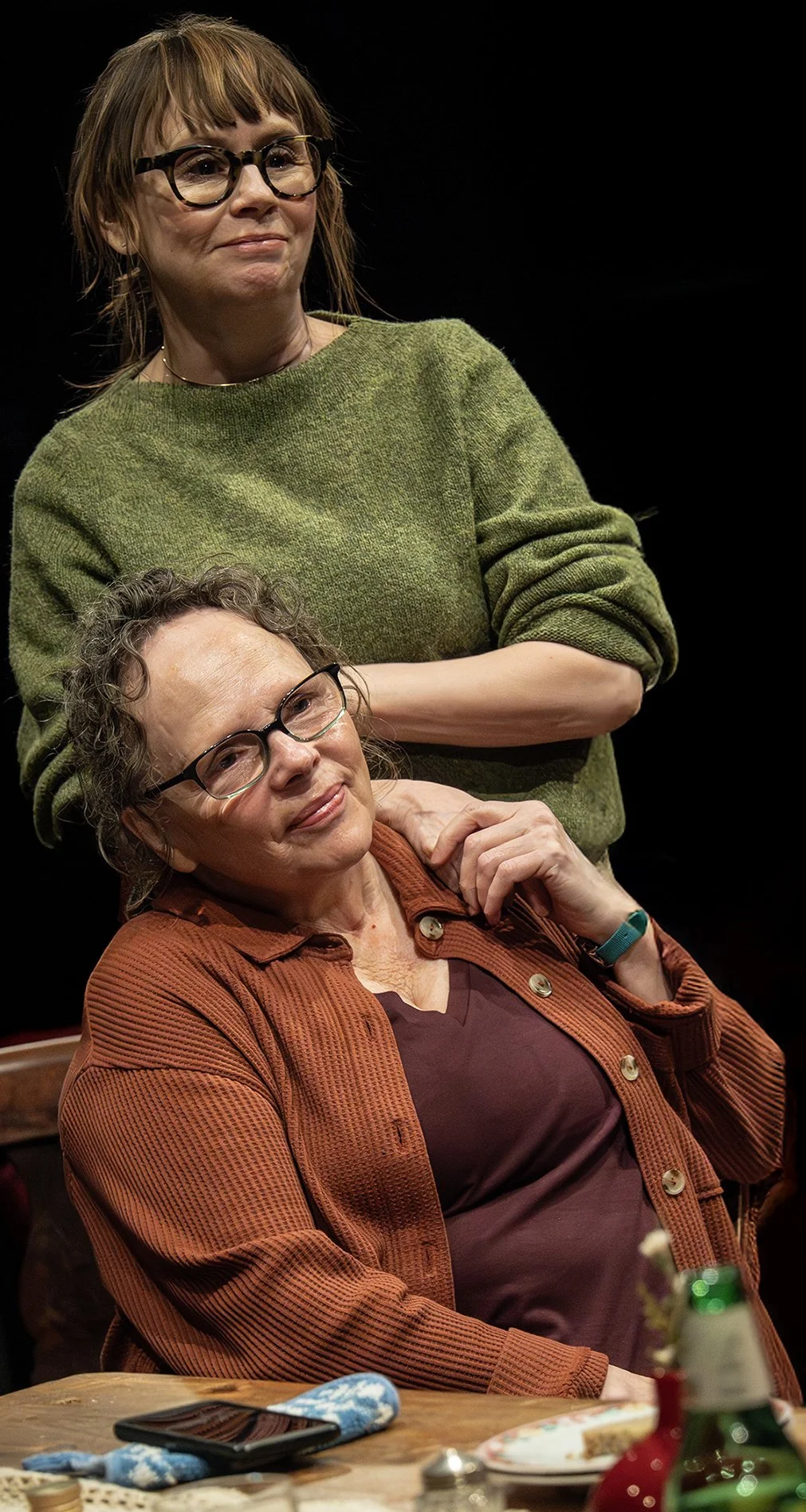
The play takes place on election night 2026, and as the siblings have dinner, they discuss politics, among other things, but don’t name Trump, referring to him only as “himself.” Photographs by Joan Marcus.
Sometimes they sing (Barbara shares an Irish folk song about immigration that she is learning for her ESL students) or read passages from Walt Whitman or Middlemarch. Sometimes subjects are broached more directly: after tiptoeing around it, Richard finally asks what forced Barbara into retirement (a politically charged incident with a student).
Even ostensibly banal interactions are fraught and laden with interpersonal meaning: Nelson, after all, says that he doesn’t write characters—he writes relationships. And this works so well because, between these actors, the relationships feel completely lived-in. Simply track the facial expressions and reactions of those not speaking and you could follow the play without hearing a word (fitting, since a sign at the entrance warns that, given the conversational volume, you may not catch every word).
Robins’s Marian is confrontational and biting—for example, never missing a chance to belittle the acting ambitions of Jane’s partner, Tim—yet her psychic wounds peek through when her late daughter’s name comes up. Plunkett, in a characteristically masterly performance, allows Barbara’s toughness and deep vulnerability to exist side by side. Sanders, who, like Plunkett, has appeared in every Rhinebeck Panorama play, taps into a melancholy in Richard that isn’t apparent at first glance.
Jane, temporarily in an uncomfortable living situation with Tim and his adult daughter, is baffled by the younger generation, and her confusion seems to be curdling into bitterness, which Murphy captures not only in her semi-coherent speeches on the subject but also in stray interjections. Finally, Woods’s Yvonne, a stage actress in remission from cancer, shifts the siblings’ dynamic with her arrival, and her theory of “Dr. Theater”—the temporary healing powers of performing—emerges as the play’s beating heart. In a nice Easter egg, she at one point discusses playing Sonya in Uncle Vanya, a role that Woods herself played brilliantly under Nelson’s direction in 2018.
National despair, emanating from President Trump (or “himself,” as he’s referred to throughout in an effort not to utter his name), bleeds into personal despair, yet the election offers both national and personal hope. These folks around the kitchen table can be seen as representative types—stand-ins for liberal America—but they are so specifically and relentlessly themselves that the play never tips into allegory.
We’ll See, indeed: with the play frozen at 9 p.m. on Nov. 3, 2026, the Apples don’t know that the country has, at long last, overwhelmingly rejected “himself.” But the audience does, and it’s hard not to wish we could pull up a chair and tell them.
We’ll See runs through Oct. 23 at the Public Theater (425 Lafayette St.). Evening performances are at 7:30 p.m. Tuesday through Sunday; matinees are at 1:30 p.m. Saturday and Sunday. Tickets are available by visiting publictheater.org.
Playwright & Director: Richard Nelson
Scenic Design: Jason Ardizzone-West
Costume Design: Susan Hilferty
Sound Design: Scott Lehrer
Lighting Design: Jennifer Tipton
If you enjoyed this review, please click on the Like button below.
