
In The Body of Mary: A Play in Three Acts (of God), Katie Cappiello reimagines the Virgin Mary’s origin story to examine the struggle over women’s bodies, reproduction, and who controls the narrative. Written and directed by Cappiello, this comedy brings together three Marys whose lives, separated by centuries, illuminate the forces of patriarchal control, violence, and repression.
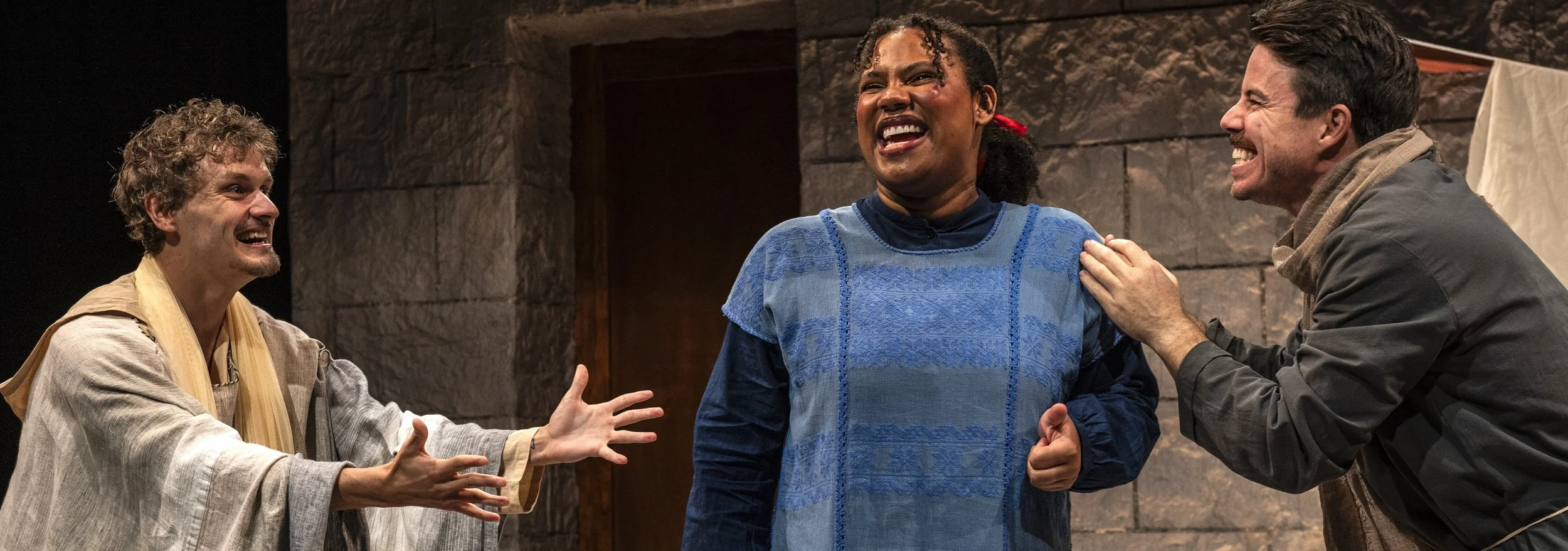
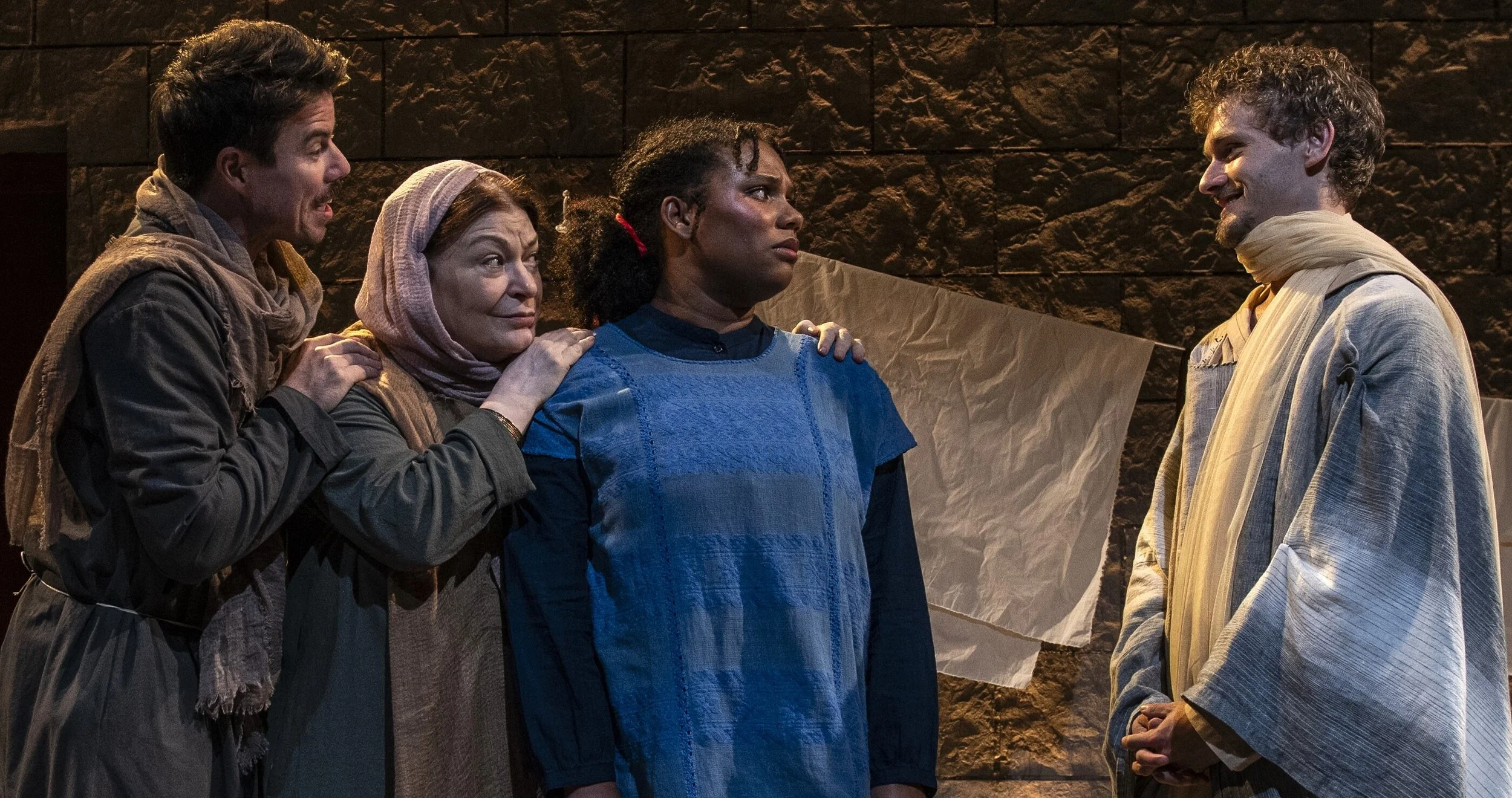
Act One, entitled “The Virgin,” is set in the ancient world circa 4–6 BC and takes us to when Mary learns that she has been chosen to become the mother of God. Drawing on Holy Writ, Cappiello takes creative license to imagine how a young woman might react when confronted by the angel Gabriel and told that she has been selected for this role. Cappiello scratches beneath Mary’s psyche as she processes the heavenly news. Particularly memorable are the patriarchal mannerisms of Gabriel and Mary’s priest-father Joachim, while her traditionally minded mother Anne seems on board. The crux is Mary’s dawning realization that she may have no choice in fulfilling God’s plan, a conclusion her parents have already reached for her.
Mary: “I have no choice.”
Joachim: “Of course you don’t.”
Anne: “Of course you do! There are always choices. They just don’t always look like you think they’re going to look. Here are your choices, Mary: 1.) You accept this as your sacred role—or 2.) You just put up with it and suffer through it.”
Mary soon connects the dots: She hasn’t had her period, and she has been vomiting all morning—a sure sign of “morning sickness.” Gabriel is not entirely in lockstep with Joachim’s insistence that Mary has no choice, but he advances God’s plan. Gabriel and Mary’s parents gradually bring her around to accepting the extraordinary role she will play in mankind’s salvation.
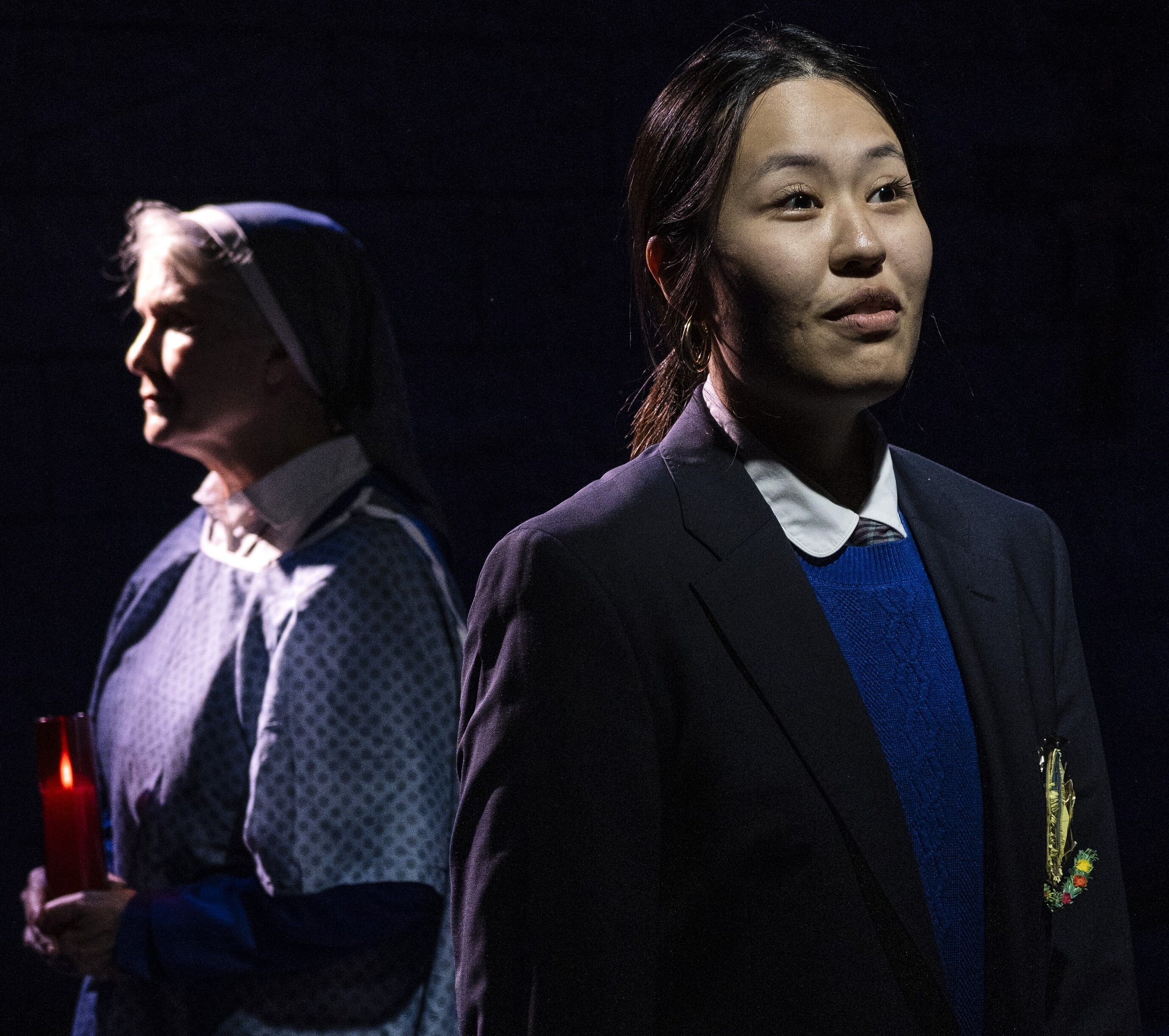
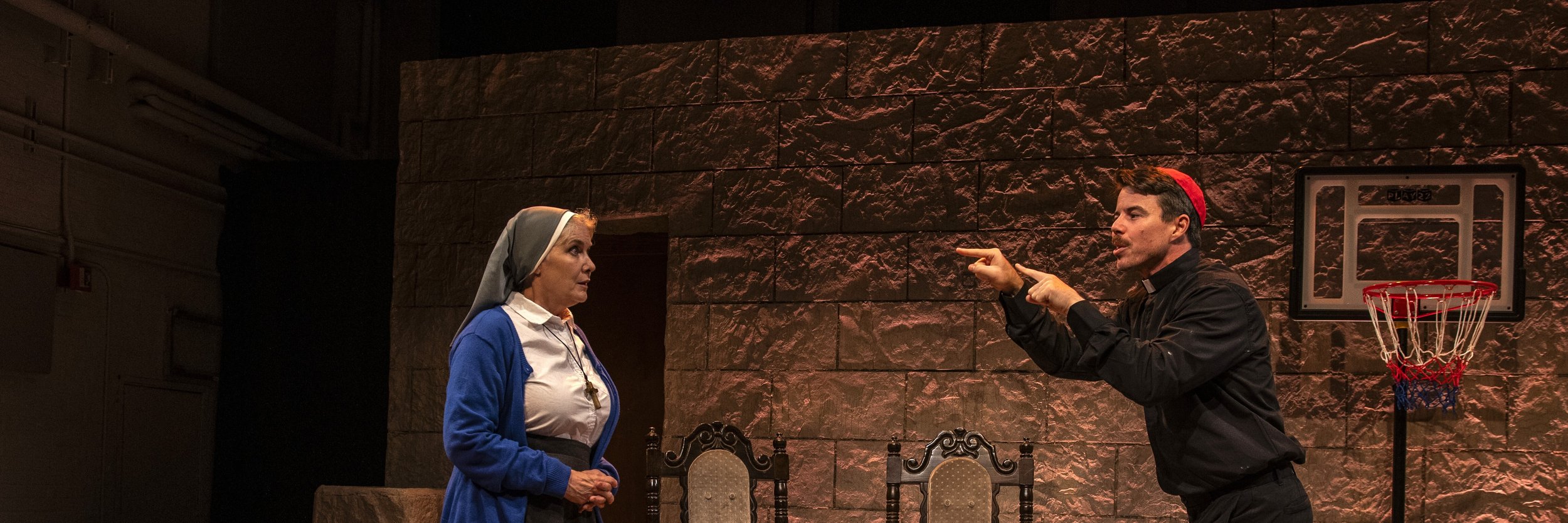
If Act One launches the drama with Christianity’s origin story, Act Two, entitled “The Mother,” leaps five years into the future, to New York City. The lights come up on Cardinal Patrick O’Malley, 48, behind his desk with a huge Bible, smoking aggressively as he prepares a homily, parsing St. Peter’s often-misinterpreted reference to women as the “weaker vessel.” The scene turns when Mother Mary Joseph, 59, of the Immaculate Little Sisters of Perpetual Sacrifice and Martyrdom arrives for her 11:30 appointment. The Cardinal says he has chosen her and her sisters to house abandoned unborn children. She is eager to help—until he explains that these “children” are embryos that “tens of thousands of negligent American parents have abandoned,” leaving them frozen in liquid nitrogen for years. His unsettling solution: “Mother, the Church would like you and your sisters to allow for the implantation of abandoned embryos—unborn children—in your uteri.” Flabbergasted, Mother Mary Joseph argues that her aging sisters are unable to endure pregnancy. But the Cardinal counters that modern science makes implantation possible for menopausal women. O’Malley has apparent support from his secretary, Sister Genoveva, and his priest-friend, Father Donato. Once again, a woman’s body is claimed by an authority that insists it knows what is best for her.
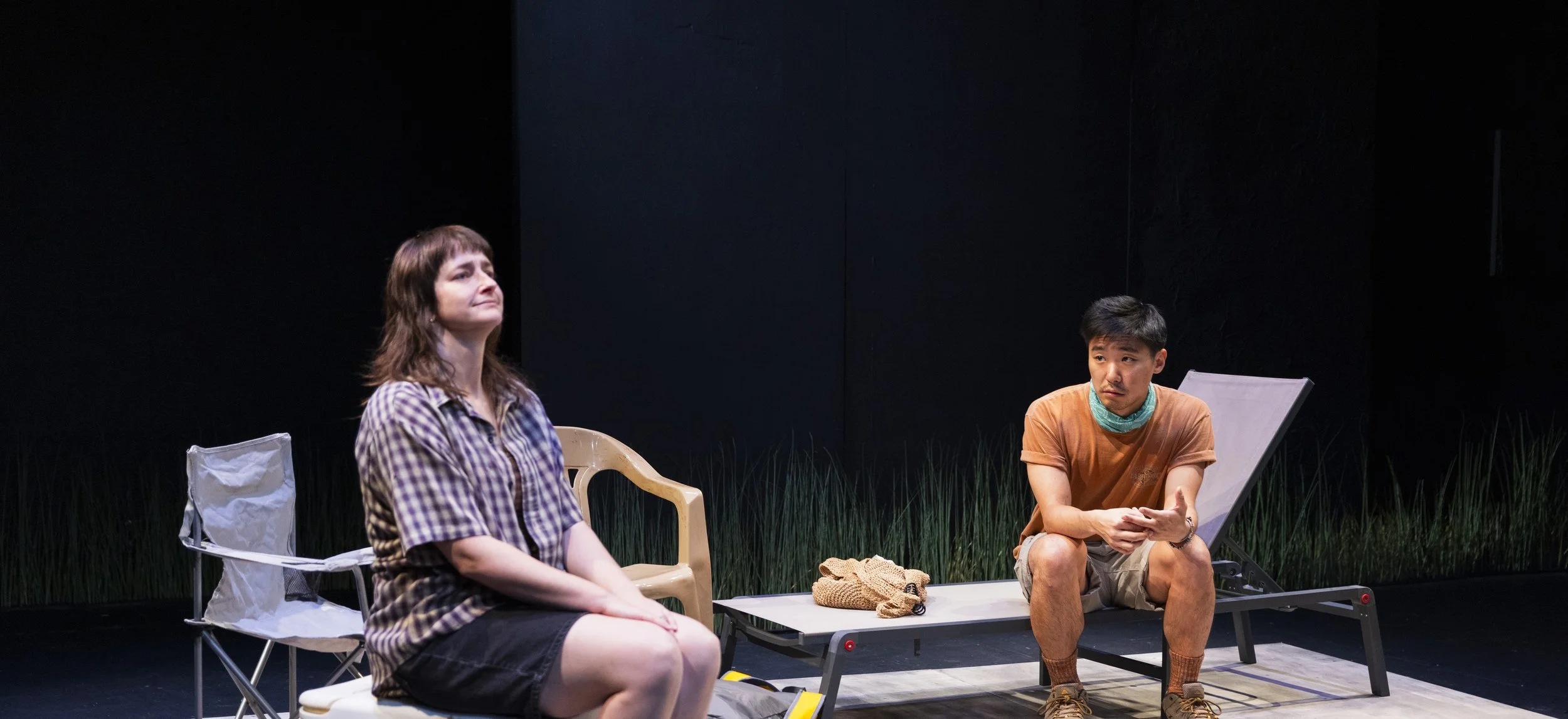
What Act Three lacks in theatrical sparkle, it gains in immediacy to today’s social problems. Aptly entitled “The Dumpster,” it is set in the present day in a Dairy Queen parking lot in the Texas Panhandle, where an employee named Mary enters, lugging garbage to the dumpster and talking on her phone to her friend Nevaeh. Their mundane conversation stops when Mary hears a wailing baby in the dumpster. With Nevaeh still on the phone, Mary climbs in and retrieves the abandoned infant. Nevaeh advises her to call 911, but they reconsider when they realize that DNA testing could lead to the mother’s arrest—and that she could be someone they know, even a friend. Or, as Mary puts it: “She could be us.”
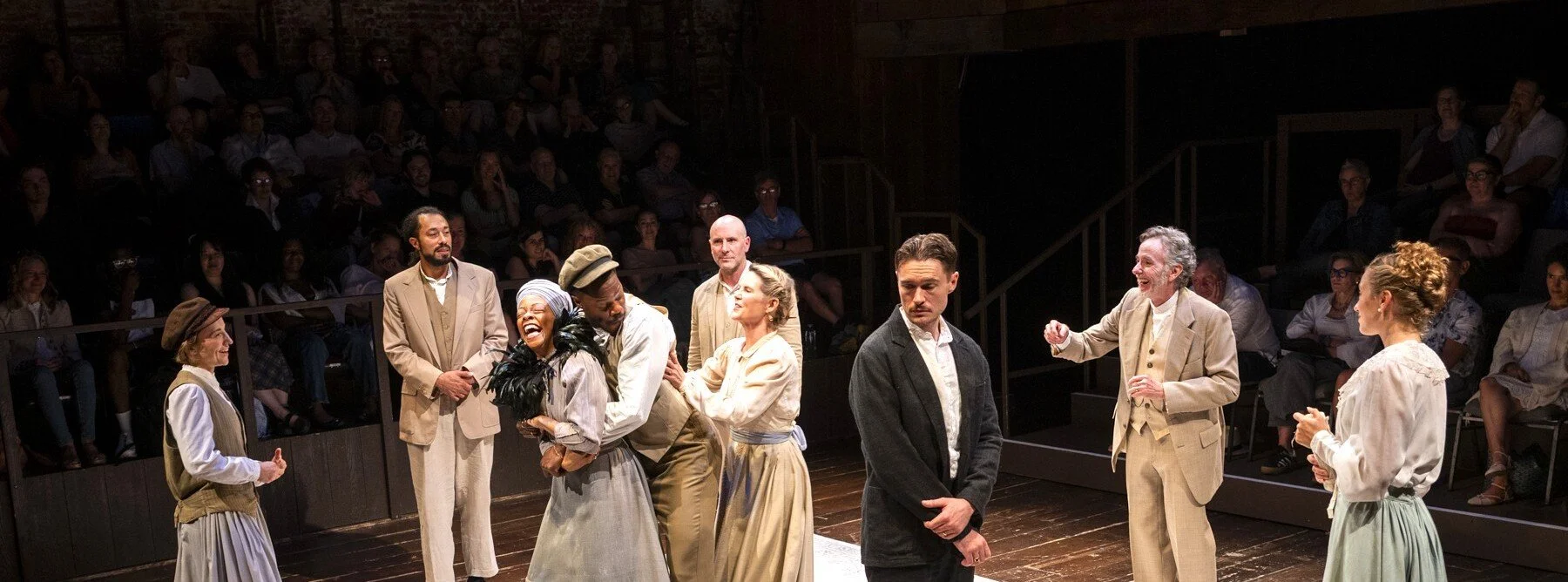
The company operates like a finely tuned machine, with some inhabiting two worlds, others a single persona. Annalisa D’Aguilar grounds Act One in Mary of Nazareth’s realistic reactions to her immaculate conception, countered by Mary Jo Mecca, David Hull, and Ben Cook, whose Anne, Joachim, and Gabriel fill the stage with eccentric, chaotic energy. In Act Two, the cast summons the soul-crushing uniformity of the Catholic Church’s extreme right, sharply contrasting with Tracy Sallows’s vulnerable Mother Mary Joseph; Lu Yi Peng’s transcendent operatic rendition of “Ave Maria” as Mother Mary Joseph undergoes her implantation is a striking bonus. Act Three derives its anguish from the breathless verbal ping-pong between Gracie Conn’s Mary and D’Aguilar’s Nevaeh.
Cappiello’s The Body of Mary explores the moral dilemmas surrounding a woman’s body through theological, institutional, and contemporary lenses. Both eye-opening and entertaining, this Off Broadway play is heaven-sent.
Body of Mary plays at The Gym at Judson (243 Thompson St.) through October 8th. Performance dates and times are somewhat irregular and may be viewed, along with other information, at thebodyofmary.com.
Playwright & Director: Katie Cappiello
Scenic Design: Forest Entsminger
Lighting Design: Lauren Bremen
Costume Design: Jennifer Baumgardner
Sound Design: Florian Staab
If you enjoyed this review, please click on the Like icon below.