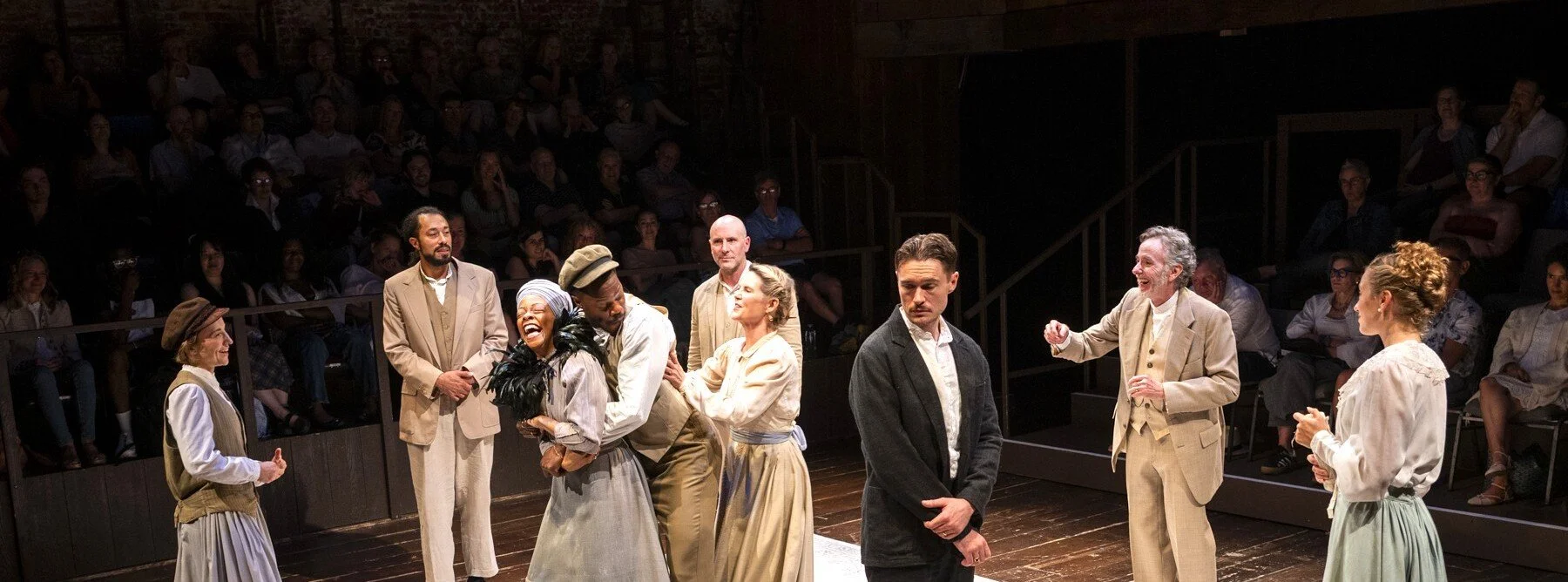
Terence Anthony’s The House of the Negro Insane, set in 1935 inside Central State Hospital, a psychiatric institution built to confine “insane and idiotic negroes,” is a searing drama about confinement, despair, and the possibility of freedom. Structured in seven scenes, the play has a surreal texture that director Daniel Carlton brings to vivid life—a world in which even those resigned to death may dare to imagine freedom beyond the walls.
Telling Tales Out of School
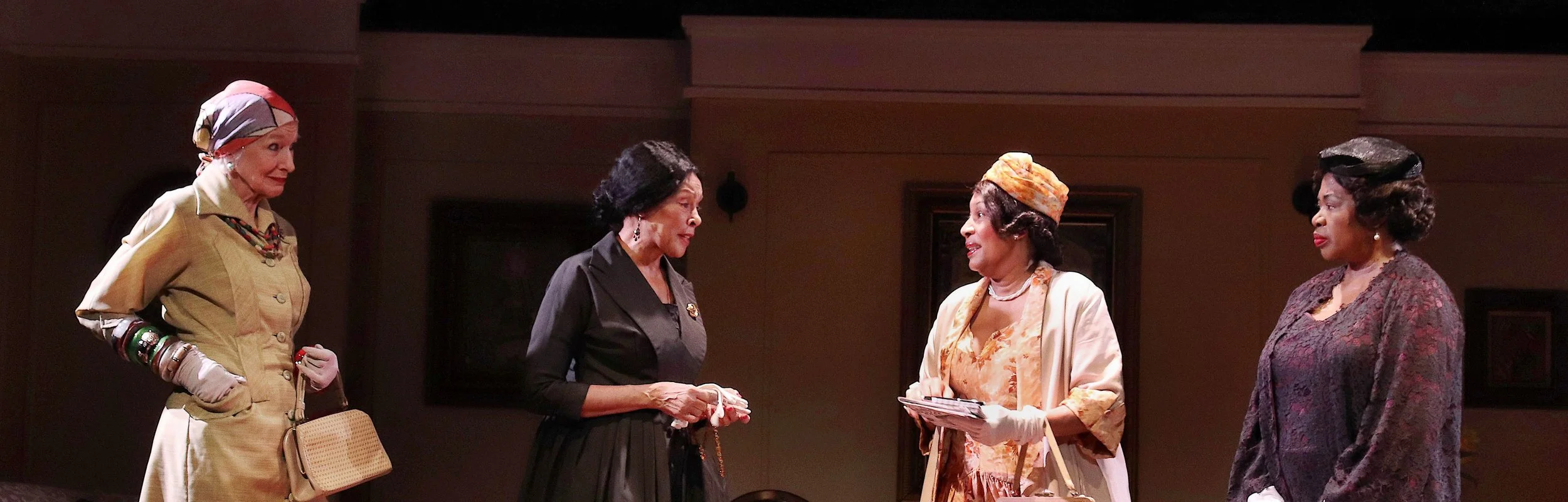
Four matrons of the Harlem Renaissance, all feisty, confident, and accomplished authors, activists, and folklorists, recall racial discrimination and the realities of a man’s world in Wesley Brown’s Telling Tales Out of School. Set in 1954, a seminal moment for civil rights, the play finds the quartet—Zora Neale Hurston (Elizabeth Van Dyke), a black anthropologist and author; Nancy Cunard (June Ballinger), a white, left-leaning Cunard heiress, activist and editor; Jessie Fauset (Richarda Adams), a black editor and poet; and Nella Larsen (Petronia Paley), a biracial former nurse and novelist—becoming reacquainted in Brown’s imagined reunion.