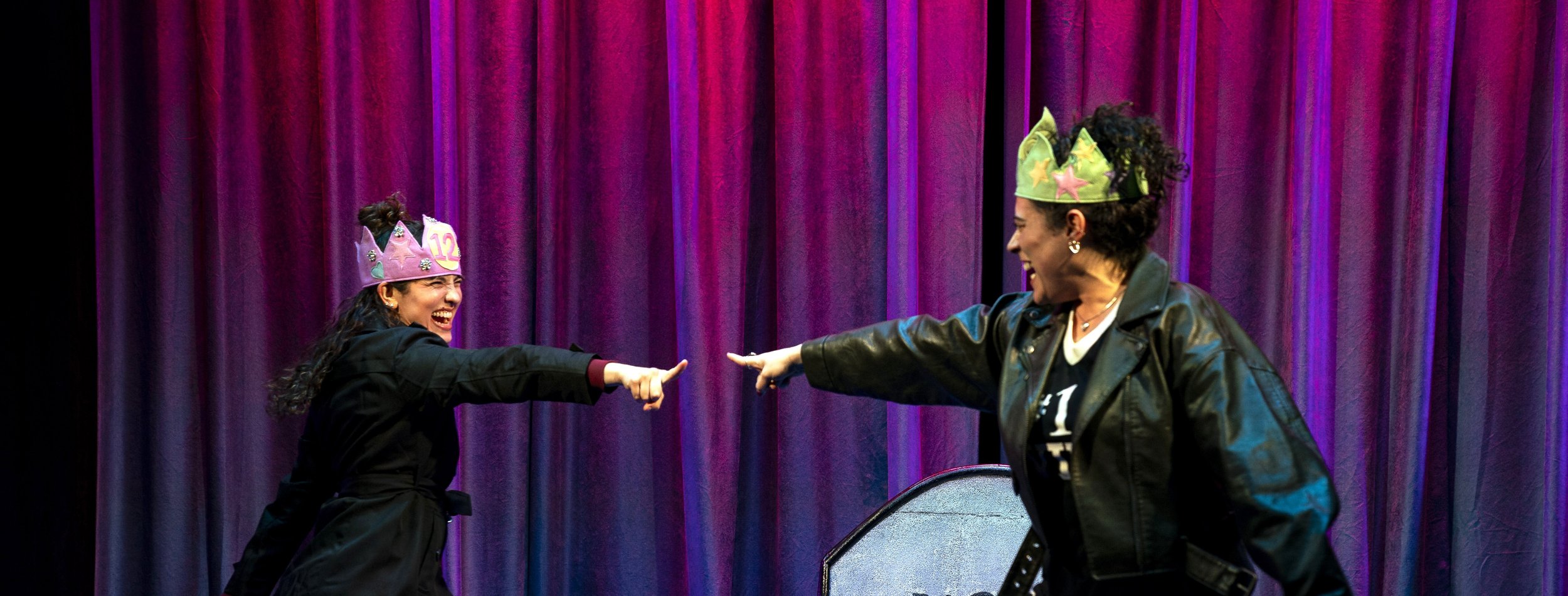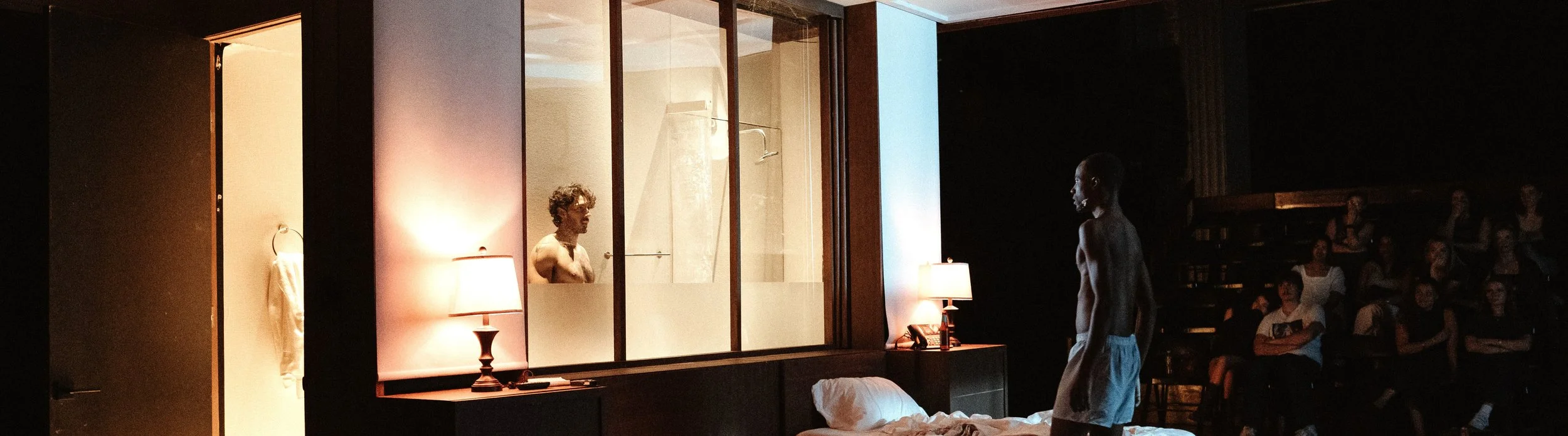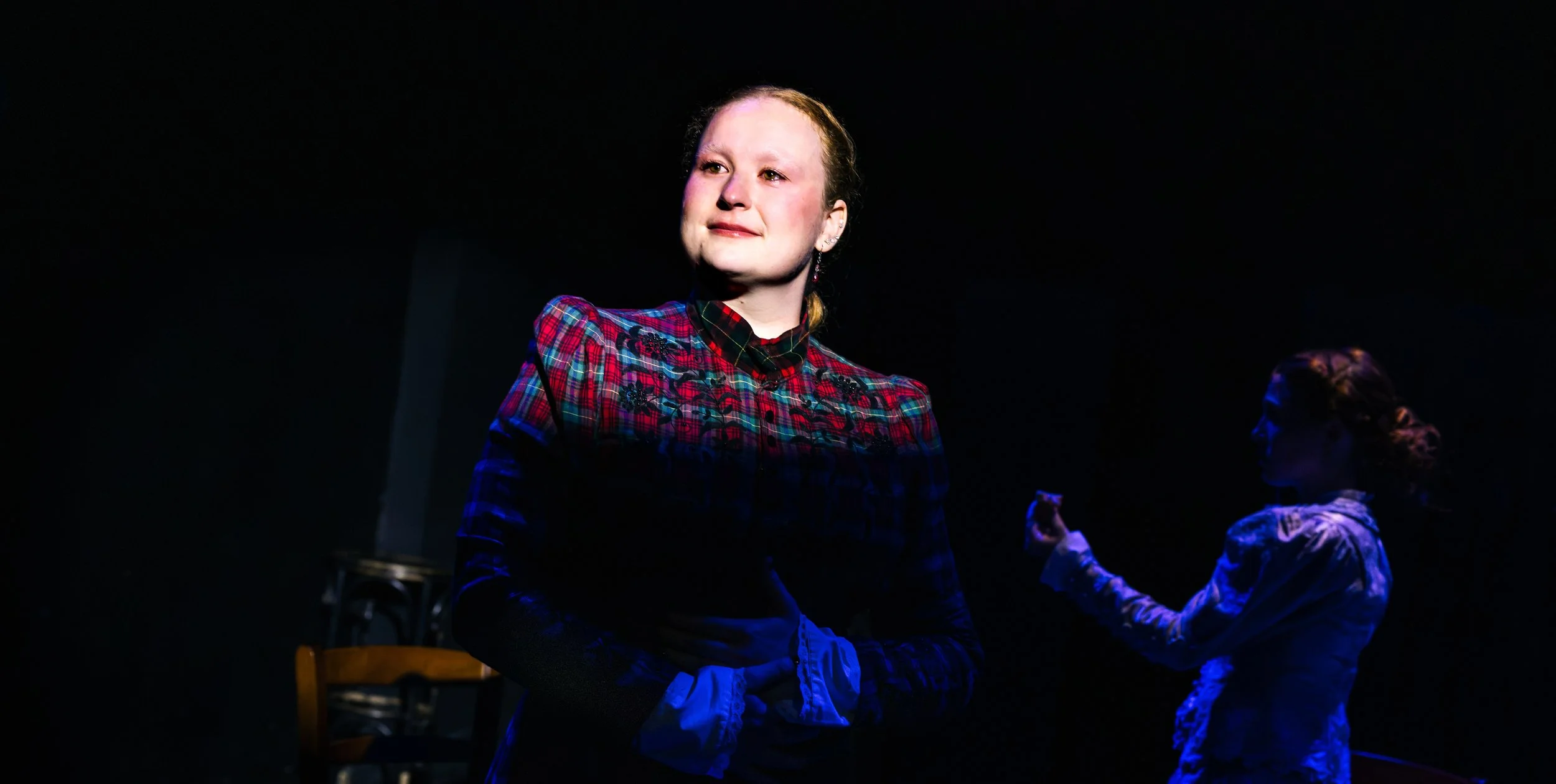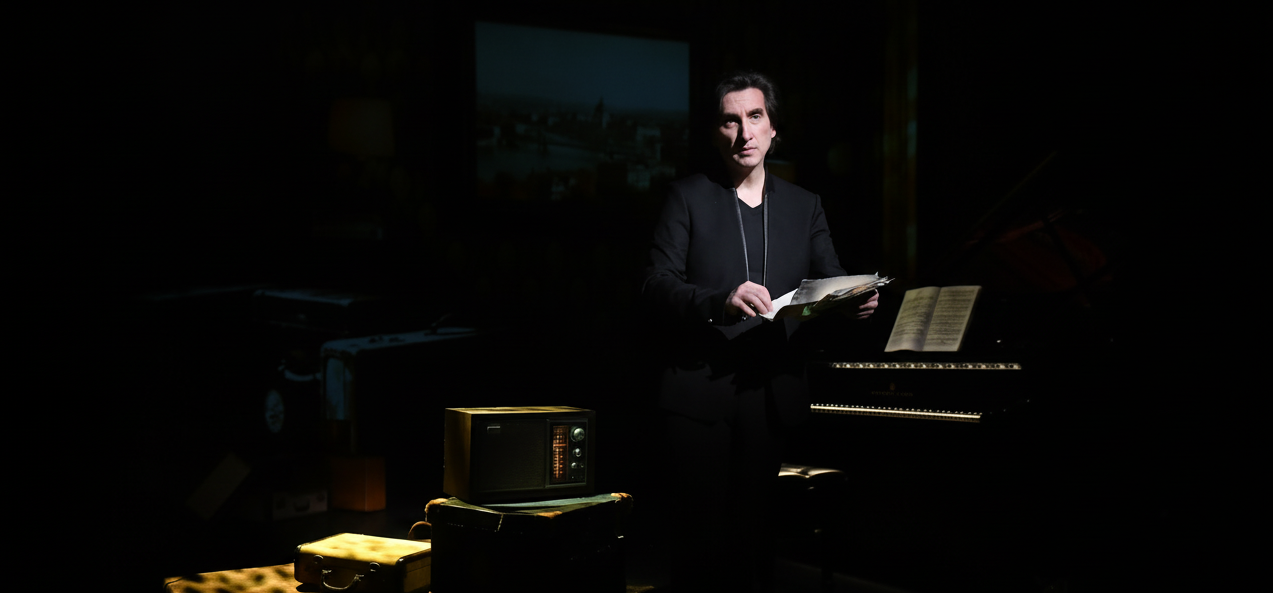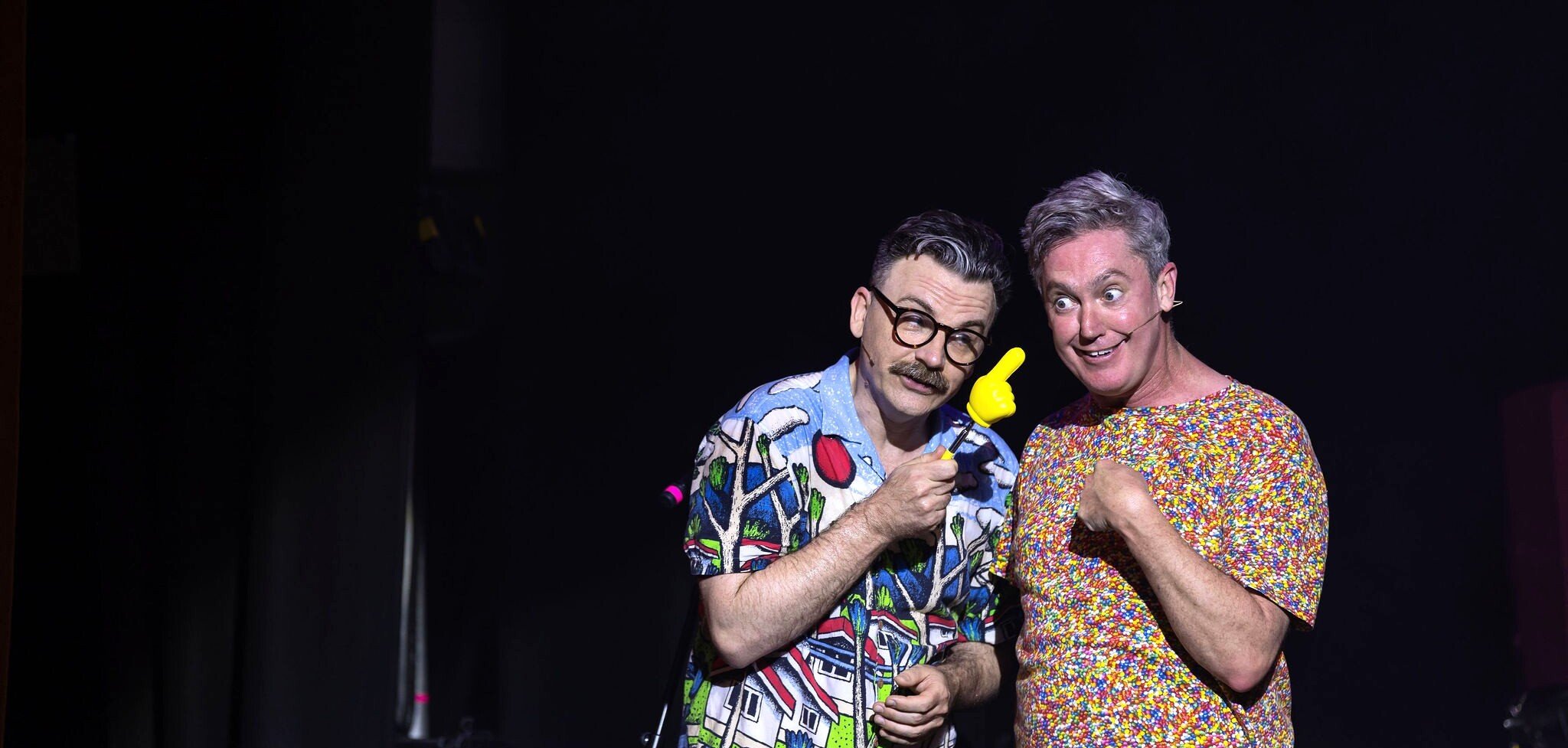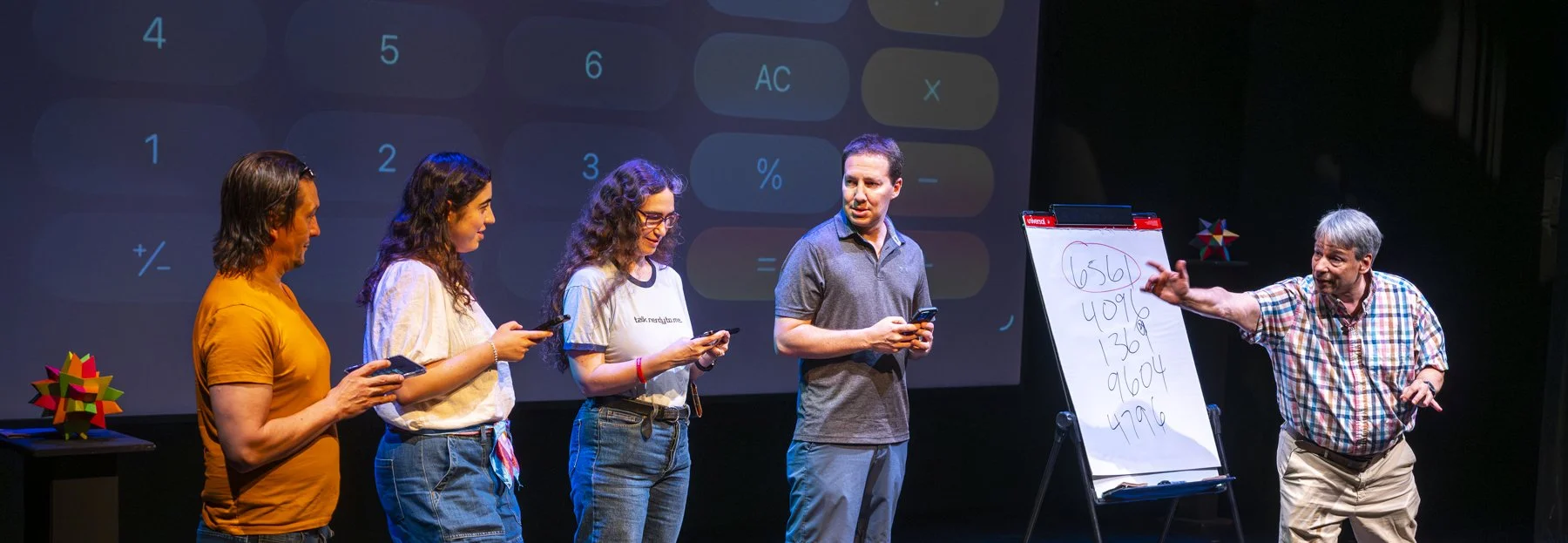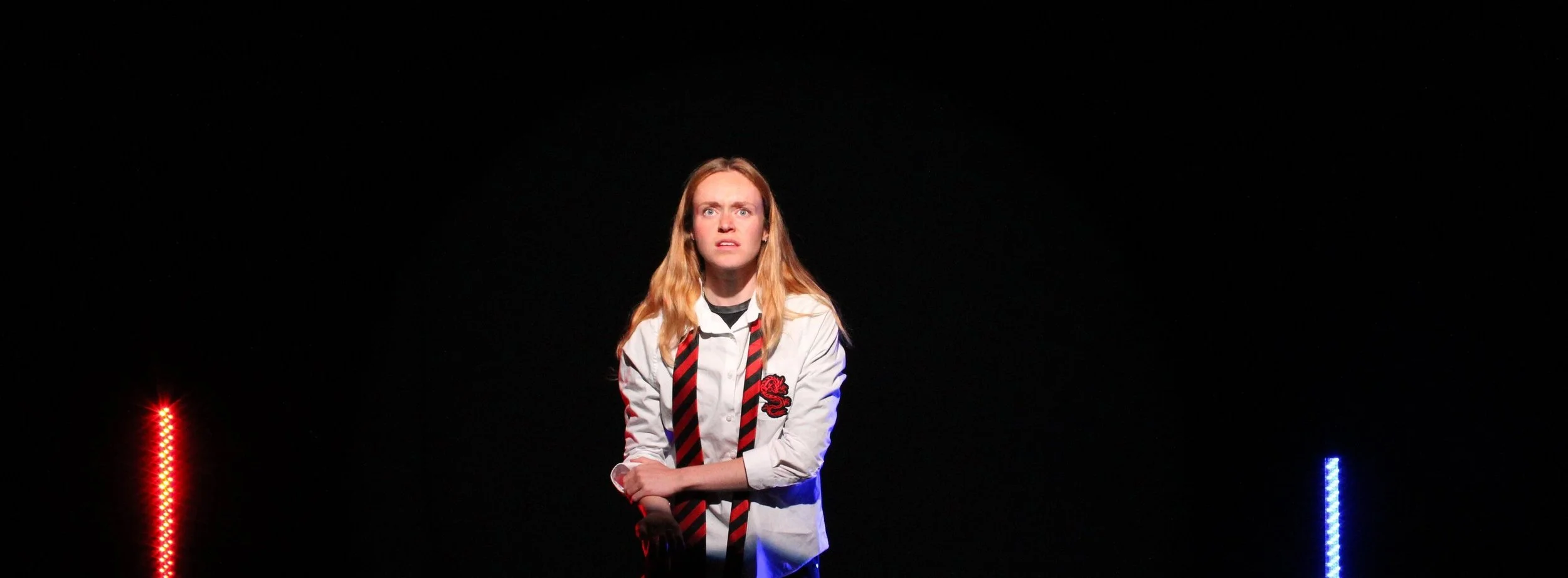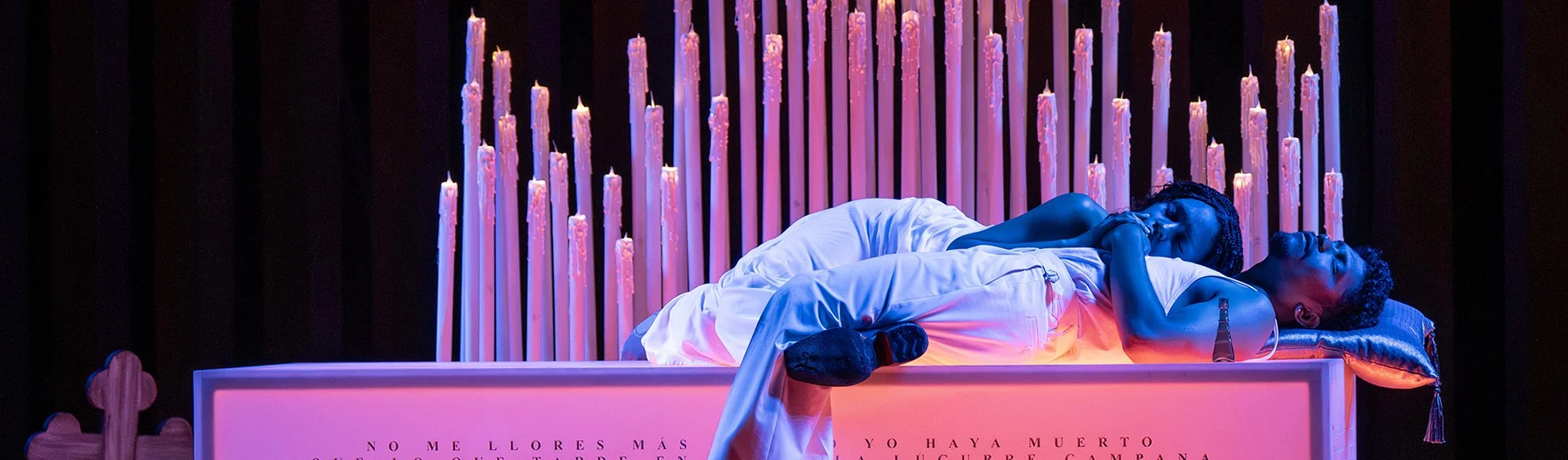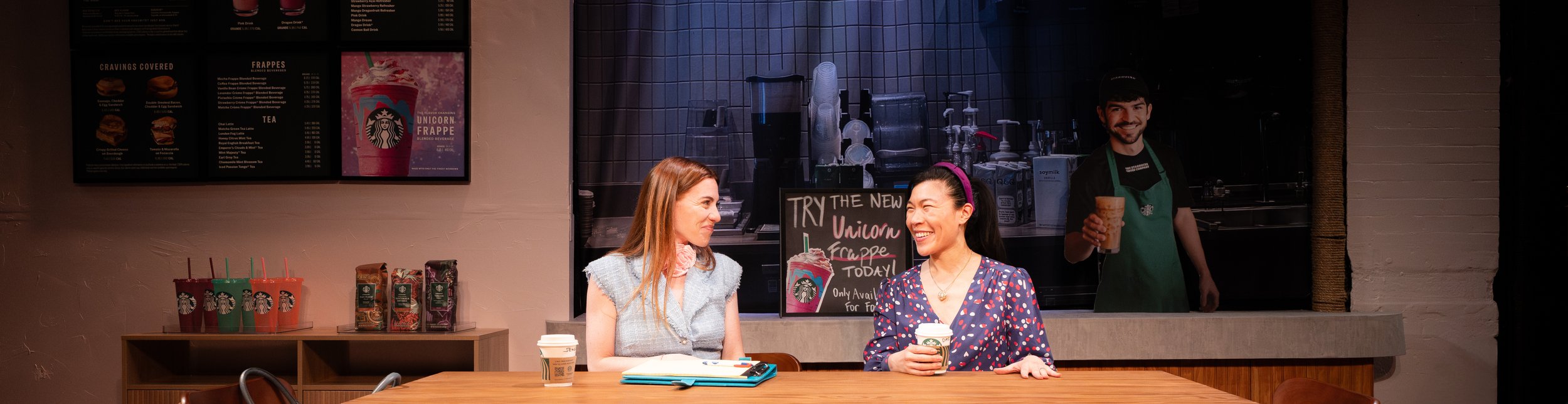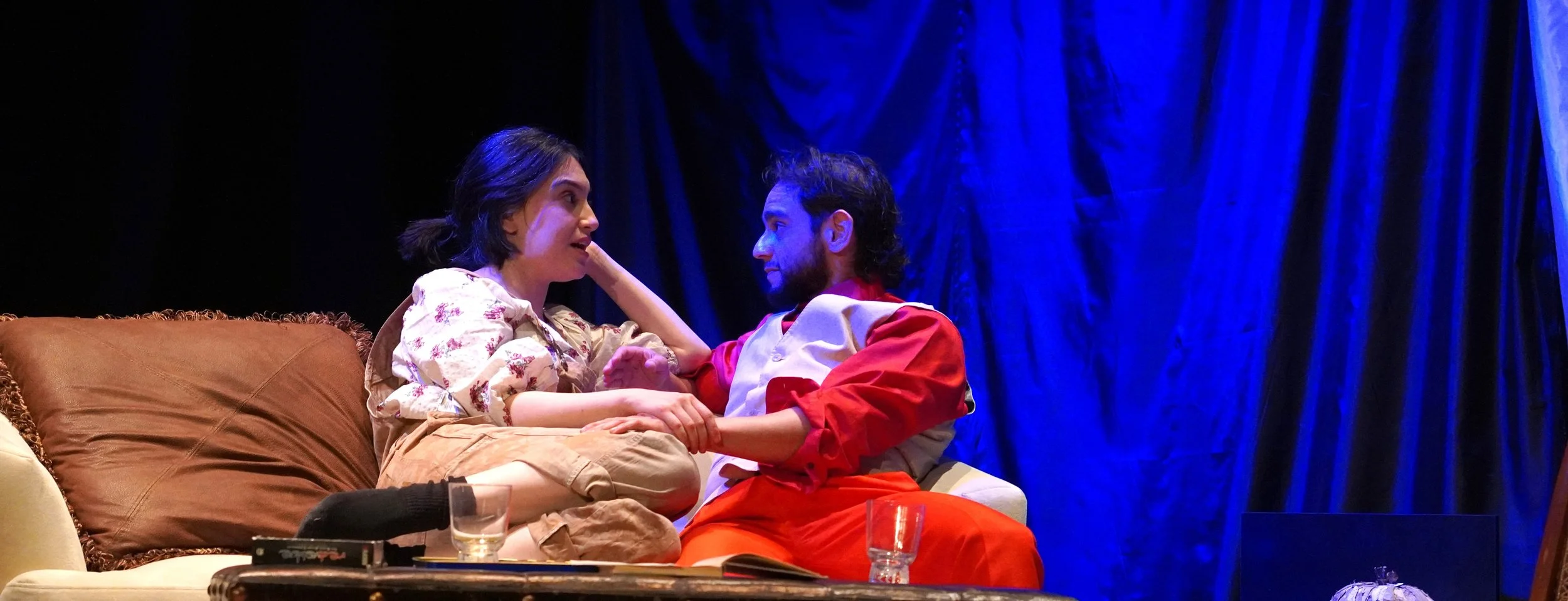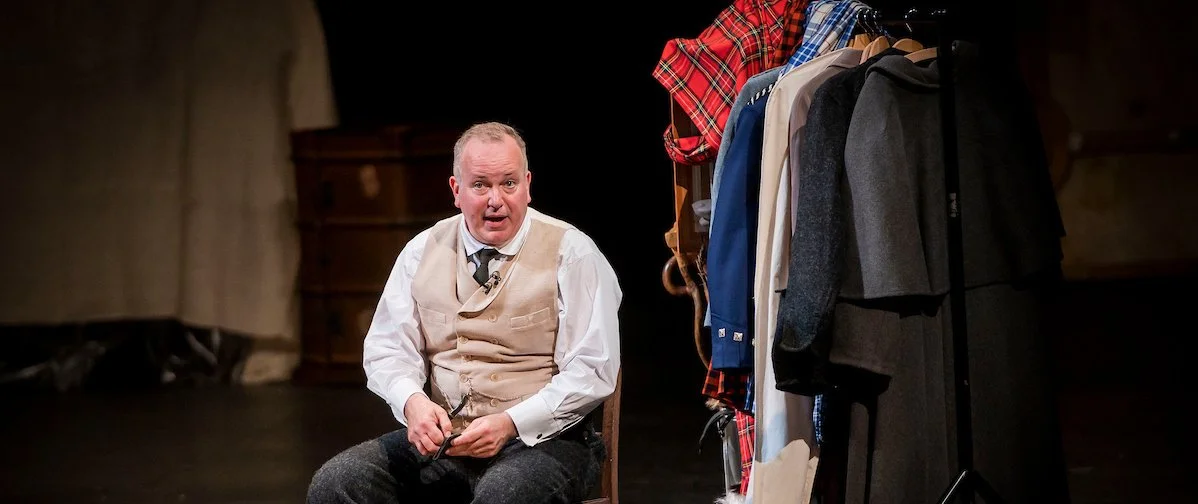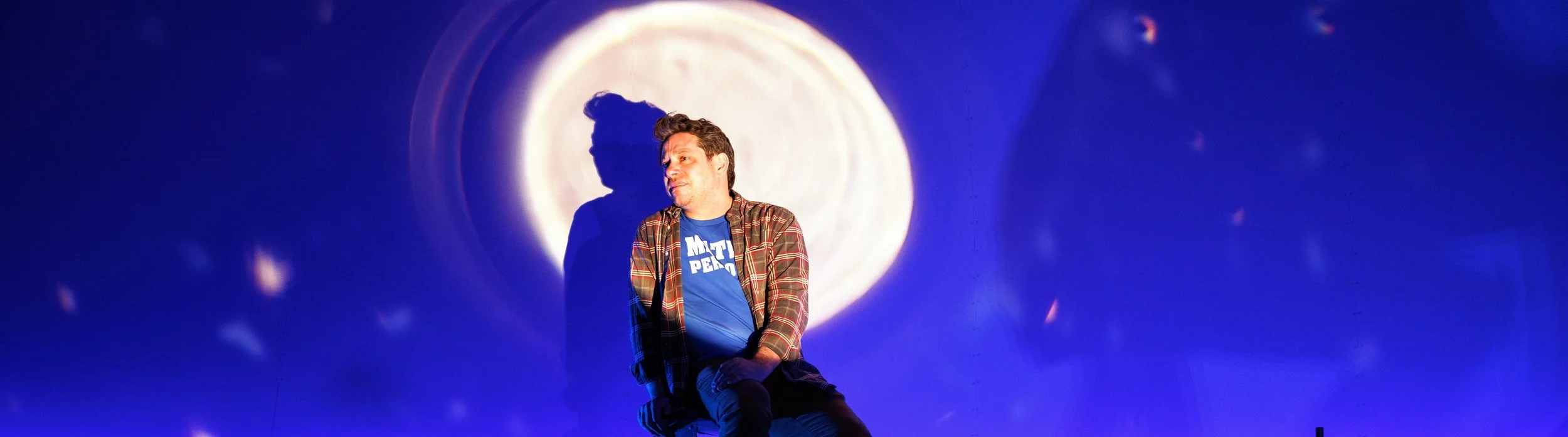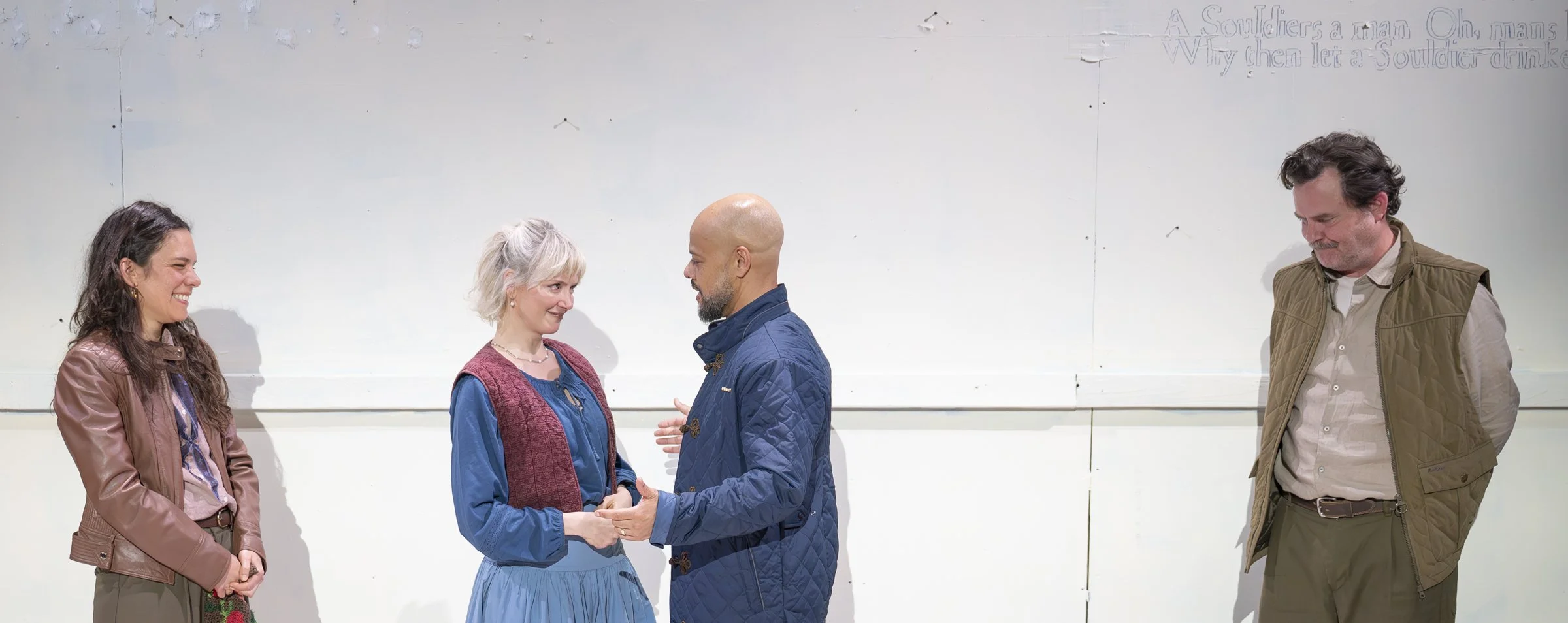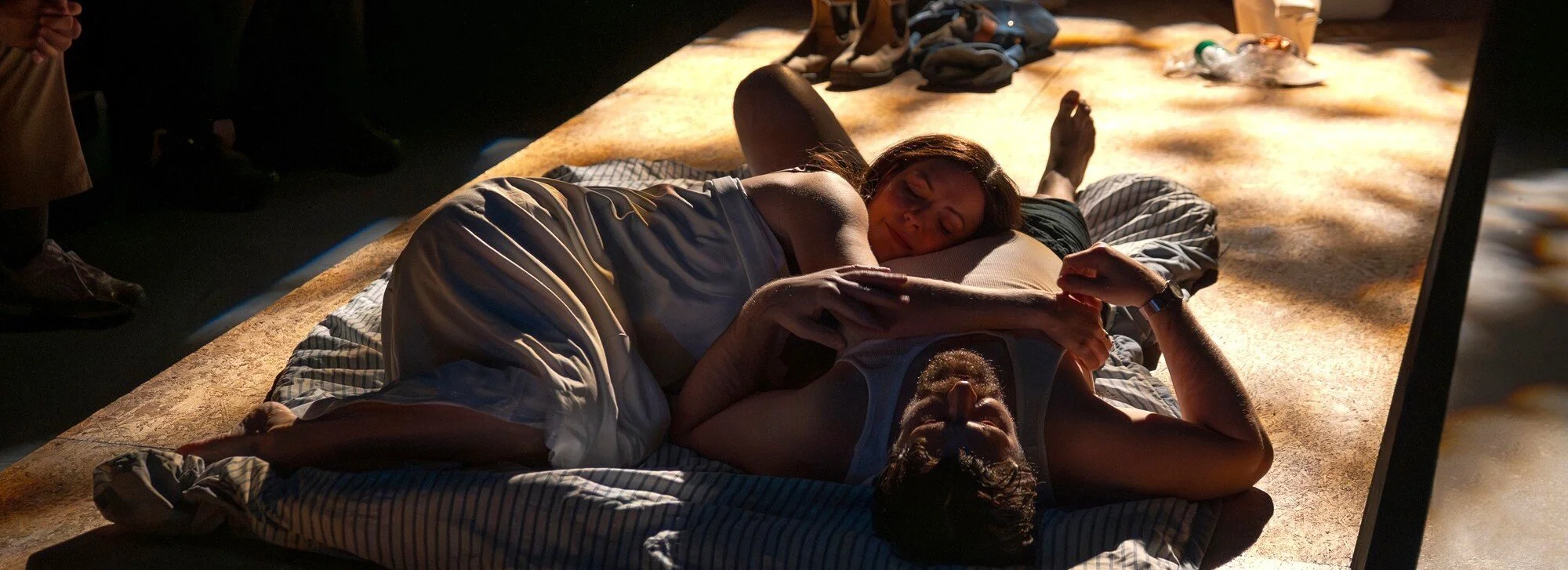
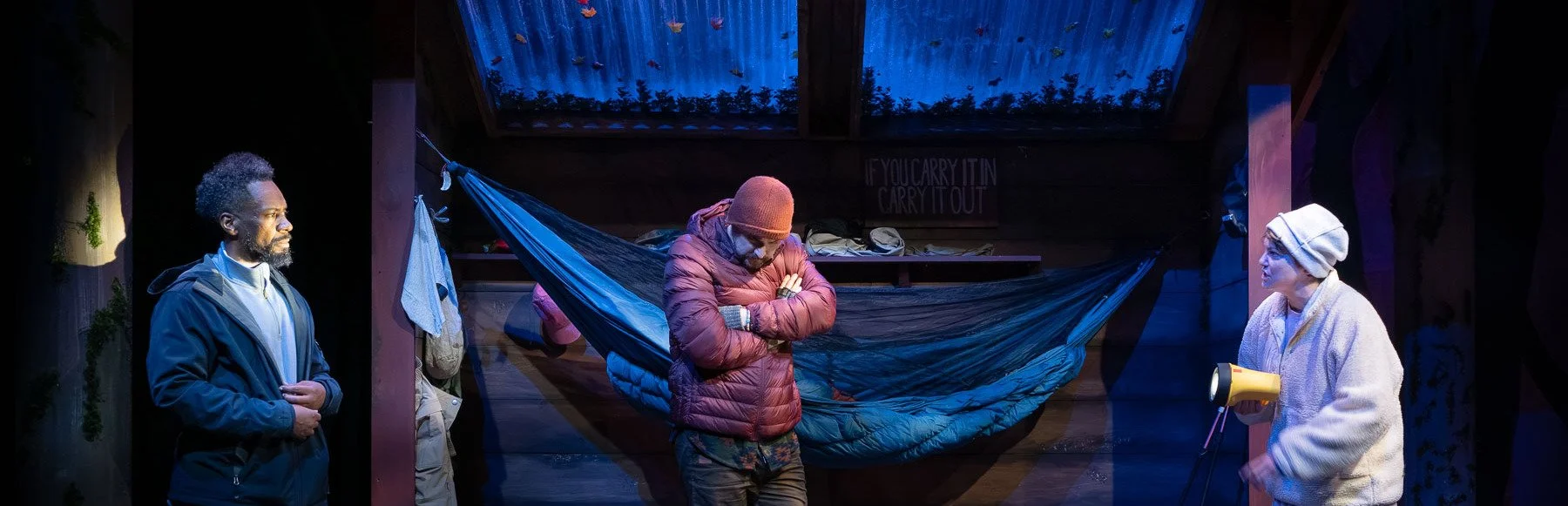
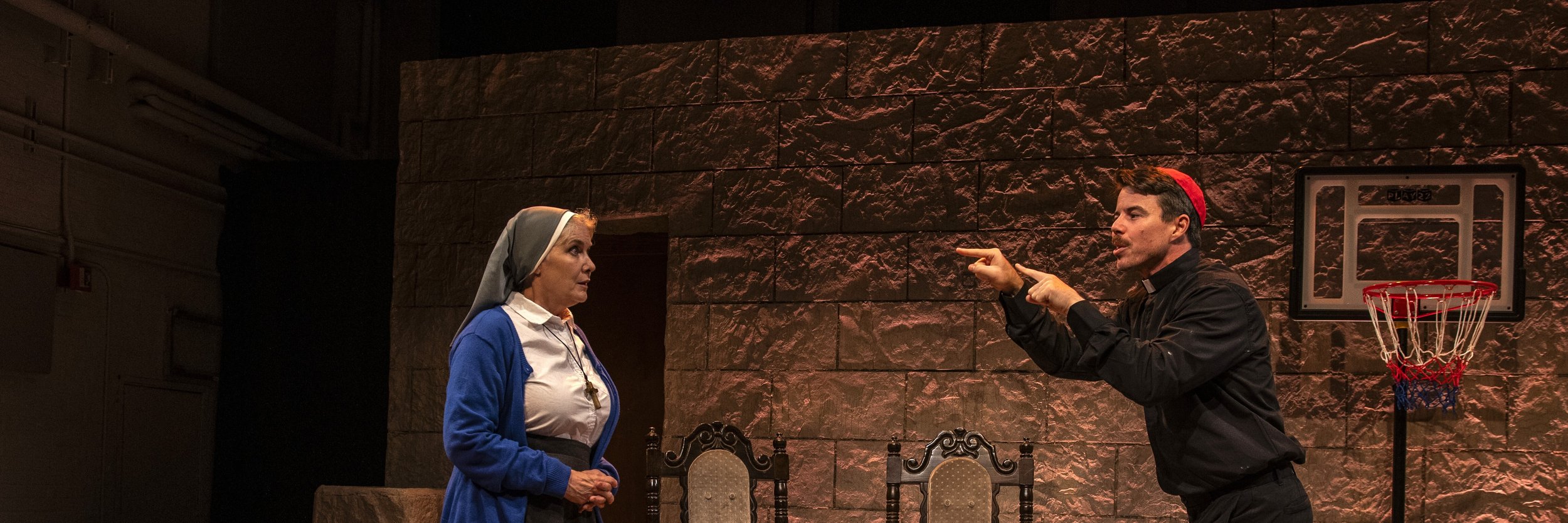
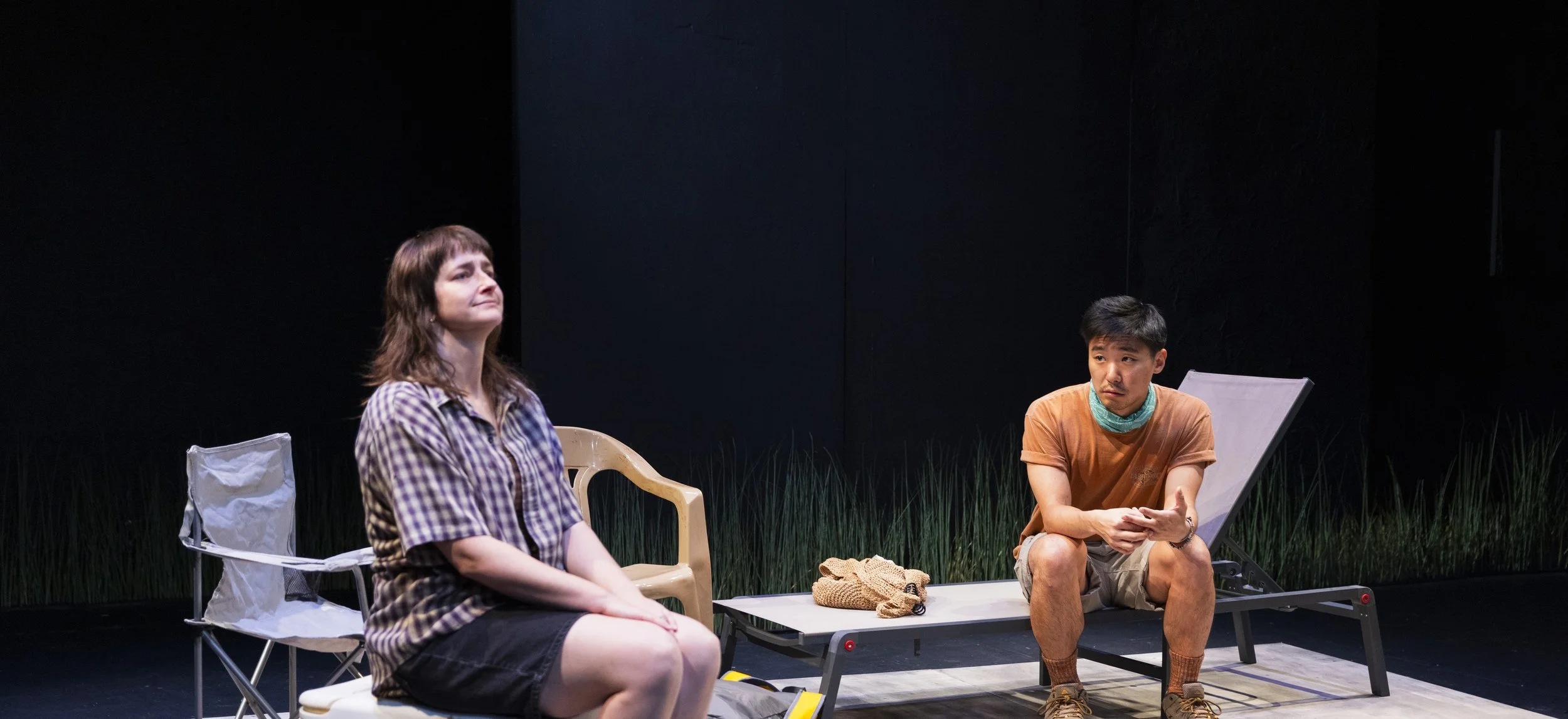
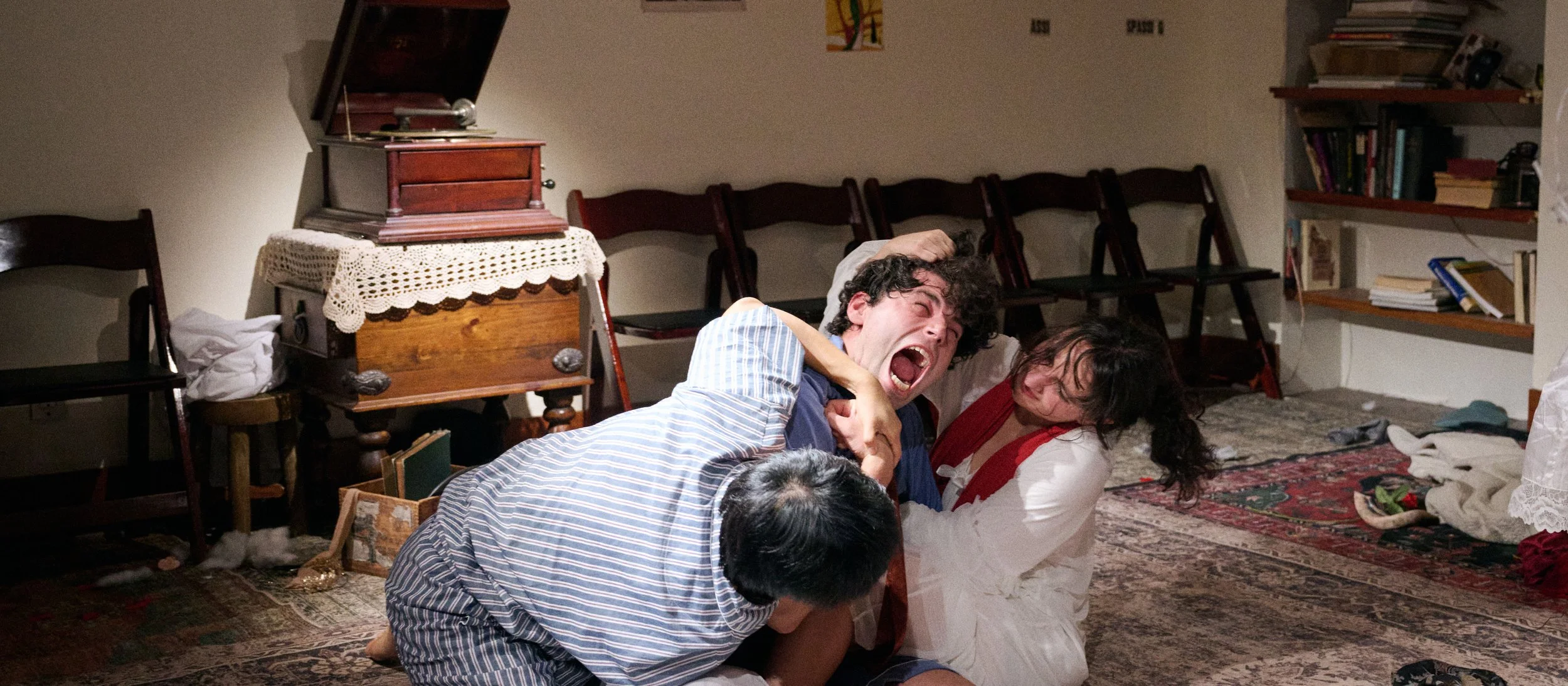
The Bad Daters, by Ireland-born New Yorker Derek Murphy, arrives Off Broadway with a winning blend of sharp Irish wit and disarming emotional honesty, transforming a premise about romantic misfires into something unexpectedly tender. Under the deft direction of Colin Summers, and buoyed by finely tuned performances from Kate Arrington and Shane McNaughton, this U.S. premiere proves as affecting as it is entertaining—a love story that earns its poignancy without sacrificing its bite.
Cumulo
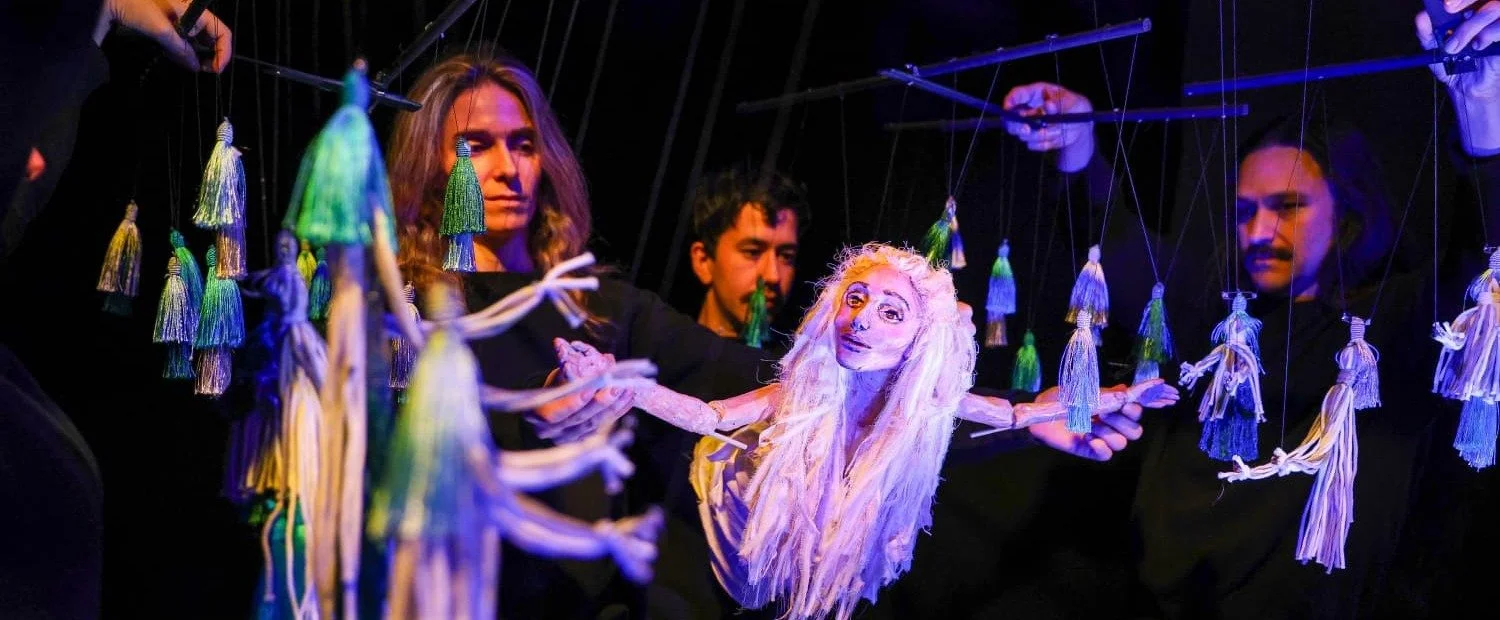
In Cumulo, creator Emily Batsford conjures a visually arresting, nonverbal puppetry work that transforms a simple free fall into a poetic meditation on autonomy and self-reclamation. Inspired by Batsford’s recurring nightmares of falling, the piece asks: how does one assert identity under circumstances beyond one’s control, when stability itself feels elusive?
Lost in Del Valle
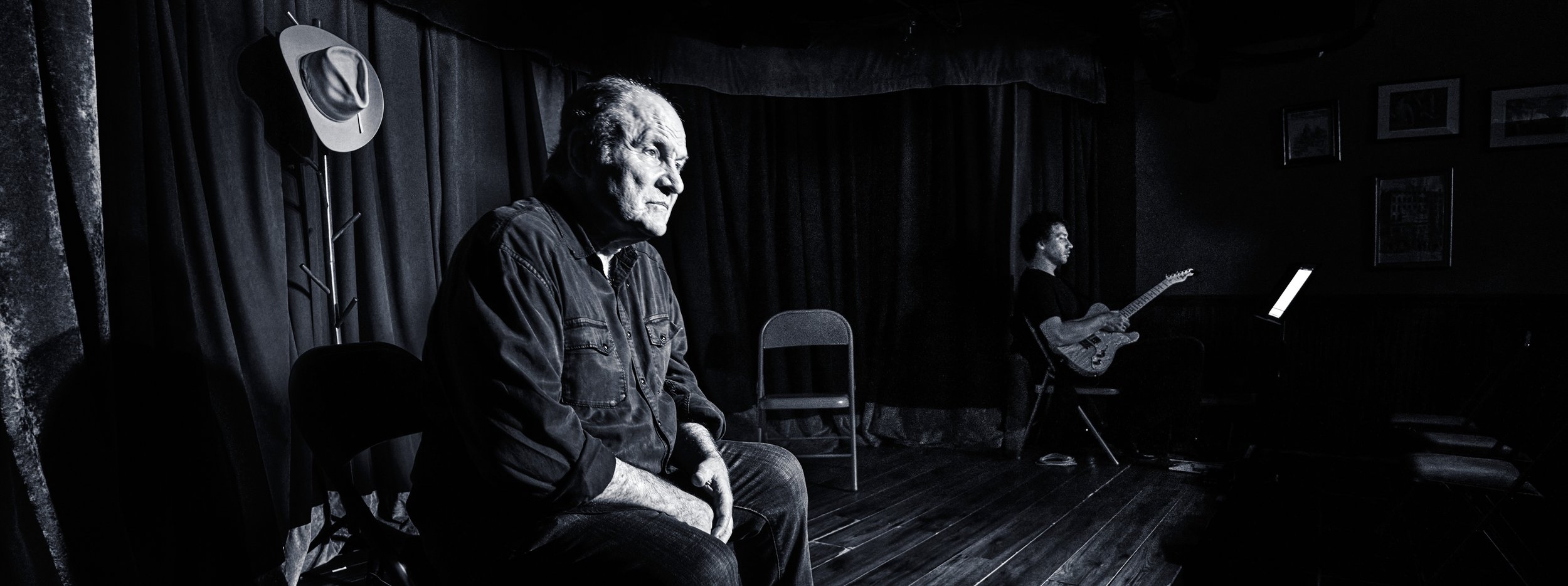
A one-man theatrical hurricane, Ned Van Zandt barrels onto the stage in Lost in Del Valle, a genre-bending dark comedy that transforms the Huron Room at SoHo Playhouse into a fever dream of excess, ruin, and hard-won redemption. Directed with razor-sharp precision by Amir Arison, and accompanied on stage by guitarist Mike Moore, this U.S. premiere is as unflinching as it is mesmerizing—an unforgettable descent into the chaos of a life lived on the edge.
Bent Through Glass
Bent Through Glass, written and performed by Alex Koltchak, transforms unimaginable loss into a work of emotional clarity, as a grieving father traces the aftershocks of his daughter’s suicide with unflinching honesty. Under the sensitive direction of Michael Sladek, this deeply personal solo piece becomes not only a testament to anguish, but a quietly radiant affirmation of love’s endurance, shaped by Koltchak’s willingness to bare his soul.
Nicole Travolta Is Doing Alright
In Nicole Travolta Is Doing Alright, a one-woman play by performer Nicole Travolta (cowritten with Paula Christensen), the star delivers a dazzling, deeply felt turn that fuses stand-up, confessional storytelling, and incisive character work into an evening of theatrical vitality, fluidly staged by directors Margarett Perry and Paula Christensen. With razor-sharp wit, Travolta transforms her trials of credit card debt and compulsive shopping into a bold, laugh-out-loud meditation on identity, resilience, and reinvention.
Public Charge
In Julissa Reynoso’s autobiographical drama Public Charge, co-written by Michael J. Chepiga, one witnesses how Reynoso, played with fierce tenacity by Zabryna Guevara, solved a political impasse as a senior diplomat in the Obama administration. While the play offers an earnest and often compelling meditation on democracy in action, its heavy-handed didacticism ultimately mutes its dramatic impact.
My Joy Is Heavy
In My Joy Is Heavy, a raw yet warmly disarming musical memoir, musician-actors Abigail and Shaun Bengson open the doors of their family life and loss to the audience. Under the sensitive direction of Rachel Chavkin, the production blurs the boundary between stage and house, transforming private grief into a communal—and unexpectedly joyful—theatrical encounter.
Dust of Egypt
Dust of Egypt: The Story of Sojourner Truth dramatizes a little-known chapter in the famed abolitionist’s life when, as a young mother, she fought to rescue her 5-year-old son after he was illegally sold down South. Karin Abarbanel’s play turns this legal battle—the first time a Black woman successfully sued a white slave owner—into a stirring portrait of maternal courage and moral defiance.
Hate Radio
In Hate Radio, Swiss writer-director Milo Rau turns the stage into a time capsule of terror, reconstructing the Rwandan radio station RTLM (Radio Télévision Libre des Mille Collines), whose jovial hate-fueled broadcasts paved the road to genocide. Listening through headsets as slurs curdle into directives, the audience is left to reckon not only with history’s horrors but with unnerving echoes in today’s media-saturated America.
Hold On to Your Butts
Hold On to Your Butts, directed by Kristin McCarthy Parker, proves that epic spectacle can be conjured from little more than bodies, sound effects, and boundless imagination, as two actors and a sound-effects artist recreate Jurassic Park shot for shot, live onstage. The result is an exuberant collision of physical comedy, sound, and affectionate parody—a love letter to both movies and theater.
Edward
In Edward, written, performed, and directed by Ed Schmidt, a small box of 27 mundane artifacts becomes a form of domestic archaeology, each item revealing a fragment of a life once lived. Gathered around a table in independent bookstores across New York City, audiences help reconstruct—night by night—a portrait of the late Edward O’Connell, a former high school English teacher whose faith in literature echoes through the stories and the spaces where they are told.
Bob Marley: How Reggae Changed the World
Bob Marley: How Reggae Changed the World is a soulful solo journey that traces reggae’s roots and its global reverberations through the life and legacy of its most iconic figure. Written, performed, and directed by Duane Forrest, the show blends acoustic music, personal storytelling, and audience connection, allowing one to glimpse how Bob Marley’s message reshaped not only a genre, but lives.
Tartuffe
Molière’s Tartuffe is robustly reimagined by Lucas Hnath in a randy new version directed by Sarah Benson, turning the classic comedy of hypocrisy into a breathless, contemporary satire. With choreography by Raja Feather Kelly and a fearless cast led by Matthew Broderick and David Cross, the production unleashes ferocious wit and gleeful buffoonery.
What If They Ate the Baby?
In the U.S. premiere of What If They Ate the Baby? writer-performers Xhloe Rice and Natasha Roland spin a seemingly polite 1950s housewife visit into a hilariously sinister dance of casseroles, secrets, and suburban dread. This queer clown two-hander uses absurdist comedy to probe surveillance, paranoia, and the pressures of American womanhood.
Pygmalion
In his current revival of Pygmalion, director David Staller does more than remount Shaw’s 1912 comedy—he alters the play’s architecture by adding a mythic framing device led by four Olympian gods who introduce and comment on the action. This addition is not found in the published script, and theatergoers expecting a traditional revival may consider it a provocation. But Staller positions it as a reclamation rather than an invention.
44—The Musical
Right in the middle of election season, 44—The Musical has arrived Off-Broadway. The show takes Barack Obama’s historic rise and views it through a carnival mirror, refracting statesmanship into satire. Written, composed, and directed by former Obama campaign staffer Eli Bauman, it gleefully revisits Obama’s presidency as Joe Biden “kinda sorta” remembers it, complete with political foibles, larger-than-life personalities, and musical swagger.
Other
Actor Ari’el Stachel commands the stage in Other, his uproarious and vulnerable one-man show about the lifelong struggle to fit in. Directed by Tony Taccone, Stachel mines identity and anxiety for both laughter and truth.
Heaux Church
In Heaux Church, writer-performer Brandon Kyle Goodman turns the traditional sermon on its head, transforming sex education into a joyful act of healing and self-acceptance. Directed by Lisa Owaki Bierman, and with DJ Ari Grooves and Greg Corbino backing a gospel of pleasure and pride, Goodman delivers a rousing, tongue-in-cheek service that’s part confession, part celebration.
Italian American Reconciliation
In a spirited revival of John Patrick Shanley’s Italian American Reconciliation, director Austin Pendleton brings fresh verve to the tale of Huey, a lovelorn dreamer who enlists his best friend Aldo to help win back his fiery ex-wife, Janice. The production captures the play’s blend of romantic folly and heartfelt yearning that first endeared it to audiences decades ago.
(un)conditional
Ali Keller’s (un)conditional, directed by Ivey Lowe, takes an unflinching look at two heterosexual marriages tested by sexual desires, shifting boundaries, and the uneasy bargains couples make in the name of love. With sharp writing and intimate staging, the play probes what one is willing to give—or give up—in relationships meant to last a lifetime.