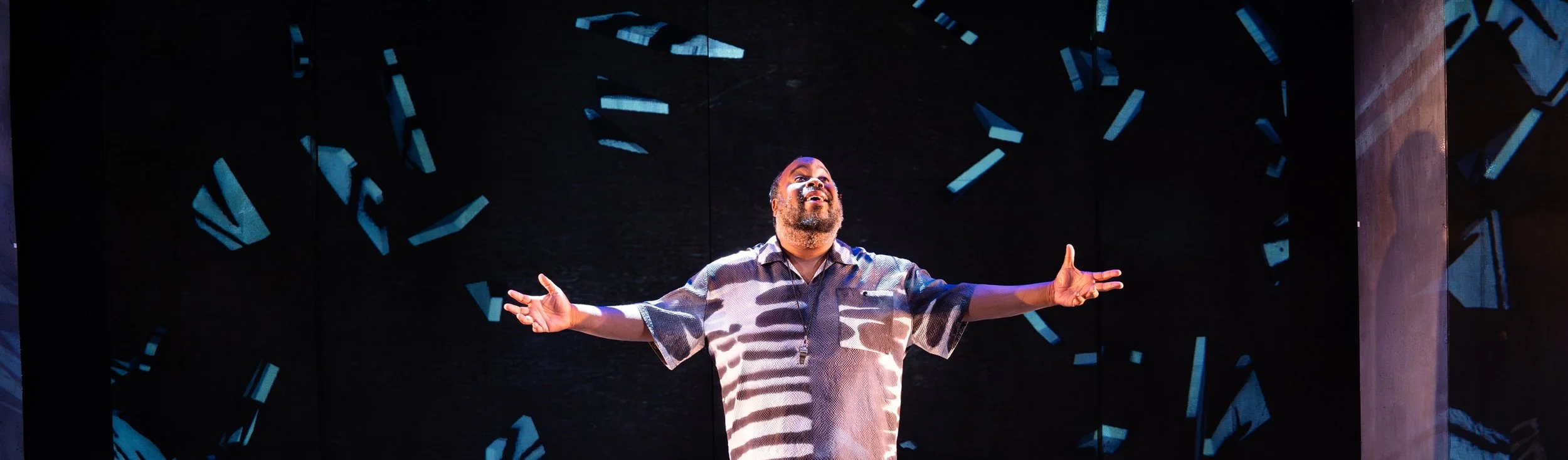
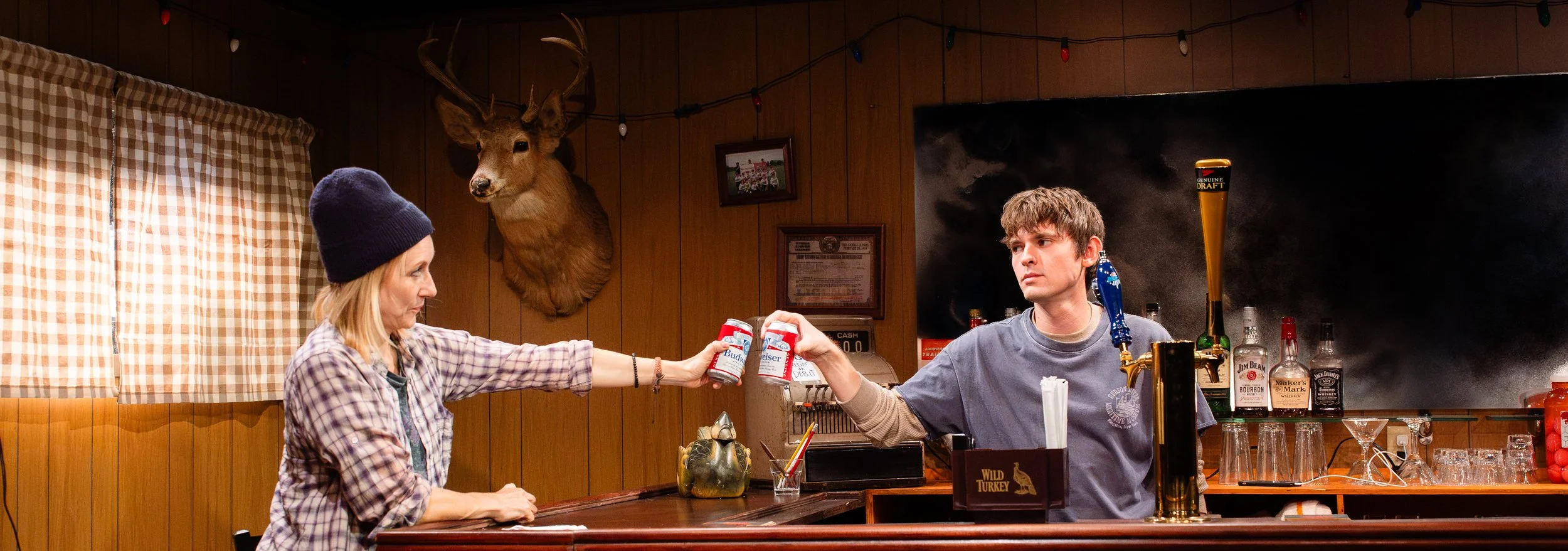
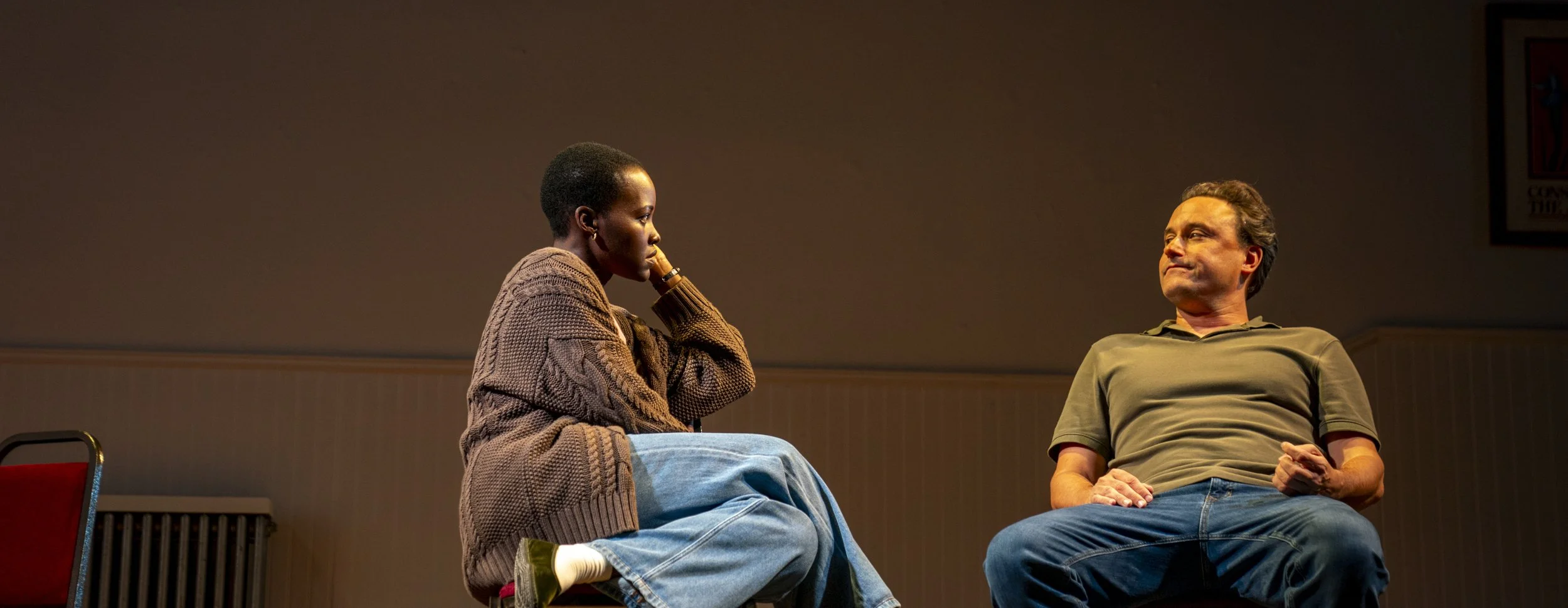
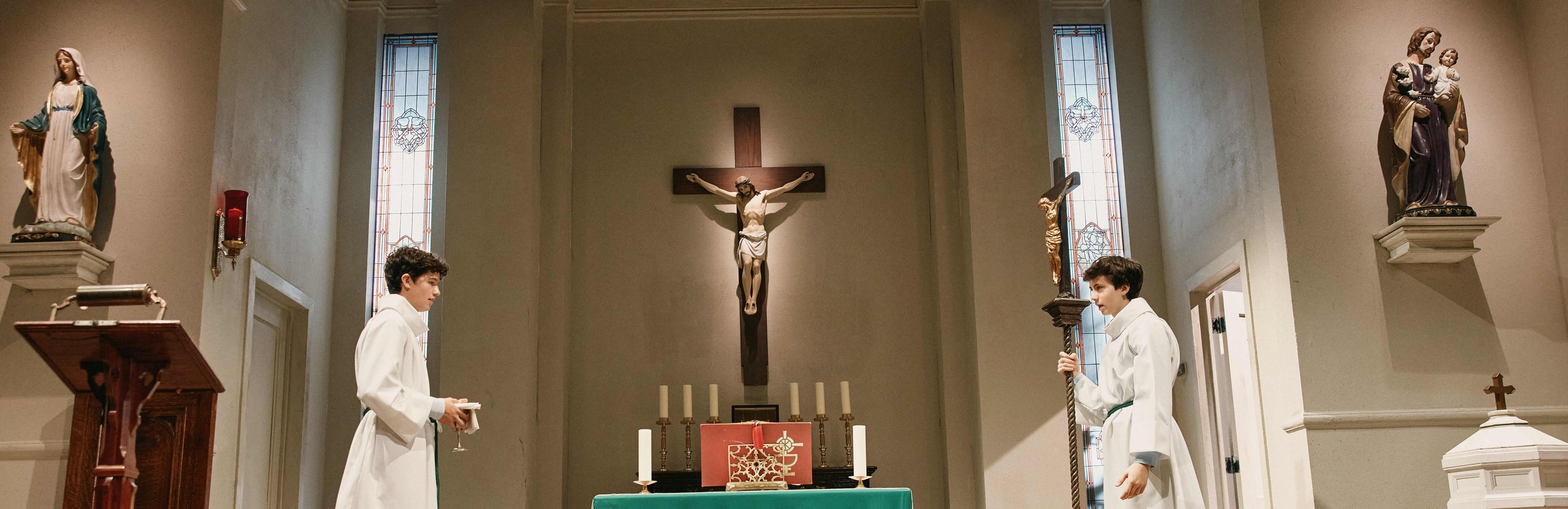
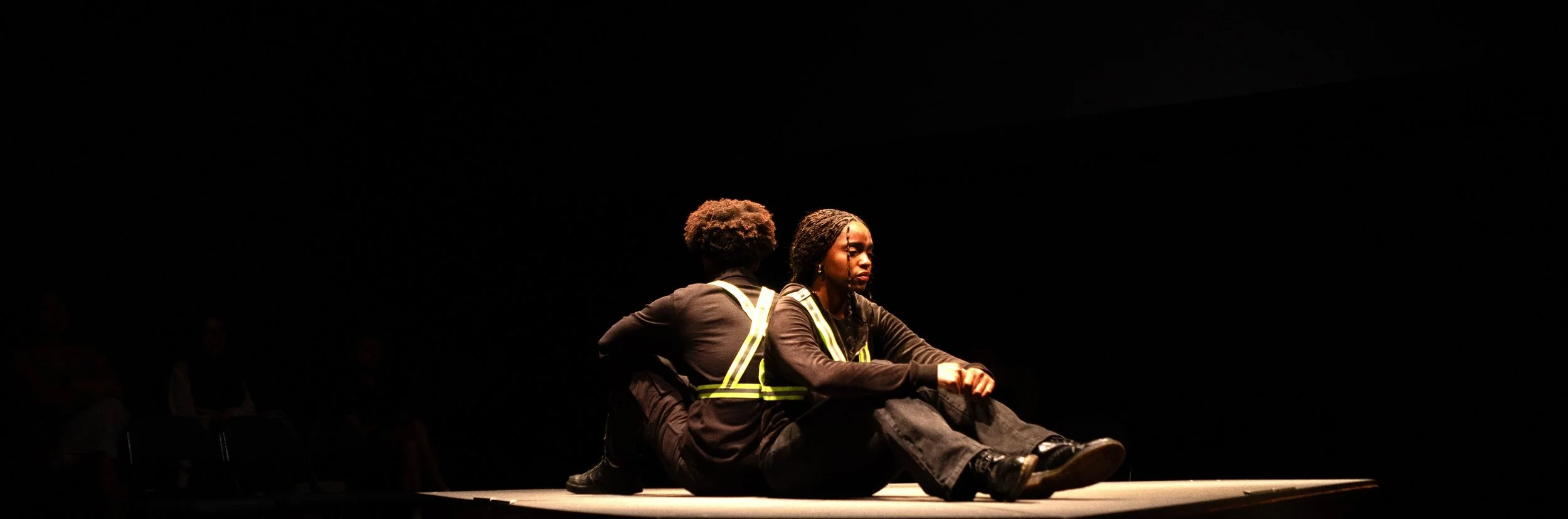
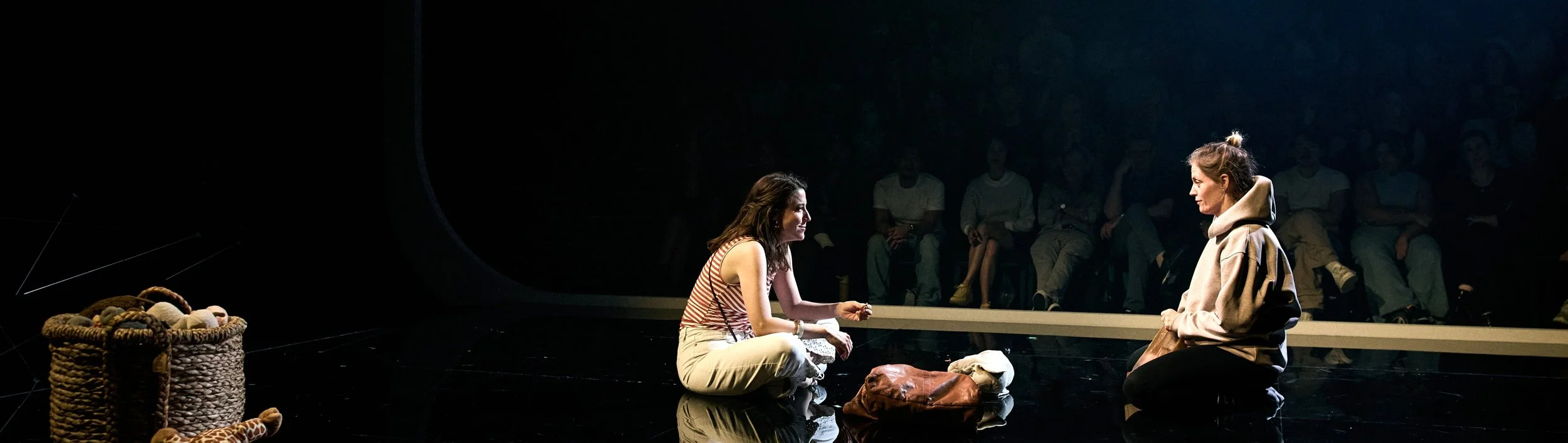
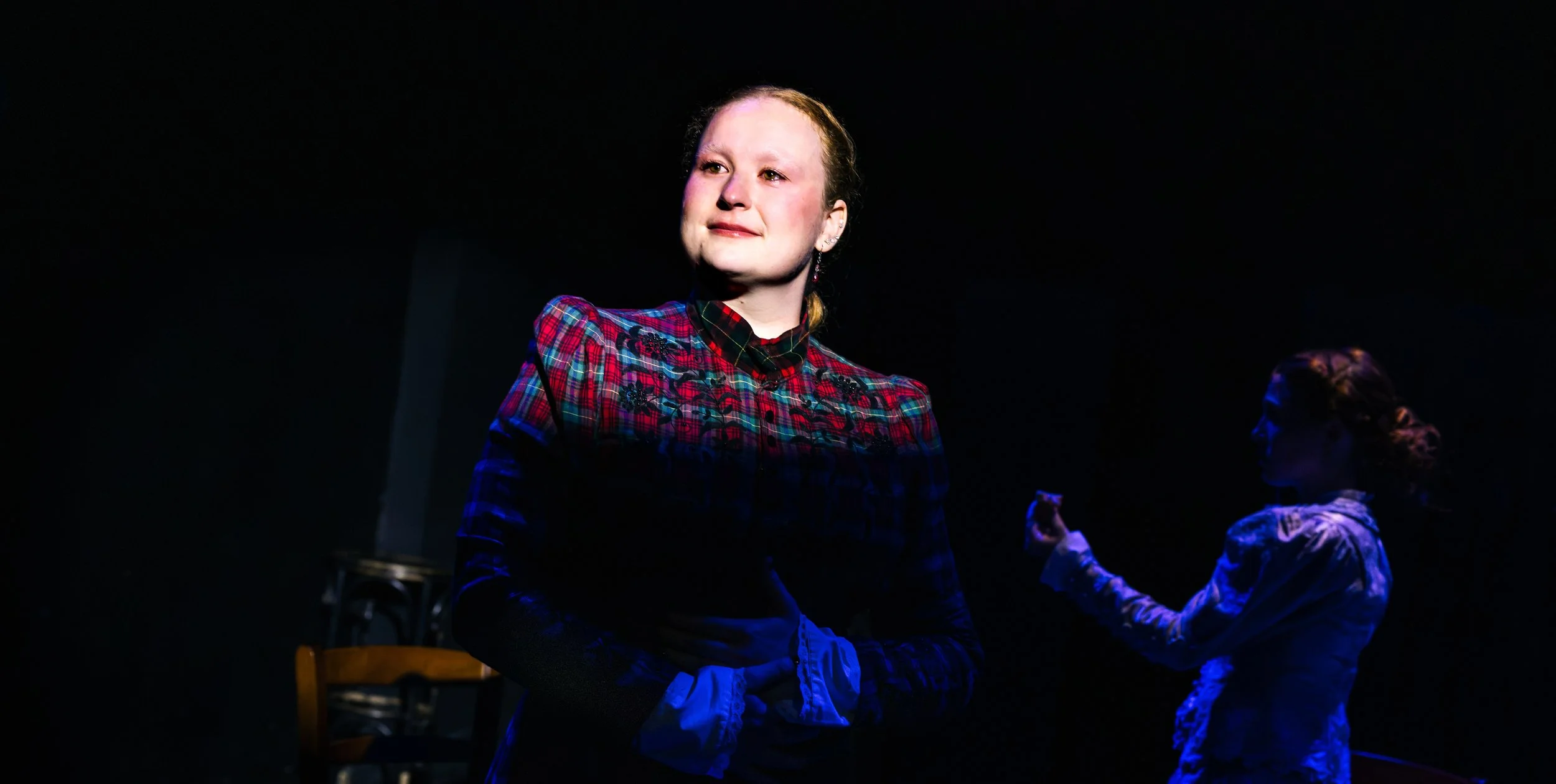
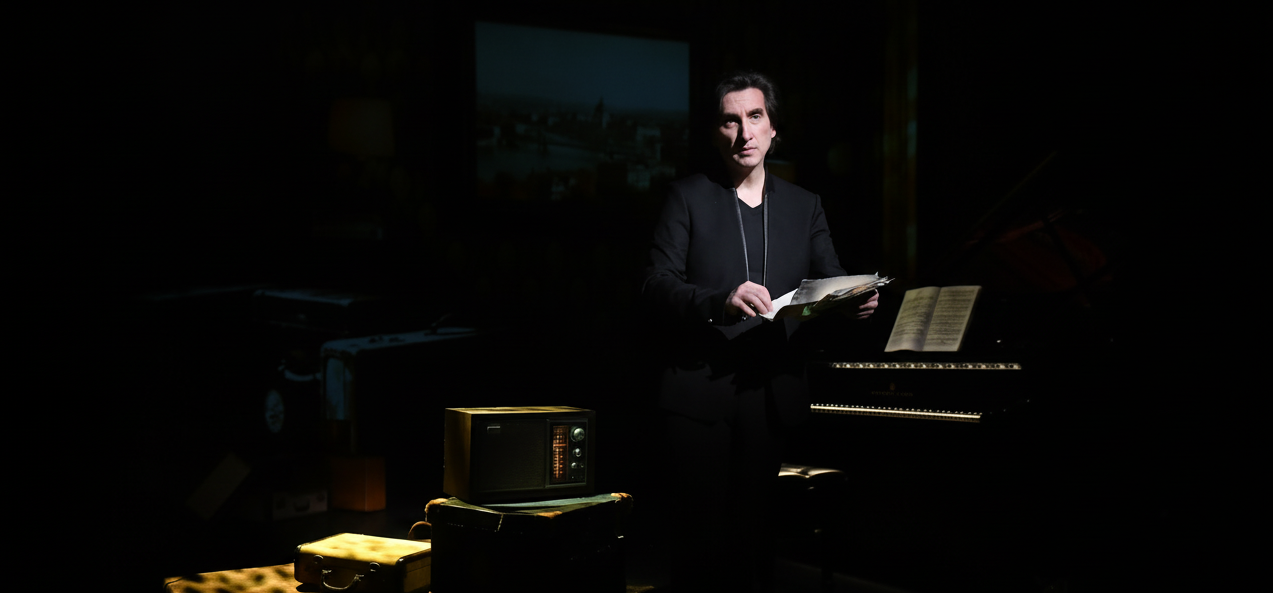
Well, I’ll Let You Go, Bubba Weiler’s drama of grief and Midwestern angst, opened Off-Broadway a year ago this month, elevating the author from yeoman actor to New York’s most prominent emerging playwright. The Saviors, Weiler’s second play (now at the Atlantic’s Linda Gross Theater) substantiates his promise, extending and arguably deepening his collaboration with director Jack Serio.
The Vessel
“A combination of the Eiffel Tower and the Rockefeller Center Christmas tree.” “Upside-down pineapple. Honeycomb spaceship/shawarma.” These descriptions of Vessel, the tourist attraction in Manhattan’s Hudson Yards, are the most memorable lines in Brendan George’s well-intentioned play The Vessel, which has a lot to say but doesn’t say most of it in a theatrically exciting manner.
Disruption
Enter a complex query into an AI chatbot, and the computer program will ruminate. Employing a proprietary algorithm, actions will be taken, decisions will be explained, and the sometimes unexpected results will arrive in due course, with little regard as to whether a satisfying answer is justification for the steps taken to reach it. This process is the metaphorical framework for Andrew Stein’s new and disturbing think piece, Disruption. Set in a New York defined more by its data sets than its landmarks, three couples provide the input for a calculating friend who employs an omniscient technology to rewire all of their lives.
Broad Strokes
Comedian and stroke survivor Cat Cohen named her solo show Broad Strokes for the puns, but the titular phrase may be more appropriate in another, unintended sense. Cohen tells her story in such broad strokes that, while she succeeds in making her serious medical condition funny, the lack of depth and detail makes it seem not that serious.
Hungry Women
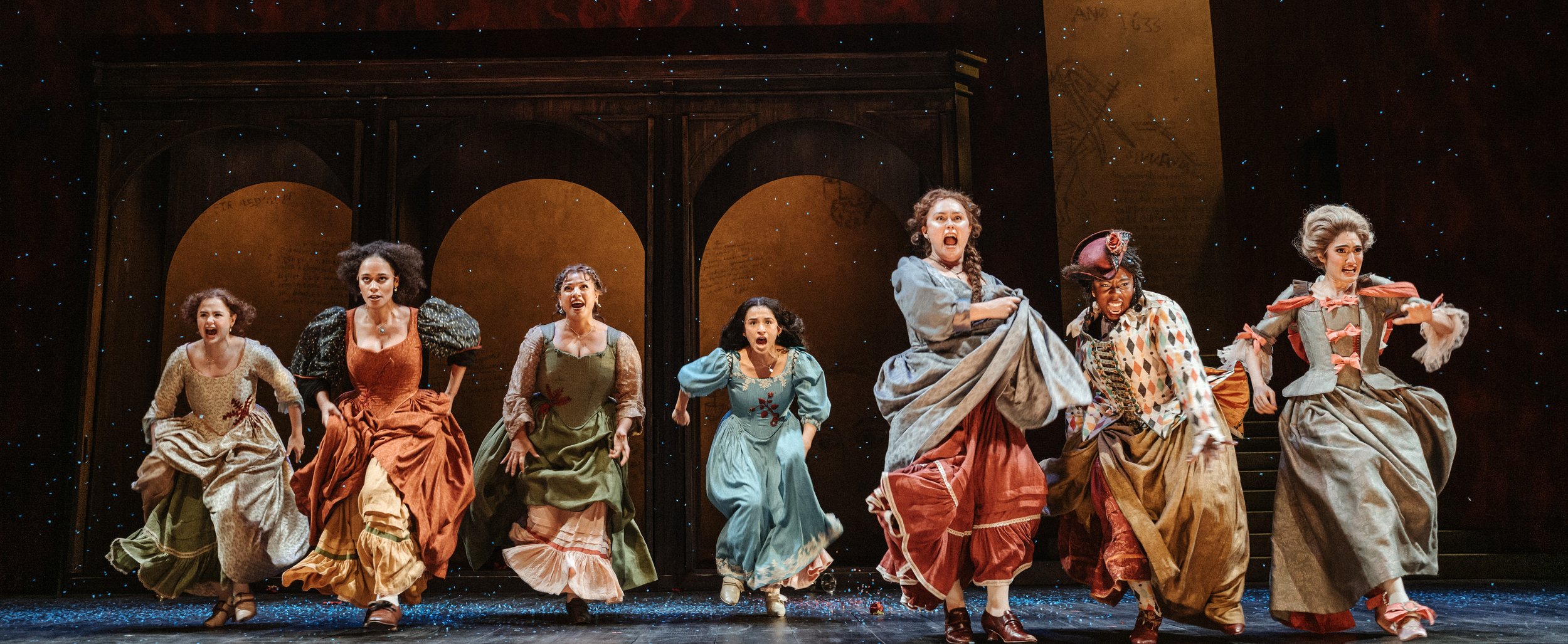
What if men suddenly disappeared from the planet? Melissa Maney’s darkly comic Hungry Women, directed by Daniella Caggiano, imaginatively explores that provocative question across two centuries, using absurdism, macabre humor, and a feminist lens to examine how women might reconstruct society—and what they might ultimately discover they are most hungry for.
Shifters
For its third mainstage production under new owners A24, Cherry Lane Theatre brings in a London success—Benedict Lombe’s romantic two-hander Shifters, directed by Lynette Linton—with some boldface names on its U.S. producing team, including actors Idris Elba and Danai Gurira and rapper Little Simz.
Hershey Felder: The Piano and Me
After spending decades bringing history’s greatest composers to vivid theatrical life, Hershey Felder turns his storytelling gifts inward in Hershey Felder: The Piano and Me. The result is an intimate and deeply affecting autobiographical portrait that reveals how music shaped not only an extraordinary career but also an extraordinary life.
What a World! What a World!
Eric Marlin’s What a World! What a World! explores gender identity, drag, and gay love in a dialogue-heavy production that opens on a bare stage reminiscent of a 1970s avant-garde drama. Queen-Tiye Akamefula and Annie Hoeg exchange overripe melodramatic dialogue while moving and posing in tandem, using gestures that recall the 19th-century Delsarte system—back of hand to forehead, arms outstretched—executed with the measured precision of tai chi. The result is alternately intriguing and irritating, but emotionally remote.
Giulia: The Poison Queen of Palermo
In a recent New York Times interview, singer-songwriter Jennifer Nettles remarked of her new show, Giulia: The Poison Queen of Palermo, “The joke of it, the irony, is that my little musical about poison is the antidote we need right now.” Based on the audience response at a recent performance, her point was well taken. In witnessing a succession of abusive, barbarous, and toxic men succumbing to murder, many in the crowd clearly found their retribution. As news feeds clutter with stories of national leaders, Senate candidates, and millionaires evading justice for their crimes against women, there is indeed something quite gratifying about watching vigilante vengeance set to an intoxicating, pop-music beat.
The Listies: Make Some Noise
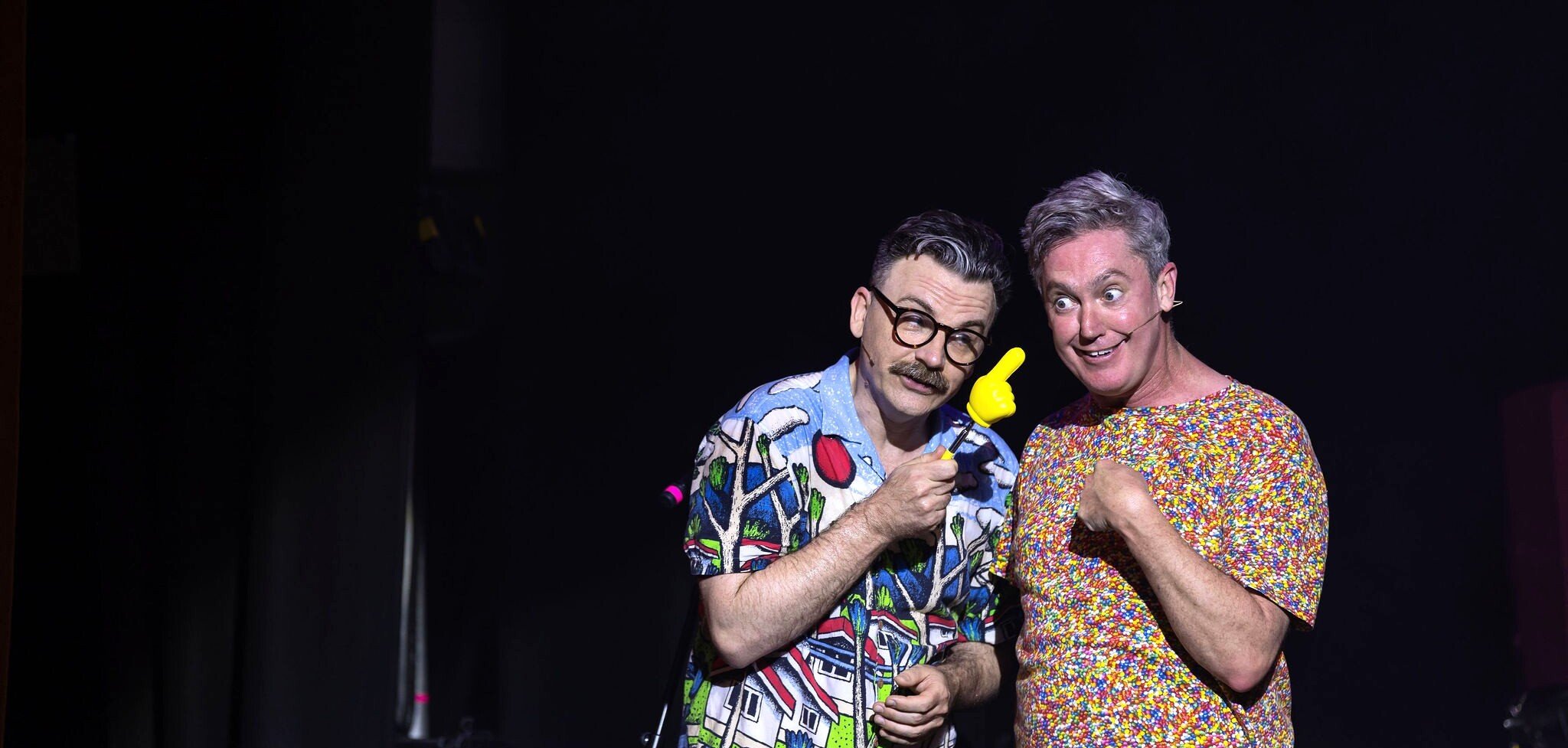
Family entertainment often settles for amusing the children while asking adults to patiently endure the ride. The Listies: Make Some Noise gleefully defies that formula, delivering an hour of quick-witted comic anarchy in which playwright-performers Richard Higgins and Matthew Kelly prove that silliness, when executed with razor-sharp timing and imagination, can delight audiences from preschoolers to grandparents.
Birthright
The ideals and experiences that bond people together when they are young may be the very things that divide them when they mature. This we learn from the protagonists in Birthright, Jonathan Spector’s play that tracks the lives of six Jewish friends from 2006 through 2024. In each of the three nearly one-hour acts, perceptible changes occur in each character’s priorities and attitudes, at least in part because in their discussions, no topic is sacrosanct.
That Math Show
For anyone who has ever believed mathematics belonged exclusively to gifted minds, That Math Show offers a joyful correction. Created and performed by Dr. Arthur Benjamin and directed by Eric Krebs, this lively production reveals the beauty and playfulness of numbers.
A Walk on the Moon
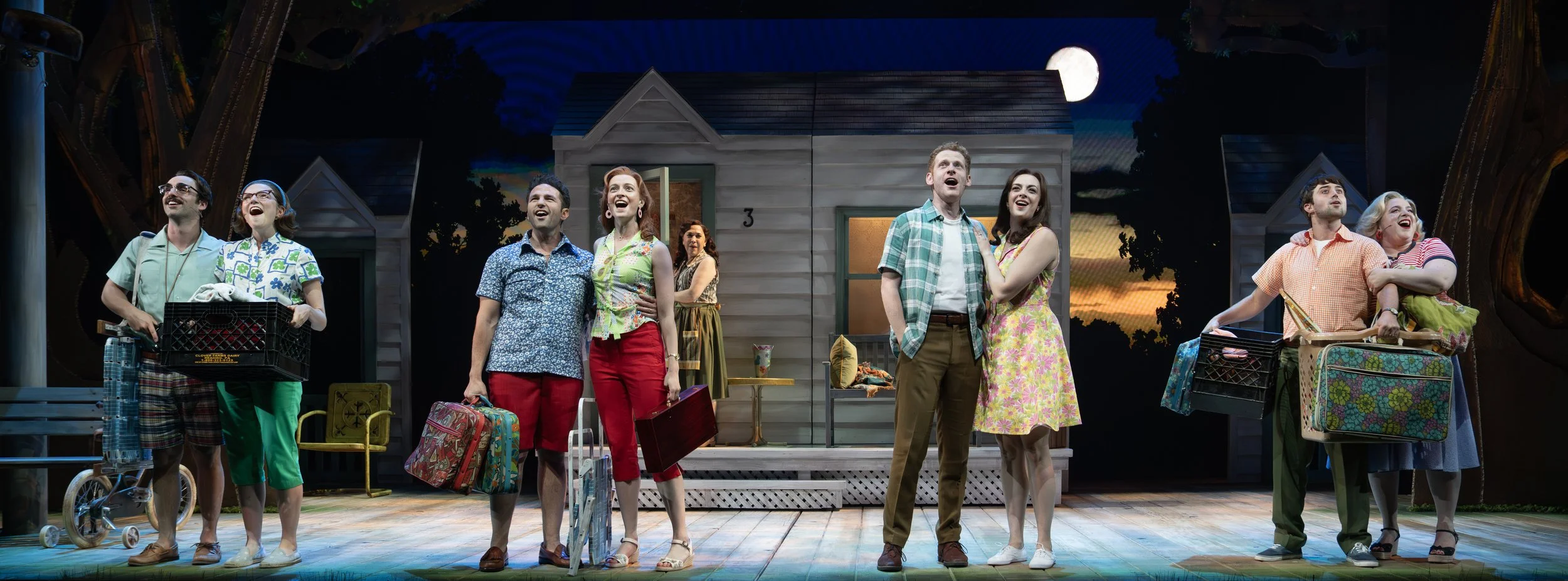
Neil Armstrong landed on the moon on July 20, 1969. Less than a month later, the Woodstock festival rocked America’s psyche. The run-up to these landmark events provides the symbolic dissonance for the bighearted and multifaceted new musical, A Walk on the Moon. With a score by AnnMarie Milazzo and book by Pamela Gray, this stage version of the 1999 film (also written by Gray) tracks a not-so-happy housewife through a risky voyage of self-discovery, just one short hike away from Max Yasgur’s farm in Bethel, N.Y., and one giant leap from her otherwise square and earthbound life.
The Loved Ones
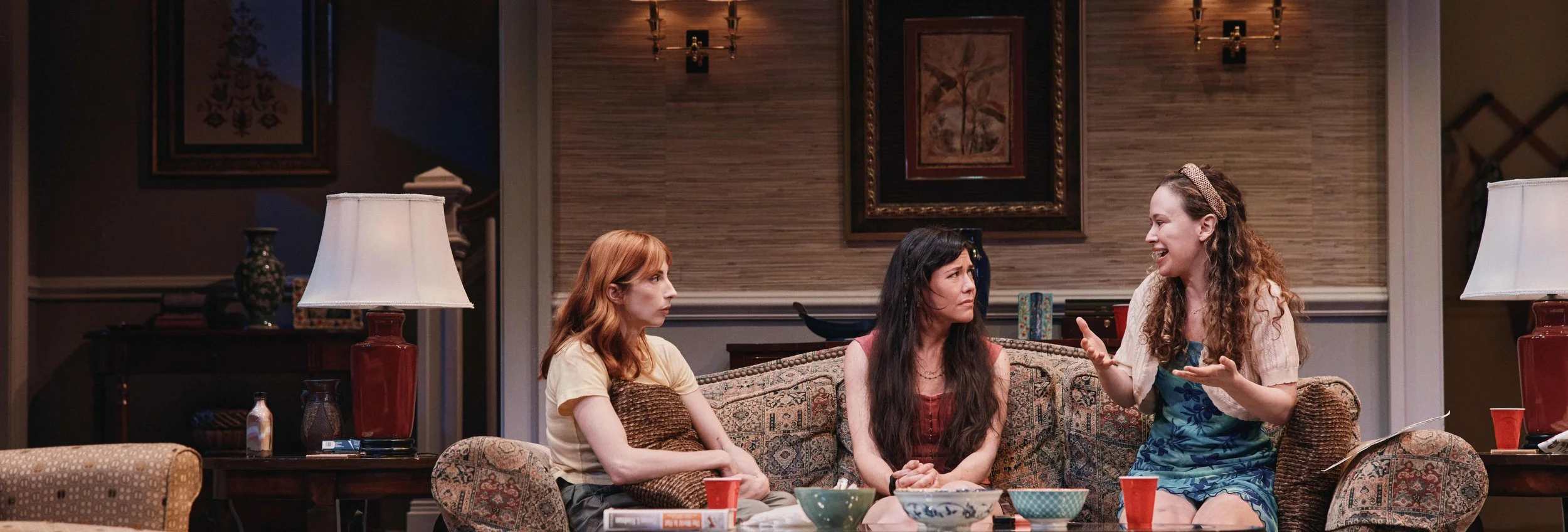
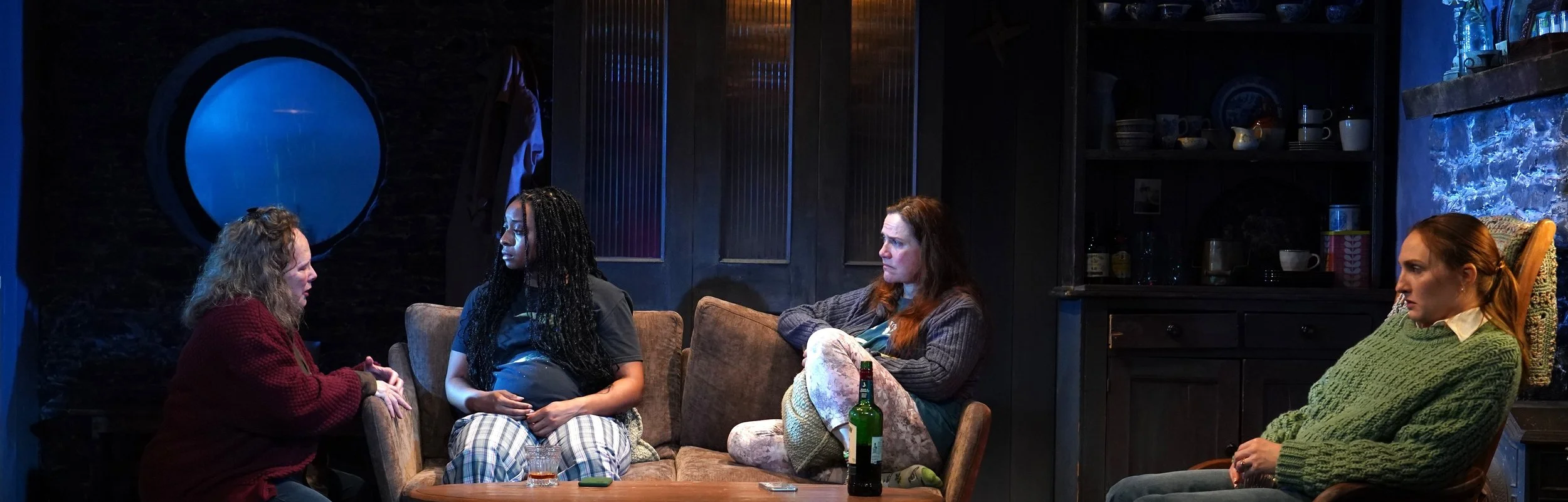
Erica Murray’s The Loved Ones is a poignant meditation on grief and betrayal that offers a potentially melodramatic setup but largely avoids obvious broad strokes in favor of quieter pleasures—sharply observed dialogue, characters who defy the labels placed on them, and an exploration of the difficulties and power of empathy. An outstanding ensemble led by the great Maryann Plunkett depicts the international group of women—Irish, English, and American—brought together in rural West Clare, Ireland, through tragic circumstances that threaten to divide them yet end up eliciting a precarious and precious sense of solidarity.
Music City
The venue is St. Luke’s Theatre, but for all practical purposes, it isn’t anymore. The Restaurant Row mainstay is now the Wicked Tickle, an East Nashville dive where the beer is cheap, the country-and-western is tangy and smart, and Cindy the bartender is on hand to crack you open a Pabst. And it’s the home of Music City, a return engagement of a musical that played well at the West End Theatre in 2024 and has only ripened with age.
Camping
A tent creates a confined yet evocative space—the image might conjure up strong memories and associations, perhaps of childhood camping trips or adolescent backyard adventures or later-in-life attempts at experiencing the great outdoors. For Ari and Brit, the protagonists of Victoria Lynne Barclay’s new two-hander Camping, the tent is a world unto itself. From ages 15 to 40, the two women navigate life—including relationships with inadequate men—and feelings for each other that they can never quite come to terms with, through events that always return them to the same tent. That Barclay makes this contrivance feel largely natural is one of the strengths of this sensitively observed play.
Youth in Flames
Millie, the cheeky British teenage expatriate at the center of Youth in Flames, begins the play drifting contentedly through life. In playwright-performer Mimi Martin’s engaging and deeply affecting solo drama, directed by Jessica Wiley, that carefree detachment is challenged by the turmoil of the 2019 Hong Kong protests, leading to a journey of self-discovery and moral reckoning.
Are You Now or Have You Ever Been
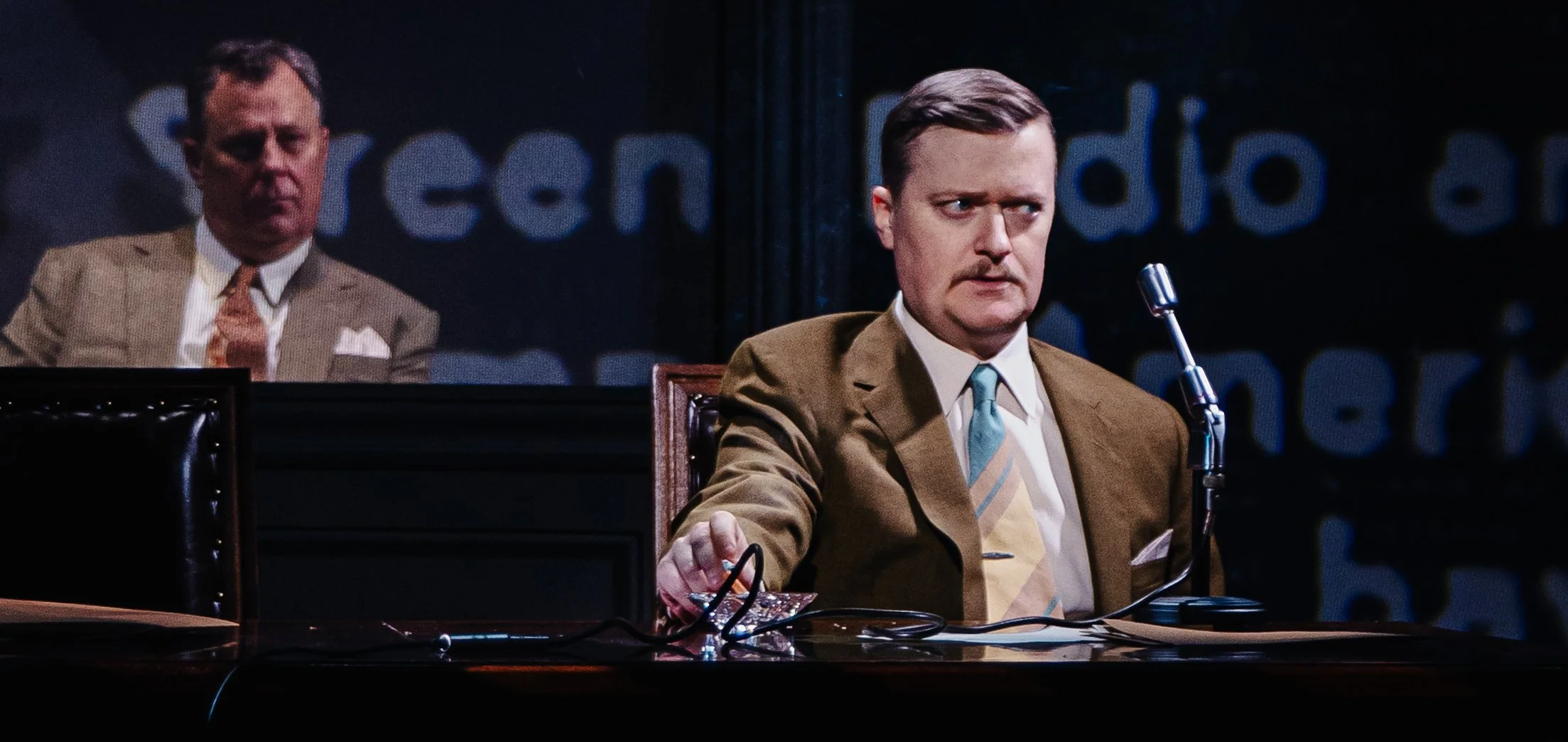
Many of the actors play multiple witnesses. Stephen Boyer testifies as Ring Lardner Jr., while Brooks Ashmanskas looks on.
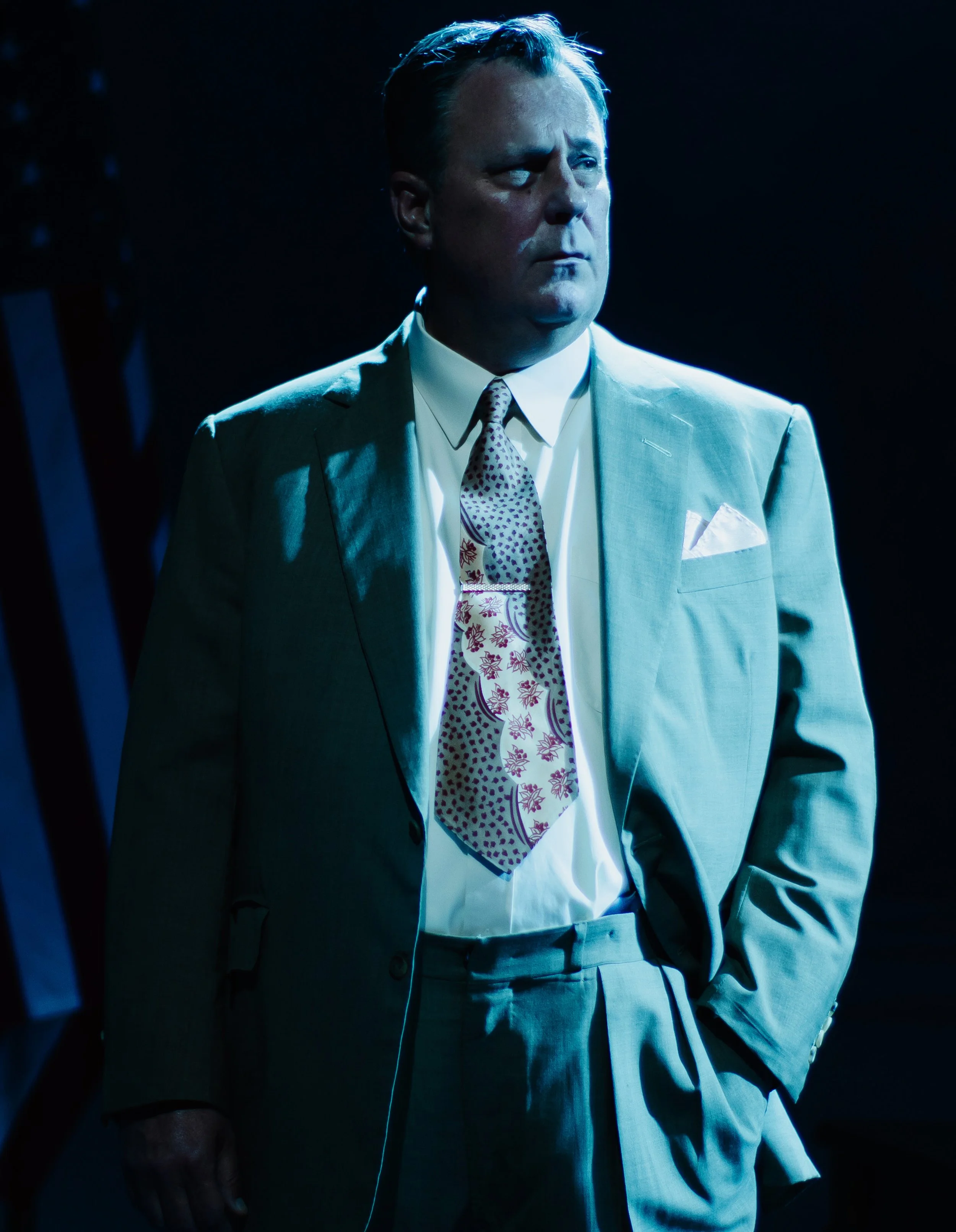
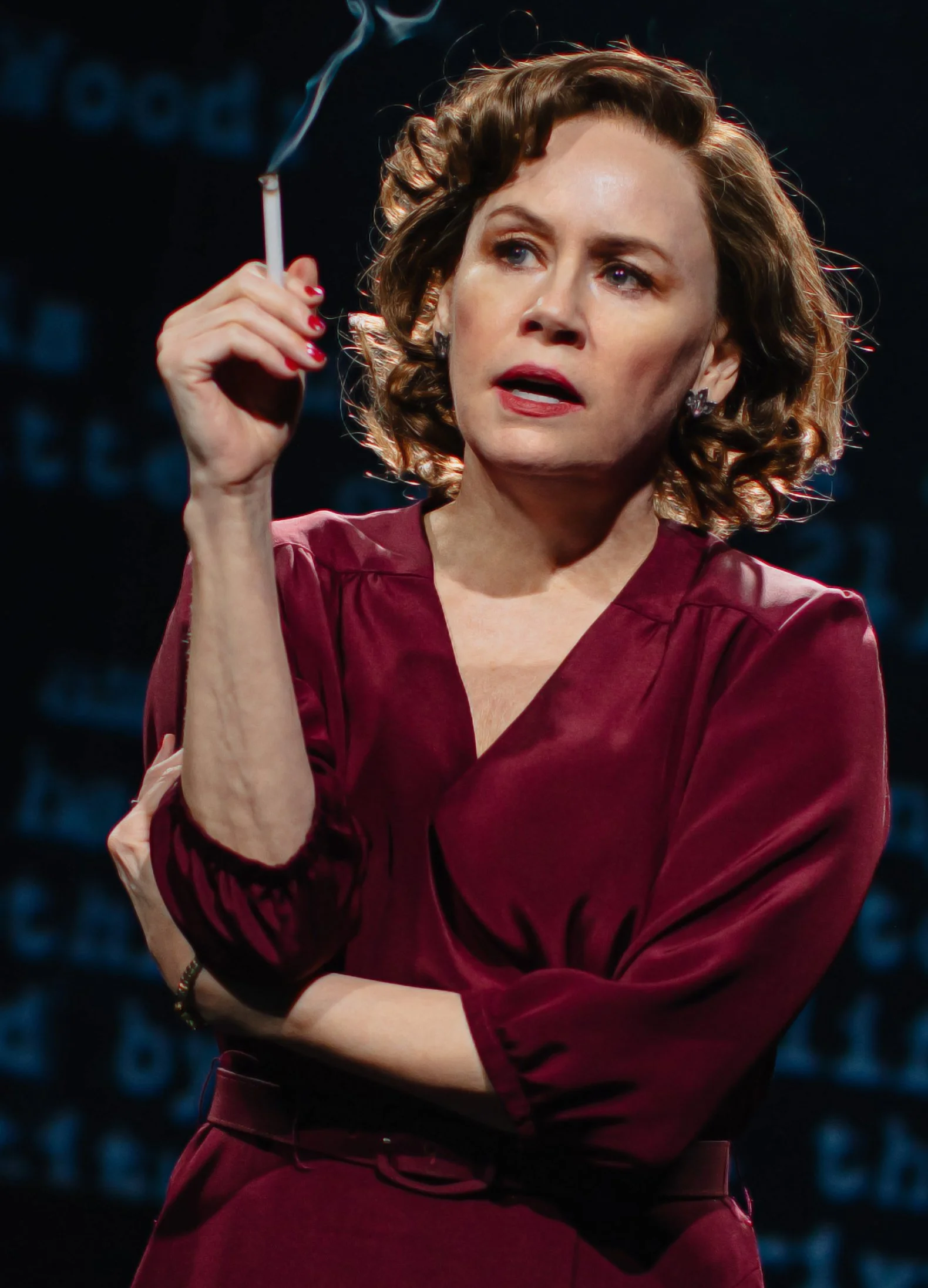
Eric Bentley’s 1972 play Are You Now or Have You Ever Been revisits the House Un-American Activities Committee’s (HUAC) investigation into Communist influence in the entertainment industry during the mid-20th century. The dialogue is drawn directly from the hearing’s transcripts, making this revival as much a documentary as a drama. Directed by Anna D. Shapiro, the production captures the grind of a political investigation in all its tedious forms.
Brooks Ashmanskas plays, among other characters, film director Edward Dmytryk, best-known for The Caine Mutiny (1954).
Those subpoenaed are asked, essentially, one question: “Are you now or have you ever been a member of the Communist Party?” What follows is a variety of responses. These hearings continued for more than a decade (1947–58), producing a blacklist and sending several individuals to prison. By dramatizing the emotional distress inflicted on the targets, Shapiro presents a prominent example of political power being misused.
The production portrays the committee’s search for “truth” as increasingly contradictory, particularly when members justify their actions by claiming to represent the will of the people while dismissing First and Fifth Amendment protections.
For contemporary theatergoers, although these proceedings took place nearly seven decades ago, Bentley’s 50-year-old play still has relevance. It serves as a reminder of the abusive power that the U.S. government can wield.
The production employs visuals to reinforce the testimony. Newspaper headlines and articles are projected in the background, while the clickety-clack of a manual typewriter—a sound perhaps recognizable only to the baby boomers in the audience—provides context and updates on the individuals appearing before the committee. The static stage setting effectively mirrors the decorum and rigidity of a legal proceeding.
Among the characters played by Frederick Weller is director Elia Kazan, whose “naming names” outraged liberals.
As a documentary, its accuracy is admirable. As theater, however, it often resembles an actual government hearing, with a mixture of anguish and distrust on both sides. Actors deliver much of their dialogue while standing or sitting behind desks, and at times the production feels like an extended table read. The burden falls on the actors—17 witnesses—to make their characters’ cases.
Andrew McCarthy’s portrayal of actor Larry Parks effectively opens the proceedings and illustrates the emotional turmoil experienced by many of those who were subpoenaed—from refusing to “name names,” to relenting, to regret, and ultimately to the destruction of a career.
Each witness makes a personal decision about how to proceed—all emerge damaged personally, professionally, or morally. Yet some choose to resist: characters such as playwright Abe Burrows (David Krumholtz), co-writer of the book for the hit musical Guys and Dolls; gravel-voiced actor Lionel Stander (Jay O. Sanders), best known for his late-career turn as the manservant to Robert Wagner and Stefanie Powers on the TV series Hart to Hart; and singer Paul Robeson (Billy Eugene Jones), star of the 1936 film Show Boat, bring moments of humor, dignity, and hope to an otherwise sobering production.
Burrows humorously recounts his introduction to Communism that coincided with his move to Hollywood. Admitting that he was part of the social circle, he denied ever actually joining the party.
Sally Murphy plays dramatist Lillian Hellman, one of the few women called to testify. Photographs by Marc J. .Franklin.
In those days, I was invited everywhere. Attended more parties than anyone. The Saturday Evening Post did an article about me and the fact that I played at parties all over Hollywood. … I used to go to too many, and, when I started to get asked by people I didn’t know, I began to quit going.
Sanders delivers Stander’s testimony with mounting indignation, transforming a transcript excerpt into one of the evening’s most theatrical moments, furiously defending his rights and willing to testify against his accusers:
I have knowledge of subversive action! I know of a group of fanatics who are trying to undermine the Constitution of the United States by depriving artists of life, liberty, and the pursuit of happiness without due process of law! I can cite instances! … A group of ex-Bundists, America Firsters, and anti-Semites, people who hate everybody, Negroes, minority groups, and most likely themselves—
Finally, Billy Eugene Jones gives Robeson’s testimony tremendous force, turning a procedural exchange into a powerful challenge to the committee’s authoGentlemen. … Wherever I have been in the world, the first to die in the struggle against fascism were the Communists. … The Fifth Amendment does not infer criminality. Chief Justice Warren has been very clear on that. I invoke the Fifth Amendment.
Ending with Robeson’s voice silenced, the production underscores how political institutions can suppress dissent while claiming to protect democracy. Bentley’s play may document events from the mid-twentieth century, but its warnings about governmental power still resonate.
Are You Now or Have You Ever Been runs through Sept. 11 at New York City Center Stage (131 West 55th St.). Evening performances are at 7:30 p.m. Tuesday through Sunday and at 8 p.m.; matinees are at 2 p.m. Wednesday and Saturday and at 3 p.m. Sunday. For tickets and additional information, visit areyounowplay.com.
Playwright: Eric Bentley
Director: Anna D. Shapiro
Associate Director: Zoe Adams
Scenic Design: Andrew Boyce
Costume Design: Johanna Pan
Lighting Design: Donald Holder
Sound Design: Rob Milburn & Michael Bodeen
Projection Design: Brittany Bland
If you enjoyed this review, please click on the Like icon below.

Catch of the Day
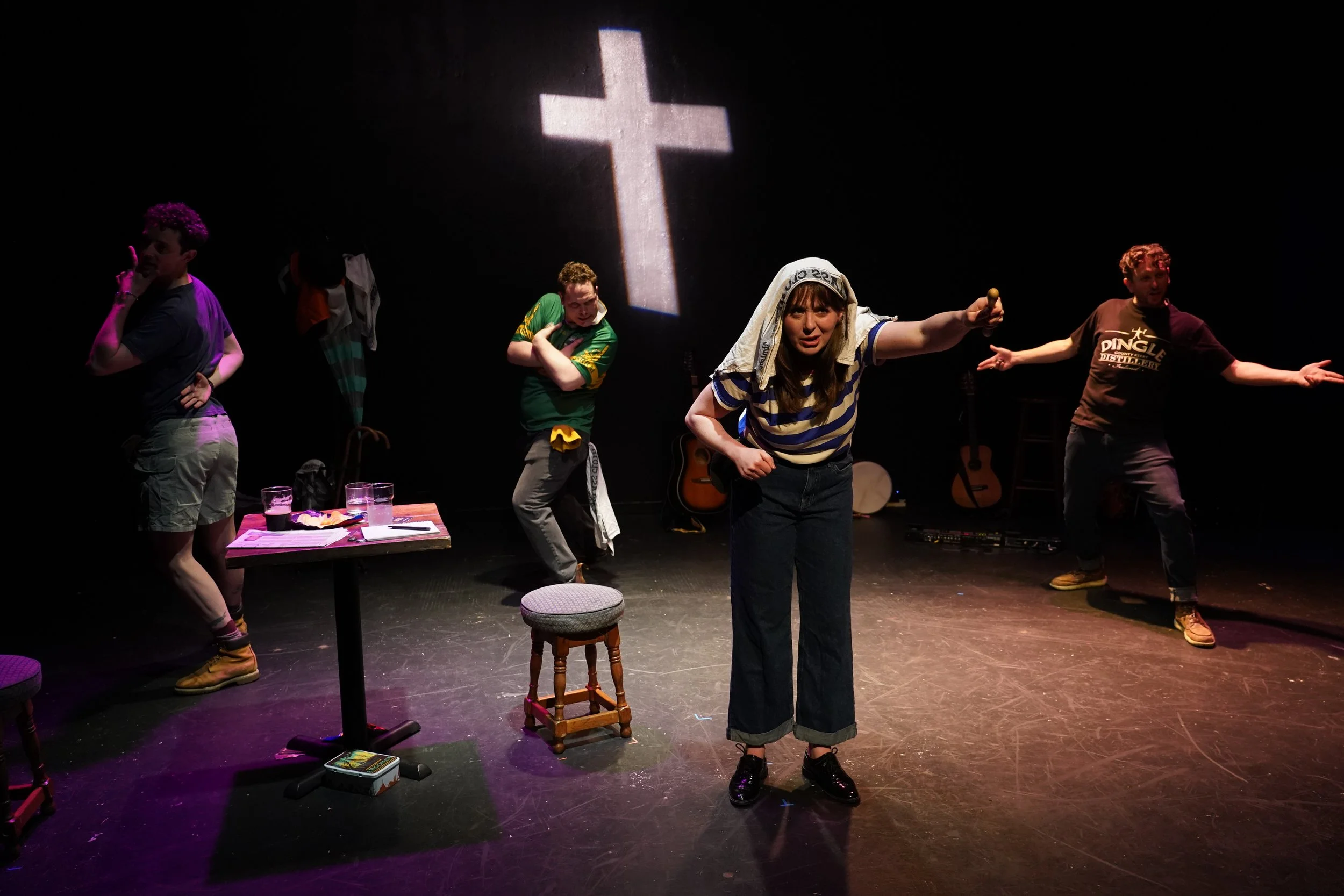
The pub in Irish dramas is a center not just of drinking, but also of telling tall tales. In J.M. Synge’s Playboy of the Western World, a new arrival, Christy Mahon, boasts of killing his father. In Conor McPherson’s The Weir, the regulars exchange ghost stories. But the atmosphere of Catch of the Day, by Megan Jenkins and the Red Fox Theatre company, is different. There’s music already happening on stage when one enters, and the gregarious cast may be engaging the audience in conversation or offering potato chips up and down the aisle or sniping at one another. The slapdash mix of music and comedy is more goulash than ghoulish, yet the lack of structure turns out to be one of the show’s charms.
Romeo and Juliet
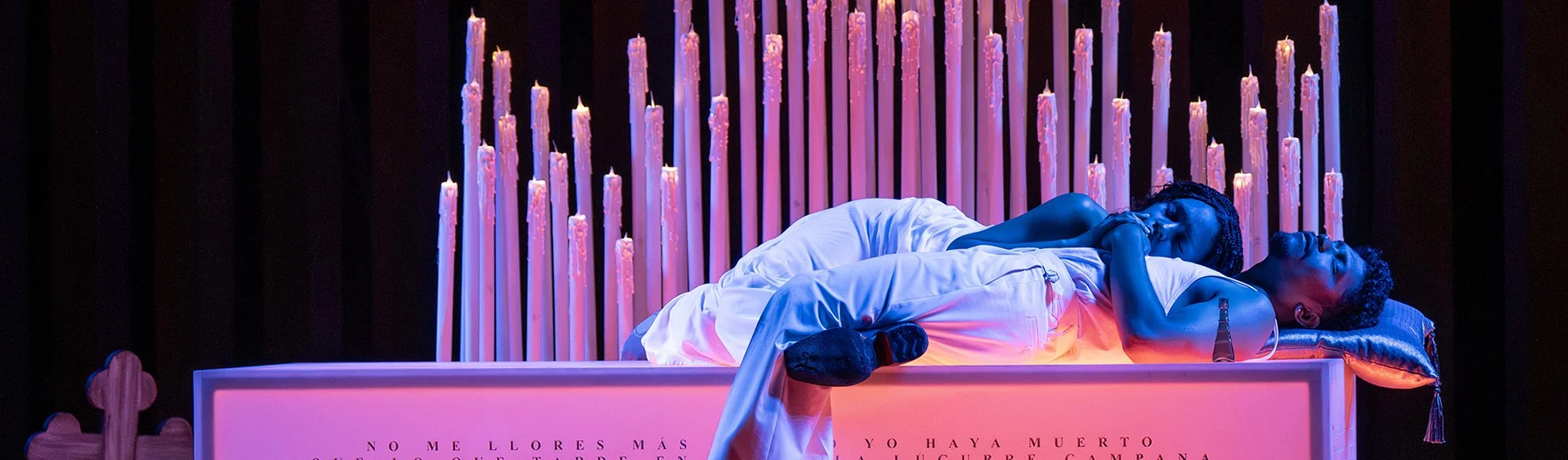
At the newly revitalized Delacorte Theater, Saheem Ali’s stirring production of Romeo and Juliet reimagines Shakespeare’s Verona as a divided community along the U.S.-Mexico border, bringing fresh urgency to the tale of the star-crossed lovers. By allowing Romeo and Juliet to speak to one another in Spanish amid a world of conflict, Ali illuminates both the intimacy of their bond and the forces determined to keep them apart.