
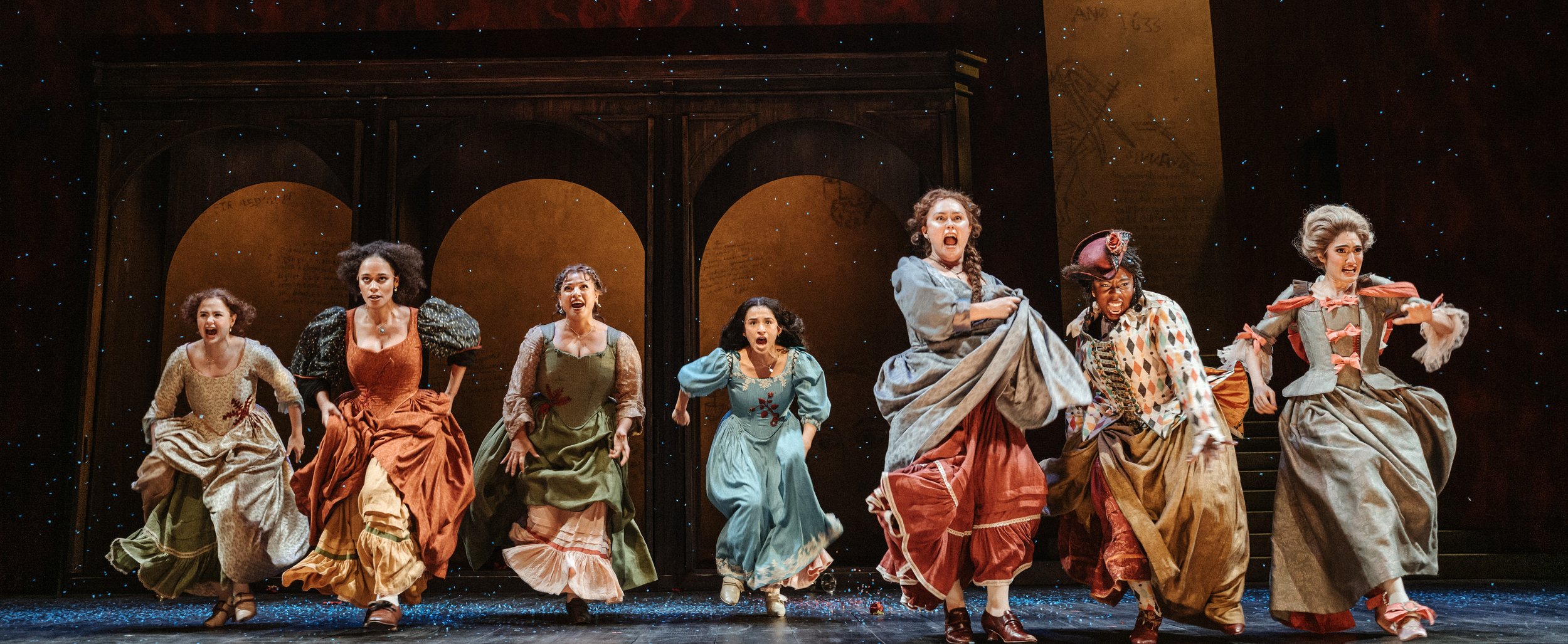
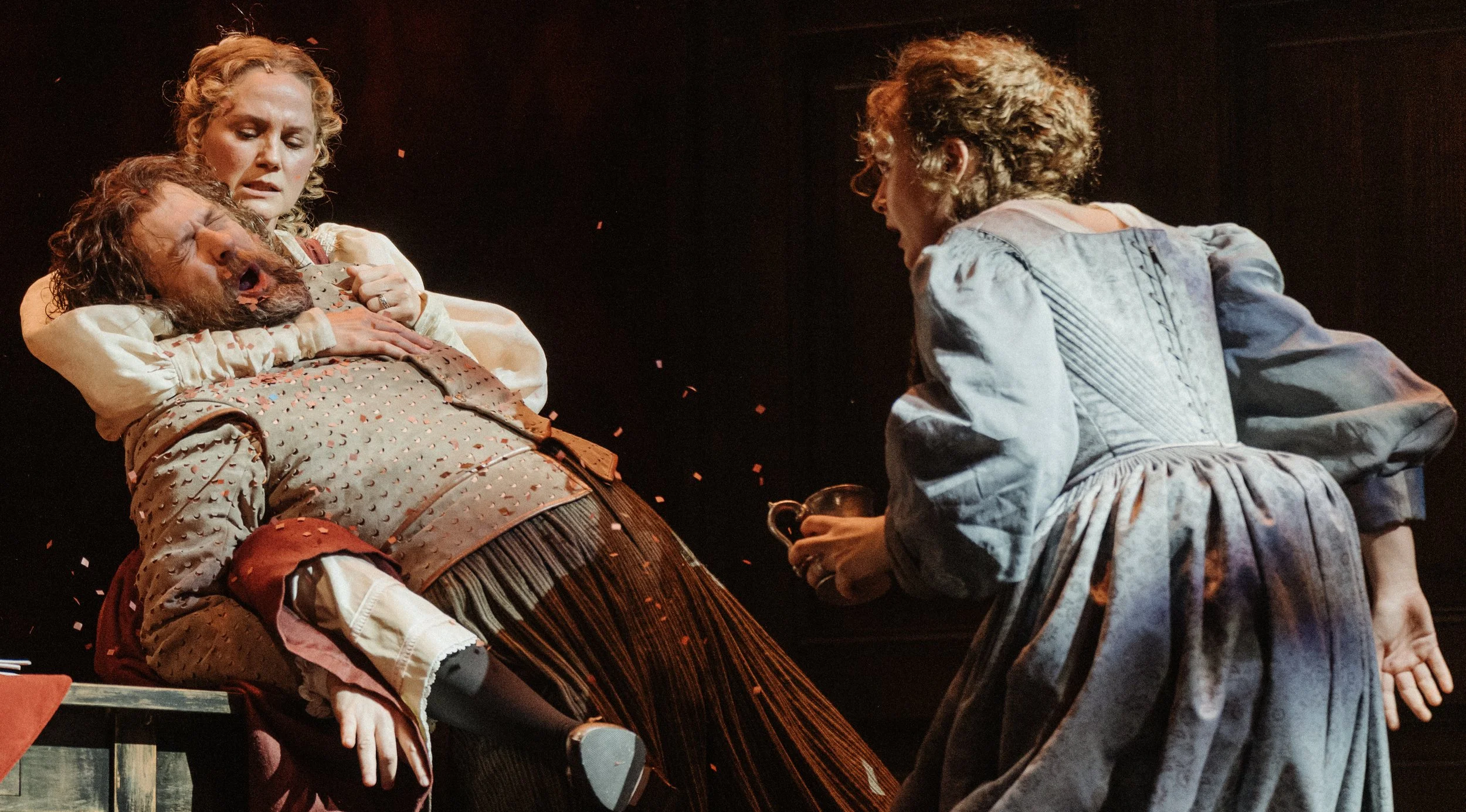
Giulia (Jennifer Nettles, left) helps a desperate wife (Emily Fink) poison her abusive husband (Andrew Kober).
In a recent New York Times interview, singer-songwriter Jennifer Nettles remarked of her new show, Giulia: The Poison Queen of Palermo, “The joke of it, the irony, is that my little musical about poison is the antidote we need right now.” Based on the audience response at a recent performance, her point was well taken. In witnessing a succession of abusive, barbarous, and toxic men succumbing to murder, many in the crowd clearly found their retribution. As news feeds clutter with stories of national leaders, Senate candidates, and millionaires evading justice for their crimes against women, there is indeed something quite gratifying about watching vigilante vengeance set to an intoxicating, pop-music beat.
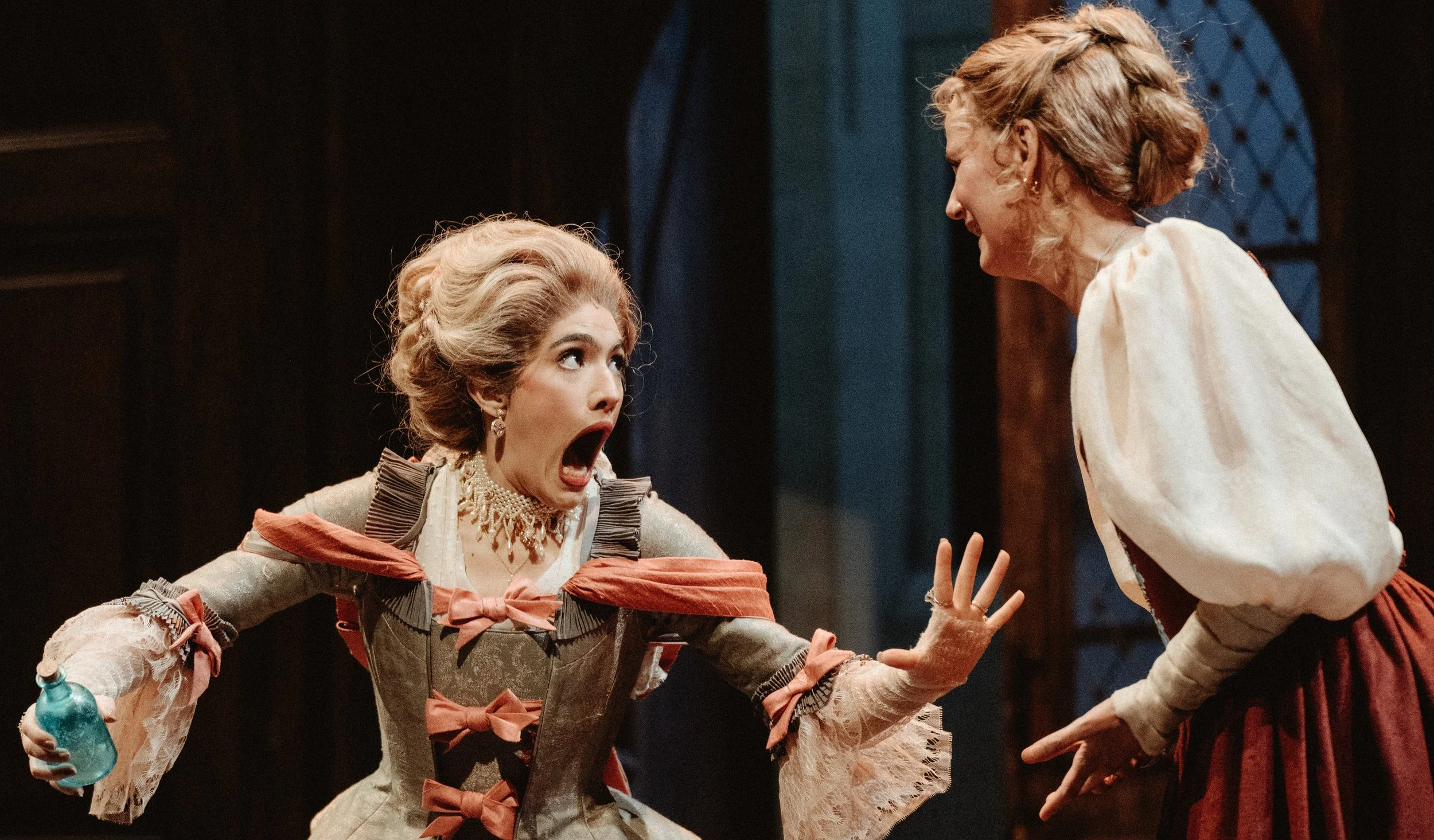
As Duchessa, Didi Romero (left) provides some comic relief while Giulia humors her.
The musical is based on Giulia Tofana, a 17th-century Sicilian apothecary whose legendary poison, Aqua Tofana, was reportedly responsible for the deaths of more than 600 men. Though the biographical details of Giulia’s life are murky, Nettles, who wrote the book and the songs, has created a milieu with contemporary resonance, but the story and characters are rendered in very broad strokes.
La Capitana (Bre Jackson), a narrator who weaves in and out of the action, opens the show echoing another musical’s prologue about mass murder, “The Ballad of Sweeney Todd.” She sings, “Come closer, lean in / Don’t miss a detail / A story of power, murder, and betrayal.” Then follows an introduction to the denizens of Palermo, a city seemingly populated exclusively by victimized wives, monstrous husbands, and corrupt nobles.
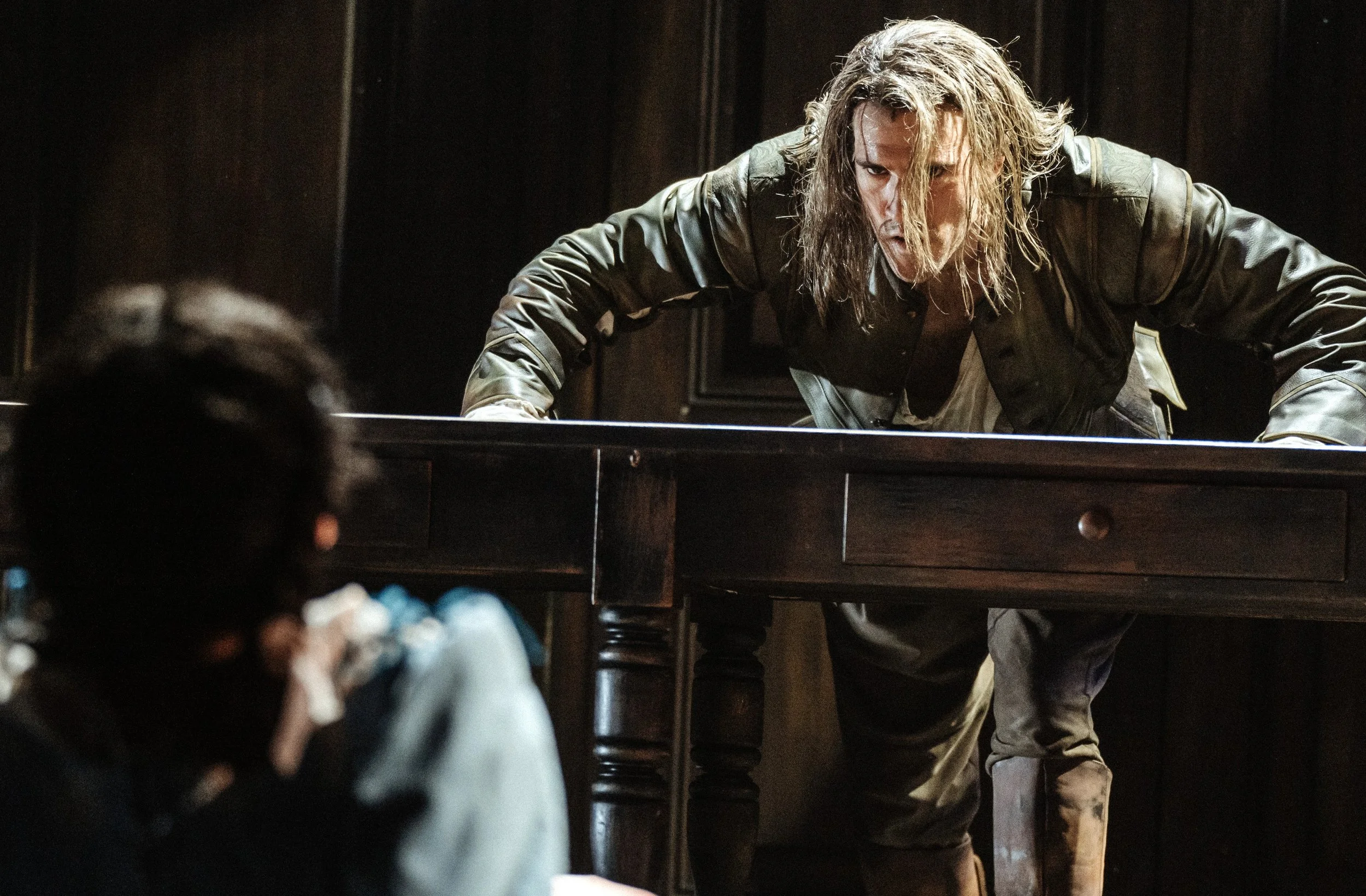
Giulia’s menacing husband, Carlo (Matthew Amira, right), pursues his stepdaughter, Vitoria (Naomi Serrano). Photographs by Andy Henderson.
Giulia (Nettles) runs a shop in Palermo, and she specializes in herbal tonics, tinctures, and salves. When her husband, Carlo (Matthew Amira), threatens Vitoria (Naomi Serrano), her daughter from a previous marriage, Giulia pivots from tonics to toxins. Pretty soon, she is dispensing her poison to brutalized women throughout the city in a war on Palermo, declaring: “Kill only those who deserve it / And I’ll give their wives the means to serve it!”
Nettles is thrilling, and her performance alone makes Giulia essential viewing. Vocally, she is superb, beautifully integrating country-western twang, pop bravado, and Broadway belting in sumptuously sung numbers like “The River,” “Fly Away,” and “Higher.” (Palmer Hefferan’s sound design, along with Adam Rothenberg’s music direction and Cian McCarthy’s orchestrations, provides strong support.) Just as impressively, she grounds the character with a notable vulnerability while displaying excellent comic timing.
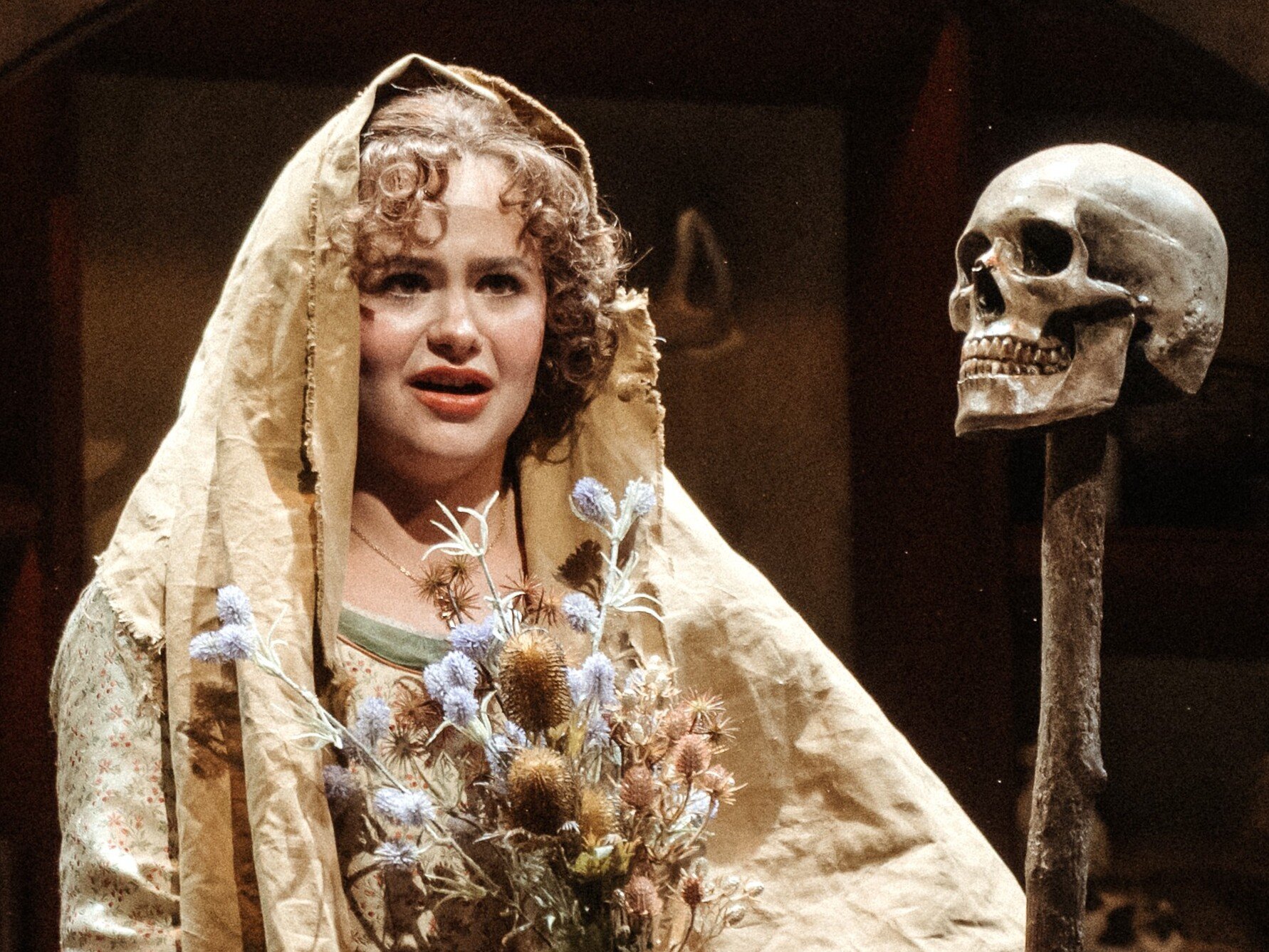
As Renata, Aubrey Matalon is a young bride on the brink of an inauspicious marriage.
As composer, Nettles generously gives her co-stars similarly big numbers. Quentin Earl Darrington portrays the heartless and hypocritical Cardinale, while Christopher M. Ramirez is the treacherous and despicable Governatore. This pair makes the Judge and Beadle from Sweeney Todd look cuddly in comparison, and they each have stand-out material to showcase their prodigious talents.
Under Mary Zimmerman’s fluid direction, the entire cast is terrific. They are well served by Austin McCormick’s angular and muscular choreography, which effectively fuses elements of hip-hop with folk dance forms. Ana Kuzmanić’s colorful period costumes, T.J. Gerckens’s expressive lighting, and particularly Daniel Ostling’s ingenious scenic design, with its shifting panels and revealing doorframes, give the sense of a pop-up book come to life.
For all its merits, though, Giulia is ultimately a letdown. While some elements evoke the brilliance of Sondheim and others the innovation of Hamilton, the musical stubbornly does not rise above the competent but uninspiring standard of Frank Wildhorn.
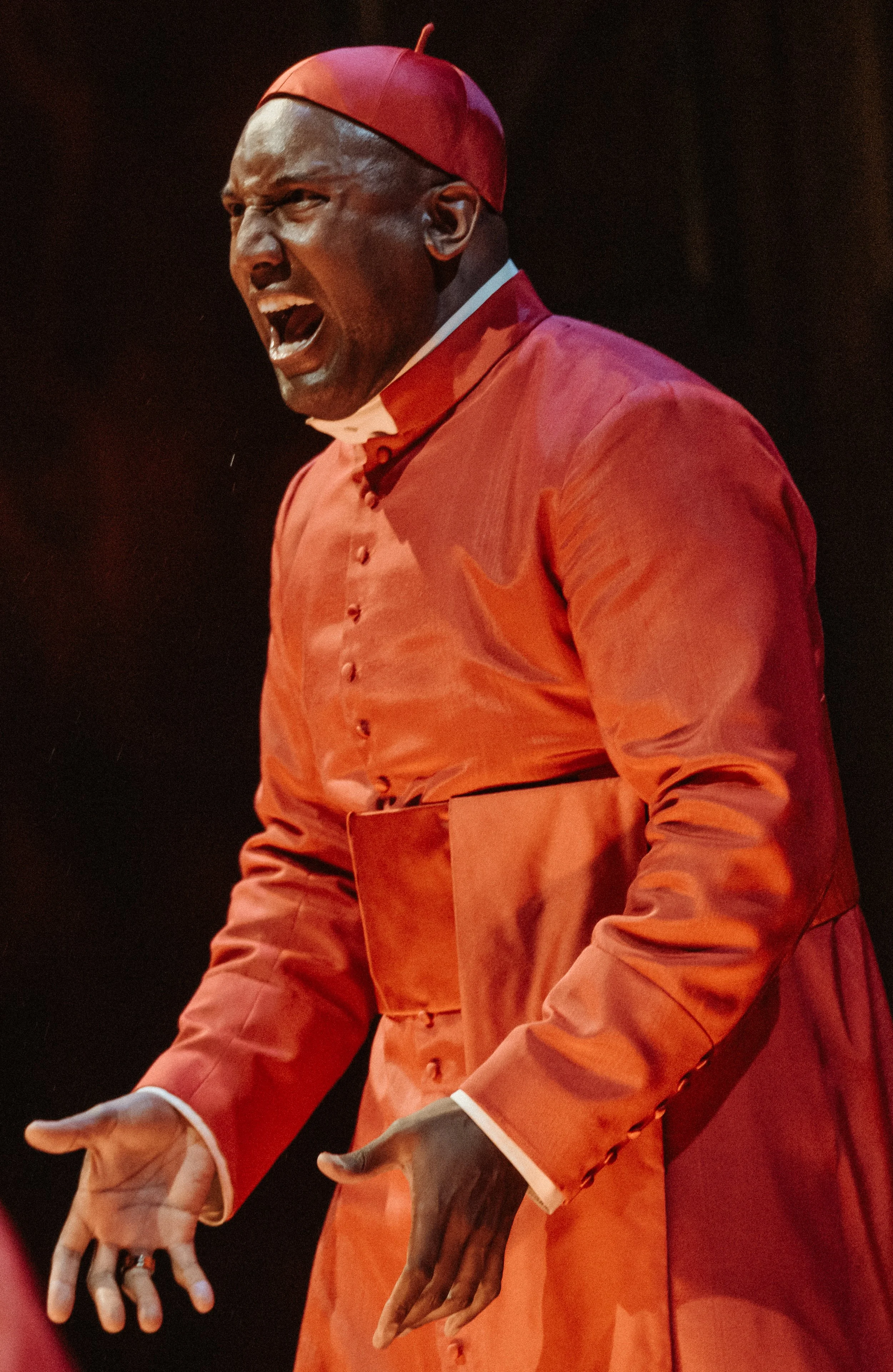
Quentin Earl Darrington plays Cardinale, a self-described “wolf” who tends his flock with cruelty and brutality.
The main issue lies in the lyrics, which fail to provide either sufficient psychological depth for the characters or narrative complexity. For instance, the numerous references to water, fire, and biblical figures lack contextual specificity. Giulia’s eleven-o’clock number, “Fly Away,” could be sung by any variety of musical theater heroines. In it, she laments:
I have a heart
And it rails and it rages
And it will beat in my chest ’til my death
Or ’til it breaks out of its ribbed cages
The generic metaphors and unabashed sentiment might make these songs perfect for chart-toppers, but they ultimately undermine the show's dramatic urgency and emotional richness.
A few years ago, Shaina Taub’s Suffs opened Off-Broadway to middling reviews. After undergoing significant revisions, it arrived on Broadway two seasons later as a dramatically improved production. One hopes that Giulia might meet a similar fate. This Poison Queen deserves a second shot.
Giulia: The Poison Queen of Palermo runs through Aug. 2 at the Perelman Performing Arts Center (251 Fulton St.). Evening performances are at 7 p.m. Tuesday through Friday and at 8:00 pm Saturday; matinees are 2 p.m. on Saturdays and 3 p.m. on Sundays. For tickets and more information, visit pacnyc.org.
Book, Music & Lyrics: Jennifer Nettles
Director: Mary Zimmerman
Choreography: Austin McCormick
Scenic Design: Daniel Ostling
Costume Design: Ana Kuzmanić
Lighting Design: T.J. Gerckens
Sound Design: Palmer Hefferan
