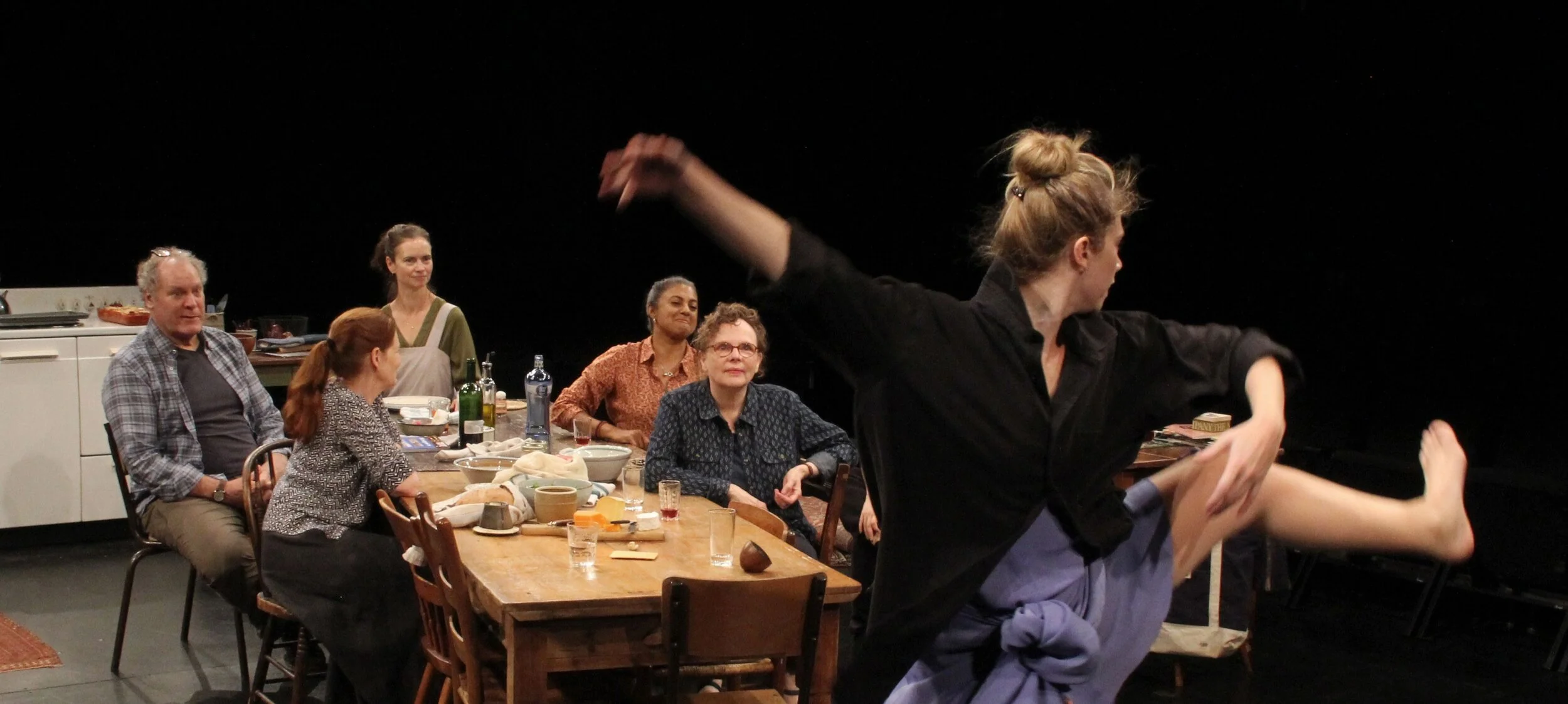
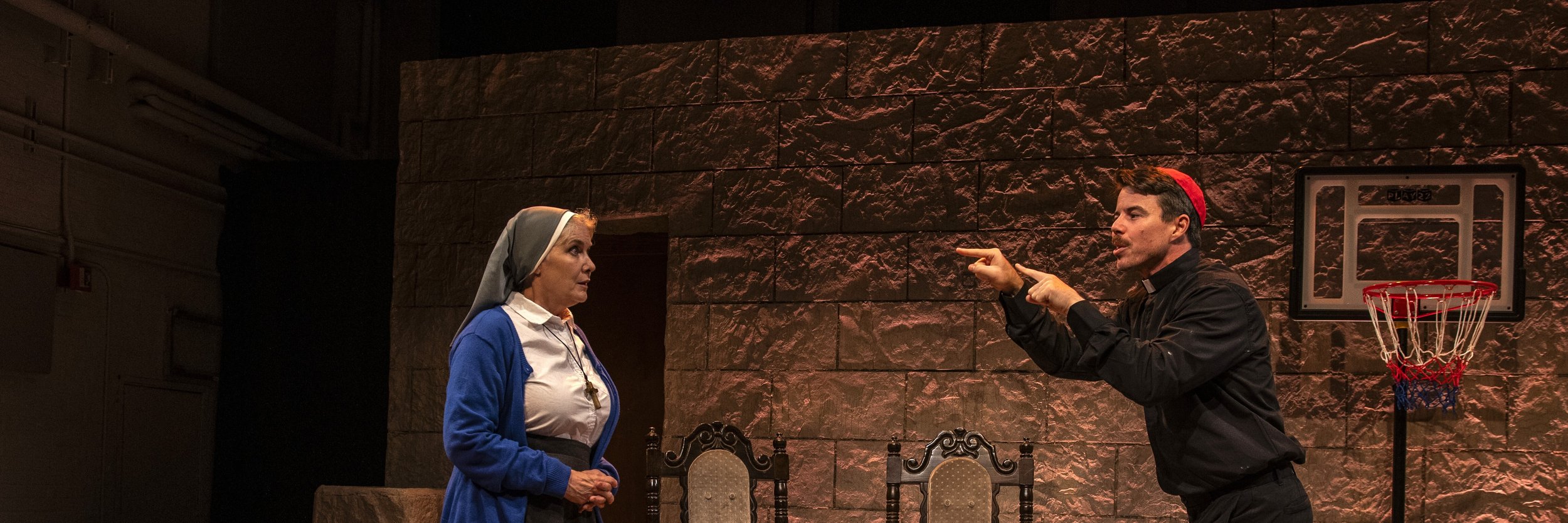
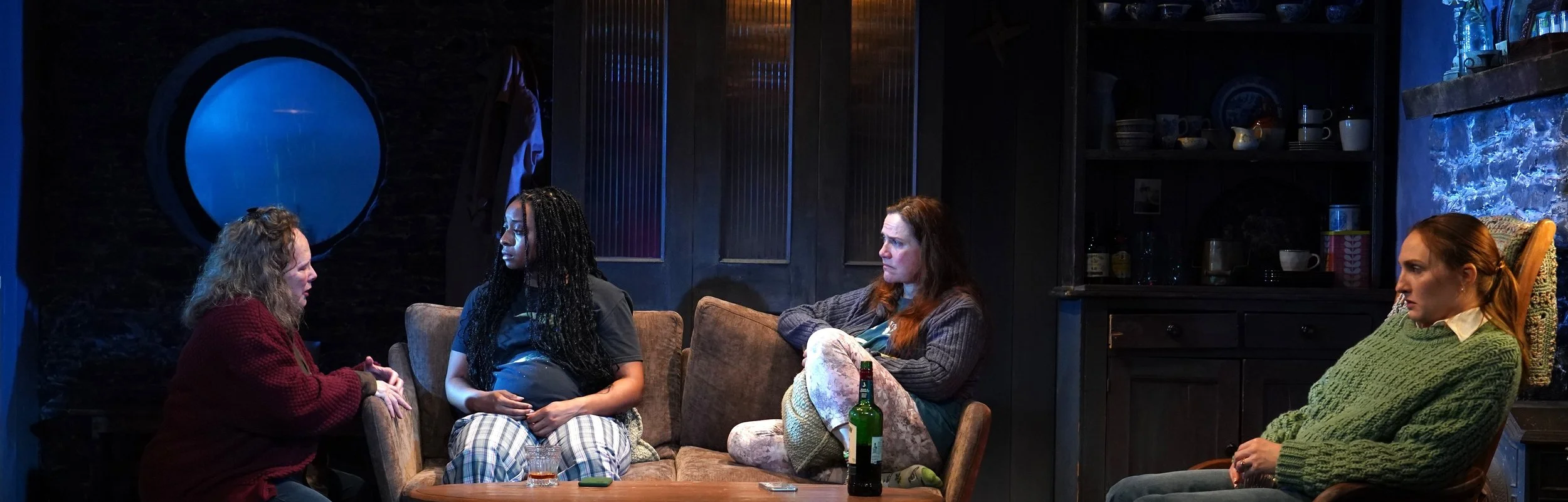
Erica Murray’s The Loved Ones is a poignant meditation on grief and betrayal that offers a potentially melodramatic setup but largely avoids obvious broad strokes in favor of quieter pleasures—sharply observed dialogue, characters who defy the labels placed on them, and an exploration of the difficulties and power of empathy. An outstanding ensemble led by the great Maryann Plunkett depicts the international group of women—Irish, English, and American—brought together in rural West Clare, Ireland, through tragic circumstances that threaten to divide them yet end up eliciting a precarious and precious sense of solidarity.

Deep Blue Sound
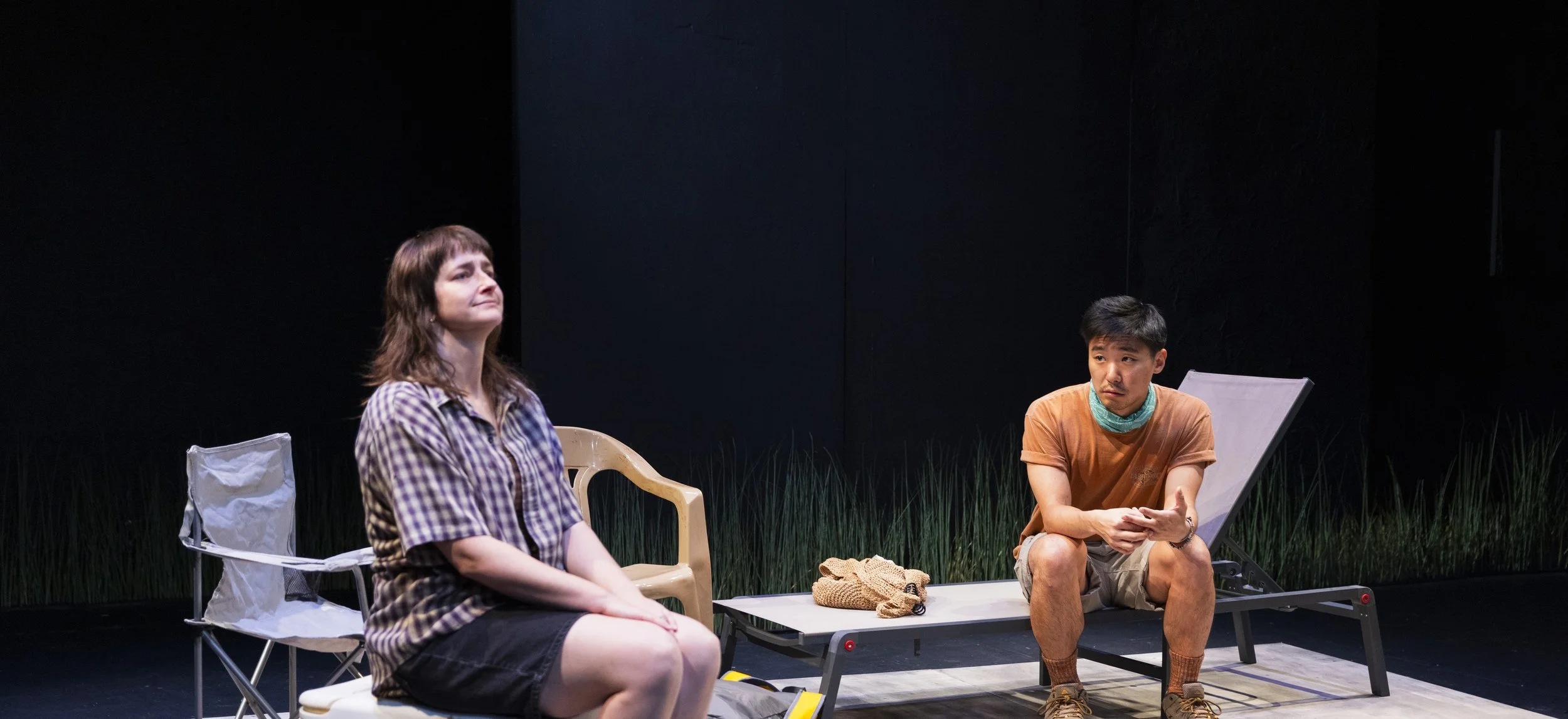
The Clubbed Thumb theater company follows up last year’s excellent Grief Hotel with another gem that originated in its Summerworks program, Abe Koogler’s Deep Blue Sound, in which a group of islanders in the Pacific Northwest mourn the disappearance of a nearby pod of orca whales. The production, in residency at the Public Theater, is astonishing: Koogler’s play is both strange and naturalistic, as funny as it is deeply moving, even shattering; Arin Arbus’s note-perfect direction is mesmerizing, smartly enhancing the emotional climaxes but never overdoing them; and the ensemble of nine is simply extraordinary.
What Happened?: The Michaels Abroad
It finally dawned on me that theater was back in New York City when I was once again in the presence of characters in a Richard Nelson play as they sliced bread, grated cheese, sipped wine, and had conversations that made you feel like an eavesdropper more than an audience member.
The Michaels
Like The Apple Family Plays and The Gabriels, Richard Nelson’s new play, The Michaels, focuses on a family in Rhinebeck, N.Y., a destination that has become for this playwright what Idaho is for the dramatist Samuel D. Hunter. In Rhinebeck, Nelson finds a microcosm of American life, although his primary structural models are clearly the plays of Anton Chekhov. Nelson has had a hand in translating three plays by the Russian master, and Chekhov’s influence is evident in the quotidian concerns of the earlier families as well as this one: it’s the first in a third cycle.
The Plough and the Stars
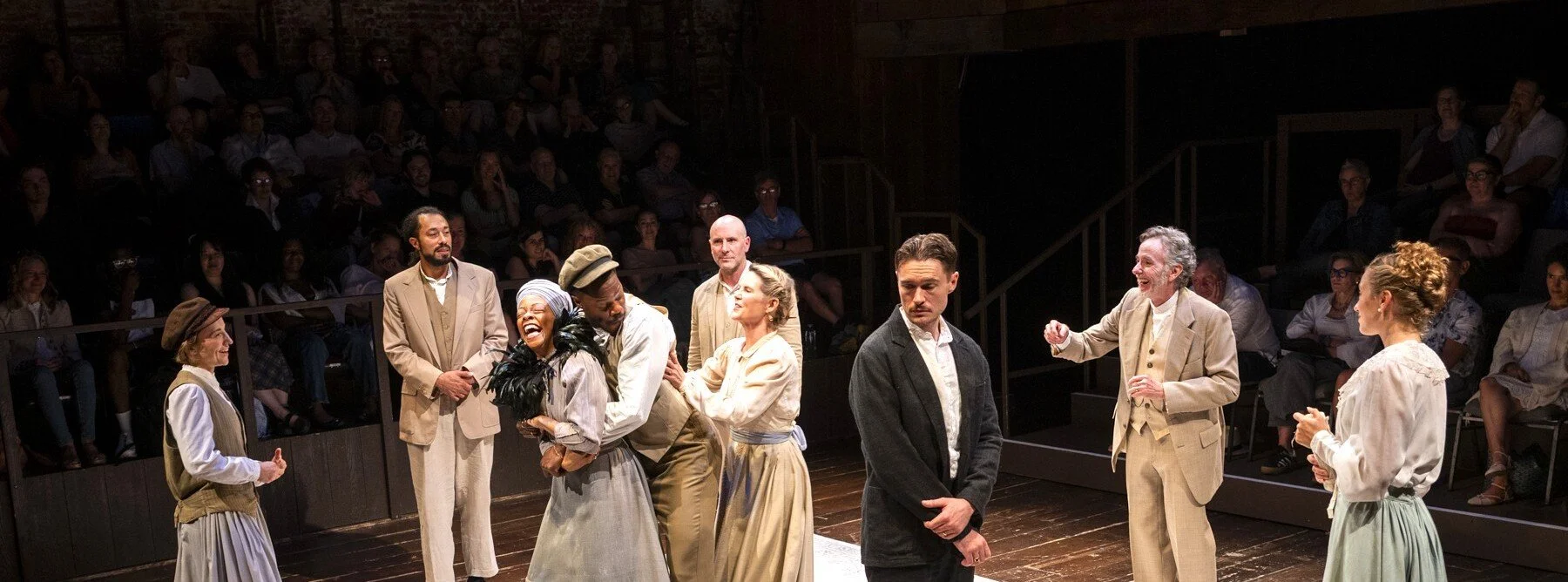
The Irish Repertory Theatre’s Sean O’Casey Season concludes with The Plough and the Stars, whose title is synonymous with the flag for the Irish Citizen Army. The last of O’Casey’s trilogy, which includes The Shadow of a Gunman and Juno and the Paycock, has joined the other two in repertory, and it’s a rougher, more jagged experience. Like the others, it takes place in a tenement; here the numerous characters move in and out of the parlor of Nora and Jack Clitheroe.