Reviews

Othello

Othello

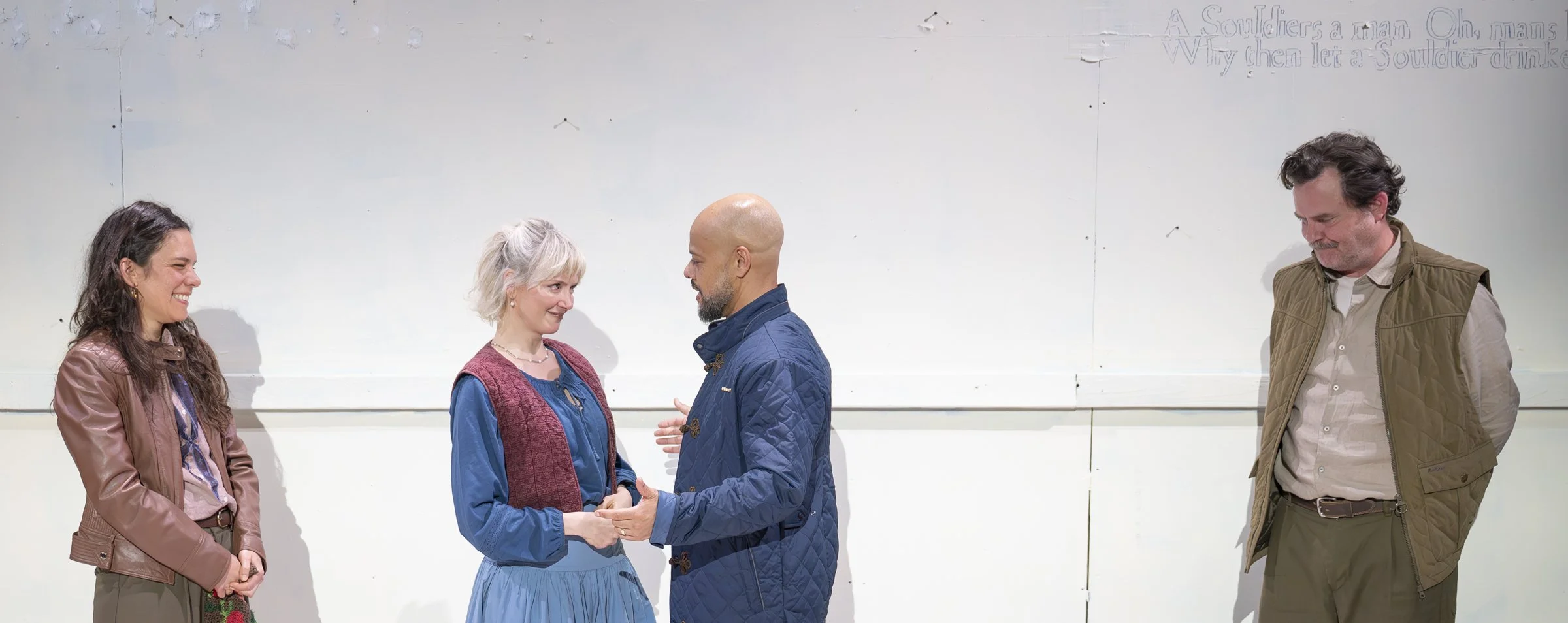
Bedlam’s stripped-to-the-bone staging of Othello proves that less can indeed be electrifyingly more, as four actors conjure a harrowing world with precision and nerve. Under the incisive direction of Eric Tucker, this revival foregrounds the play’s racial tensions with clarity, inviting audiences to lean in—and reckon—with every word.

Click for print friendly PDF version of this blog post

Hamlet

Hamlet

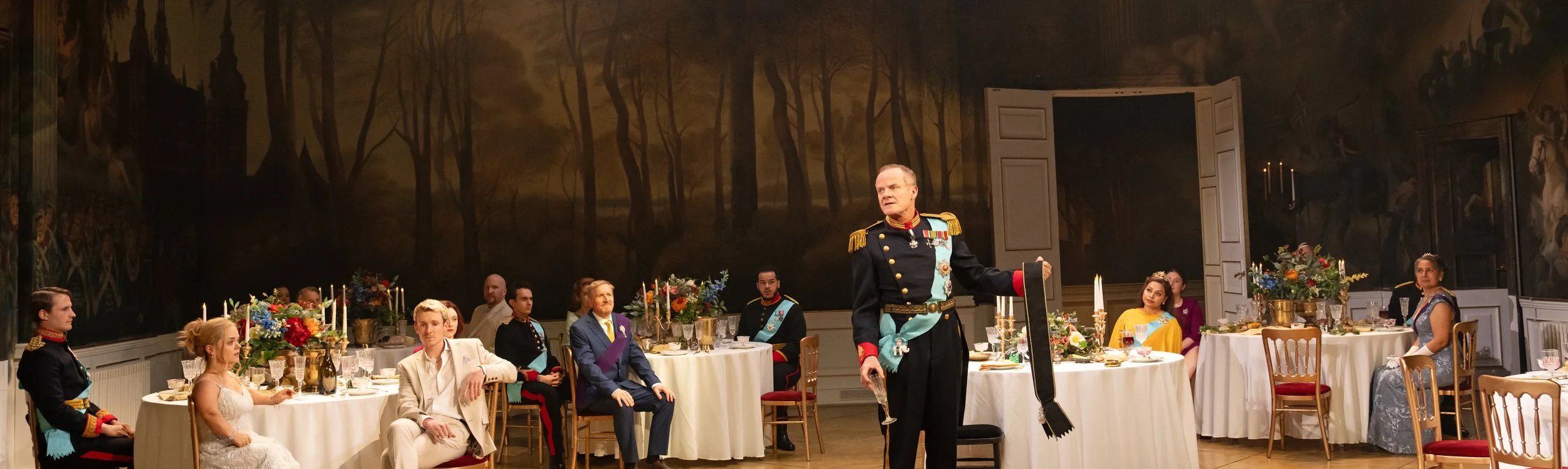
Director Robert Hastie brings his bold and inventive production of Hamlet for the National Theatre of Great Britain to the Brooklyn Academy of Music (BAM), a fitting first outing in the new partnership between these venerable institutions—BAM first performed Hamlet in 1861, and it was the National’s inaugural production in 1963. Hiran Abeysekera portrays the moody Danish prince as sweet, neurotic, and impish, drawing out the comedy in the play without sacrificing its complexity and tragic weight. Hastie and Abeysekera seize on Hamlet’s theatricality and theatrical self-awareness, taking it to a new and provocative level.

Click for print friendly PDF version of this blog post

Beauty Freak

Beauty Freak

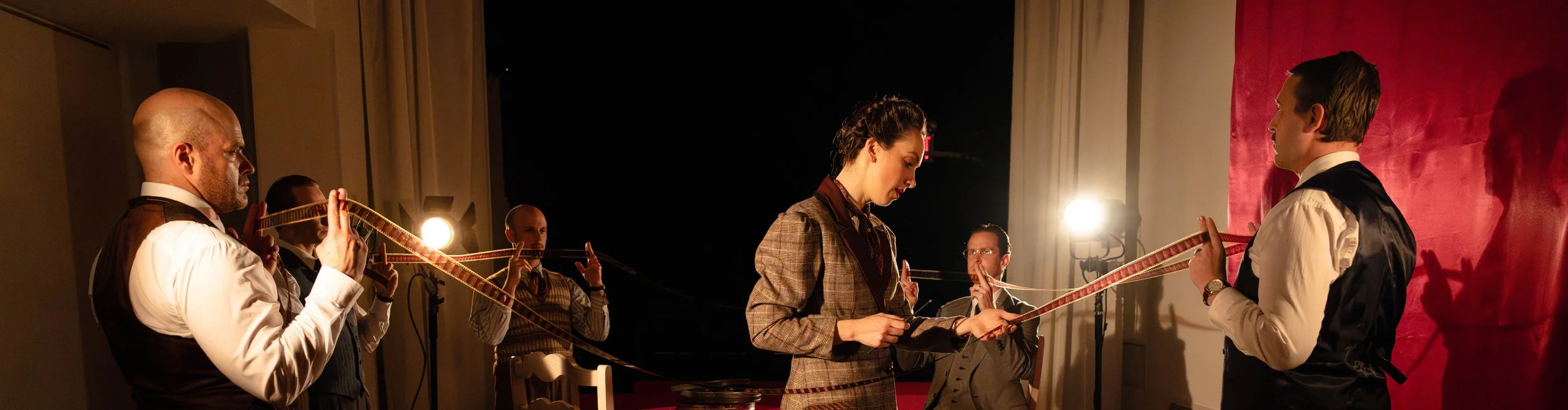
Josef Goebbels, Hitler’s master propagandist and serial womanizer, almost always had his way with women. Nevertheless, when he challenges filmmaker Leni Riefenstahl it’s a classic case of “the unstoppable force meets the immovable object.” It’s unclear from James Clements’ Beauty Freak whether Riefenstahl is the unstoppable force or the immovable object, but regardless, she emerges the winner—or so one is led to think.

Click for print friendly PDF version of this blog post

Kenrex

Kenrex

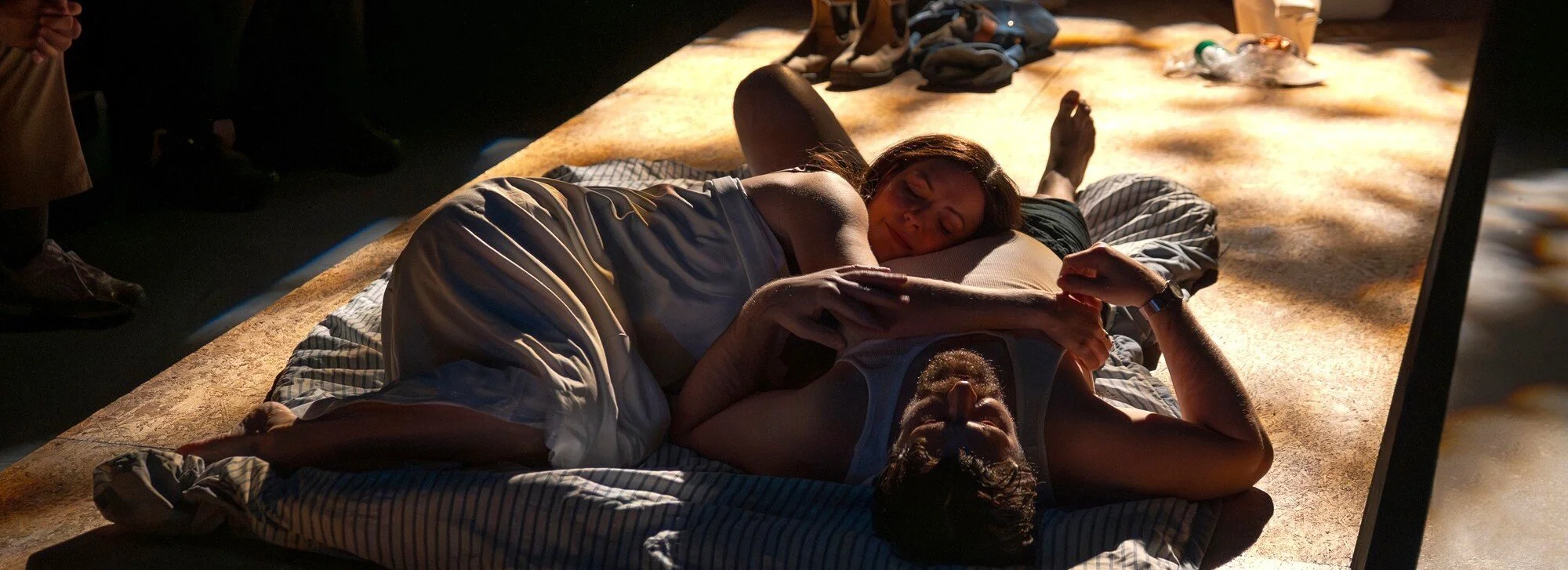
He plays dozens of characters. He bolts around the stage like a dervish, rearranging props, setting up mikes, climbing stairs and changing personas with every move. He works up as much sweat as Jonathan Groff in Just in Time. And he tells a chilling true-crime story in the process, one to leave the observer unsettled as to whether justice was done, and if so, what the price of that justice was.

Click for print friendly PDF version of this blog post

The Bad Daters

The Bad Daters

The Bad Daters, by Ireland-born New Yorker Derek Murphy, arrives Off Broadway with a winning blend of sharp Irish wit and disarming emotional honesty, transforming a premise about romantic misfires into something unexpectedly tender. Under the deft direction of Colin Summers, and buoyed by finely tuned performances from Kate Arrington and Shane McNaughton, this U.S. premiere proves as affecting as it is entertaining—a love story that earns its poignancy without sacrificing its bite.

Click for print friendly PDF version of this blog post

Rheology

Rheology

In Shayok Misha Chowdhury’s Rheology, now at Playwrights Horizons after a spring 2025 run at the Bushwick Starr in Brooklyn, the writer and director creates a form of exposure therapy for his consuming fear of his mother’s death by confronting the prospect directly, in performance, alongside his real-life mother, Bubul Chakraborty. She is not an actor or a theater-maker, but an acclaimed theoretical physicist and professor at Brandeis University in Massachusetts.

Click for print friendly PDF version of this blog post

Cumulo

Cumulo

In Cumulo, creator Emily Batsford conjures a visually arresting, nonverbal puppetry work that transforms a simple free fall into a poetic meditation on autonomy and self-reclamation. Inspired by Batsford’s recurring nightmares of falling, the piece asks: how does one assert identity under circumstances beyond one’s control, when stability itself feels elusive?

Click for print friendly PDF version of this blog post

The Adding Machine

The Adding Machine

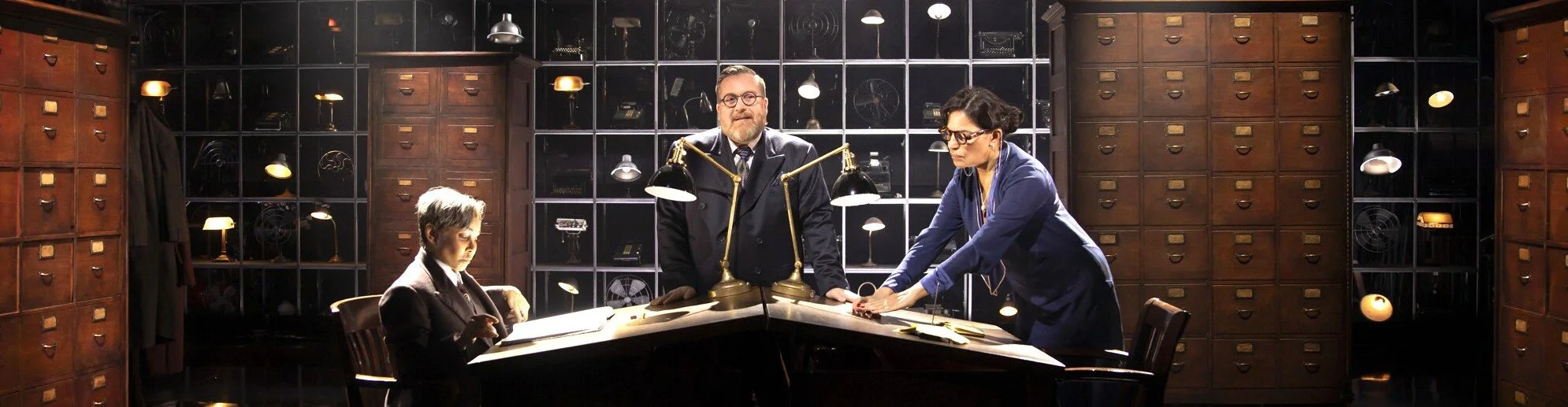
Elmer Rice’s The Adding Machine shows surprising vitality after more than a century. Although critic Edmund Wilson disdained the play in 1924 for its “pessimistic heresies” and “effects of ferocious ugliness,” the importance of it did not escape other critics. When Death of a Salesman premiered in 1949, Harold Clurman noted that the theme of Arthur Miller’s play was “not, strictly speaking, new to our stage,” citing Rice’s 1923 work. With Salesman now on Broadway to rehash the shortcomings of capitalism, the New Group deserves kudos for offering a chance to see its precursor.

Click for print friendly PDF version of this blog post

Lost in Del Valle

Lost in Del Valle

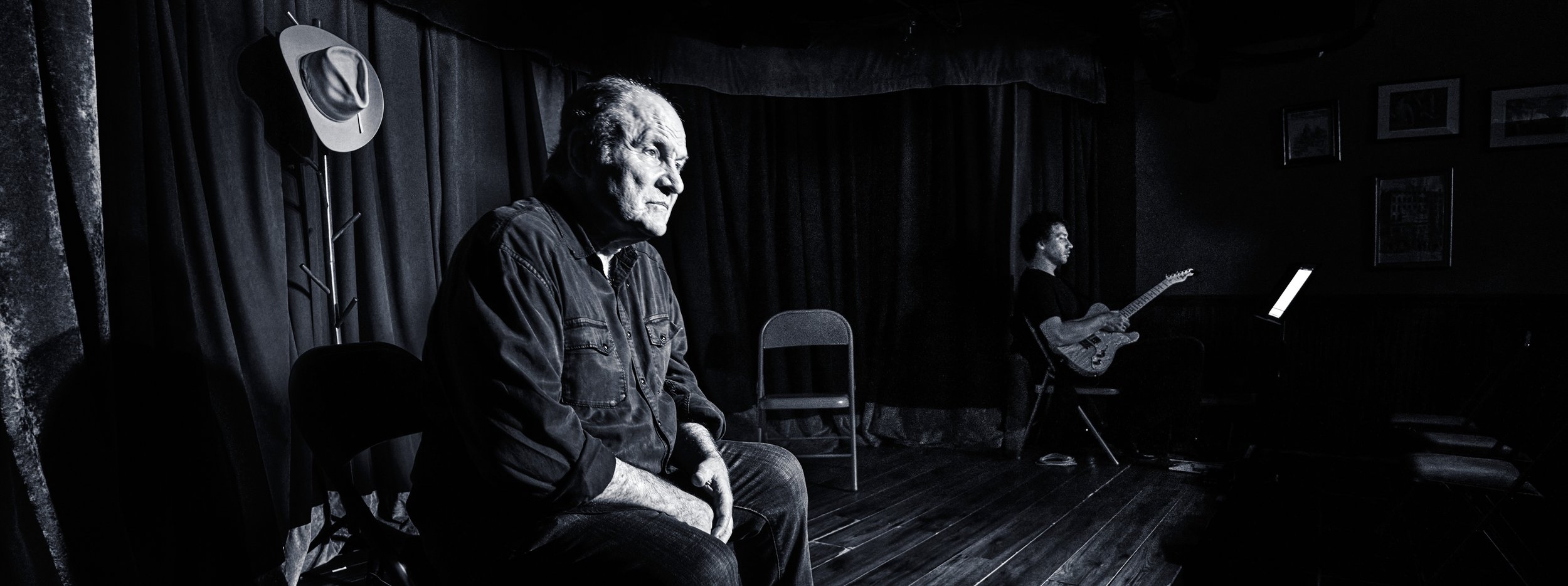
A one-man theatrical hurricane, Ned Van Zandt barrels onto the stage in Lost in Del Valle, a genre-bending dark comedy that transforms the Huron Room at SoHo Playhouse into a fever dream of excess, ruin, and hard-won redemption. Directed with razor-sharp precision by Amir Arison, and accompanied on stage by guitarist Mike Moore, this U.S. premiere is as unflinching as it is mesmerizing—an unforgettable descent into the chaos of a life lived on the edge.

Click for print friendly PDF version of this blog post

The Approach

The Approach

On the tiny stage of Irish Rep’s basement Studio Theatre, two women sit at a cafe table catching up on their lives. The Approach has a cast of three, and the pairing of women changes for each scene. This Dublin-set play centered solely on women talking with one another is written and directed by men (Mark O’Rowe and Conor Bagley, respectively)—and, alas, for a good portion of its 70-minute run time, it fails the Bechdel test

Click for print friendly PDF version of this blog post

Scorched Earth

Scorched Earth

Scorched Earth, a dance theater piece created, directed and choreographed by Luke Murphy, asks, “What does it take to be of a place?” At the center of the play is the tension between William Dean (Will Thompson), a confident new arrival in a rural Irish community, and John McKay (Luke Murphy), a local tenant who lives on land that is up for auction. The work digs into territorialism and the violence that can occur over land disputes.

Click for print friendly PDF version of this blog post

Bent Through Glass

Bent Through Glass

Bent Through Glass, written and performed by Alex Koltchak, transforms unimaginable loss into a work of emotional clarity, as a grieving father traces the aftershocks of his daughter’s suicide with unflinching honesty. Under the sensitive direction of Michael Sladek, this deeply personal solo piece becomes not only a testament to anguish, but a quietly radiant affirmation of love’s endurance, shaped by Koltchak’s willingness to bare his soul.

Click for print friendly PDF version of this blog post

Titus Andronicus

Titus Andronicus

Though apparently popular in its own time, Titus Andronicus (ca. 1592), Shakespeare’s first tragedy, and his bloodiest, hasn’t enjoyed much esteem since. One 17th-century playwright declared it a “heap of rubbish”; T.S. Eliot thought it “one of the stupidest and most uninspired plays ever written.” Others conveniently decided that something so barbarous could not have been written by Shakespeare (although it likely contains some material by the dramatist George Peele, there is no doubt of Shakespeare’s authorship of the bulk of the play). It’s a good thing, then, that Red Bull Theater, led by Jesse Berger, was undeterred: Berger directs a harrowing, and funny, production of the play, featuring a ferocious Patrick Page in the title role.

Click for print friendly PDF version of this blog post

The Pushover

The Pushover

Just what is John Patrick Shanley, a major playwright and screenwriter, doing at the Chain Theatre, a black box on the third floor of a dowdy Garment District office building? Premiering a lesser work, that’s what. Much lesser. The Pushover, his frenetic new drama, might generously be described as an exploration of good vs. evil, a character study of troubled individuals struggling to wriggle free of the personas they’ve created for themselves, or a noirish crime caper. Mostly, what’s on the small Chain stage is three romantically entangled women, arguing, acting out, and pulling power plays on one another. It’s very loud, even without miking, and while there are intimate moments and the occasional arresting snatch of Shanley dialogue, the tone seldom varies from harsh and antagonistic.

Click for print friendly PDF version of this blog post

Heartbreak Hotel

Heartbreak Hotel

Titling her play Heartbreak Hotel is a major bit of misdirection from New Zealand dramatist Karin McCracken. Elvis’s recording of his classic 1956 single (by Mae Boren Axton and Tommy Durden) is barely mentioned, and its bouncy blues are a far cry from McCracken’s gloomier deep dive into the nature of heartbreak. Directed by Eleanor Bishop, the play reaches beyond McCracken’s personal drama to examine unexpected, more clinical aspects of a breakup, such as psychological, biological, and physiological symptoms. Interspersed with those sequences are musical interludes—she took up the synthesizer to occupy herself after the end of a six-year relationship, and she has learned six “powerful” chords.

Click for print friendly PDF version of this blog post

Nicole Travolta Is Doing Alright

Nicole Travolta Is Doing Alright

In Nicole Travolta Is Doing Alright, a one-woman play by performer Nicole Travolta (cowritten with Paula Christensen), the star delivers a dazzling, deeply felt turn that fuses stand-up, confessional storytelling, and incisive character work into an evening of theatrical vitality, fluidly staged by directors Margarett Perry and Paula Christensen. With razor-sharp wit, Travolta transforms her trials of credit card debt and compulsive shopping into a bold, laugh-out-loud meditation on identity, resilience, and reinvention.

Click for print friendly PDF version of this blog post

11 to Midnight

11 to Midnight

11 to Midnight is a funky, dance-driven show by Austin and Marideth Telenko (the social media sensations Cost n’ Mayor) in partnership with Lyndsay Magid Aviner (who also directs) and Jacob Aviner of Hideaway Circus. Set on New Year’s Eve between the hours of 11 and midnight, the production presents a festive feel before it begins. Cast members casually chat with the audience as they take their seats, holding a large stack of sticky notes on which they write down missives, meant to echo New Year’s resolutions.

Click for print friendly PDF version of this blog post

How My Grandparents Fell in Love

How My Grandparents Fell in Love

Two occupants of 59E59 from recent seasons inform the new musical now playing there. The Sabbath Girl, from 2024, was a sweet musical romance of a Jew and a non-Jew in modern-day Manhattan. Dear Jack, Dear Louise, from 2025, had playwright Ken Ludwig affectionately serving up the epistolary wartime courtship of his parents, an Army doctor and a chorus girl. Pour these two shows into a blender, add a generation, hit Purée, and you come up with How My Grandparents Fell in Love.

Click for print friendly PDF version of this blog post

Public Charge

Public Charge

In Julissa Reynoso’s autobiographical drama Public Charge, co-written by Michael J. Chepiga, one witnesses how Reynoso, played with fierce tenacity by Zabryna Guevara, solved a political impasse as a senior diplomat in the Obama administration. While the play offers an earnest and often compelling meditation on democracy in action, its heavy-handed didacticism ultimately mutes its dramatic impact.

Click for print friendly PDF version of this blog post

No Singing in the Navy

No Singing in the Navy

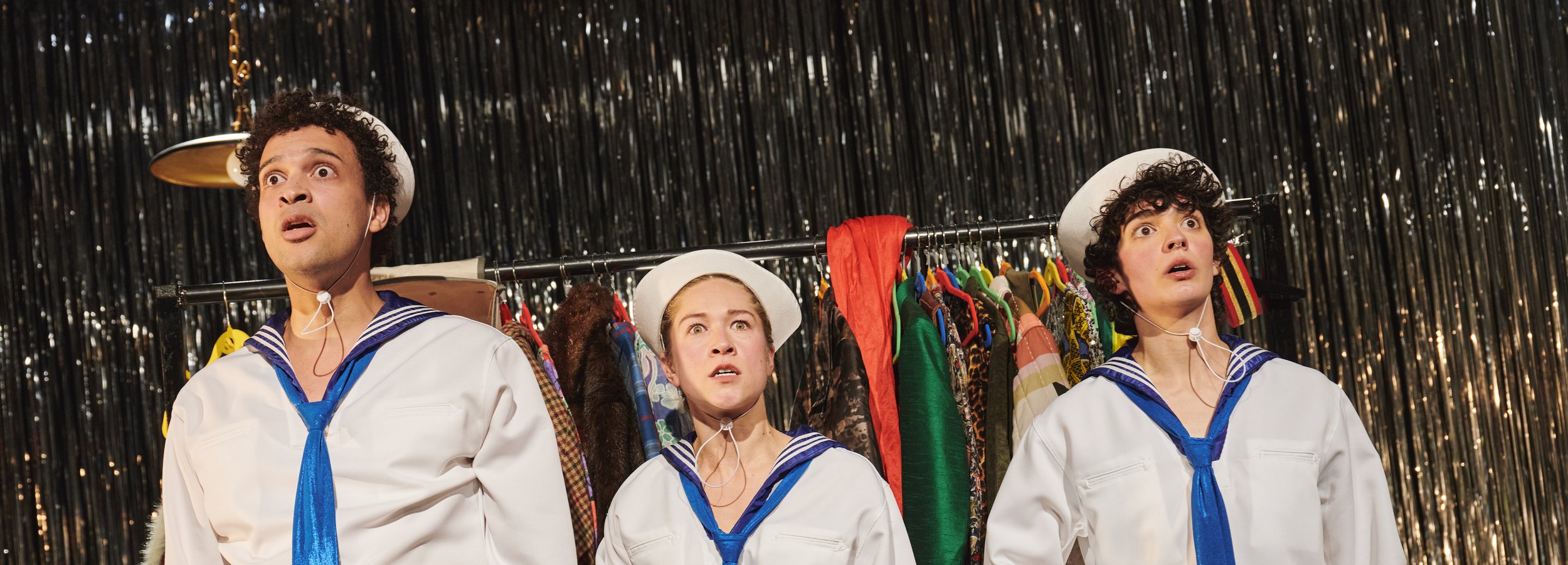
The poster for Milo Cramer’s No Singing in the Navy, showing three wide-eyed sailors, evokes classic military-themed musicals—not only wartime ones like On the Town (1944) and Anchors Aweigh (1945), but also the nostalgia-tinted shows of a generation later: Dames at Sea (1966) and Over Here! (1974). Its “score,” however, bears little resemblance to melody-rich 1930s and ’40s musicals, and its book is awash with absurdist episodes that misfire.

Click for print friendly PDF version of this blog post