
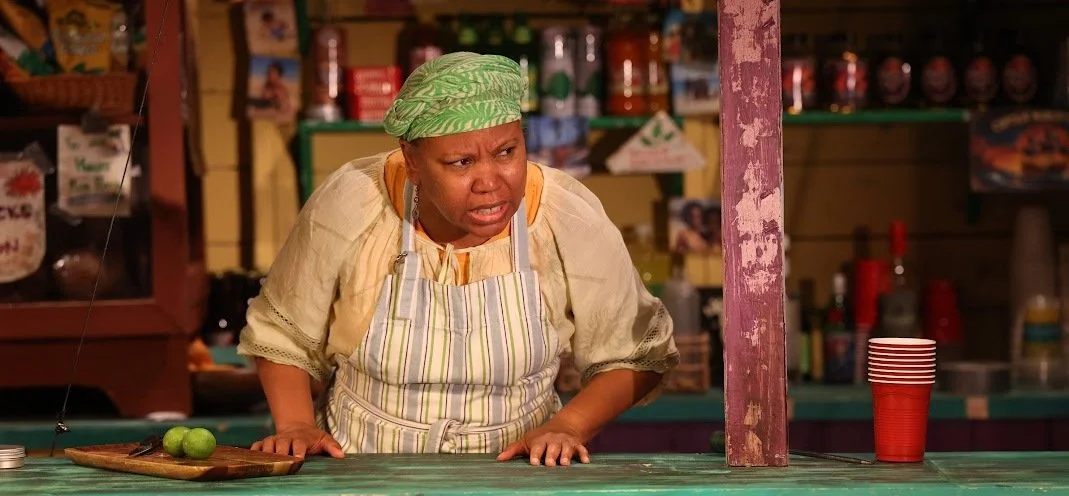
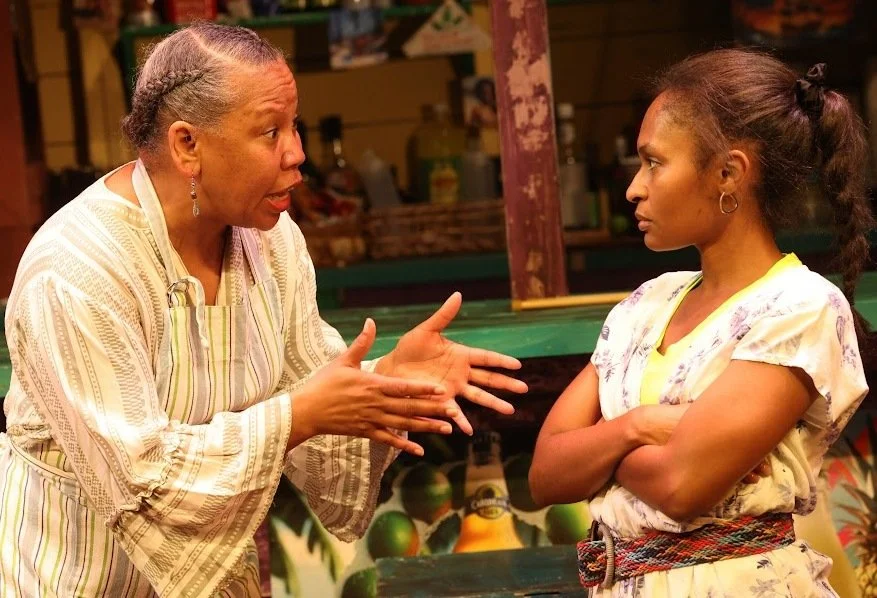
Mother Rose (Melanie Matthews) offers her daughter Garland (Nikyla Boxley) heartfelt career and life advise.
Eljon Wardally’s Blooming in Dry Season turns a family dispute over a daughter’s future into a moving examination of ambition, sacrifice, and the burdens parents pass to their children. Over the course of two acts, layers of conflict gradually emerge, deepening one’s understanding of the characters’ lives. Wardally skillfully builds suspense through subtle clues that reveal the emotional toll hidden beneath the characters’ seemingly happy lives, and director Jackie Alexander paces the production adroitly and guides the powerful performances of an excellent cast.
Set in a weathered bar in tropical Grenada, with a calypso-infused score by Étienne Charles, this three-hander is the story of a family coming apart. Father Fitz (Brian Richardson), a former singer for a local calypso group, is married to Rose (Melanie Matthews), a devoted wife and owner of their rum shop. Their daughter, Garland (Nikyla Boxley), is an accomplished pan drummer who is about to finish school when she is offered an opportunity to join a professional touring band.
Fitz does not want Garland to pursue music because he fears she will be disappointed or exploited, sparking a conflict between father and daughter that reveals deep feelings of abandonment and self-worth. Fitz’s lack of support leaves Garland questioning her father’s love.
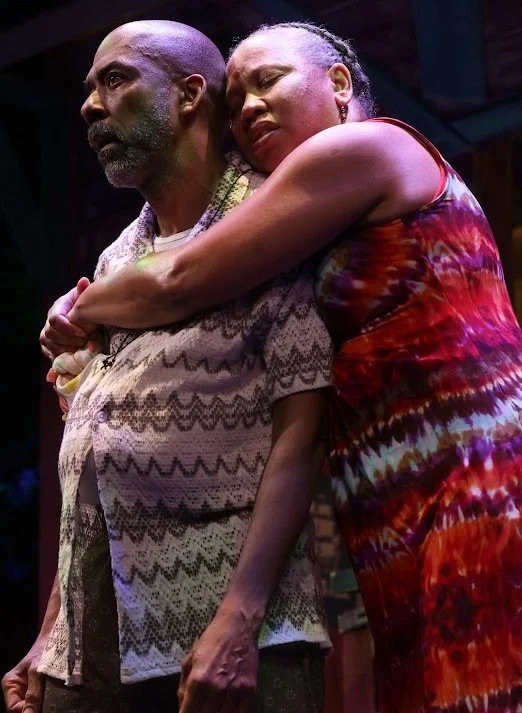
Rose reminds her husband, Fitz (Brian Richardson), how committed she is to him and their family. Photographs by Hollis King.
I know Mummy loves me but—
Do you?
Do you wish I was a boy child?
While Rose steadfastly supports and loves Garland, she is forced to revisit the way she let go of her own aspirations when she married Fitz. Fitz followed his music; Rose remained faithful to her marital commitment, never wavering, despite his failures. When he suggests that she has been unfaithful, Rose explodes:
When in all the years we were supposed to be in love
You were horning me with that, that—
... And I stood by you.
Beyond the conflict between Fitz and Garland, Wardally enriches the family dynamic by introducing other elements. For all of Fitz’s bluster about a man’s rights as head of the family, it is Rose who serves as its center and strength. She weathers setbacks—fire, illness, financial hardship, and regret—with deep faith and hope. She recognizes what is best for both Garland and Fitz. Matthews’s performance is the sun around which everything revolves:
But I realized that flowers doh blossom
Just because of the sunshine.
They bloom because of the rain,
The dirt, the drought and patience.
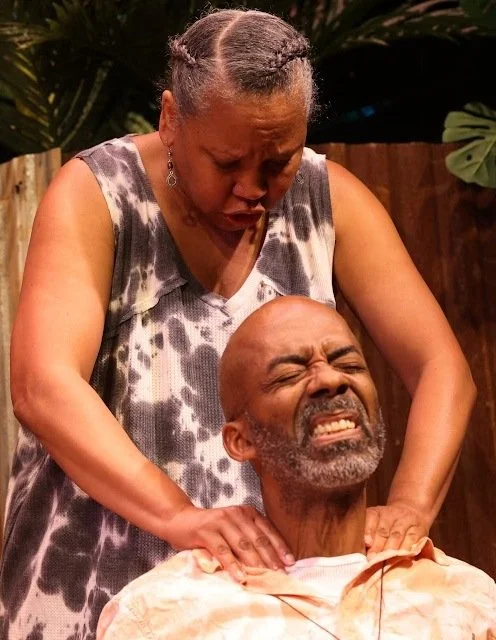
Rose soothes Fitz as he becomes confused and overwhelmed with changes to himself and his family.
For his part, Richardson’s Fitz is haunted by the pursuit of his musical career—his dream—against his parents’ wishes and further burdened by the lack of support from Rose’s family. Additionally, his strong embrace of patriarchy denies the reality of who truly leads the family: Rose. Yet Richardson’s empathetic portrayal makes his devotion and affection for Rose and Garland abundantly clear throughout.
The teenage Garland appears to be at the center of the family’s drama. She has the opportunity to leave school and pursue music. Garland becomes the vessel for her parents' competing dreams: Fitz fears she will repeat his mistakes, while Rose hopes she will achieve the independence she herself sacrificed. Boxley’s strong performance captures the full range of emotions Garland experiences as she tries to move forward with her life while still honoring her parents.
Wardally’s crackling dialogue features abundant humor, helping to ease the family tension. In response to Rose being evasive about Fitz, Garland quips:
The higher the monkey climbs,
The more you see his ass…
Rose, meanwhile, reminds Garland to appreciate her father’s talent and namesake, pointing out its benefits:
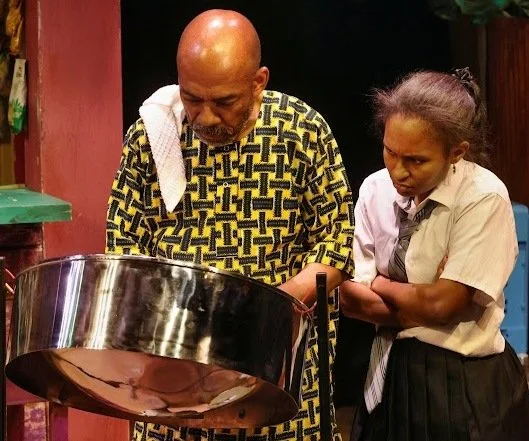
Fitz tries to impress his daughter with his drumming prowess. She is not convinced.
It’s only natural that some of the family talent
Rubbed off on you with a name like that.
Goat doh make sheep.
There is little in this production that does not serve a purpose. Even the weathered shack, scenic design by Isabel & Moriah Curley-Clay, functions as a reminder of Rose’s family support. Additionally, it is a smart choice by Alexander to use the shack as a stoic symbol of endurance in spite of repeated repair, directing the audience’s attention to the performers.
All lay claim to this purple piece of nothing
And my father left it to me.
Me, so I would always have something that would be mine …
So I could always be free.
As the title—Blooming in Dry Season—suggests, beauty can emerge despite difficult conditions. The play is about family stress, but it is also about a strong family, especially mother Rose, that survives.
Blooming in Dry Season runs through June 28 at WP Theater (2162 Broadway, at 76th Street). Performances are Tuesday, Thursday, Friday and Saturday at 7 p.m; matinees are Wednesday and Sunday at 3 p.m. and Saturday at 2 p.m. For tickets and additional information, visit newfederaltheatre.com.
Playwright: Eljon Wardally
Director: Jackie Alexander
Music: Étienne Charles
Scenic design: Isabel & Moriah Curley-Clay
Lighting design: Antoinette Tynes.
Costume design: Gregory J. Horton
Sound design: Lee Martinez Cruz
If you enjoyed this review, please click on the Like icon below.
