
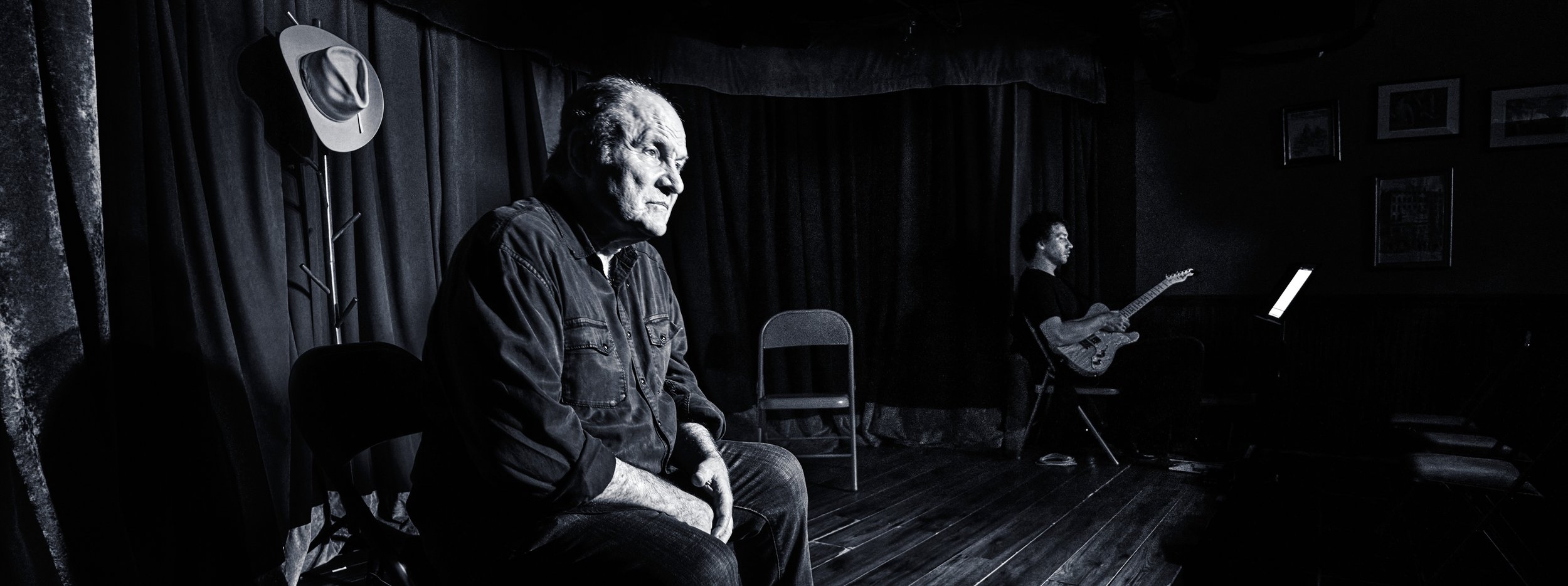
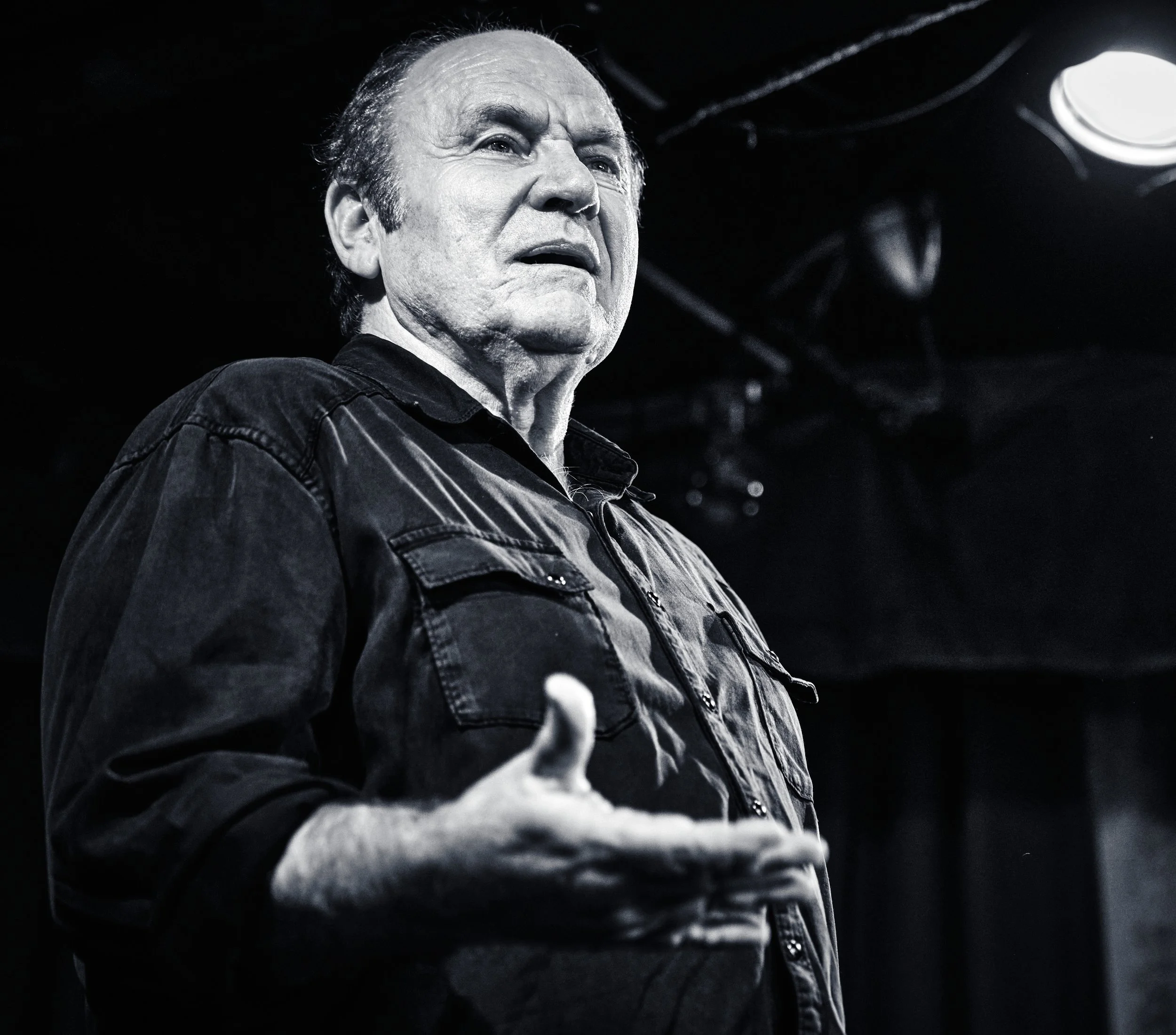
Performer-playwright Ned Van Zandt plays 19 characters in Lost in Del Valle, his autobiographical play about survival, sobriety, and the redemptive power of art.
A one-man theatrical hurricane, Ned Van Zandt barrels onto the stage in Lost in Del Valle, a genre-bending dark comedy that transforms the Huron Room at SoHo Playhouse into a fever dream of excess, ruin, and hard-won redemption. Directed with razor-sharp precision by Amir Arison, and accompanied on stage by guitarist Mike Moore, this U.S. premiere is as unflinching as it is mesmerizing—an unforgettable descent into the chaos of a life lived on the edge.
Following a celebrated run at the 2025 Edinburgh Festival Fringe, where it received the Derek Award for Best Overseas Production, Lost in Del Valle sweeps from Texas to New York, Los Angeles to Hawaii, threading together vivid, first-hand glimpses of life on the margins—from a medium-security prison in Del Valle, outside of Austin, Texas, to the charged interiors of the Chelsea Hotel in downtown Manhattan and the intimate orbit of music royalty. Yet Lost in Del Valle is far more than a chronicle of a drug-fueled existence in the underbelly of the arts world; it ultimately reveals itself as an arduous journey toward survival, sobriety, and the redemptive power of art.
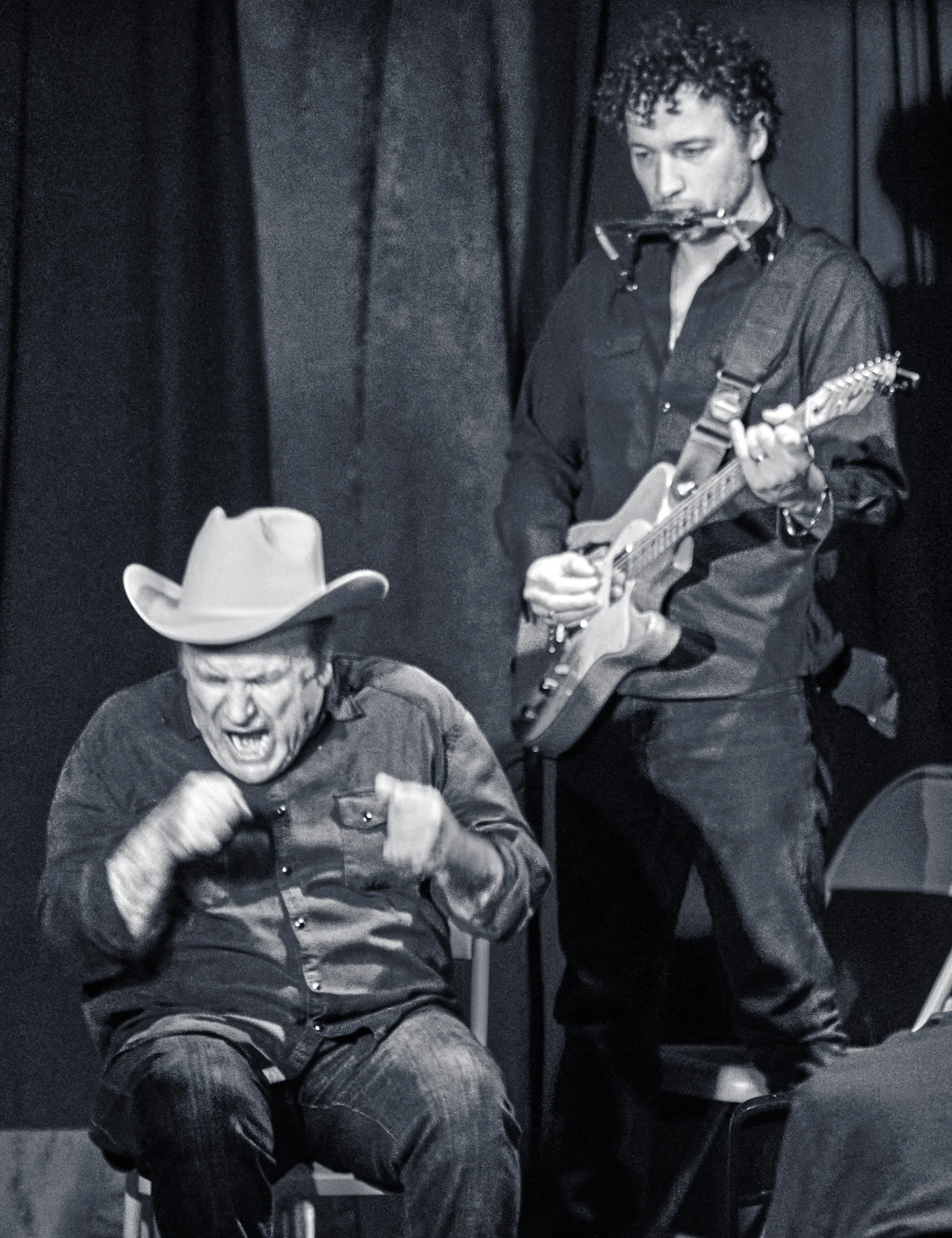
Van Zandt, accompanied on stage by guitarist Mike Moore, shares some of his harrowing experiences in Del Valle Correctional Institute, outside of Austin, Texas, where he spent five months after a drug charge conviction.
Van Zandt’s sprawling autobiographical odyssey unfolds along a fractured timeline, suggesting a narrative shaped less by objective reality than by the distortions of memory. He opens with a harrowing flashback to a near-fatal overdose, unmoored from any specific time or place but rendered with visceral immediacy: he recalls “falling” and thinking he “didn’t wanna die” as his body gave out; his roommate ultimately broke down the bathroom door to revive him. The moment is punctuated by an almost surreal detail—his cat’s frantic cries alerting help—prompting Van Zandt to marvel that “that cat saved my life,” a reflection that underscores both the randomness of survival and the fragile line between life and death.
Under Amir Arison’s direction, Lost in Del Valle refuses to soften its edges, embracing a raw, immersive aesthetic that privileges emotional intensity over audience comfort. The production’s unflinching candor—marked by explicit language and graphic, at times sexually charged storytelling—serves not as provocation for its own sake, but as an extension of its commitment to truth-telling. In this regard, the piece pulls no punches, confronting the audience with the full force of its characters’ lived experiences.
The show unfolds as a roller-coaster ride spanning four decades of Van Zandt’s life, from his twenties through his sixties, with the performer nimbly inhabiting 19 distinct characters along the way. Among them are cultural icons like Chaka Khan, Sid Vicious and his ill-fated girlfriend Nancy Spungen, whose presence looms large in the narrative. Van Zandt recounts moving into the Chelsea Hotel the same week as the notorious couple—and being in Spungen’s room on the very night of her death—lending the story an eerie proximity to rock and roll notoriety. Yet his portrait of the hotel extends beyond the sensational anecdote; as he reflects on its storied past, invoking figures like Dylan Thomas, Walt Whitman, Herman Melville, and Stephen Crane, the space emerges as a haunted cultural landmark—its walls, as Van Zandt suggests, “steeped in history.”
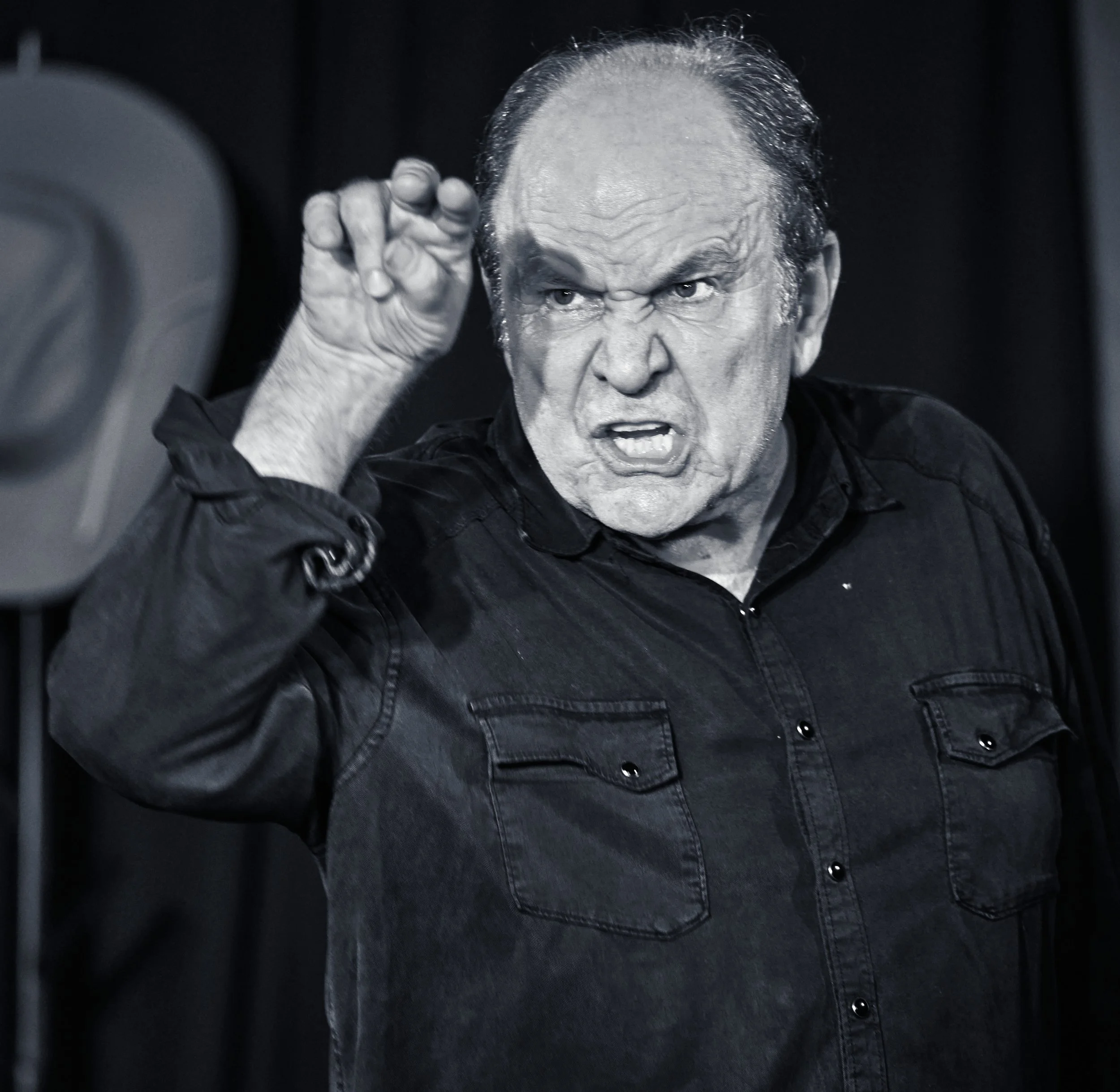
Van Zandt recounts his days living at the Chelsea Hotel in the late 1970s, moving in the same week as Sid Vicious and his girlfriend, Nancy Spungen. Photographs by Mark Shaw.
The play’s emotional center, however, lies in Del Valle, a medium-security prison outside Austin, Texas, where Van Zandt spent five harrowing months in the fall of 2006. Indeed, Donnie, the Junior Grand Dragon of the Aryan Brotherhood who rules the roost, recognizes him from TV’s All My Children and offers him protection in exchange for acting lessons. Walking this moral tightrope, Van Zandt discovers—almost in spite of himself—the unexpected power of performance as a tool for empathy and transformation, even among society’s most hardened outcasts.
Van Zandt also threads in his unlikely pedigree: born into a prominent Texas family, he counts Fort Worth founder Khleber Miller Van Zandt as a great-grandfather and revered musician Townes Van Zandt as a cousin. Yet that lineage offers little refuge; following his arrest and incarceration, he receives not rescue but “tough love,” punctuated by his cousin’s cutting refrain: “Now who’s the black sheep?”
In the end, Lost in Del Valle emerges as more than a chronicle of excess and survival; it stands as a testament to the redemptive power of live performance. Onstage, Van Zandt does not merely revisit his past—he reshapes it, channeling decades of chaos into a work of startling immediacy and emotional truth. What lingers is not the darkness he endured, but the hard-won clarity he now possesses, offering audiences a portrait of an artist who has, at last, found purpose, discipline, and a measure of grace in the act of telling his own story.
Lost in Del Valle plays through May 3 at SoHo Playhouse (15 Vandam St.). Evening performances are at 7 p.m. Wednesday through Saturday and 5 p.m. on Sunday. For more information, visit sohoplayhouse.com.
Playwright: Ned Van Zandt
Director: Amir Arison
Lighting Design: Colin Grenfell
