
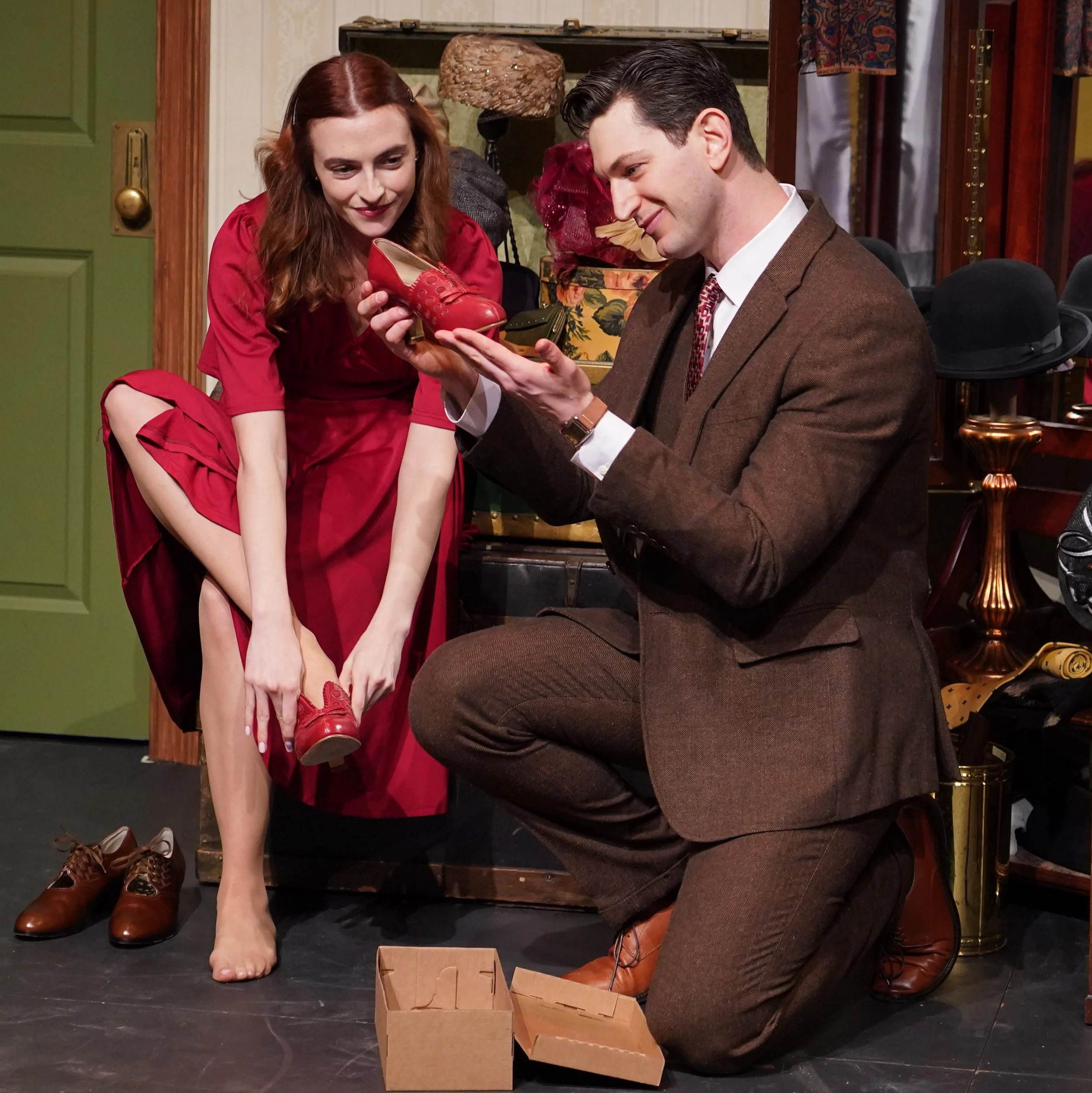
Charlie (Harris Milgrim), who runs a Hoboken shoe repair shop, has a gift for Chava (Becca Suskauer).
Two occupants of 59E59 from recent seasons inform the new musical now playing there. The Sabbath Girl, from 2024, was a sweet musical romance of a Jew and a non-Jew in modern-day Manhattan. Dear Jack, Dear Louise, from 2025, had playwright Ken Ludwig affectionately serving up the epistolary wartime courtship of his parents, an Army doctor and a chorus girl. Pour these two shows into a blender, add a generation, hit Purée, and you come up with How My Grandparents Fell in Love.
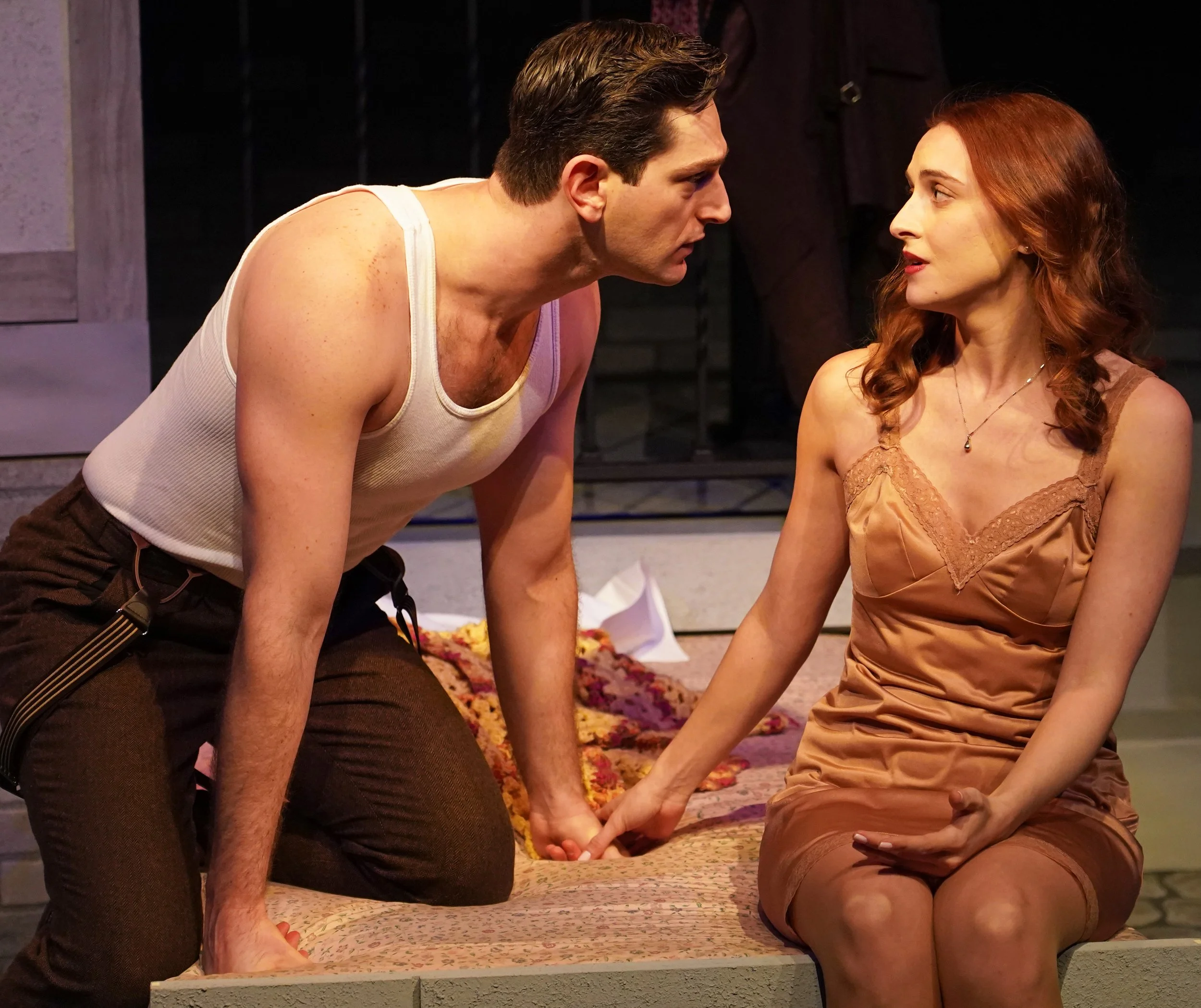
By the top of Act II, Charlie’s courtship has progressed considerably.
The work of The Sabbath Girl’s authors, Cary Gitter (book and lyrics) and Neil Berg (music and lyrics), the New Jersey Repertory Company production is exactly as advertised, a mellow two-character chronicle of how Gitter’s grandparents grew all swoony in a matter of days. That was in 1933, in Rovna, Poland (now Ukraine), where Chava (Becca Suskauer) is an enterprising clerk at a hat shop, and Charlie (Harris Milgrim) is a young shop owner returning to his Polish roots after 10 years in the U.S. Chava is smart and ambitious, determined to get into Warsaw University. The charmingly awkward Charlie—né Tsale, but who in America can pronounce that?—is in search of a bride. (Why couldn’t he find one in the States?) In his first song Charlie asks, “Why do I feel ten feet high?” and the answer is, because Milgrim is. What a tall leading man!—and surely Charlie and Chava must be the handsomest young couple in Rovna’s Jewish shtetl.
“Their emotions [are] delineated mainly in song, like the old-fashioned, well-behaved musical this is. ”
But, in the first of several instances of How My Grandparents Fell in Love radiating a She Loves Me vibe, they’re not yet a couple—she’s instantly repelled by him. He’s narrowly focused, not one to philosophize or analyze; she’s politically engaged and insatiably curious, though oddly blind to any threat from Germany, where Hitler has just been appointed chancellor—one of those “It’ll all blow over” types. Charlie, though relatively apolitical, sees the menace and tries to convince her of it. Mostly, though, he’s just very smitten: “I’ve met this charming girl who works in a little store, / I don’t think she likes me much, / Still my heart wants to soar.”
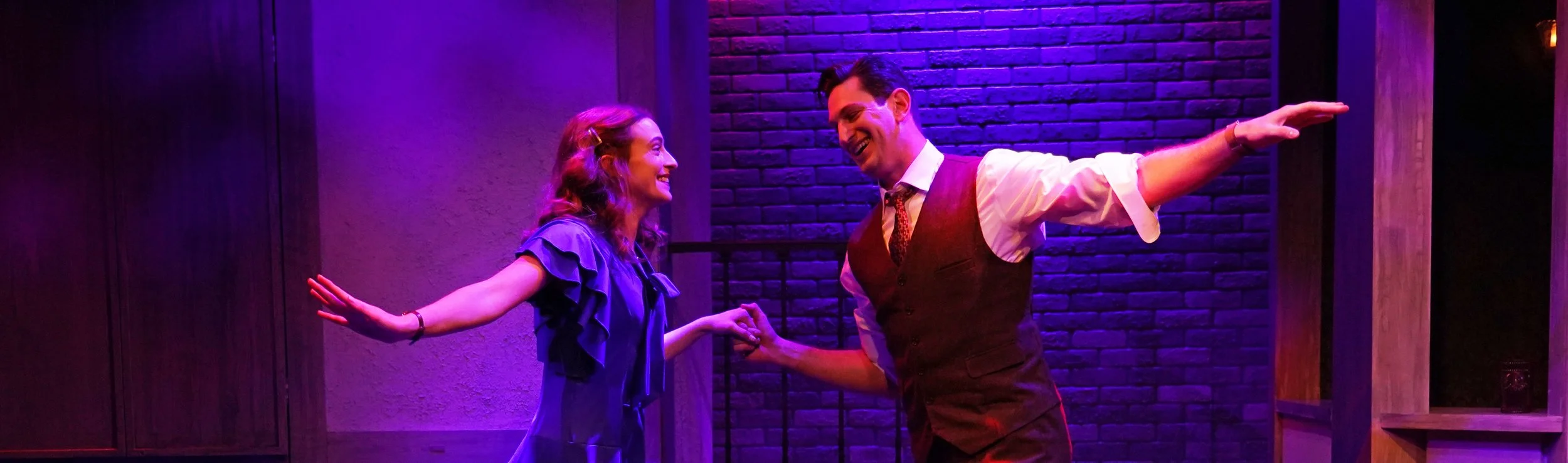
That’s an example of Gitter and Berg’s functional-and-not-much-better lyrics, though on occasion they’ll surprise you: At a dance hall, nicely conveyed by Jill Nagle’s purple lighting and some projections of a 1930s nitery, Charlie urges her, “Trade that Mahler for a little Fats Waller.” Then they go into a lindy hop, and, although Jordan Ryder’s choreography isn’t terribly challenging, it’s expertly executed.
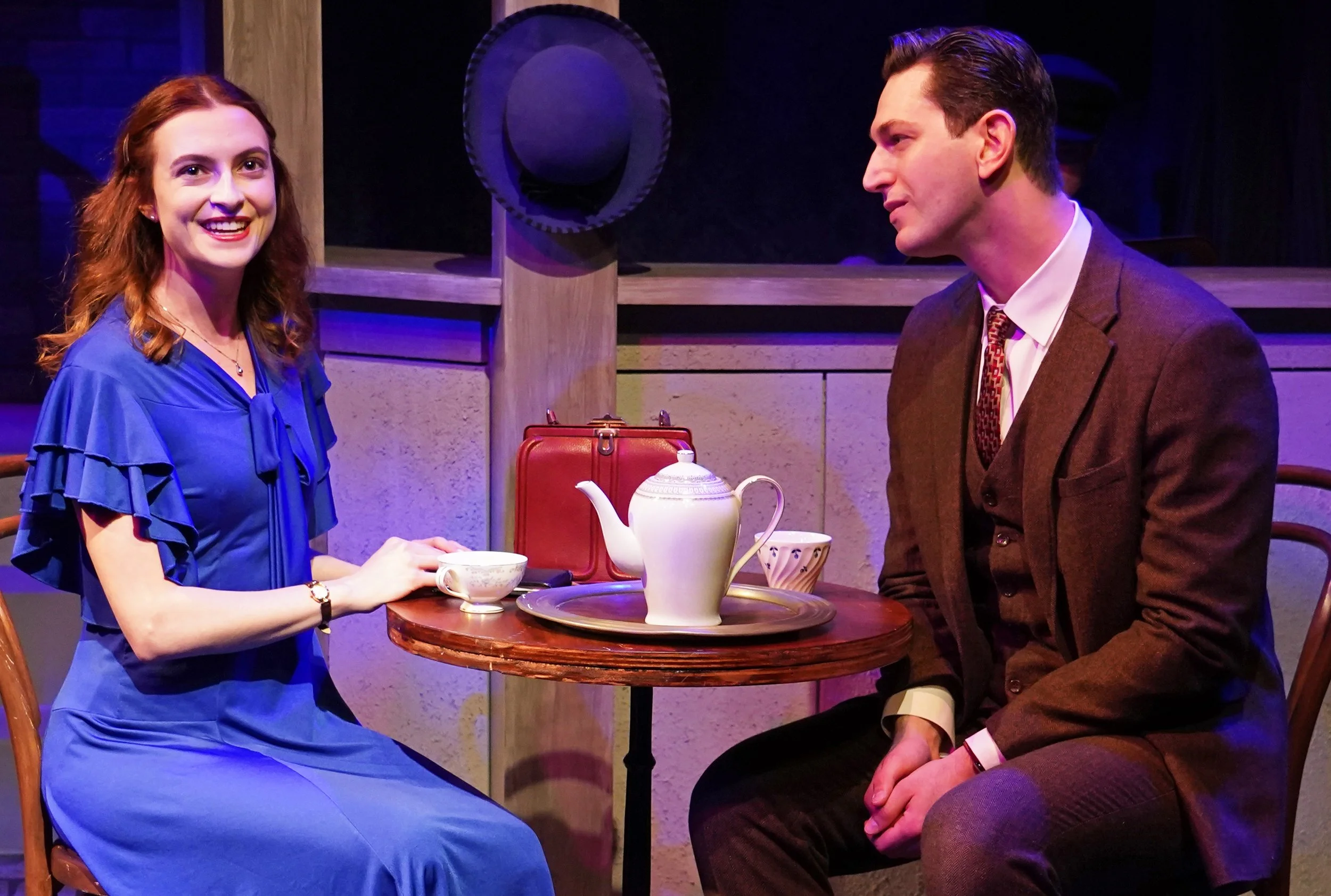
Chava is ambitious and optimistic; Charlie, practical and focused. Photographs by Carol Rosegg.
By now the affection is beginning to be mutual, and when the first-act curtain ends with a first kiss it’s clear where this is headed, though still surprising when the second act opens with Charlie and Chava in bed. Their emotions will be delineated mainly in song, like the old-fashioned, well-behaved musical this is. Berg’s melodies soar lower than Charlie’s heart, but they’re ingratiating enough, and his and Gitter’s very traditional score hits all the expected marks. Among the high points: “Oh, Hoboken,” Charlie’s love letter to his adopted city; “All I Left Behind,” Chava’s rationalization for not leaving anything behind; and “Suddenly,” her realization that yes, knowing Charlie has changed her a lot.
Suskauer’s voice, while powerful and trained, can get a bit piercing in higher registers. Milgrim has really impressive top notes, and his Jimmy Stewart aw-shucks demeanor is right for Charlie. They’re alone onstage except for music director Aaron Benham, who ought to trade his electric piano for a real one—the sound, by Nick Simone, is disconcertingly artificial—and a stagehand in a babushka and long skirt, presumably to complement the 1930s Mitteleuropean goings-on around her. Jessica Parks’ set is unspectacular but efficient, with a wall continually swinging in or out to hide or reveal Chava’s hat shop, and a roll-out bed for that Act II opening.
Suzanne Barabas’s direction stays suitably focused on the evolving dynamics of the couple’s relationship; she can’t do much to disguise the needlessness of a framing device, which has Chava’s granddaughter dishing out unnecessary info about what’s going to happen. But that relationship is spun out modestly and pleasingly, and the right songs show up in the right places. For the ages? Not this one. But a nice show to take your mom to.
How My Grandparents Fell in Love plays through April 18 at 59E59 Theaters (59 East 59th St.). Evening performances are at 7:15 p.m. Tuesday through Saturday. Matinees are at 2:15 p.m. Saturday and Sunday. For tickets and more information, visit 59E59.org.
Book: Cary Gitter
Music: Neil Berg
Lyrics: Cary Gitter and Neil Berg
Director: Suzanne Barabas
Music Director: Aaron Benham
Choreography: Jordan Ryder
Scenic and Props Design: Jessica Parks
Costume Design: Patricia Doherty
Lighting Design: Jill Nagle
Sound Design: Nick Simone
