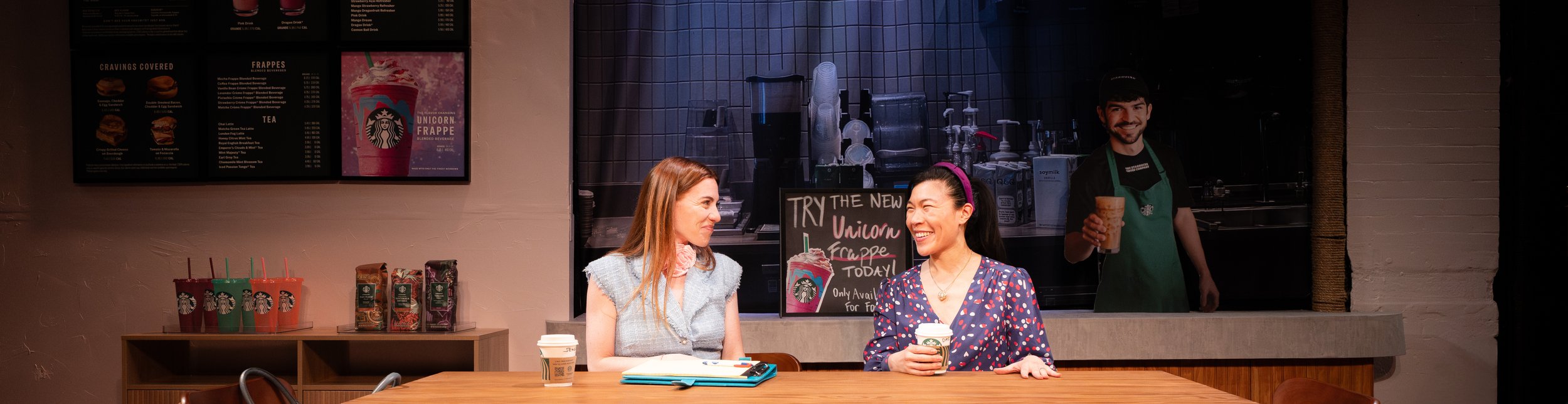
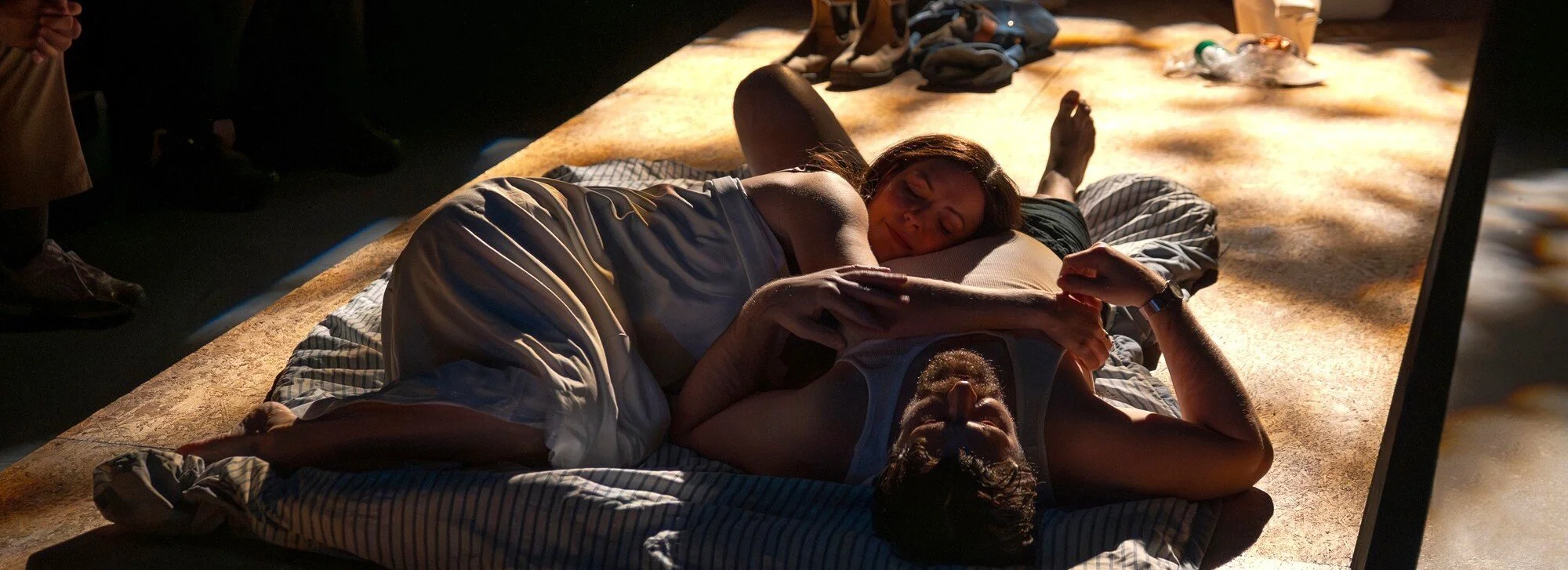
Few things are as ripe for satire as the modern wedding industry, and Catherine Weingarten’s I Wanttt a Unicorn Frappe!!! gleefully plunges its horn into the target. This clever world premiere transforms one woman’s engagement anxiety into a satire about desire, denial, and the pressures placed on women to pursue happily-ever-after at any cost.
Jerome
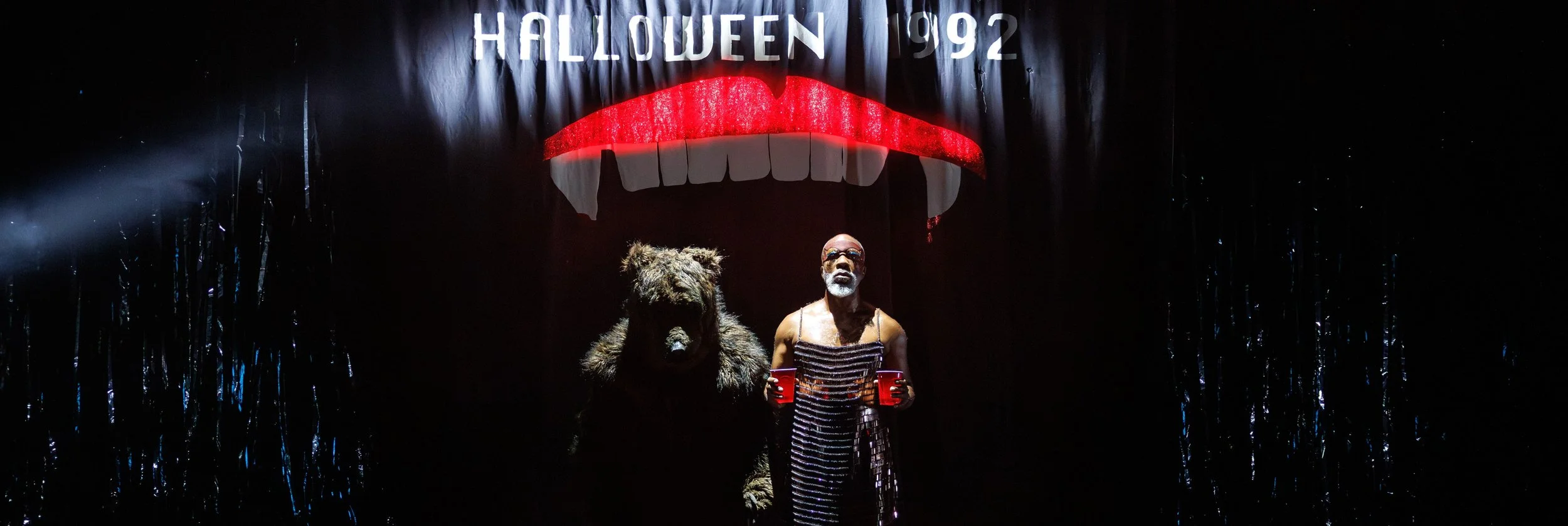
John J. Caswell, Jr.’s Jerome is a departure from the typical gay play that pops up in June, geared toward Pride month: its focus is older gay men. A chalkboard in front of the proscenium curtain charts the decline of Jerome, Ariz., a mining town, from 10,000 population (crossed out) to lesser numbers (also crossed out) to, finally, Ghost City. That’s a tipoff that this eerie, intriguing drama is going to be different.
Heated Rivalry: The Unauthorized Musical Parody
Send-ups of television series have become a cottage industry in New York theater, but they usually target familiar, long-established properties. Dylan MarcAurele’s Heated Rivalry: The Unauthorized Musical Parody arrives barely six months after HBO Max premiered Heated Rivalry, a hit drama about rival hockey players who become lovers. Under Alan Kliffer’s direction, the result is fresh and bawdy, and sung with serious voices by a talented cast, all of whom help with scene changes that boost the production’s sketch-comedy vibe.
The Maids
Jean Genet’s The Maids remains one of the theater’s strangest and most unsettling explorations of class, identity, fantasy, and performance. In director Kip Williams’s “new version,” Genet’s world of ritualized role-playing is transplanted into the age of Instagram filters, live-streams, and social media influencer culture—a contemporary framework that proves surprisingly well-suited to Genet’s original obsessions.
A Night of Chekhov
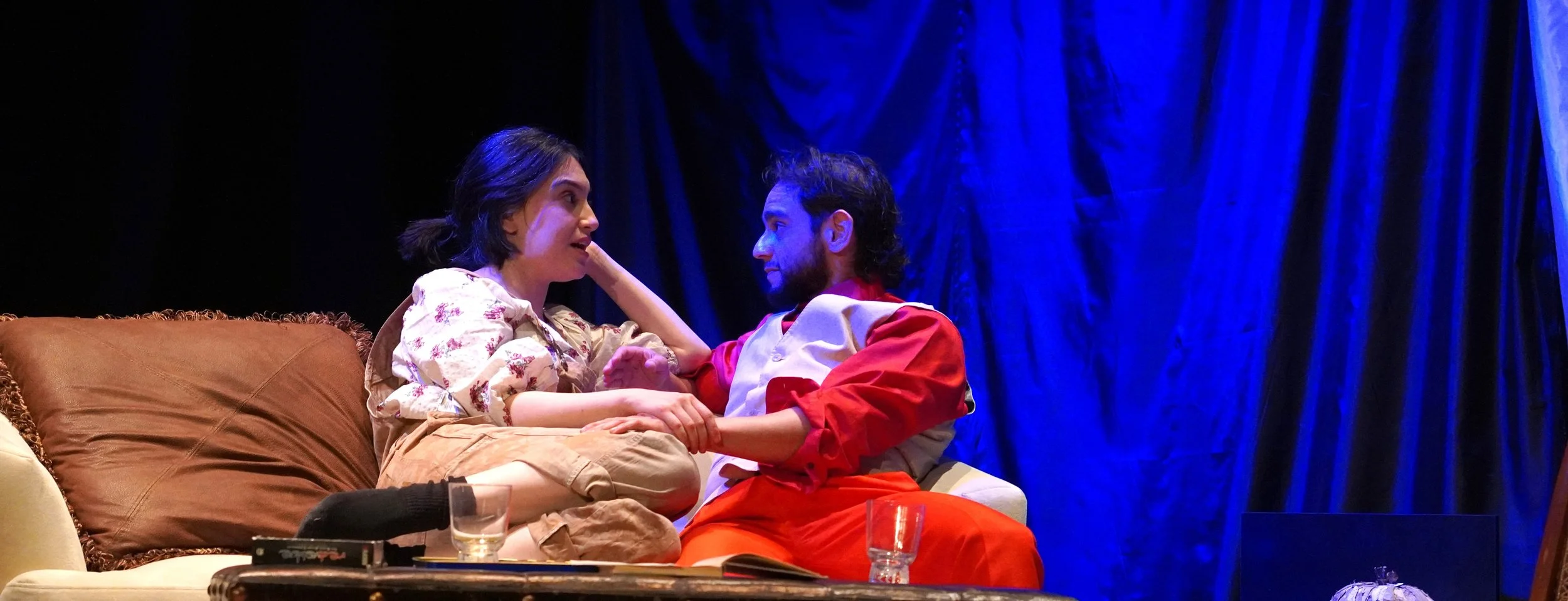
In A Night of Chekhov, director Sanio Kurtesevic ambitiously compresses three lesser-known Anton Chekhov works into a brisk evening of comic despair and emotional misfire. While flashes of Chekhov’s wit emerge throughout Swan Song, The Proposal, and The Bear, the ensemble has not yet fully settled into the rhythms of the material, resulting in performances that often feel tentative and uneven.
This Is Not About Me
Hannah Caplan’s This Is Not About Me, a play about creating art, demonstrates the best aspects of collaboration: a smart script, captivating direction, immersive set design, and wonderful performances. Caplan’s dialogue crackles with wit and insight, while director Douglas Clarke-Wood allows the play’s 20-plus scenes and multiple storylines to flow beautifully. The result is a production that is joyful, funny, and a delight for both the ear and the eye.
Lauder: Scotland’s Kilted King of Broadway
Before the age of global pop stardom, there was Harry Lauder—a kilted powerhouse of British music hall and vaudeville whose songs and irrepressible personality made him one of the most beloved entertainers of the early 20th century. In Lauder: Scotland’s Kilted King of Broadway, Jamie MacDougall brings this larger-than-life figure back to the stage with infectious warmth and musical flair that turns biography into jubilant theatrical celebration.
The Emporium
After Pulitzer Prize–winning plays in 1938 (Our Town) and 1942 (The Skin of Our Teeth), Thornton Wilder, in his remaining 33 years of life, didn’t write another full-length, original play. Our Town, likely the most produced American play of all time, still burns brightly, undimmed by the passing decades. It is, then, no mystery why the allure of The Emporium, an unfinished Wilder play that exists in 360 handwritten pages at Yale’s Beinecke Library, called, Siren-like, to playwright Kirk Lynn, who has undertaken the task of assembling, interpreting, and finishing it. The result is a road full of cracks and bumps, but one that leads somewhere impossible to forget.
Cable Street
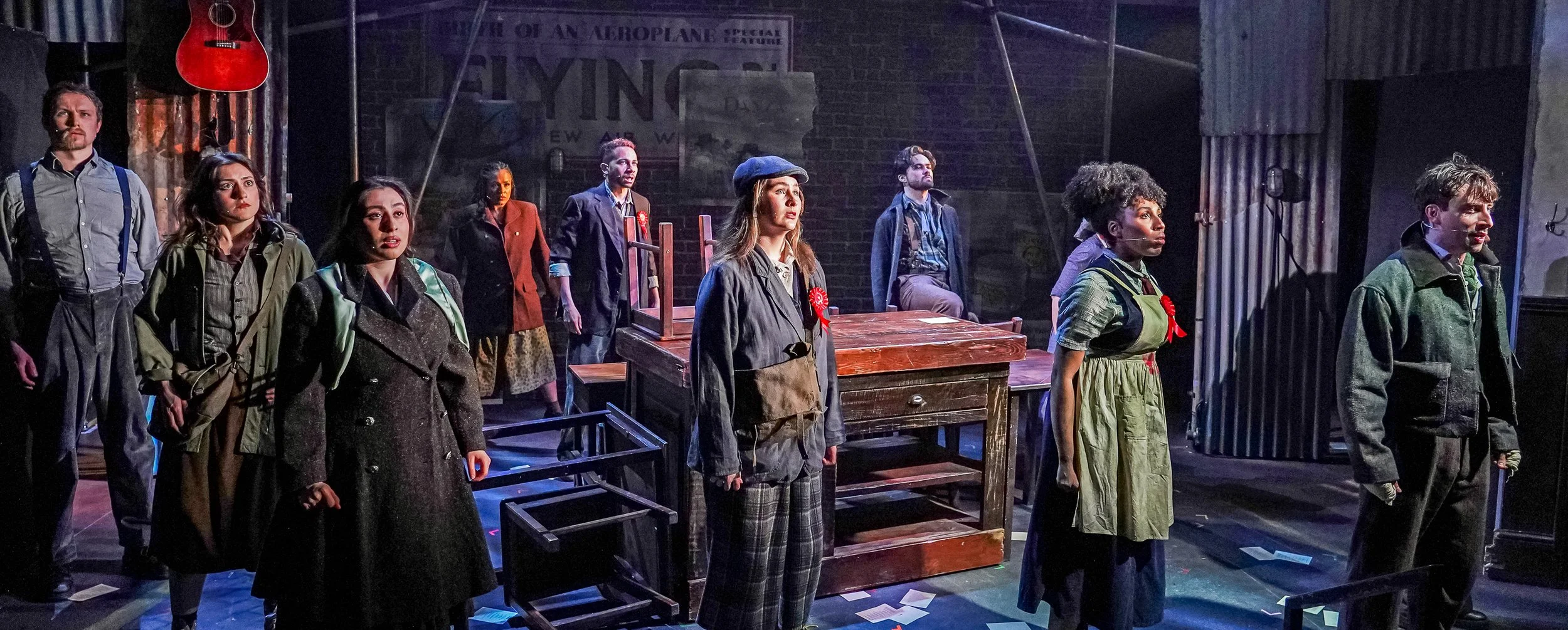
British fascism may have preceded Hitler and Mussolini, but those dictators inspired homegrown demagogues who reveled in mass rallies and mobilized Blackshirts to harass and terrorize impoverished immigrants. Tim Gilvin’s and Alex Kanefsky’s musical Cable Street recounts, in scenes alternating between the modern day and 1936, how British fascism turned out differently, as residents of London’s multicultural East End united to deter a right-wing rally on their turf.
Well, I’ll Let You Go
Well, I’ll Let You Go is written by actor Bubba Weiler, who’s a little over 30, and directed by Jack Serio, still under 30 and seemingly ubiquitous in New York theater. It’s set in a mid-size, midwestern town that has lost its skill-based, manufacturing economy. Weiler’s characters are adjusting, in sundry ways, to coarsening influences, including the regional fulfillment facility of a gargantuan online retailer, which is the town’s sole surefire source of regular employment. Weiler and Serio bring a balance of intellect and feeling to their work, and the result is a fresh, engrossing chronicle of ordinary citizens contending with change for the worse.
Specimen
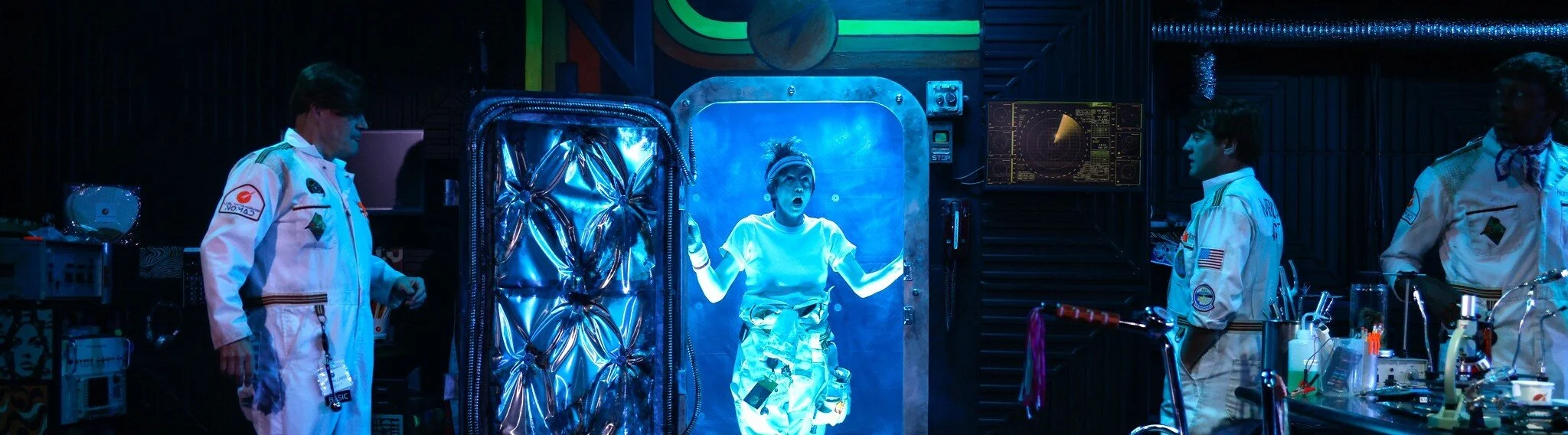
Randall Sharp has been writing and directing plays for her Axis Theatre Company for more than 30 years. Radiating from the basement of One Sheridan Square, the sacred and profane locale that once housed Café Society, then Charles Ludlam’s Ridiculous Theatrical Company, Sharp’s jabby storytelling is never without its quirks. Her latest work, a space oddity called Specimen, is no exception.
Masquerade
The closing of Bad Cinderella in June 2023 may have ended Andrew Lloyd Webber’s 43-year Broadway streak, but it sparked a radical re-interpretation of his hit shows from the 1980s and ’90s. Last season featured a stripped-down, video-heavy revival of Sunset Boulevard, while a ballroom-inspired Cats: The Jellicle Ball is currently running. Next season, Jamie Lloyd’s pulsing, monochromatic revival of Evita, having triumphed in London, arrives in New York. However, the most transformative reimagining has arrived with Masquerade, an immersive and interactive Off-Broadway production that deconstructs and reconfigures The Phantom of the Opera.
73 Seconds
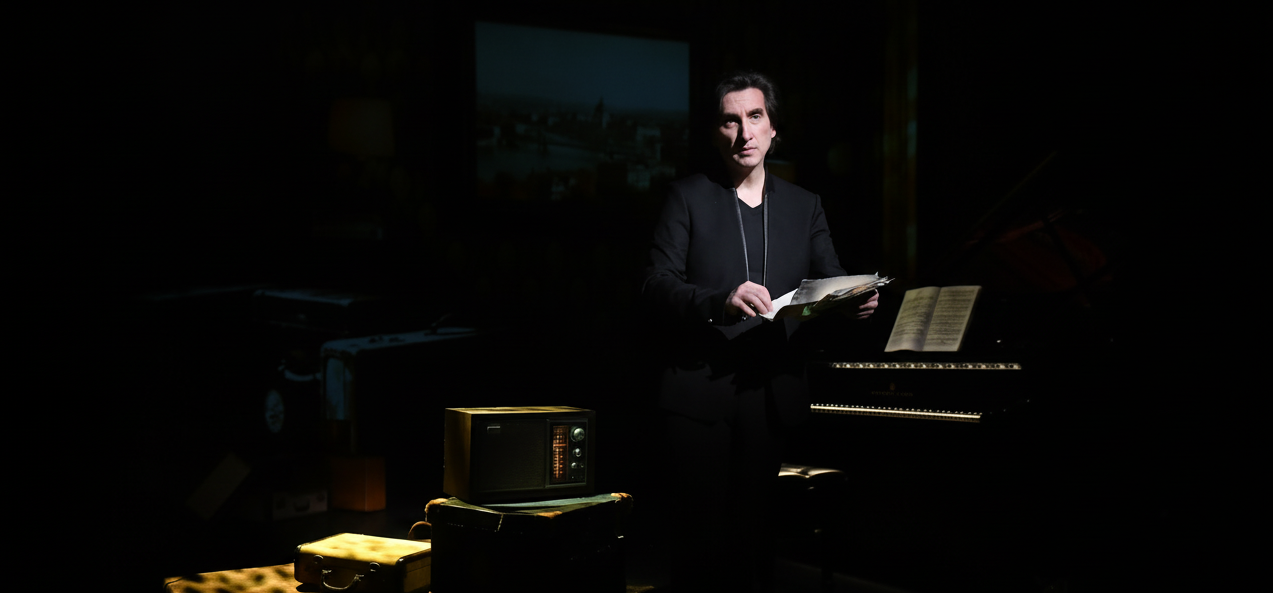
Some plays tell stories; 73 Seconds excavates silences. In this haunting and ambitious solo work, writer and performer Jared Mezzocchi traces his mother Rosemary’s hidden connection to NASA to explore the fragile constellations of family memory, loss, and unrealized possibility. Sensitively staged by director Aya Ogawa inside the 64-seat planetarium at the Lower Eastside Girls Club, Mezzocchi’s autobiographical narrative is structured in three movements.
The Receptionist
Adam Bock’s The Receptionist is a slippery workplace comedy that starts with a seemingly innocuous monologue by an unidentified male about his love of fishing, and then shifts to the workers in an office, where a Mr. Raymond (Nael Nacer, the monologuist) is unexpectedly late. Amid exchanges of personal gossip, the receptionist Beverly (Katie Finneran) and a supervisor, Lorraine (Mallori Johnson), receive a visitor from the “home office,” Martin Dart (Will Pullen), as they await Mr. Raymond’s return. Director Sarah Benson’s revival of Bock’s masterly piece sustains a sense of inconsequentiality, even as discordant notes pop up, until the play reveals itself as a chilling paradigm of what Hannah Arendt, in covering the trial of Adolf Eichmann in 1963, called “the banality of evil.”
American, Italian
Family relationships are universally difficult for teens, and with unpredictable outcomes. American, Italian is Anthony P. Pennino’s touching, emotionally wrenching, and sometimes humorous exploration of family dynamics in two multigenerational Italian families.
Othello
Bedlam’s stripped-to-the-bone staging of Othello proves that less can indeed be electrifyingly more, as four actors conjure a harrowing world with precision and nerve. Under the incisive direction of Eric Tucker, this revival foregrounds the play’s racial tensions with clarity, inviting audiences to lean in—and reckon—with every word.
Hamlet
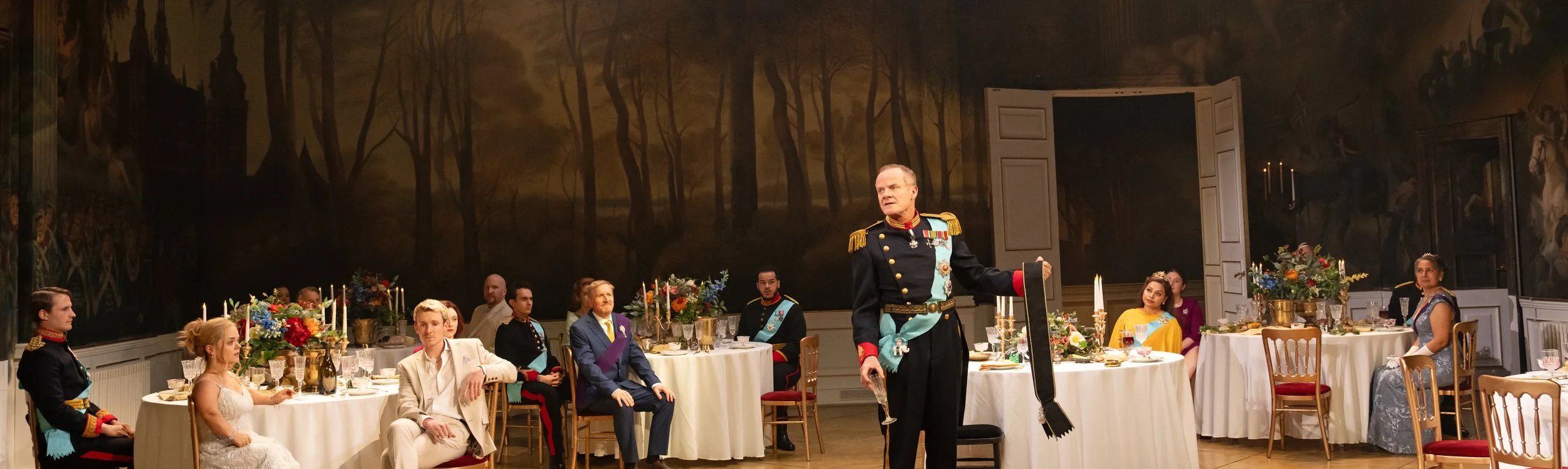
Director Robert Hastie brings his bold and inventive production of Hamlet for the National Theatre of Great Britain to the Brooklyn Academy of Music (BAM), a fitting first outing in the new partnership between these venerable institutions—BAM first performed Hamlet in 1861, and it was the National’s inaugural production in 1963. Hiran Abeysekera portrays the moody Danish prince as sweet, neurotic, and impish, drawing out the comedy in the play without sacrificing its complexity and tragic weight. Hastie and Abeysekera seize on Hamlet’s theatricality and theatrical self-awareness, taking it to a new and provocative level.
Beauty Freak
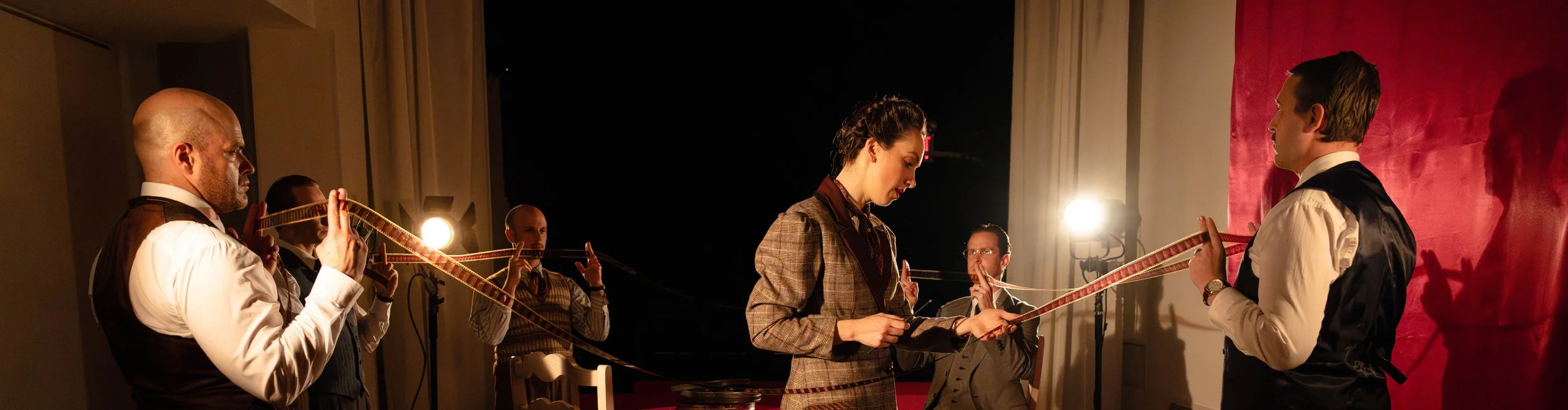
Josef Goebbels, Hitler’s master propagandist and serial womanizer, almost always had his way with women. Nevertheless, when he challenges filmmaker Leni Riefenstahl it’s a classic case of “the unstoppable force meets the immovable object.” It’s unclear from James Clements’ Beauty Freak whether Riefenstahl is the unstoppable force or the immovable object, but regardless, she emerges the winner—or so one is led to think.
Kenrex
He plays dozens of characters. He bolts around the stage like a dervish, rearranging props, setting up mikes, climbing stairs and changing personas with every move. He works up as much sweat as Jonathan Groff in Just in Time. And he tells a chilling true-crime story in the process, one to leave the observer unsettled as to whether justice was done, and if so, what the price of that justice was.
The Bad Daters
The Bad Daters, by Ireland-born New Yorker Derek Murphy, arrives Off Broadway with a winning blend of sharp Irish wit and disarming emotional honesty, transforming a premise about romantic misfires into something unexpectedly tender. Under the deft direction of Colin Summers, and buoyed by finely tuned performances from Kate Arrington and Shane McNaughton, this U.S. premiere proves as affecting as it is entertaining—a love story that earns its poignancy without sacrificing its bite.