
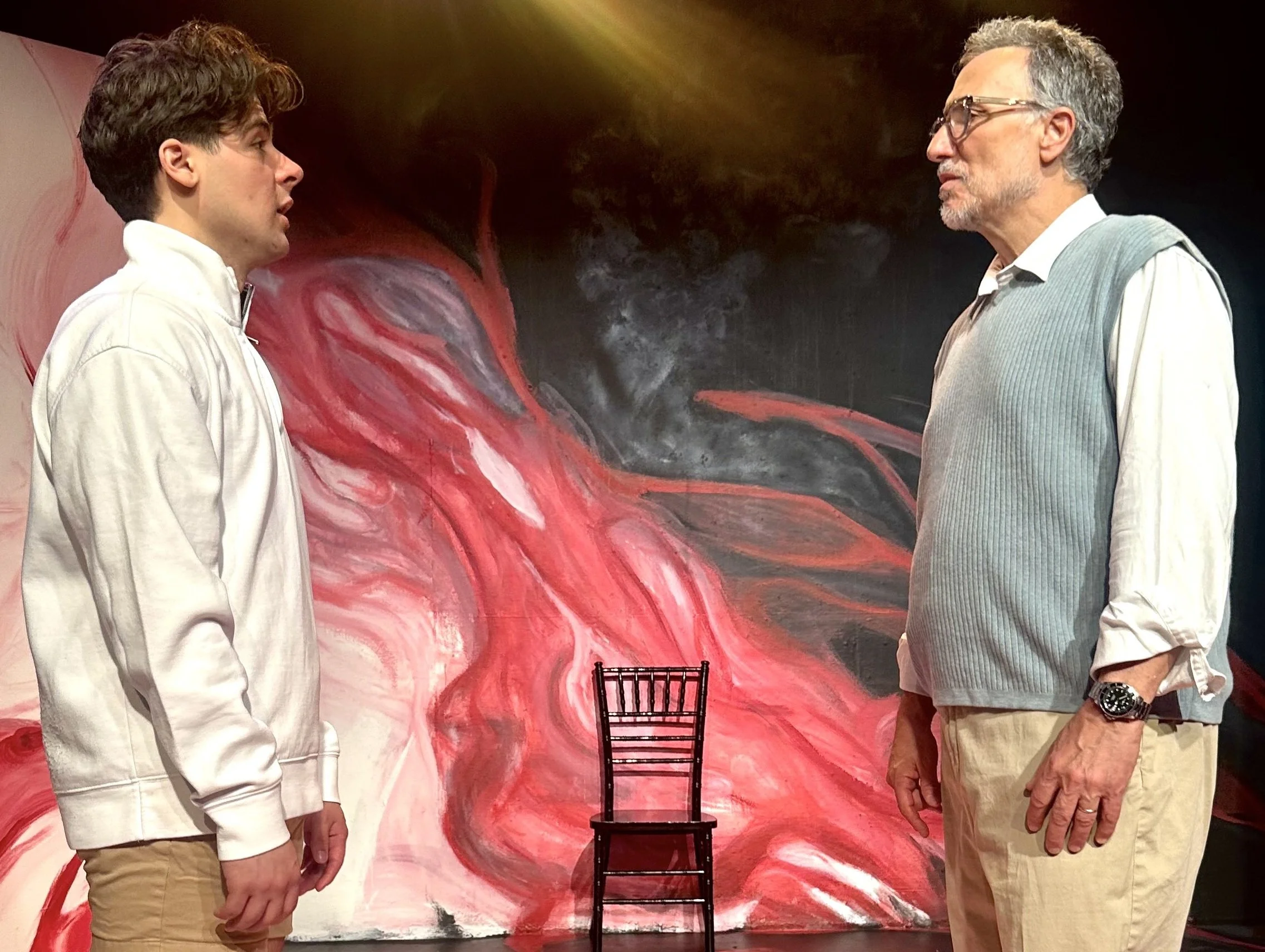
Gio (Donovan Counts, left) is in a heated discussion with his father Frank (Marc Romeo) about Vin’s addiction.
Family relationships are universally difficult for teens, and with unpredictable outcomes. American, Italian is Anthony P. Pennino’s touching, emotionally wrenching, and sometimes humorous exploration of family dynamics in two multigenerational Italian families.
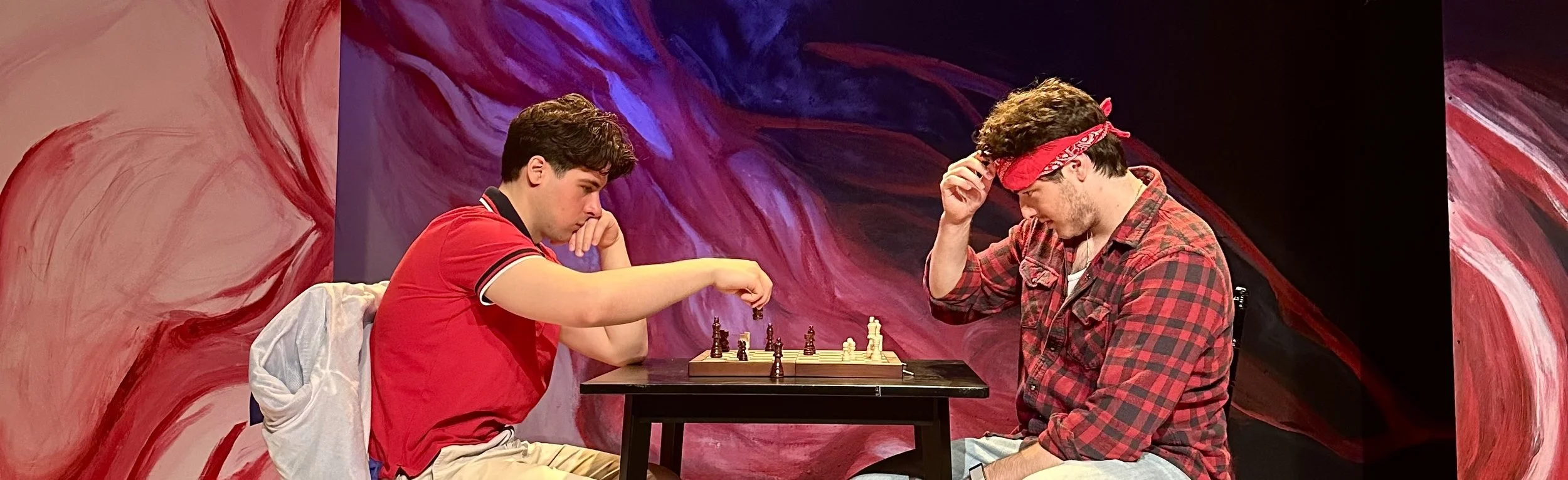
The play, revolving around two brothers and their families, shows how extended family may be drawn into conflict. Had Gio (short for Giovanni) and Vin (short for Vincenzo, Jr.) Lampedussa not been first cousins, it’s questionable whether they would have been friends. It’s the mid-1980s, and Gio (Donovan Counts), a geeky high school senior, is at a Bruce Springsteen concert with his cousin Vin. (Dante Palminteri). The sometimes-otherworldly Gio (Vin’s father calls him “Robot”) might today be diagnosed as “on the spectrum.” Labels aside, he is a loving 17-year-old “big brother” to his 19-year-old “lost” cousin, who adores him and seeks his approval.
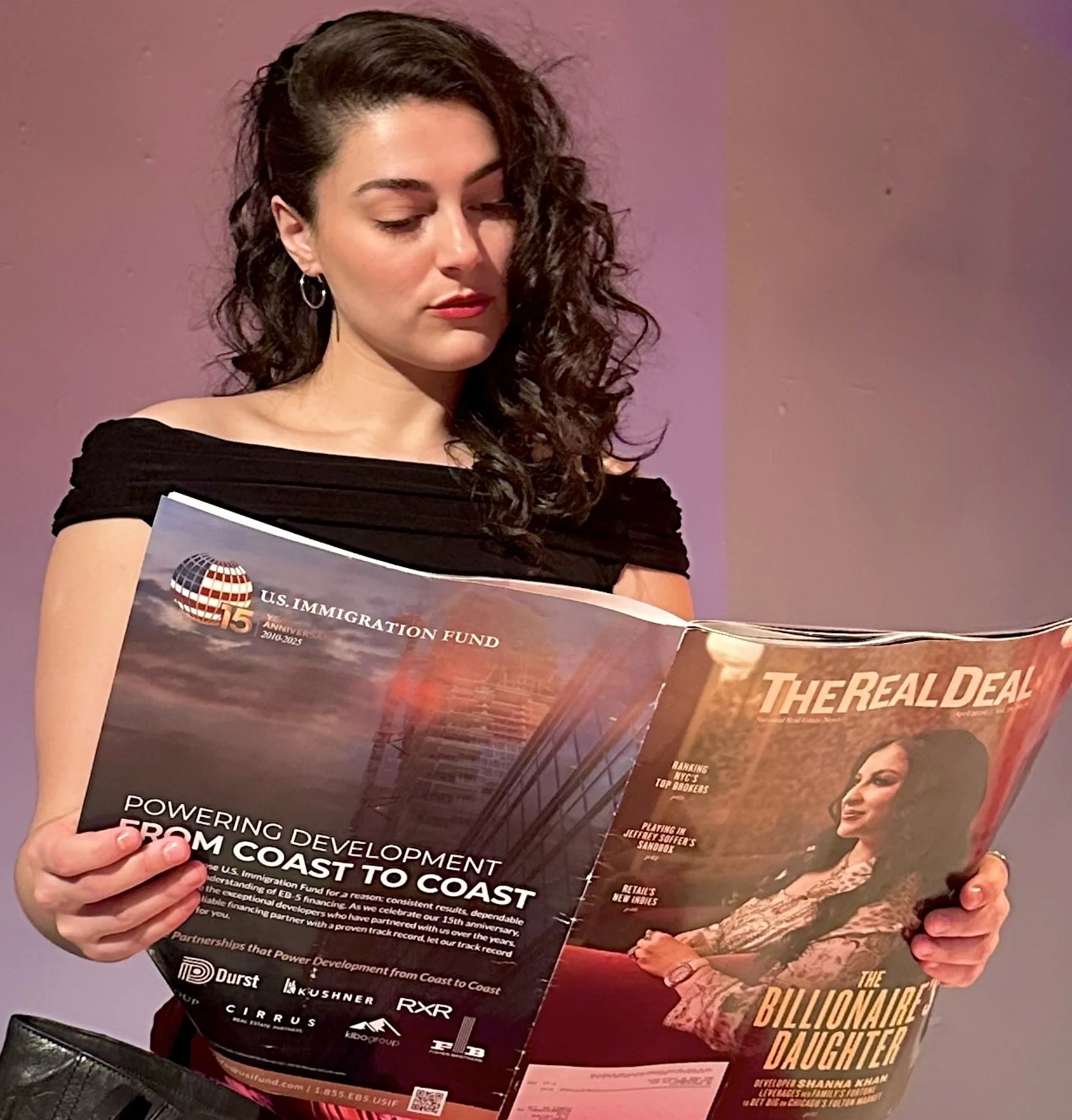
Gina (Isabella Bertoni) flips through a magazine to get ideas for her new hair salon. Photgraphs by Grace Romanello.
An exchange the two have about “Born in the USA” symbolizes the gulf between them. Vin, dazzled by the Boss, says Gio is overdressed, and Gio pinpoints what Vin overlooks—that the song is about the USA’s failure to support Vietnam veterans.
Meanwhile, Vincenzo (Paul Romanello), Vin’s rage-propelled father, pays his son’s private-school tuition yet abuses Vin verbally and physically and favors his daughter, Gina (Isabella Bertoni), a successful hairdresser. Vincenzo is a working-class foil to his younger brother and Gio’s father, Frank (Marc Romeo), an accomplished physician married to a professor.
Vincenzo and Frank, children of Sicilian immigrants, represent an age, class and educational divide, one compounded by Vincenzo’s conflicting admiration and resentment for the brother whom he helped to advance. The women are secondary in the narrative; the brothers’ wives are neither seen nor heard and, for the most part, Gina and Lisa (Sara Romanello), Vin’s self-possessed and ambitious girlfriend, have their own spheres of influence; their positive impact on Vin is negligible, compared to that of Frank and Gio.
It’s unclear if this heavyweight male macho father vs. rational, accepting brother/nephew dance stems from the play’s emphasis on patriarchal authority or emerges because each brother wants to fast-track his own son’s future. Romanello’s characterization of Vincenzo at his strongest echoes the recalcitrant Eddie Carbone in Arthur Miller’s A View from the Bridge. Although the plots differ, the plays share a cultural “feel.”
Romeo’s Frank is excellent as a generally prudent and caring brother and uncle, one who unsuccessfully tries to convince Vincenzo to have Vin tested and treated for dyslexia, to help his nephew succeed in school. When Vin refuses, Frank backs off. Nevertheless, he is prepared for all-out war if Vincenzo interferes with his own family’s harmony. Romeo’s lovingly protective Frank guides Gio in his college application process, in the hope that he’ll make the Ivy Leagues.
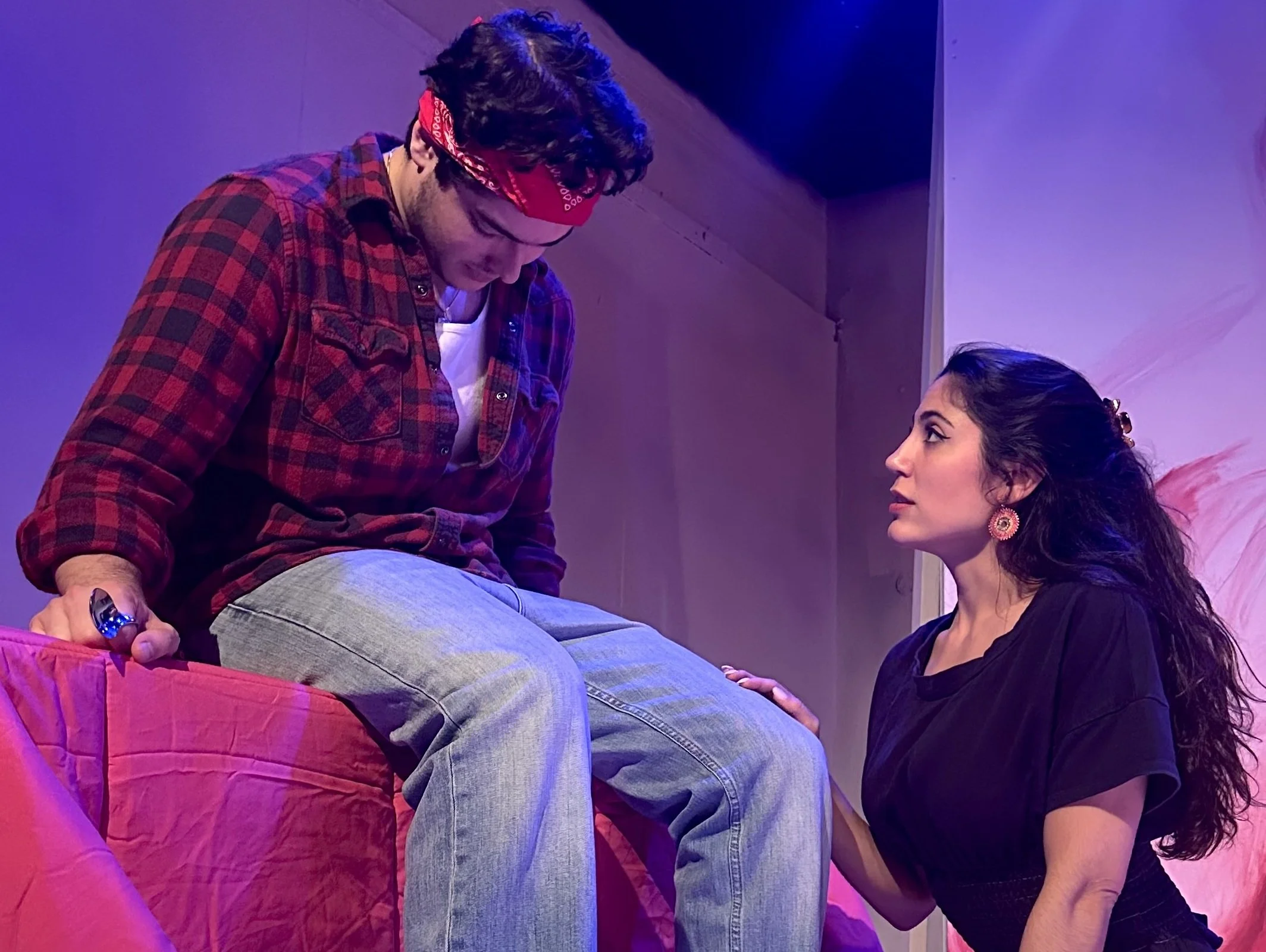
Lisa (Sara Romanello, right) pleads with Vin (Dante Palminteri) to stop using heroin.
Frank’s approach to Gio, though, is a dual-edged sword—it advances him academically but may worsen his pronounced social awkwardness. Counts’s touching, empathetic Gio bears no resemblance to Uncle Vincenzo’s “robot” epithet and Vin—well, Palminteri’s Vin is a tragic sacrifice. Only Gio, Lisa, and sometimes Frank grasp Vin’s pain, which masks his talent and potential. Vin’s only antidote to pain is the “peace” of heroin. Palminteri effectively conveys Vin’s childlike need for approval, his poetic and defiant moments, and his recognition of Gio’s and Frank’s efforts to save him from drugs.
Vin: He told me to throw it away. Next open drain, I was dropping it in. He was really mad at me. As mad as you are now. A little bit quieter about it.
Frank [laughing]: Excuse me, I’ve got to sit down. …
Vin: You OK, Uncle Frank?
Frank: I got to thank you, Vin.
Vin: Thank me?
Frank: It takes years, decades, if ever, for a father to know whether or not he did a good enough job parenting his kid. And here he is, only 17, my God. He told you to throw it away.
Despite Gio’s and Frank’s best efforts, Vincenzo’s retaliation after Vin quits college propels his son further into addiction. Even Gio, who early on had physically buffered Vin from Vincenzo to prevent a beating, cannot help him. Neither can Frank, whose relationship with Vincenzo ruptures, nor Lisa, who won’t derail her law school plans because of Vin.
Reilly Rabitaille’s minimalist set—with splashes of red on large panels, simple black chairs, a small, functional desk, and a large bed—leaves ample room for outings, confrontations, dreams, and regrets. Michelle Romanello’s ’80s fashions amplify gender and cultural differences, particularly in Lisa’s and Gina’s outfits, including eye candy–like beachwear. Most significantly, though, this truly tragic window into family closeness and conflict is enabled by Pannino’s cultural tableau, under the sensitive direction of Mike Keller.
Anthony P. Pennino’s American, Italian runs at the Chain Theatre (312 W.36th St.) through May 16. Evening performances are at 7:30 p.m. Mondays through Saturdays; matinees are at 4 p.m. on Sundays. For tickets and more information, call (914) 924-5051 or visit sooptheatre.org.
Playwright: Anthony P. Pennino
Director: Mike Keller
Sound Design: Sebastian Gutierrez
Set Design: Reilly Rabitaille
Costume Design: Michelle Romanello
Lighting Design: Elijah Schreiner
