
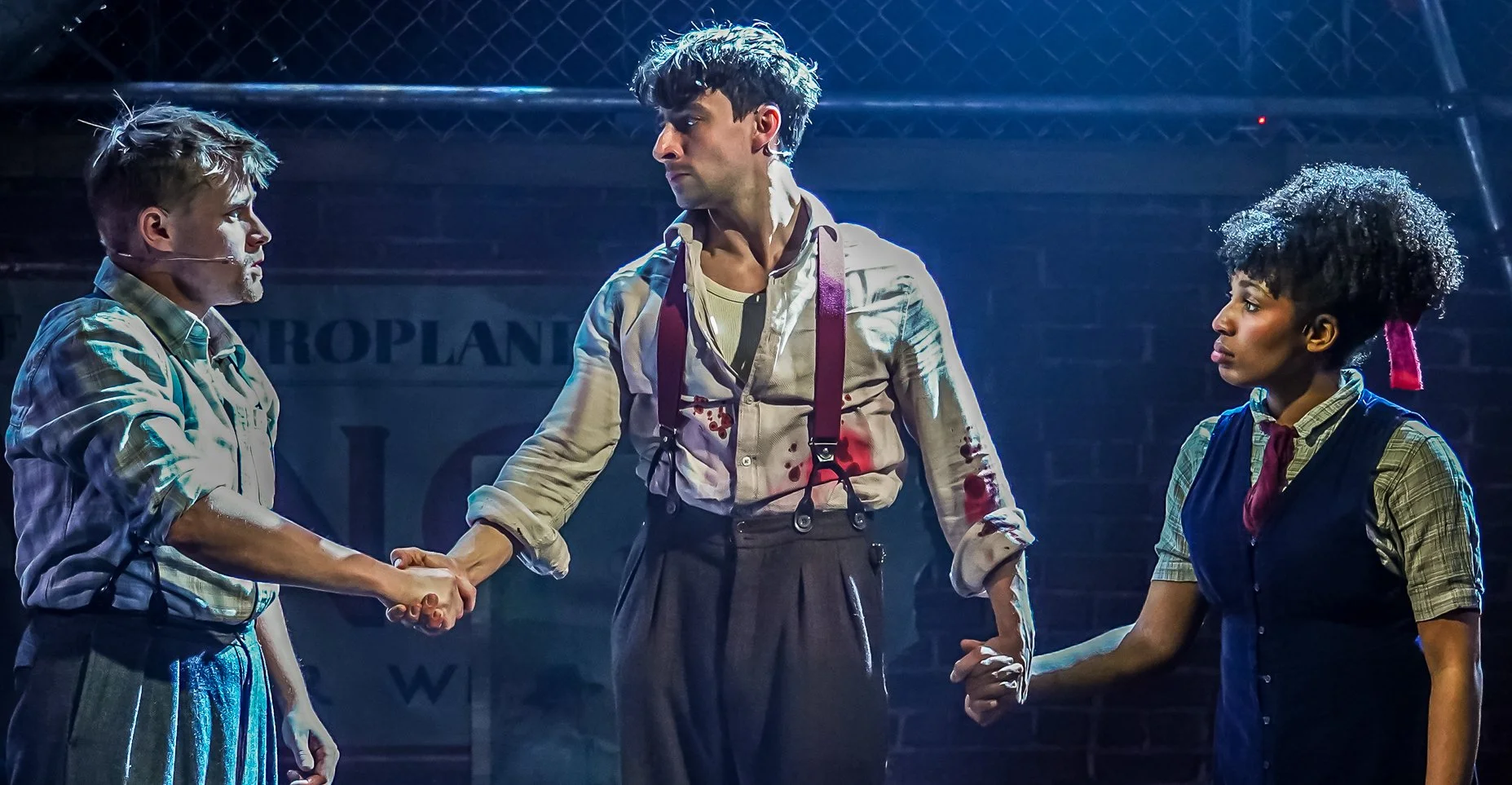
Ron Williams (Barney Wilkinson, left) makes peace with Sammy Scheinberg (Isaac Gryn) as Mairead Kenny (Lizzy-Rose Esin Kelly) looks on.
British fascism may have preceded Hitler and Mussolini, but those dictators inspired homegrown demagogues who reveled in mass rallies and mobilized Blackshirts to harass and terrorize impoverished immigrants. Tim Gilvin’s and Alex Kanefsky’s musical Cable Street recounts, in scenes alternating between the modern day and 1936, how British fascism turned out differently, as residents of London’s multicultural East End united to deter a right-wing rally on their turf.
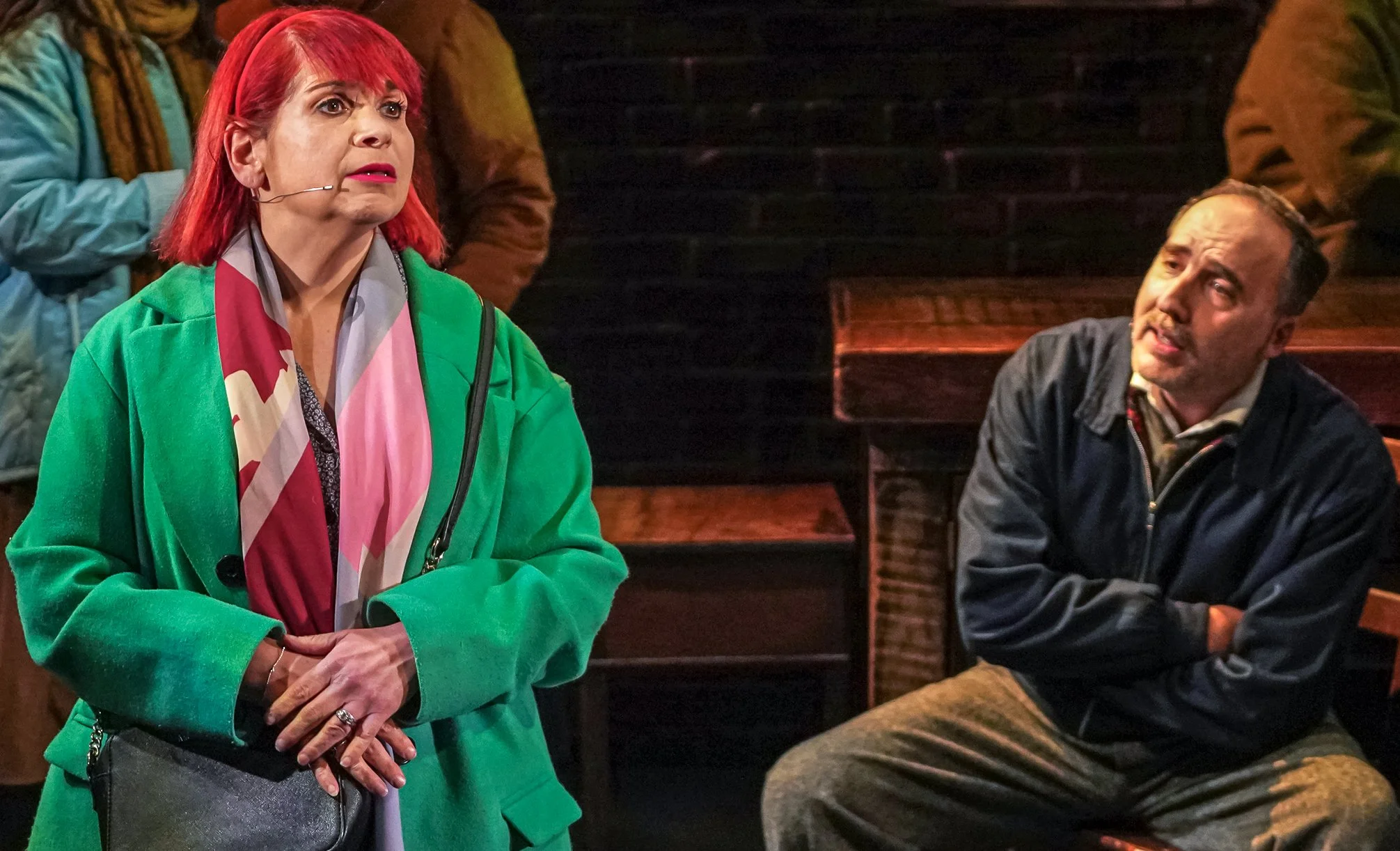
Oonagh (Debbie Chazen, left) looks longingly for Camelot Mansions, while Steve Scheinberg (Jez Unwin) recounts East End history.
In today’s East End, guide Steve Scheinberg (Jez Unwin, in one of three roles), consults his late Uncle Sammy’s diary to provide tourists with East End roots a window into 1936’s turbulence. Among them, Irish American Oonagh (Debbie Chazens) hopes to find Camelot Mansions, her mother’s childhood tenement home.
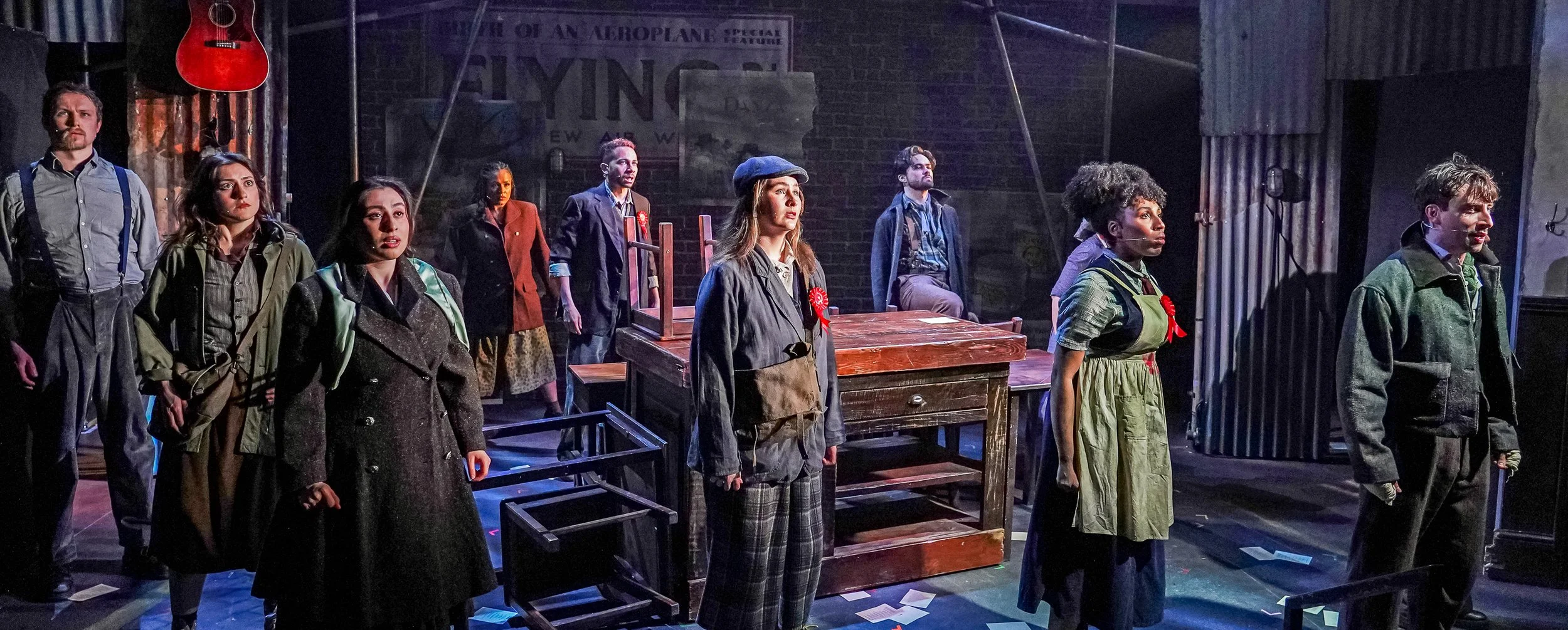
The first of many flashbacks to that time reveals Camelot’s multicultural makeup. In the opening song “My Street,” Sammy Scheinberg (Isaac Gryn), followed by Lancashire lad Ron Williams (Barney Wilkinson) and the mellifluously voiced Mairead Kenny (Lizzy-Rose Esin Kelly) lament the hardships of getting jobs during the Great Depression, especially given their Jewish, English commoner (Ron’s own word), and Irish backgrounds, respectively.
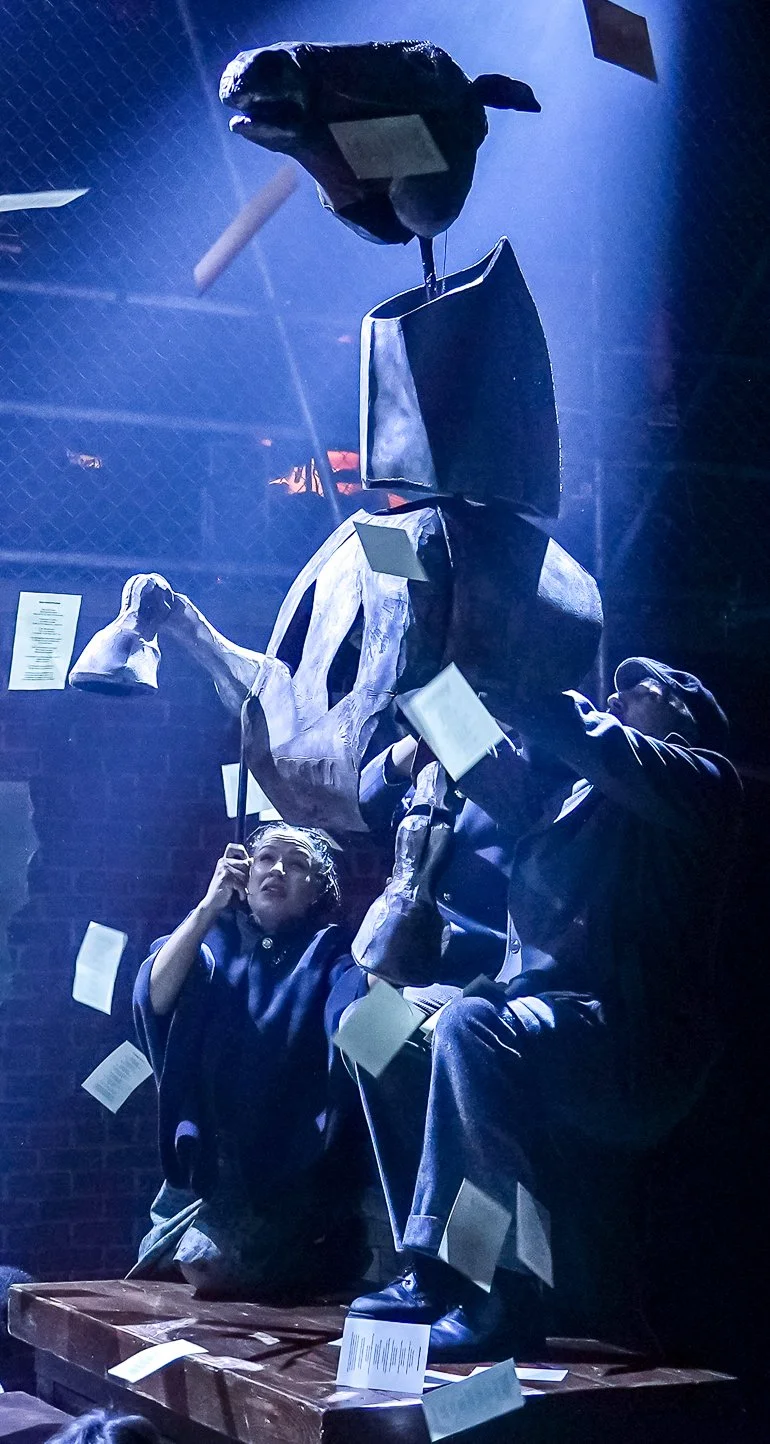
Police let a cavalry horse loose in Cable Street to break up the rioters. Photographs by Carol Rosegg.
In 1936, British aristocrat Oswald Mosley, a member of Parliament, a bigot and a hatemonger, whips up an anti-immigrant, antisemitic, and racist frenzy to an all-time high. Although Mosley himself doesn’t appear, his brand of fascism is much more powerfully organized than its 1920s predecessors. His lackeys salute with a Heil, align with Hitler and are garbed in black with red armbands reminiscent of swastikas.
Camelot’s troubles, viewed through the lenses of the Scheinberg, Kenny, and Williams families, are most often voiced by Sammy, Mairead, and Ron, whose songs span multiple genres. The music ranges from rap lyrics to pop. Gryn’s and Wilkinson’s voices are professional caliber, and Esin-Kelly’s extraordinary voice segues seamlessly from angelic to feisty and angry and back. These three are dynamic actors as well as extraordinary singers; overall, this double and triple cast ensemble excels.
Much like Hitler’s brownshirts, Mosley’s armed thugs are discontented, anti-immigrant rabble-rousers. Their harassment of Camelot Mansions compounds immigrants’ existing stresses—endemic poverty, widespread unemployment, and evictions. Immigrants are doubly squeezed—by Mosley’s thugs’ and the landlords. They are also plagued by the fascists’ myths of immigrants stealing Englishmen's jobs and of Jewish financial control.
Nevertheless, when the British Union of Fascists, headed by Mosley, decides to march on the East End, and his henchmen destroy stores and attack East Enders, “unempowered” Irish, dockworkers, Jews, and communists unite to repel Mosley’s supporters and are a force with which to reckon. They battle police cavalry, who break up the confrontation, but with their truncheons they bear down more heavily on the victims than on the perpetrators.
A desperate Ron, facing joblessness and eviction, briefly joins the Blackshirts, but his anger quickly turns to fascists who let him down and landlords who evict in the song “Shut Me Out.” He regrets not rescuing Sammy’s brother Moishe from the Blackshirts’ wrath.
Ron: I tried to stop them, I’m sorry.
Sammy: My brother. My brother!
Ron: It wasn’t me. I tried to stop them. I never wanted him to get hurt!
Mairead: Sammy. Stop. Listen to him!
Ron: Look, I’m sorry about your brother. It weren’t me, but I should have helped him. I’m so sorry.
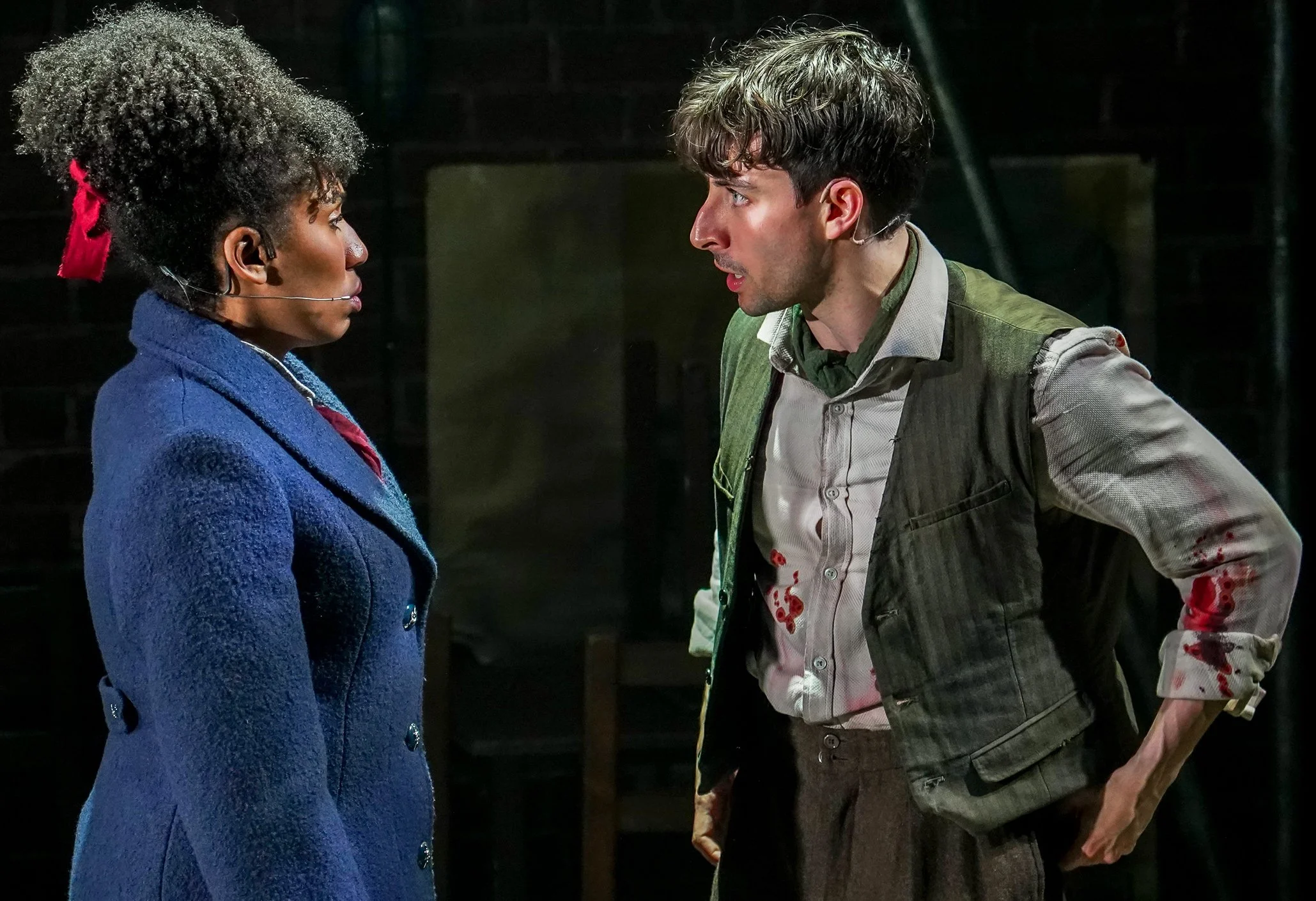
Mairead Kenny (Esin Kelly) tried to dissuade Isaac (Gryn) from seeking revenge for the attack on his brother.
The team of Tim Gilvin (music, lyrics, orchestration, and vocal arrangements), musical director Garret Healey and vocal arranger Tamara Singer have created 39 musical numbers (some of them multi-genre, including a few reprises) that exemplify pathos, hope, joy, resilience, social upheavals, armed attempts at repression, and remorse at violence’s human toll. Jevan Howard-Jones’s choreography makes innovative use of the stage’s space. Although Yoav Segal can't extend his set because of limited stage dimensions, he does build upward, which is tenement true.
Adam Lenson’s tight direction, Lu Herbert’s terrifying fascist costumes, and Jevan Howard-Jones’ choreography amplify the tension between the residents, the communists and their supporters, and the Blackshirts. The casting itself reflects historic East End multiculturalism. Englishmen and South Asians portray Jews and Irish immigrants, Jews are cast as Irish, and Irish, Jews, and Bangladeshi are communists. Even the fascist characters are a diverse lot.
The play’s emphasis on unity against injustice can, by extension, have relevance in these divisive times.
Cable Street runs at 59E59 Theaters (59 E. 59th St.) through May 24. Evening performances are at 7 p.m. Tuesdays through Saturdays; matinees are at 2 p.m. on Saturdays and Sundays; For more information, or to purchase tickets, call (646) 892-7999, visit 59e59.org.
Music & Lyrics: Tim Gilvin
Book: Alex Kanefsky
Director: Adam Lenson
Choreographer: Jevan Howard-Jones
Sound Design: Charlie Smith
Set Design: Yoav Segal
Costume Design: Lu Herbert
Lighting Design: Ben Jacobs & Sam Waddington
