The turmoil of refugee family life following World War II—the traumas of escaping genocide, identifying the dead, and hunting for the missing—lingers until today. Holocaust survivors have often been separated by cities, continents, political and ideological barriers, and sometimes by religion. The postwar obstacles to reassembling family units are daunting. Mark Weiner’s compelling drama Hidden confronts the pain of that separation and the feelings of abandonment, loss, anger, and confusion that persist, even when those separated are reunited.

Being Chaka
Part ghost story, part coming-of-age drama, part memory play, Being Chaka—written by Tara Amber, Chuk Obasi and Nalini Sharma—is a provocative investigation into racism in America. The surreal plot centers on the character Chaka (Kahiem Rivera), a black 16-year-old transfer student at East Prep High School in Manhattan. As the action unfolds, the audience will see him continually shifting between reality and dreamscapes, with the line between the two worlds often blurring.
The Fears
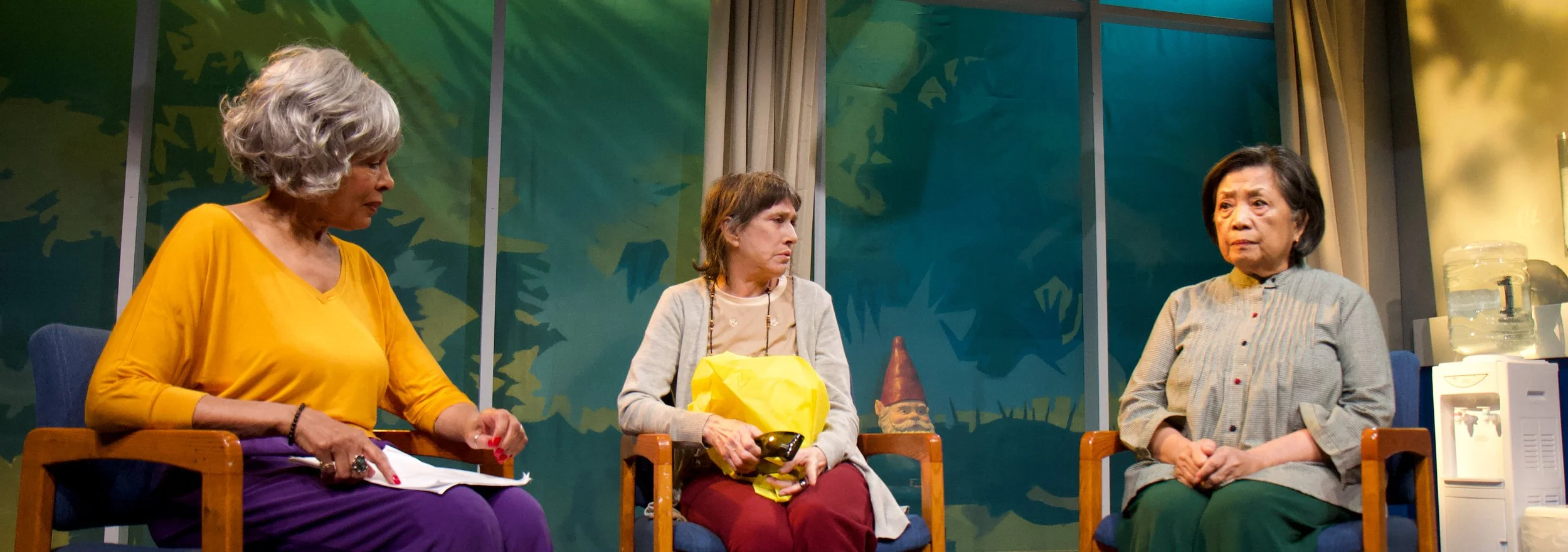
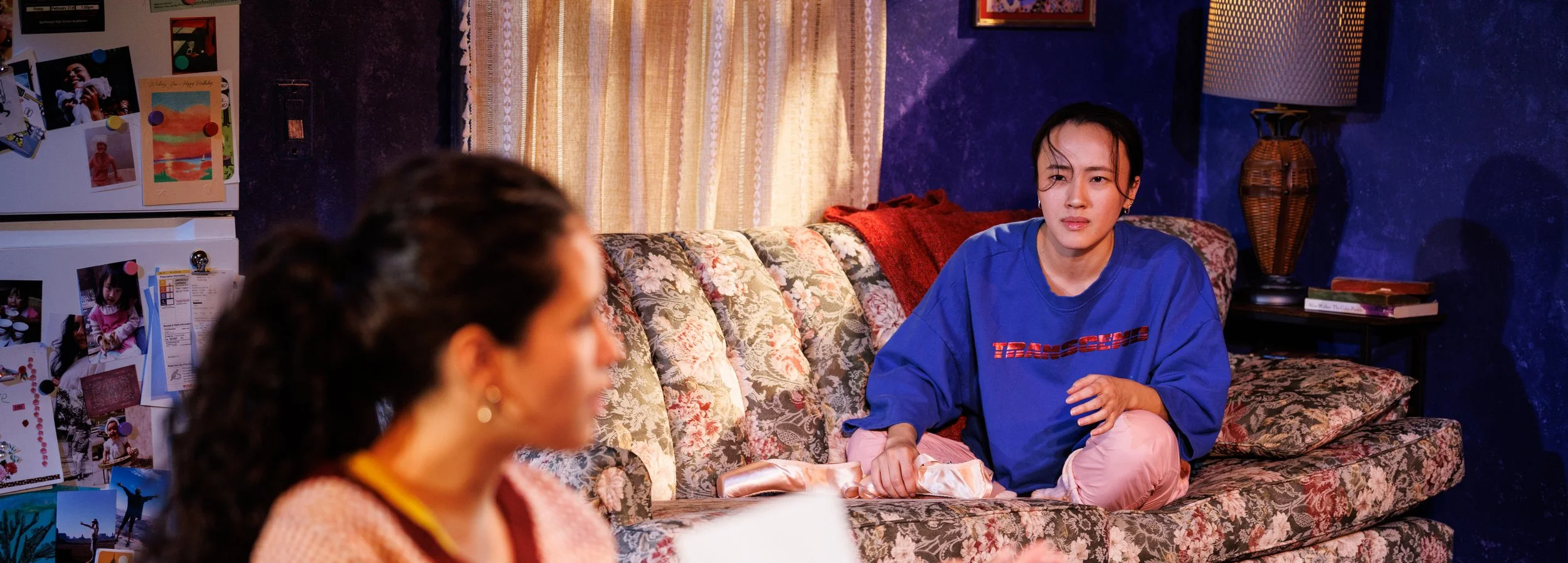
People can be damaged by those they love or admire. They can sometimes be repaired, too, with the help of others. And often the shared desire to be healed is a salve in itself. Such are the truths swirling beneath the meditation and mindfulness sessions on display in The Fears. It is a toss-up as to whether playwright Emma Sheanshang has crafted a strikingly sad comedy or a quite funny drama. The play’s seven characters all walk a fine line between comedy and tragedy. And because the action is set in a Buddhist center, they do so without their shoes.
Tartuffe
Lucie Tiberghien, artistic director of Molière in the Park, has scored a coup—an English-language world premiere of Tartuffe that uses Moliere’s uncensored version as its basis. Tiberghien’s production is the first English rendering to draw on a restoration of the original text by Georges Forestier that played in 2022 at the Comédie Française.
Samuel Clemens: Tales of Mark Twain
“The human race has only one really effective weapon, and that is laughter.” The words are those of Mark Twain, né Samuel Clemens, and the philosophy gets a healthy workout in Samuel Clemens: Tales of Mark Twain, Joe Baer’s one-man retrospective of the life and works—but mostly the life—of America’s great author. Baer loves his subject, and he works up a worthy retelling of Clemens’s life and times. He might have labored harder to carry them into a modern perspective, but it’s still a pleasant, leisurely ride.
A Gaga Guide to the Lower East Side
Ron Lasko’s new immersive theater experience, A Gaga Guide to the Lower East Side, takes audiences on a walking tour of the Lower East Side to visit locations and venues that were frequented by pop star Lady Gaga during the start of her singing career.
God of Carnage
The veneer of civilization is thinner than one hopes for in Yasmina Reza’s 2009 Tony-winning black comedy God of Carnage, admirably revived by Theater Breaking Through Barriers. The set-up is simple. Two couples are meeting after Benjamin, the 11-year-old son of one couple, hit Henry, the son of the other, with a stick and damaged two teeth. Henry’s parents, Michael and Veronica Novak (Dave Fazio and Christiane Noll), pressured him to reveal Benjamin’s name, and they have invited Benjamin’s parents, Annette and Alan Raleigh (Corey Cox and David Burtka) to their well-appointed home to exchange “statements” about the incident.
Let Me Cook for You
Like René Magritte’s painting of a pipe with the sentence “Ceci n’est pas une pipe” (“This is not a pipe”) beneath it, Orietta Crispino writes “This is not about the past” on the wall behind her early in her solo show Let Me Cook for You. But over the next two-plus hours she talks a lot about her mother—deceased since 1994—as well as about the relatives she lived with growing up, her attempt at age 17 to meet the father she’d only recently learned was still alive, and the many times she has moved (at least 35 total in four different places in Italy and the U.S.). In other words: about the past.
The Habit of Art
The great poet W. H. Auden had notable success working on the stage—he collaborated on choral works and an opera with Benjamin Britten and on plays with Christopher Isherwood. But Auden as a character has had a lively theatrical life too. Paul Godfrey’s 1990 play Once in a While the Odd Thing Happens examined Britten’s friendship with Auden in the 1940s. In 2012 the Off-Broadway musical February House featured them living in Brooklyn in the early 1940s, in a house with Gypsy Rose Lee and Carson McCullers. And now comes Alan Bennett’s play The Habit of Art, written in 2009 but making its New York debut as part of Brits Off-Broadway. It shows a declining Auden meeting his old friend Britten after a 30-year estrangement.
The Knight of the Burning Pestle
Fiasco Theater, in a joint production with Red Bull Theater, takes on Francis Beaumont’s The Knight of the Burning Pestle, which was a flop when it premiered in 1607. Though it has been occasionally revived, the play is mostly of scholarly interest: Beaumont is best-known for his collaborations with John Fletcher, who succeeded Shakespeare as writer-in-residence of the King’s Men, but The Knight of the Burning Pestle is Beaumont’s only play written alone. If the comedy doesn’t offer up the richness or complexity of Shakespeare, Fiasco is clearly drawn to its story of topsy-turvy community-building through theater.
Daughter of the Wicked
The impending 75th anniversary of the declaration of Israel as an independent state has prompted many controversial discussions. Among them are retrospective conversations about the country’s early days and questions as to whether those who struggled to create a cohesive post-Holocaust multicultural society also permitted systematic mistreatment of some citizens. How, for example, is it possible to justify the abduction of Yemenite children and the resultant grief and trauma for their families? Daughter of the Wicked, Shanit Keter Schwartz’s solo autobiographical play, deals in large part with her Yemenite identity, her immigrant parents, and her search for her missing sister.
Robin and Me: My Little Spark of Madness
Dave Droxler makes his living as an actor and voice-over artist, but he is also a gifted impressionist. His 2016 New York Fringe Festival show, Walken on Sunshine, was built around his masterly impersonation of Christopher Walken. Now Droxler has written a solo play, Robin and Me: My Little Spark of Madness, that showcases his equally spot-on impression of his idol Robin Williams.
Regretfully, So the Birds Are
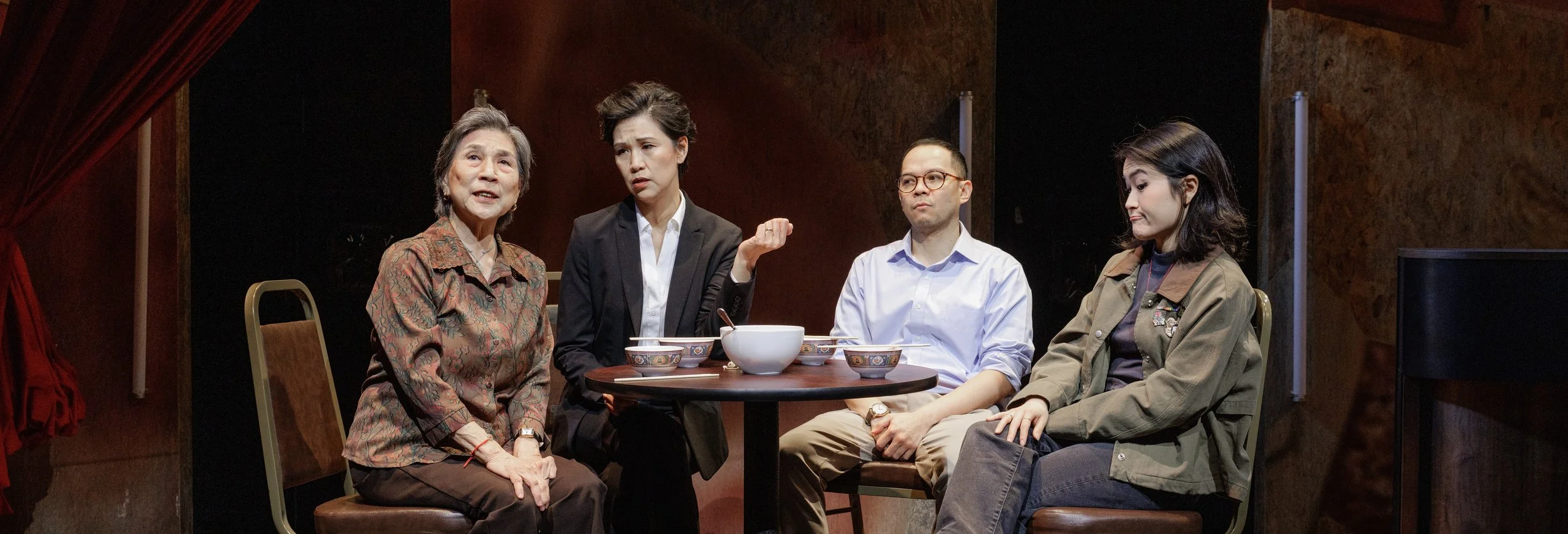
As the loopy title suggests, Regretfully, So the Birds Are is theater of the absurd. Julia Izumi’s play concerns three New Jersey siblings adopted from Southeast Asia by a Caucasian couple (Gibson Frazier and the incomparable Kristine Nielsen) who’ve refused to tell the children where they were born. The parents’ rationale is that, if their adoptive offspring don’t know where they come from, they’ll feel their “origins are the Whistler family” rather than separate, far-off countries.
On the Right Track
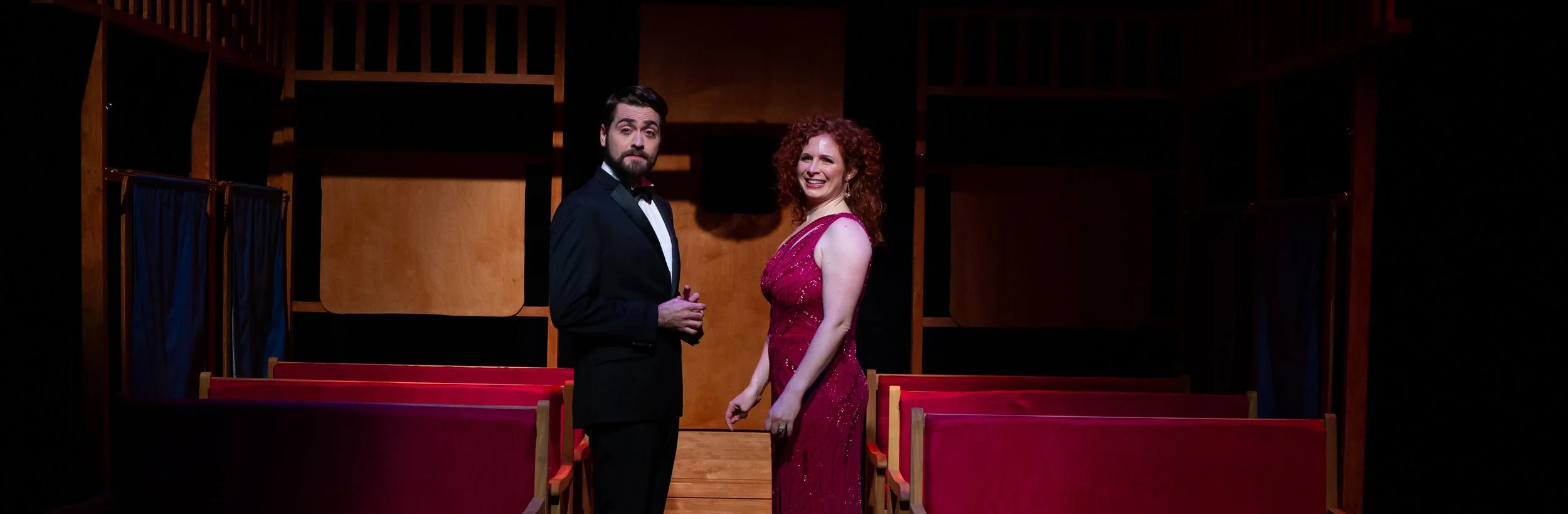
Tony Sportiello and Albert M. Tapper’s new musical comedy On the Right Track invites audiences to ride the rails on a New Jersey Transit train carrying three couples who have three very different problems. Sensitively directed by Mauricio Cedeño, the show is not only entertaining but edifying. It also reminds folks that “sometimes the key to happiness is simply a matter of knowing which door you want to open . . . and which one you want to keep closed.”
Eleanor and Alice
It’s amazing how Alice Roosevelt, daughter of President Theodore Roosevelt, and her first cousin Eleanor, renowned wife of Franklin Delano Roosevelt (FDR), sustained a relationship for more than six decades, given their polar-opposite dispositions. Blood is not necessarily thicker than water, and yet these two disparate personalities—the former, a socialite and senator’s wife, and the other, a political force and humanitarian in her own right, do not sever ties. Eleanor and Alice: Conversations Between Two Remarkable Roosevelts, Ellen Abrams’s new play about that relationship, deals with these celebrated women’s close camaraderie from childhood through FDR’s death.
Walking with Bubbles
Perhaps because one must dodge homeless people to get to the theater the time seems right for the new one-woman musical, Walking with Bubbles. Created, written and performed by Jessica Hendy, and based on her journey as a single mother rebuilding her life after her husband Adam’s mental illness and homelessness, this female-driven narrative is inspiring and may well impart hope to others in crisis.
Emilie: La Marquise du Châtelet Defends Her Life Tonight
Lauren Gunderson is the most successful playwright you’ve never heard of—if you are a New York theatergoer. She has topped American Theatre magazine’s annual list of most-produced playwrights in three of the last five years and ranked second in the other two, but her work is mostly done by regional theaters. Gunderson’s Emilie: La Marquise du Châtelet Defends Her Life Tonight, for example, has been staged from Maryland to Wisconsin to New Mexico to Australia since it premiered at California’s South Coast Rep in 2009, but is just now arriving Off-Broadway.
The Wife of Willesden
The Wife of Willesden, novelist Zadie Smith’s captivating playwriting debut, is a contemporary version of The Wife of Bath’s prologue and tale from Chaucer’s Canterbury Tales. As many an English major will attest, Alyson, the Wife of Bath, is the most colorful of the pilgrims whose verse monologues form the bulk of Chaucer’s 14th-century masterpiece. Using rhymed couplets with 10 syllables per line (as did Chaucer), Smith has transformed Alyson to Alvita, a Jamaica-born Londoner of today, in a comedy faithful to its source material yet discerning about contemporary social issues.
Smart
The opening scene of Act II of Smart is not a typical meet-cute. One person is grieving the recent death of her father and looking at an apartment she can’t afford. The other is the broker, who in her downtime has an even more difficult job of caring for a mother with dementia. Still, “meet-cute” seems a good description because the actors, well, they are cute, and they act cute as their conversation veers away from real estate and they discover what they have in common.
Día y Noche
Día y Noche is a dynamic, energy-filled new play by David Anzuelo that chronicles the lives of two teenage boys, Danny Guerrero and Martin Leonard Brown, growing up in El Paso, Texas, during the 1980s. Danny (Freddy Acevedo) and Martin (Neil Tyrone Pritchard) are polar opposites, yet their friendship is one of the best relationships they could have imagined.