Reviews

Everything Is Here

Everything Is Here

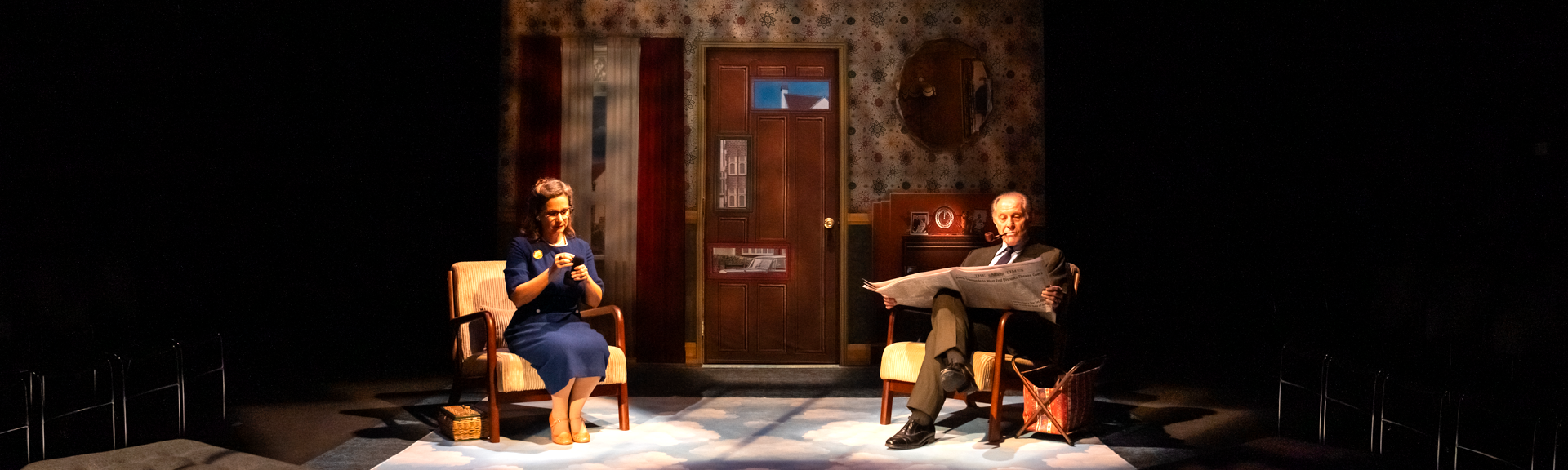
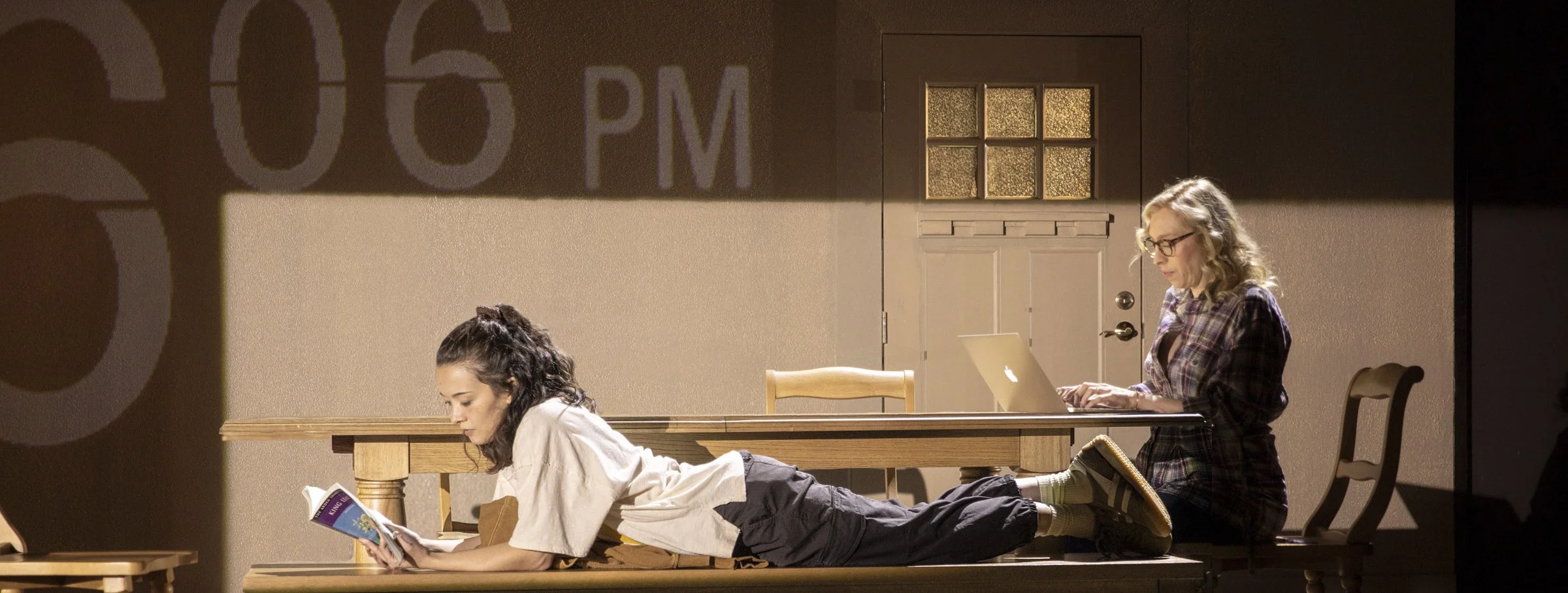
Peggy Stafford’s Everything Is Here explores the later stage of the life cycle—what some call the golden years, and others call the twilight years—by focusing on three women in their 70s: Bev (Jan Leslie Harding), Bonnie (Petronia Paley) and Janice (Mia Katigbak). Living in senior housing, they find their days are punctuated by the visiting nurse, Nikki (Suzannah Millonzi), who has a sadness beneath her cheerful demeanor, and the lanky and handsome Grant (Pete Simpson), who leads meditation and mindfulness classes at the home while he auditions for acting roles.

Click for print friendly PDF version of this blog post

It’s a Wonderful Life! A Live Radio Play

It’s a Wonderful Life! A Live Radio Play

When Frank Capra’s It’s a Wonderful Life premiered a few days before Christmas in 1946, New York Times reviewer Bosley Crowther was not exactly filled with glad tidings. “The weakness of this picture,” he bah-humbugged, “is the sentimentality of it—its illusory concept of life.” He observed that the small-town denizens represented in the film, “all resemble theatrical attitudes rather than average realities.” In a return engagement of Irish Repertory Theatre’s It’s a Wonderful Life! A Live Radio Play, Anthony E. Palermo’s adaptation of the film’s screenplay unapologetically leans into the sentimentality and accentuates the theatrical attitudes to deliver a sparkling and joyful Yuletide delight.

Click for print friendly PDF version of this blog post

Laowang: A Chinatown King Lear

Laowang: A Chinatown King Lear

Titles, even subtitles, sway playgoers’ expectations. Take, for instance, a recent press performance of Laowang: A Chinatown King Lear. Alex Lin’s new farcical melodrama zips relentlessly around jocose hairpin turns. The dialogue, stylishly delivered by a first-rate cast, is witty, urbane, and frequently arch. Yet the audience—presumably anticipating King Lear or something akin to that monumental tragedy—sat in suspended, churchlike repose throughout the play’s early scenes.

Click for print friendly PDF version of this blog post

Diversion

Diversion

Playwright Scott Organ excels at creating characters whose mistakes in their jobs and relationships lead to agonizing consequences. His 2020 drama, 17 Minutes, was a harrowing tale of a sheriff’s deputy in a crumbling marriage who failed to stop a mass shooting. For his new work, Diversion, Organ reunites with director Seth Barrish and the Barrow Group to focus on a close-knit nursing unit on the verge of unraveling. This quiet and absorbing think piece examines the hardship of opioid addiction and the post-traumatic stress of the COVID-19 pandemic.

Click for print friendly PDF version of this blog post

The Surgeon and Her Daughters

The Surgeon and Her Daughters

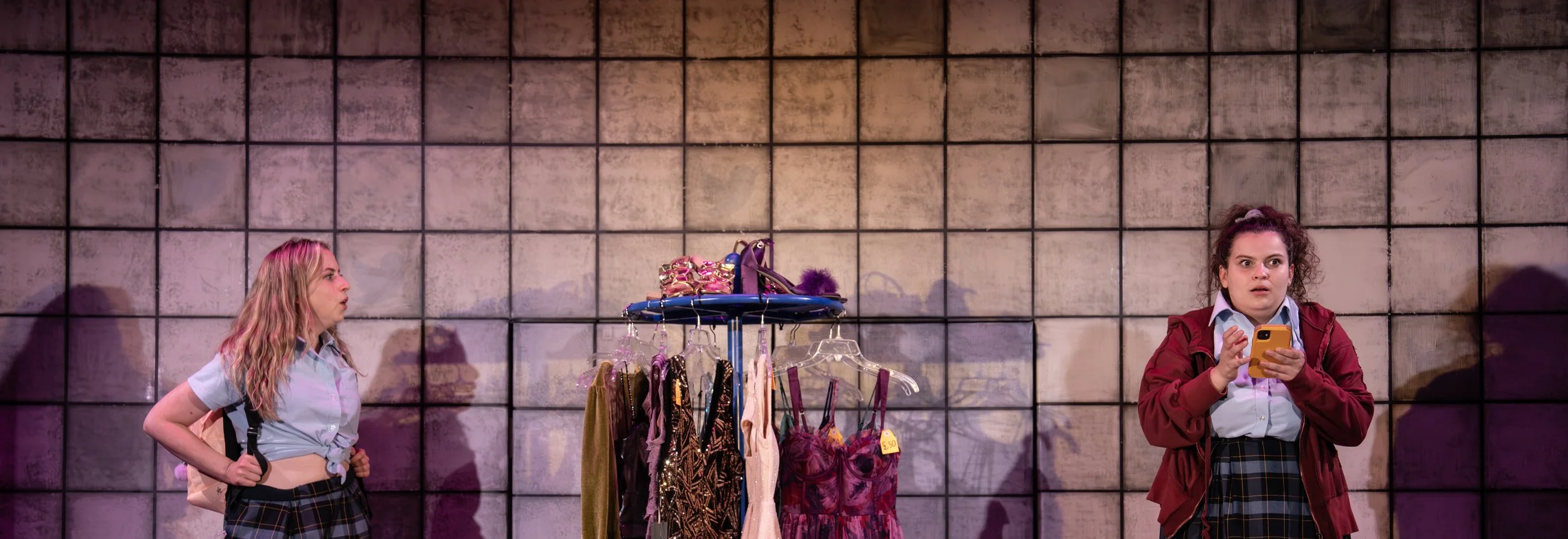
Set in New York City—specifically Times Square and Ozone Park, Queens—The Surgeon and Her Daughters presents a powerful story of seemingly unrelated people whose lives are upended as they struggle with insecurity and grief. Chris Gabo’s script artfully follows characters who struggle, deceive, fight, joke, and hope while reckoning with what their lives have become. Director Adrienne Campbell-Holt skillfully guides the production for maximum cathartic effect.

Click for print friendly PDF version of this blog post

Meet the Cartozians

Meet the Cartozians

Two different views of immigration and assimilation hold sway in Talene Monahon’s Meet the Cartozians. Directed and expertly cast by David Cromer, the first half of Monahon’s play finds a naturalized Armenian American defending his citizenship in a landmark court case in 1925. In the second part, set a century later, the Armenian community has both thrived and splintered.

Click for print friendly PDF version of this blog post

What If They Ate the Baby?

What If They Ate the Baby?

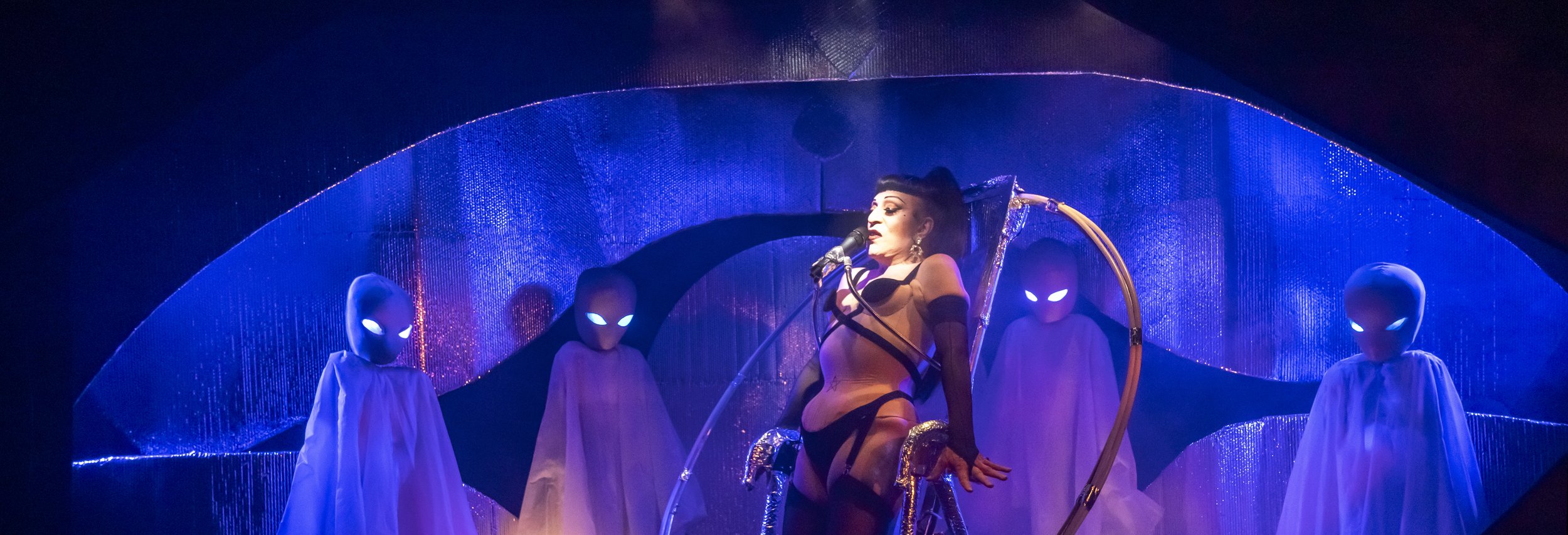
In the U.S. premiere of What If They Ate the Baby? writer-performers Xhloe Rice and Natasha Roland spin a seemingly polite 1950s housewife visit into a hilariously sinister dance of casseroles, secrets, and suburban dread. This queer clown two-hander uses absurdist comedy to probe surveillance, paranoia, and the pressures of American womanhood.

Click for print friendly PDF version of this blog post

Gruesome Playground Injuries

Gruesome Playground Injuries

Put two single beds side by side, and the stage is set for a romantic comedy. But what if they are hospital beds? Could a depressing drama be on tap? Not to worry. Rajiv Joseph’s 2009 oddity, Gruesome Playground Injuries, returns to Off-Broadway with plenty of laughs, missed connections, and fleeting kisses. And when things do, on occasion, turn grim, the solid acting, ample stage blood, and traces of vomit make this piece more of a shocker than a bummer. In the reliable hands of veteran director Neil Pepe, it’s a slice-of-life one-act with the emphasis on slice.

Click for print friendly PDF version of this blog post

The Baker’s Wife

The Baker’s Wife

The musical The Baker’s Wife has had a notoriously checkered history. With a book by Joseph Stein and music and lyrics by the young Stephen Schwartz, it first appeared in 1976. But, amid casting changes (Patti LuPone survived) and infighting, producer David Merrick closed it before it got to Broadway. Over the years it has had many iterations, in hopes of correcting whatever sank it then (critics excoriated the book but praised the music). LuPone’s song “Meadowlark” has become a standard for cabaret singers. The current revival at the Classic Stage Company (CSC), boasting a stellar cast, is likely to be its best shot at resuscitation.

Click for print friendly PDF version of this blog post

The Seat of Our Pants

The Seat of Our Pants

Adapting a Thornton Wilder play into a musical has notable historical precedents. His 1954 comedy, The Matchmaker, was, of course, the basis for Hello, Dolly! And in 1955, Our Town was transformed into a live television musical starring Frank Sinatra. Now comes The Seat of Our Pants, based on Wilder’s wildest work, his 1942 Pulitzer Prize–winner, The Skin of Our Teeth. Under the direction of Leigh Silverman, with book and score by Ethan Lipton, this faithful interpretation gets by on novelty in the first act, thrives on its merits in the second, and offers hope, if not structure, in the third.

Click for print friendly PDF version of this blog post

Practice

Practice

In his play Practice, Nazareth Hassan delivers an uncomfortable yet unflinching depiction of what it takes for an artist to achieve his vision, allowing director Keenan Tyler Oliphant to stage a powerful production that the script fully earns. The story follows a group of actors and an ascendant theater star, Asa Leon, who subjects them to a rigorous development process for his next project. Asa pursues his vision with messianic dedication, drawing his actors into that vision without regret or apology. The result is distressing, at times brutal, and ultimately thrilling.

Click for print friendly PDF version of this blog post

Wake

Wake

Grief is very personal, and everyone processes it in their own way and in their own time. Elisabeth Kübler-Ross identified five stages of grief: denial, anger, bargaining, depression, and acceptance. Wake, written by Leon Ingulsbrud and Brooke Shilling, explores the contours of these stages through music, dialogue, musings, reflections, and poetry.

Click for print friendly PDF version of this blog post

Archduke

Archduke

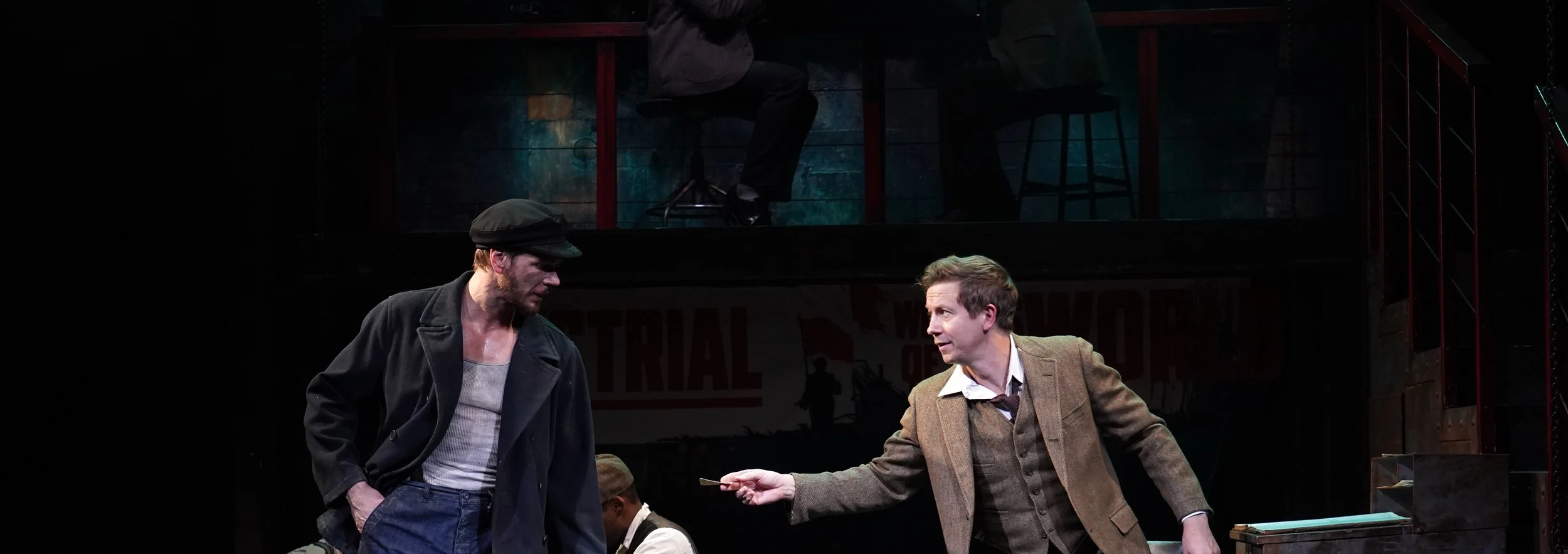
If the title of Rajiv Joseph’s latest play, Archduke, conjures up Franz Ferdinand, the most famous archduke of all, that’s exactly what’s intended. But Joseph is less concerned with the death of the Serbian monarch whose assassination in 1914 sparked World War I than he is with the social and historical forces that helped radicalize the three principal killers: Gavrilo Princip, Nedeljko Čabrinović, and Trifko Grabez.

Click for print friendly PDF version of this blog post

Pygmalion

Pygmalion

In his current revival of Pygmalion, director David Staller does more than remount Shaw’s 1912 comedy—he alters the play’s architecture by adding a mythic framing device led by four Olympian gods who introduce and comment on the action. This addition is not found in the published script, and theatergoers expecting a traditional revival may consider it a provocation. But Staller positions it as a reclamation rather than an invention.

Click for print friendly PDF version of this blog post

The Burning Cauldron of Fiery Fire

The Burning Cauldron of Fiery Fire

Anne Washburn’s The Burning Cauldron of Fiery Fire, making its world premiere at the Vineyard Theatre, defies categorization. The offbeat exploration of an agrarian California commune bordering on a cult might also defy comprehension; your mileage may vary depending on your tolerance for unknowable mysteries. There is something mesmerizing about Burning Cauldron, beautifully strange and compelling, with silliness and menace existing so comfortably side by side. Who needs easy answers when the questions are this much fun?  

Click for print friendly PDF version of this blog post

Messy White Gays

Messy White Gays

Although it’s probably not among the top 10 elements for a successful farce, the awkward presence of a corpse has proved comic gold in such plays as Joseph Kesselring’s Arsenic and Old Lace and Joe Orton’s Loot. The first few moments of Messy White Gays suggest that playwright Drew Droege may have tapped into the vein as well. In darkness, a crash of breaking glass is heard, and the lights come up suddenly on two young men standing over a body. The corpse is Monty, the third in their throuple. But what ensues is more a nightmare of bad behavior than a comic soufflé.

Click for print friendly PDF version of this blog post

Richard II

Richard II

The Red Bull Theater production of Shakespeare’s Richard II (1595) is welcome, if only because it is so rarely staged. A Public Theater production scheduled for 2020 was presented online because of COVID; the last Delacorte production was in 1987. In the 2000s, BAM has hosted two major British productions: Ralph Fiennes in 2000, and David Tennant in 2016.

Click for print friendly PDF version of this blog post

Kyoto

Kyoto

Joe Murphy and Joe Robertson’s Kyoto, now playing at Lincoln Center after runs in Stratford-upon-Avon and London, opens by breaking the fourth wall and reminding the audience that “the times you live in are fucking awful.” The statement, delivered by the play’s narrator, Don Pearlman (Stephen Kunken), a right-wing Department of Energy lawyer during the Reagan administration and now a climate change–denying crusader, is preceded by video projections (designed by Akhila Krishnan) of Americans acting violently, including the Jan. 6 terrorists storming the Capitol. For Pearlman, the 1990s, the period on which the play concentrates, “were freakin’ glorious” by comparison.

Click for print friendly PDF version of this blog post

44—The Musical

44—The Musical

Right in the middle of election season, 44—The Musical has arrived Off-Broadway. The show takes Barack Obama’s historic rise and views it through a carnival mirror, refracting statesmanship into satire. Written, composed, and directed by former Obama campaign staffer Eli Bauman, it gleefully revisits Obama’s presidency as Joe Biden “kinda sorta” remembers it, complete with political foibles, larger-than-life personalities, and musical swagger.

Click for print friendly PDF version of this blog post

Playing Shylock

Playing Shylock

Many an actor has played Shakespeare’s problematic Shylock, the centerpiece of Shakespeare’s Merchant of Venice, since Elizabethan times. Even in “officially” Jew-free England (nominally from 1290–1656, though Sephardic Jews fleeing the Spanish Inquisition did live there), stereotypes of Shylock the Jew prevailed. Yet relatively rarely has a Jewish actor been cast as Shylock, especially in today’s “cancel culture.” In Playing Shylock, dramatist Mark Leiren-Young’s solo play, actor Saul Rubinek channels this issue.

Click for print friendly PDF version of this blog post