
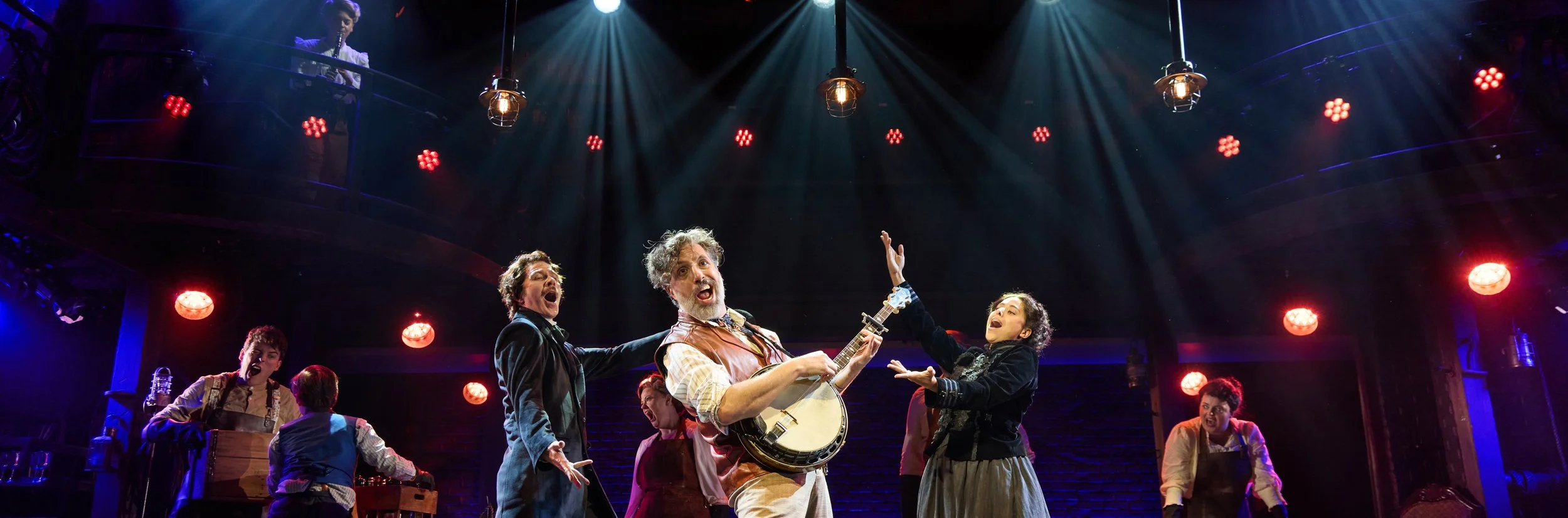

“This is not a moral place,” proclaims a master of ceremonies at the outset of the Pearl Theatre Company’s energetic Vanity Fair. “Nor is it often a merry one,” he adds, “for all of its pageantry and noise.”

As a portrait of two relationships imploding when the couples are confined together, Kate Vozella’s Machine Learning provides 90 minutes of fiercely acted, propulsive drama. As a portrait of AI’s expanding influence in our lives, however, it underwhelms.
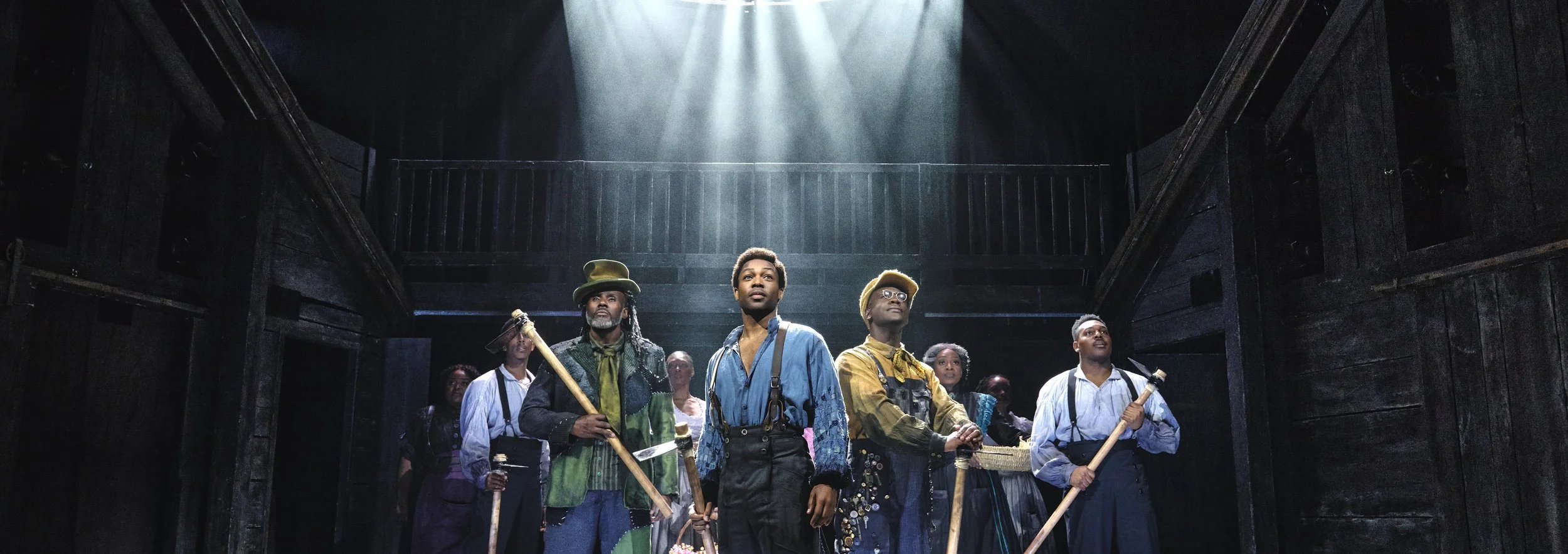
Life for blacks in the antebellum South, during the Civil War, and for generations thereafter consisted of a confluence of injustices at the intersection of class, race, and gender. Todrick Hall's complex new musical Midnight grapples with those injustices by reimagining what it might be like if the oppressors became the oppressed.
The producers of Copperfield! have added the subtitle The New Musical, presumably to alert anyone who saw the notorious 1981 flop Copperfield, which ran only 39 performances, that this show is not a revival of that one, which New York Times critic Frank Rich described as “the kind of musical that sends you out of the theater humming every score other than the one you’ve just heard.” On the contrary, the new Copperfield! is an energetic and melodious delight. If Dickens at Christmastime is a tradition, and A Christmas Carol is starting to feel shopworn, Copperfield! is an ideal substitute.
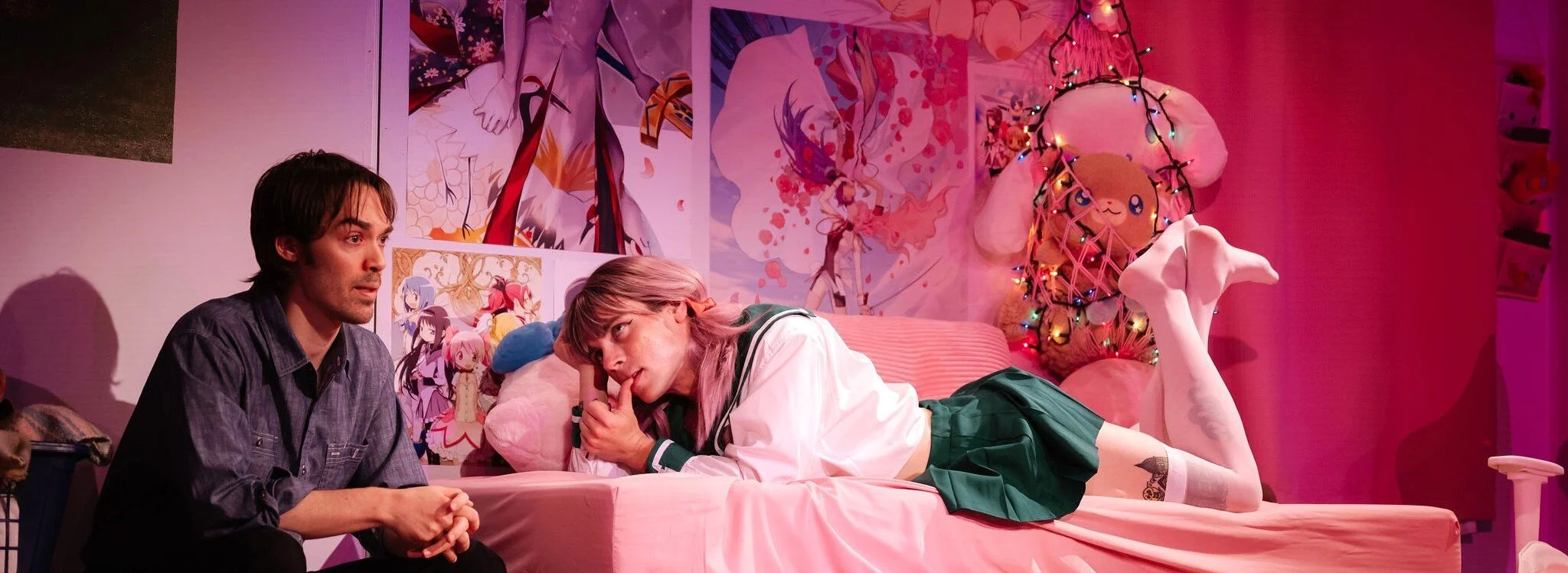
In Degenerates, playwright Else Went explores the world of incels—typically heterosexual males who cannot form romantic or sexual relationships with women for a variety of reasons. Went’s script immerses the audience in incel and online slang, such as redpill (the belief in an alleged truth about women and the sexual marketplace) and weeb (a fan of Japanese popular culture, particularly anime) as it focuses on some of them, frustrated by loneliness and desiring unconditional love. The incels’ world turns out to be riveting theater.
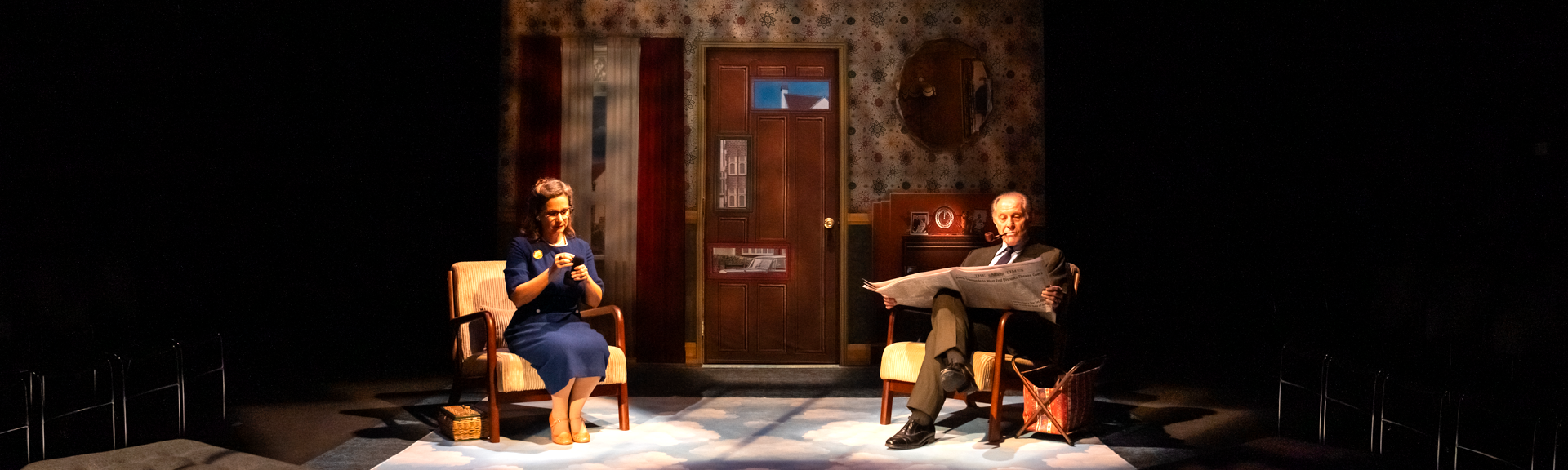
Eugène Ionesco’s The Bald Soprano, a landmark of the Theatre of the Absurd, transforms the banalities of everyday conversation into a riotous comedy of linguistic confusion and human folly. Under Bradford Cover’s astute direction, the Resident Acting Company brings out the enduring brilliance of this classic, whose absurdist humor continues to resonate in a world where communication too often gives way to cacophony.
“This is not a moral place,” proclaims a master of ceremonies at the outset of the Pearl Theatre Company’s energetic Vanity Fair. “Nor is it often a merry one,” he adds, “for all of its pageantry and noise.”
