


The 30–40 guests attending each performance of Last Call, A Play with Cocktails know they’re going to immersive theater, but they may not expect that what they’ll be immersed in are marriage counseling and an authoritarian dystopia.

Ms. Blakk for President, co-written by Tarell Alvin McCraney and Tina Landau, who also directs, revisits the early 1990s through the story of Joan Jett Blakk, the first Black—and only drag queen—to run for president of the United States. Inspired by, but not strictly adhering to, the life of Chicago drag performer and activist Terence Alan Smith, who adopted the Blakk persona, the production unfolds as a fever dream—part docudrama, part party, part vaudeville, part political campaign—while exploring the demands of acting in good conscience.
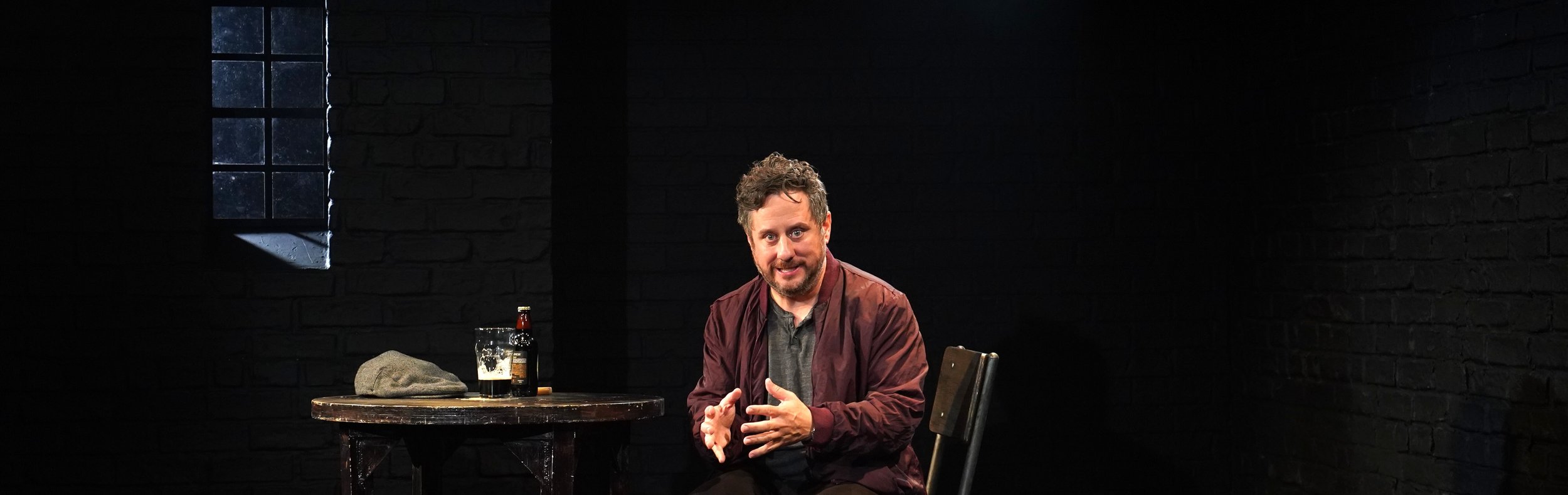
The Good Thief, an early work of the renowned Irish playwright Conor McPherson (it premiered in 1994, when McPherson was 23), is a monologue spoken by a small-time Dublin criminal. The production currently running at the Irish Rep, featuring Christopher Fitzgerald as the protagonist—the “good thief” of the title, a reference to the Gospel of Luke—and directed by Justin Waldman, is a lightly engaging 70 minutes but is unable to tap into the more sinister resonances of the piece. It has the feel of a somewhat melodramatic story told by a harmless barfly, rather than a glimpse into a heart of darkness.
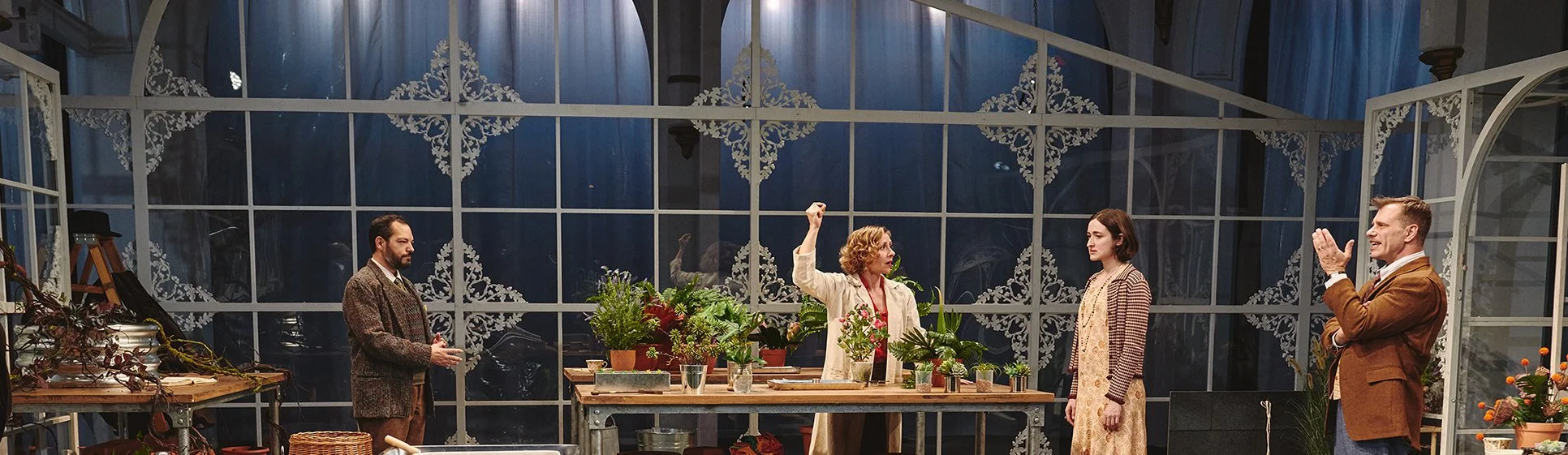
“All I ask is to die in the gutter with everyone spitting on me,” declares Claire Archer, the protagonist of Susan Glaspell’s 1921 drama The Verge. It’s an over-the-top statement that the thwarted heroine has been leading up to in this hothouse play, but it seems appropriate for Claire, a difficult person to like or care about. Fiasco Theater’s resurrection of The Verge is an admirable attempt to look at the theatrical repertoire neglected by most producers (except for the Mint Theater, which has unearthed such discoveries routinely for decades).
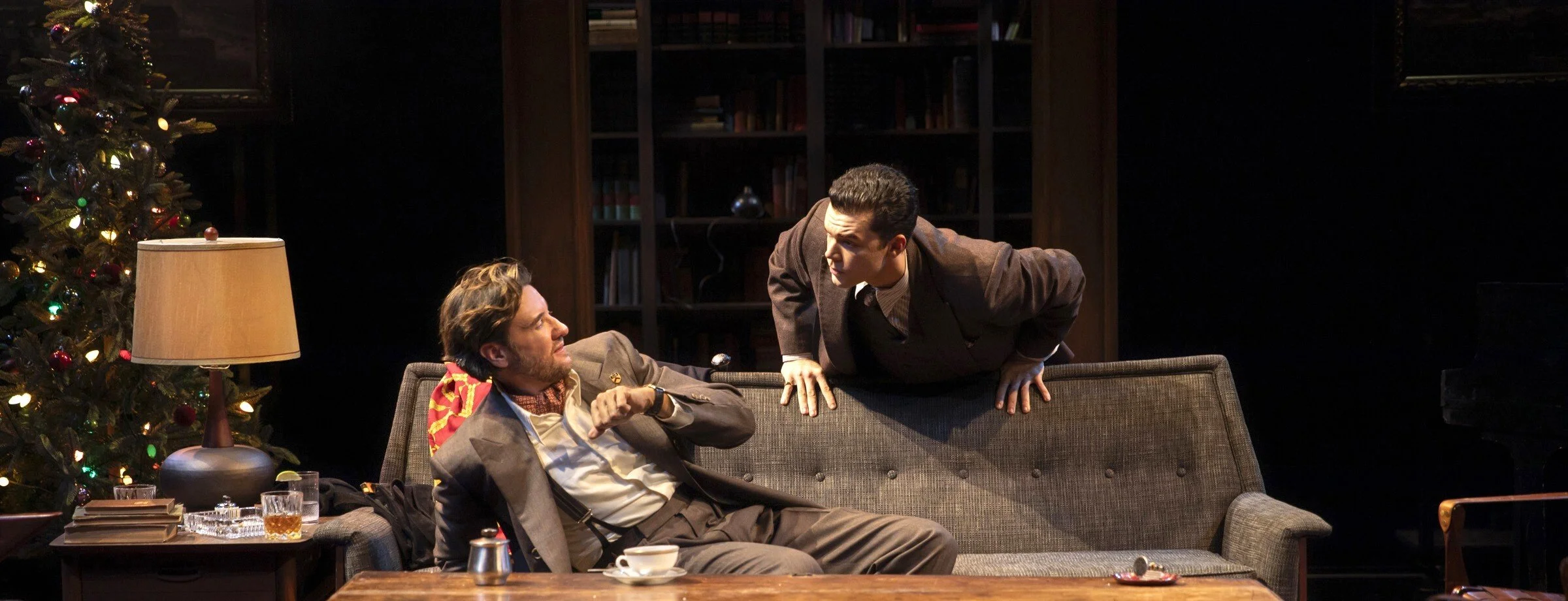
The 1948 Alfred Hitchcock thriller Rope is famous for a) seemingly being filmed in one take, so the cameraman has to focus on a large immobile surface every 12 minutes or so to reload, and b) containing a homoerotic undercurrent, something it shares with Hitchcock’s Strangers on a Train and North by Northwest. It’s adapted from a 1929 play by Patrick Hamilton, which fictionalized the 1924 Leopold and Loeb case. In it, two romantically entangled college boys murdered a third boy (Clarence Darrow defended them at trial). Now Gordon Greenberg has rewritten it, and gayed it up. The result is odd.
Intergenerational trauma can cripple, and many Holocaust survivors pass the scars of their wartime experiences on to their children, even inadvertently. Cary Gitter’s The Steel Man, inspired by a true story, identifies the underlying pain of a physically intact yet severely damaged man trapped in a destructive dance with his only child.
The 30–40 guests attending each performance of Last Call, A Play with Cocktails know they’re going to immersive theater, but they may not expect that what they’ll be immersed in are marriage counseling and an authoritarian dystopia.
