


The 30–40 guests attending each performance of Last Call, A Play with Cocktails know they’re going to immersive theater, but they may not expect that what they’ll be immersed in are marriage counseling and an authoritarian dystopia.

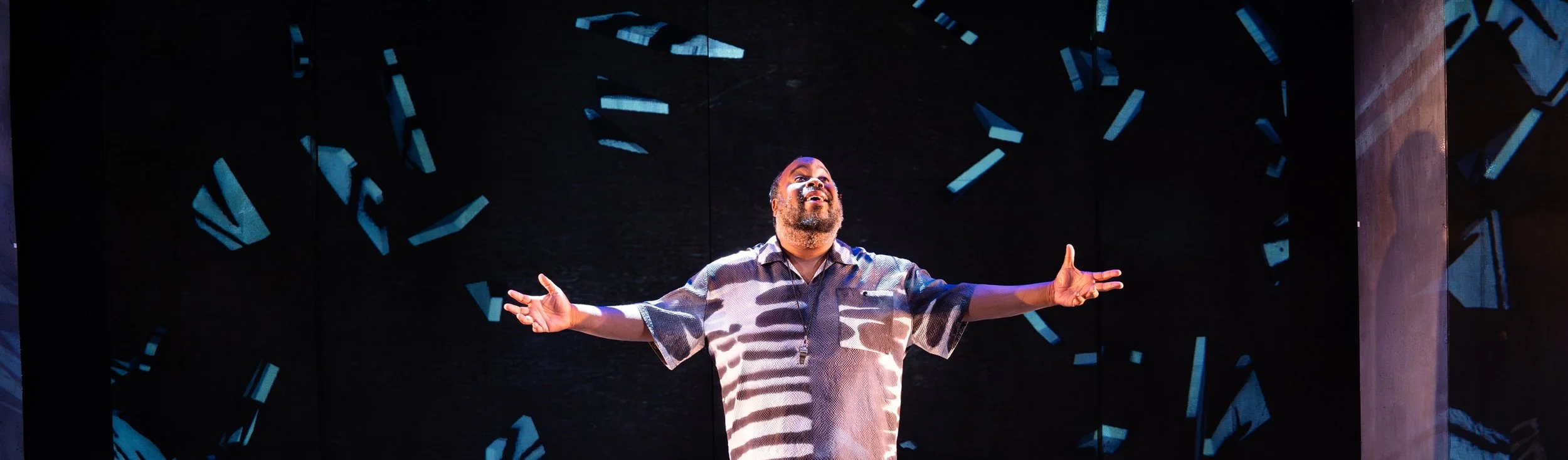
In How Shakespeare Saved My Life, Jacob Ming-Trent transforms the search for a place to belong into a riveting celebration of the power of language. Directed by Tony Taccone, this solo performance draws on Shakespeare, rap, poetry, and preaching to chart one man’s journey toward reclaiming his life.
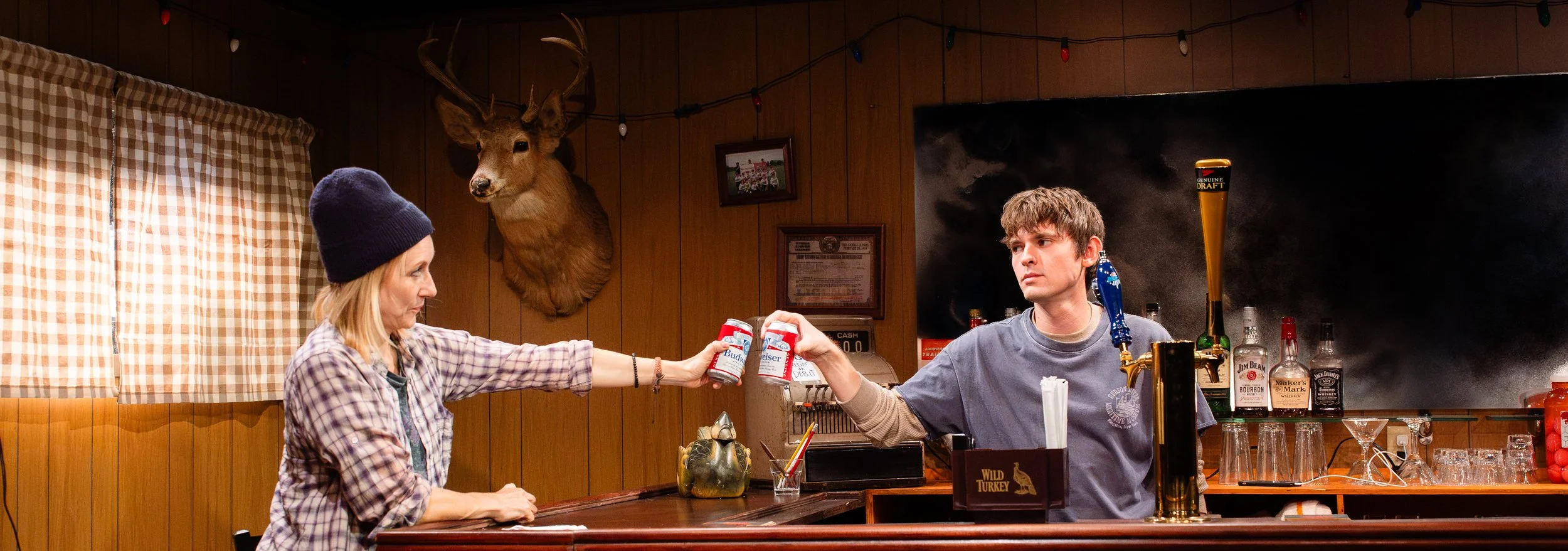
For the first two scenes of Max Wolf Friedlich’s The Holes, the intrigue builds carefully, as a bartender named Joey Alexander (Bubba Weiler) hangs around his cozy but empty establishment on a snowy night. He soon has a visitor, a man (Grantham Coleman) calling himself “Paul,” who hands him an envelope full of cash and an ID that identifies him otherwise: as someone named Wesley. The cash gains Wesley entrée into the back room of the dive bar—in spite of arriving long after his assigned time. “Next time don’t be late,” says Weiler’s stern Joey, adding, “12:24 is not the same as 11:30.” What is behind that door constitutes a mystery that drives the narrative of The Holes. Friedlich calls his play a “fairy tale,” but the gay-inflected twaddle that follows is a far cry from Hans Christian Andersen.
Avant-garde playwright Eugène Ionesco (1909–94) traced his love of theater to watching a Punch-and-Judy show in Paris’s Luxembourg Gardens as a child. He was enthralled by the puppets that “talked, moved, clubbed each other,” and the performances represented, he wrote, “the spectacle of the world itself . . . as if to underline its grotesque and brutal truth.” Igor Golyak’s Delirium, an adaptation of Ionesco’s 1962 play Délire à deux (Frenzy for Two), captures this signature blend of slapstick domestic squabbling while highlighting the human penchant for destruction and barbarity.
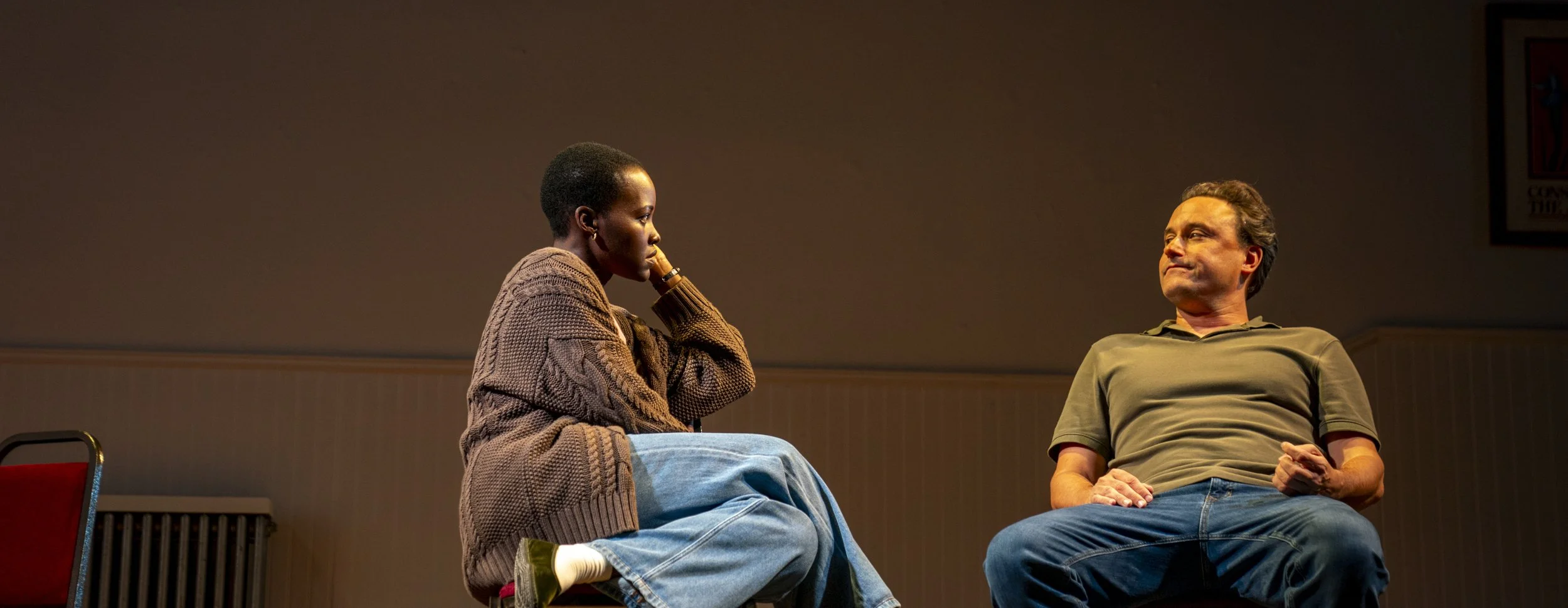
Marin Ireland’s Pre-Existing Condition is about the emotional aftermath of domestic violence. It is a quiet, unflashy play—75 minutes, sensitively directed by Maria Dizzia, with subtle performances from an ensemble of four—but no less devastating for its restraint. Lupita Nyong’o is outstanding as the protagonist, A: with fury, self-doubt, shame, and agony roiling beneath the surface, she strains at every moment to stay composed. The audience follows her through support groups, therapy, unhelpful family and friends, and the tentative possibility of letting herself trust again.
In Tom Stoppard’s The Invention of Love (1997), intellectual brilliance and unspoken longing collide as poet and classical scholar A. E. Housman confronts the love he has carried silently through a lifetime. In this rare revival, Zachary Elkind’s direction and David Greenspan’s mesmerizing performance transform Housman’s final journey into a poignant meditation on love, memory, and the price of keeping desire hidden.
Last Call A Play With Cocktails
The 30–40 guests attending each performance of Last Call, A Play with Cocktails know they’re going to immersive theater, but they may not expect that what they’ll be immersed in are marriage counseling and an authoritarian dystopia.
