


Billy Crudup has built a career playing charming rogues in films like Almost Famous, Eat Pray Love, and last year’s 20th Century Women. It makes perfect sense when his character is revealed as (11-year-old spoiler alert!) the real villain of Mission: Impossible III because Crudup is credible as both hero and villain; there’s always a hint of psychosis underpinning his boy-next-door looks. He’s indulged this duality in his stage roles as well (The Elephant Man, The Pillowman, The Coast of Utopia), but none has exploited the dark under his light as successfully as Harry Clarke, David Cale’s new one-man show at Vineyard Theatre.

Hot Mess
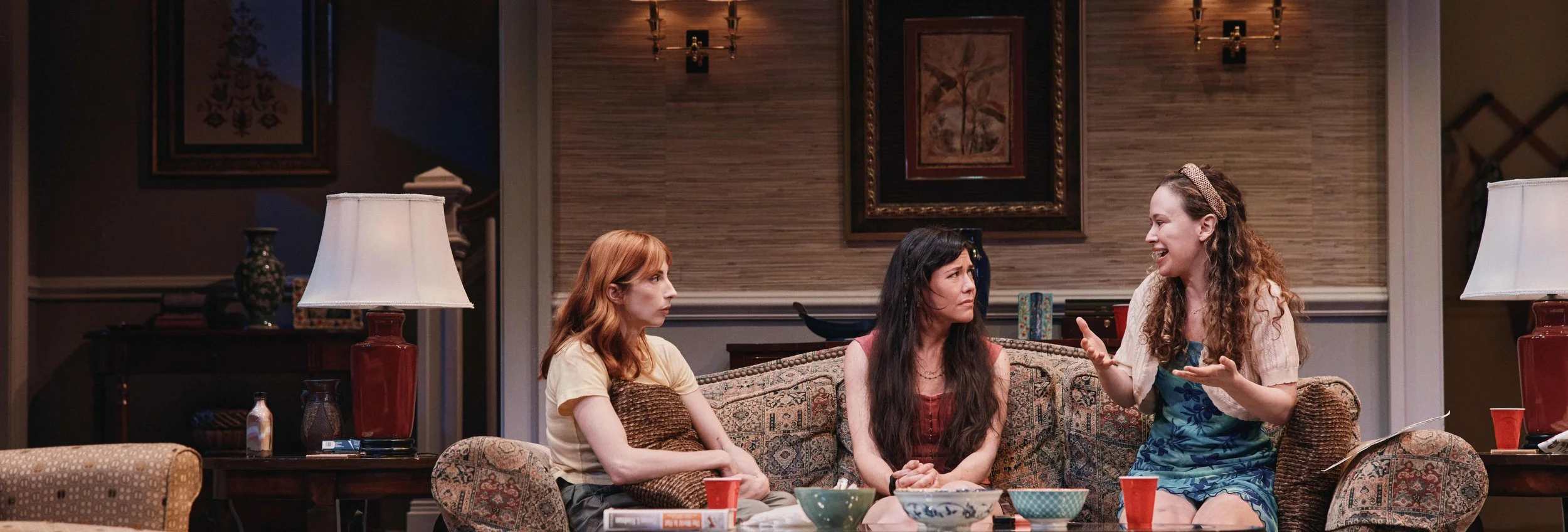
A retitled version of Regretrosexual—The Love Story, a play written roughly 10 years ago by Dan Rothenberg and Colleen Crabtree, the “new play” Hot Mess is about the authors’ unusual courtship and marriage. Both were comedians working in Los Angeles, and the work focuses on a particular hurdle Rothenberg had to overcome: he had lived as a gay man for two years in San Francisco before meeting and marrying Crabtree. Scrubbing out the “regret” part of the former title and using the catchier Hot Mess eliminates the implication of previous disappointment in the age of political correctness.
Pride and Prejudice
Don’t underestimate Jane Austen. Her authorial voice, distinctively witty and humane, rings out above the Gothic din of early 19th-century fiction. Two centuries after her death, this middle-class provincial’s novels still enchant readers with their verisimilitude and authenticity, despite how radically manners and morals have changed.
The Mad Ones
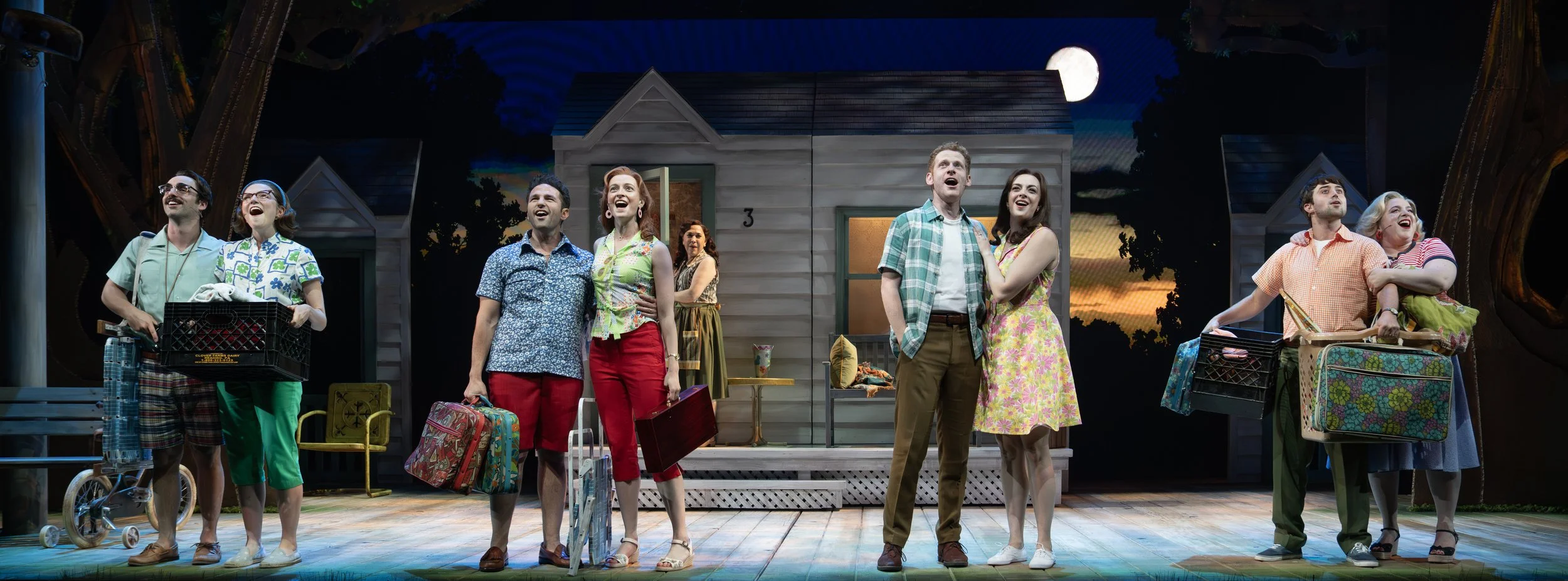
Kait Kerrigan and Brian Lowdermilk are the Rihanna of musical theater. Just as the Barbadian pop goddess releases hit song after hit song while selling relatively few albums, Kerrigan and Lowdermilk are less known for their plays than for their individual tunes, which have gained them a rabid online following. Their contemporaries Benj Pasek and Justin Paul (Dear Evan Hansen, La La Land) have conquered Broadway and Hollywood, but Kerrigan and Lowdermilk have connected with the millennial fan base like no other musical theater writers; they’re the official composers of the Internet. Now, several of their conversationally catchy pop songs have found their way into the long-gestating original musical The Mad Ones, playing at 59E59 Theaters.
Peter Pan
The boy who wouldn’t grow up has become the character who won’t die. J.M. Barrie’s Peter Pan has been endlessly staged, filmed, remixed, twisted, and contorted since its 1904 premiere at the Duke of York’s Theatre, London, and the insatiable Pan pangs show no sign of ceasing. Bedlam’s current adaptation at another Duke, on 42nd Street, is the second Peter Pan–inspired show to run on the Deuce this season.
Bright Colors and Bold Patterns
“We celebrate things and make fun of them at the same time,” Gerry, the flamboyant middle-aged hero of Bright Colors and Bold Patterns, advises a 23-year-old. “That’s called gay.” And Gerry is gay—gay as a goose, gay as Provincetown, gay as a green carnation. He’s part P.T. Barnum, part Edward Everett Horton, part encyclopedic movie reference, and wildly passionate about everything he says. And plenty of what he says is outrageously funny. Played by the author, Drew Droege, Gerry (pronounced Gary) is a hoot to hang out with.
Muswell Hill
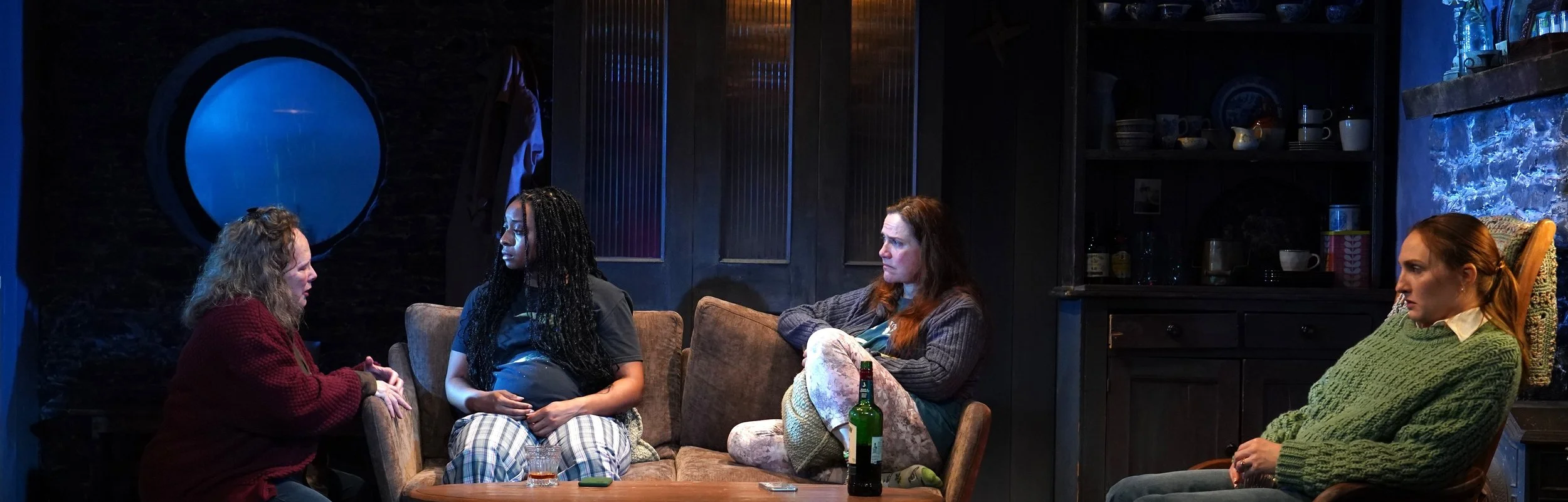
A pot of monkfish stew sits on the stove for most of Muswell Hill, Torben Betts’s barbed comedy—simmering, bubbling, issuing forth its varied flavors gradually and subtly. As does Muswell Hill. Set in 2010 in the titular leafy upscale London suburb—the equivalent of, say, Saddle River on this side of the pond—Betts’s work presents a troubled dinner party of mismatched individuals and couples, talking past and misunderstanding one another, drinking too much even though at least two begin as teetotalers, letting their libidos lead them to unwise decisions, and revealing personality traits simultaneously unexpected and inevitable. We’re in what seems familiar Alan Ayckbourn territory for much of it, then the hurts and regrets pile up, and the curtain falls on a very funny comedy that has also become a sad commentary on human foibles.
The Home Place
The “home place” in the title of Irish playwright Brian Friel's 2005 drama is Kent, England, where the family of widowed landowner Christopher Gore (John Windsor-Cunningham) originated. Gore, residing in Ballybeg, Ireland, speaks of Kent as a paradise lost, though he’s never really lived there. He and his son David (Ed Malone) administer their Irish estates with an uneasy liberality toward their tenants, made all the more uneasy by the recent murder of another local English landlord.
Jesus Hopped the ‘A’ Train
New York Congressman Adriano Espaillat has called it “an 18th-century solution to a 21st-century problem.” New York City Mayor Bill De Blasio has vowed to shutter it in the next decade. Most people don’t think about it unless they’re flying out of LaGuardia, but many don’t have that luxury: Rikers Island, the bête noire of the East River, is one of the largest and worst prisons in America and a hotbed of violence and neglect. Stephen Adly Guirgis’ 2000 play Jesus Hopped the ‘A’ Train, in revival at Signature Center, aims to counteract that neglect and remind its audience of the discarded, forgotten lives behind its iron gates.
Wilde’s ‘Woman’ to get reading by Project Shaw
Gingold Theatrical Group will conclude its 12th season of Project Shaw at 7 p.m. on Dec. 18 with a rare staging of Oscar Wilde’s comedy A Woman of No Importance. Directed by the award-winning Charlotte Moore, the cast features Reed Birney, Cynthia Darlow, Andrea Lynn Green, Tim Jerome, Jay Armstrong Johnson, Robert Langdon Lloyd, Martha Plimpton, Margaret Loesser Robinson, Thom Sesma, and Jennifer Van Dyke The performance will be at Symphony Space’s Leonard Nimoy Thalia Theatre (2537 Broadway at 95th Street). Tickets are $35 and are available by calling (212) 864-5400 or online at www.symphonyspace.org.
The Trial of Typhoid Mary 1915
Since 2009, Live In Theater has reimagined the murder mystery genre by staging historic events within various nontraditional theatre spaces throughout New York City. The group specializes in interactive, true crime stories, putting some audience members at the center of the action. In The Trial of Typhoid Mary 1915, viewers are faced with the case of Mary Mallon, a domestic cook for affluent New York families during the early 1900s. As a silent carrier of the contagious bacteria that causes typhoid fever, Mallon infected more than 50 New Yorkers, resulting in at least three deaths. However, while Mallon was certainly not the only carrier of the disease, her status as an immigrant woman may have disadvantaged her in the justice system. It is up to the audience to decide whether Typhoid Mary should remain in quarantine for the rest of her natural life or be set free.
Marcel + The Art of Laughter
The first thing to know about Marcel + The Art of Laughter is that they are two one-acts, not a single show. The first is named for one of the two performers in it: Marcello Magni—although using the French version of Marcello conveniently echoes the great mime Marcel Marceau. The second is a solo performance by Marcel’s compatriot in the first piece (and co-creator of it) Jos Houben, a Belgian. Their show is about clowning and laughter, and it has a particular European sensibility that’s engaging, offbeat and sometimes strangely familiar.
Strange Interlude
Strange Interlude, one of four Eugene O’Neill plays to have won a Pulitzer Prize, is brilliant, magisterial, and provocative. How then, does one actor, David Greenspan, take the complex story of Nina Leeds and the four men in her life, a play that is written in nine acts and spans five hours in the telling, and deliver the highs and the lows, the strange twists of fate, the loves, and the schemes of its characters? Dressed in a dapper three-piece suit, Greenspan is alternately Nina, Charles, Ned and Sam (and three minor characters as well), maintaining an energetic, staccato presence while shifting, sometimes with gunfire rapidity, among these characters. Who would have imagined that this 1928 whale of a play could be acted as a one-man show to riveting effect? Greenspan is extraordinary, and he brings to life an extraordinary play.
Tartuffe
Directors of Shakespeare’s plays often feel the need to goose them a bit with extraneous business, and the results can be highly variable. Yet directors tamper far less often with, say, Aeschylus, Shaw, Ibsen or Molière. It’s a bit of a surprise, therefore, to find that Craig Smith has chosen to inject a good deal of invented business into Molière’s 1669 classic Tartuffe, and that, for the most part, it works rather well.
Occupied Territories
Occupied Territories, a visceral and exciting new play co-written by Nancy Bannon and Mollye Maxner, focuses on two sets of characters separated by 50 years. It begins and ends in the basement of a family home, where Alex (Ciela Elliott) has come with her Aunt Helena (Kelley Rae O’Donnell) to bury her grandfather. They are quickly joined by Alex’s mother, Jude (Bannon), who is recently out of rehab but still in a halfway house. Jude is trying to connect to Alex after what seems to be a series of disappointments her addiction has wrought in the past.
Only You Can Prevent Wildfires
Harrison David Rivers’ play Only You Can Prevent Wildfires takes as its jumping-off point an actual conflagration known as the Hayman fire, the worst blaze in Colorado’s history. Sparked mysteriously on June 8, 2002, the fire burned 137,000 acres and destroyed 133 homes. Fire Prevention Technician Terry Barton later admitted to starting it after burning a letter from her estranged husband. That letter is a focus of several speeches—the play begins with Terry’s insistence that she didn’t read the letter, but rather put it in her purse—yet it’s a mark of Rivers’ skill that by the end of his riveting play one still doesn’t know the contents of it.
Lonely Planet
Jody and Carl, the only characters in Lonely Planet, are habitués of a sleepy little shop called Jody’s Maps in an unnamed American city. These middle-aged men, intricately rendered in Steven Dietz’s subtle, elegiac script, are being realized vividly by New York stage veterans Arnie Burton and Matt McGrath in a Keen Company production celebrating the 25th anniversary of the play’s premiere at Northlight Theatre in Evanston, Ill. Lonely Planet, winner of the PEN Center USA Award for Drama, was written when the arts were being defoliated by an epidemic beyond the American medical community’s control. AIDS is the background of the play, but not its subject.
Frankenstein
Young Frankenstein, a revised version of Mel Brooks’s 2007 Broadway musical parody, is winning accolades over in London, but Eric B. Sirota’s version of the Frankenstein story, receiving its world premiere on a budget a hundredth of the size, is surely much more faithful to Mary Shelley’s 1818 novel. Sirota, who wrote the book, music and lyrics for Frankenstein, imbues his show with the serious philosophical underpinnings of Shelley’s original: the dangers of man playing God, the belief in a higher power, the pitfalls that science may hold for overweening practitioners. But even with capable performers, the more adult approach comes up short.
Red Bull readings of classic plays scheduled
This season’s series of Revelation Readings by the Red Bull Theater will focus on the themes of love and its madness. The Monday night readings, which present rarely performed classic plays, open on Nov. 13 with The Rover by Aphra Behn. They continue on Dec. 11 with Christopher Marlowe’s Doctor Faustus; Jan. 15 with Victor Hugo’s Hernani; Feb. 12 with Molière’s Don Juan; March 19 with Ben Jonson’s The Alchemist; April 16 with The Second Maiden’s Tragedy by Thomas Middleton; and on May 14 with another Molière play, A Doctor in Spite of Himself. The final presentation will be The Clandestine Marriage by David Garrick and George Colman the Elder. The readings will feature a number of renowned performers, including Drama Desk winner John Douglas Thompson in The Alchemist and Tony Award winner Stephen Spinella, with Patrick Page, in Doctor Faustus. All readings take place on Monday evenings at 7:30 p.m. at the Lucille Lortel Theatre (121 Christopher St.). For more information, visit www.redbulltheater.com.
Measure for Measure
Duke Vincentio of Vienna doesn’t have time to sit and chat. He’s got a dukedom to observe in disguise. “Our haste from hence is of so quick condition,” he says at the start of Shakespeare’s Measure for Measure, “that it prefers itself and leaves unquestioned matters of needful value.” Elevator Repair Service’s gaga production of the play at the Public Theater is in as big a hurry as the Duke, but achieves the opposite effect: it tears through the niceties of Shakespeare’s plot only to screech to nearly a full stop in the scenes of highest tension, ensuring that none of the most meaningful fragments of “needful value” passes unheard, if not unfelt.


