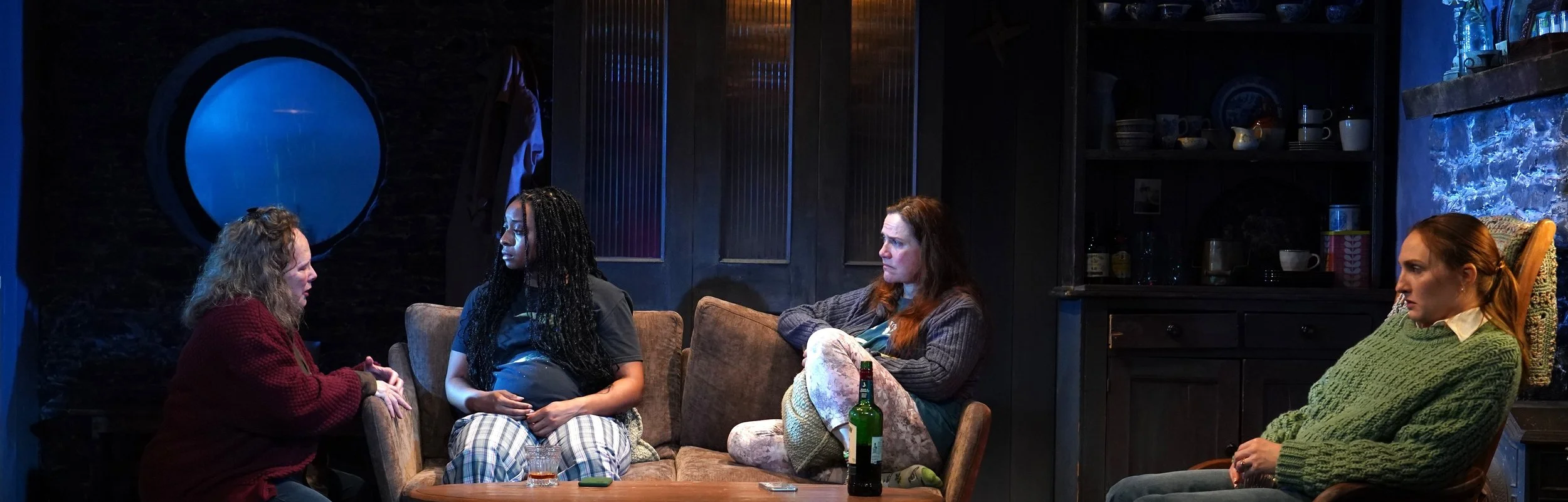

Howard Barker’s Pity in History is a deeply thought-provoking play, which uses the events of the 17th-century English Civil War (a fight to overthrow the monarchy and replace it with a parliamentary government) but is set in contemporary times, to explore the meaning of life, death and relationships. Barker wrote the play in 1984 for BBC television, and its antiwar attitude is clear. It opens on a British platoon that comes to represent any thuggish mass that makes up a military unit. It’s easy to imagine this very same platoon in the Falklands, Afghanistan, or Iraq. After all, war is war, and all war is hell.

Puffs
Readers of a certain generation who grew up with a bestselling children’s book series about a boy wizard know firsthand the impact that J.K. Rowling’s Harry Potter series has had—not just on themselves as lifelong fans, but also in the wider culture. Even people not belonging to that generation can attest to its world-reaching powers: from a hugely profitable eight-film franchise to the anticipation of a Broadway play adaptation at the end of this season. However, while many fans wait with bated breath for that production, coming off a successful West End run in London, there’s another play in town offering a different perspective on the books and their universe. It’s titled Puffs.
Arcadia
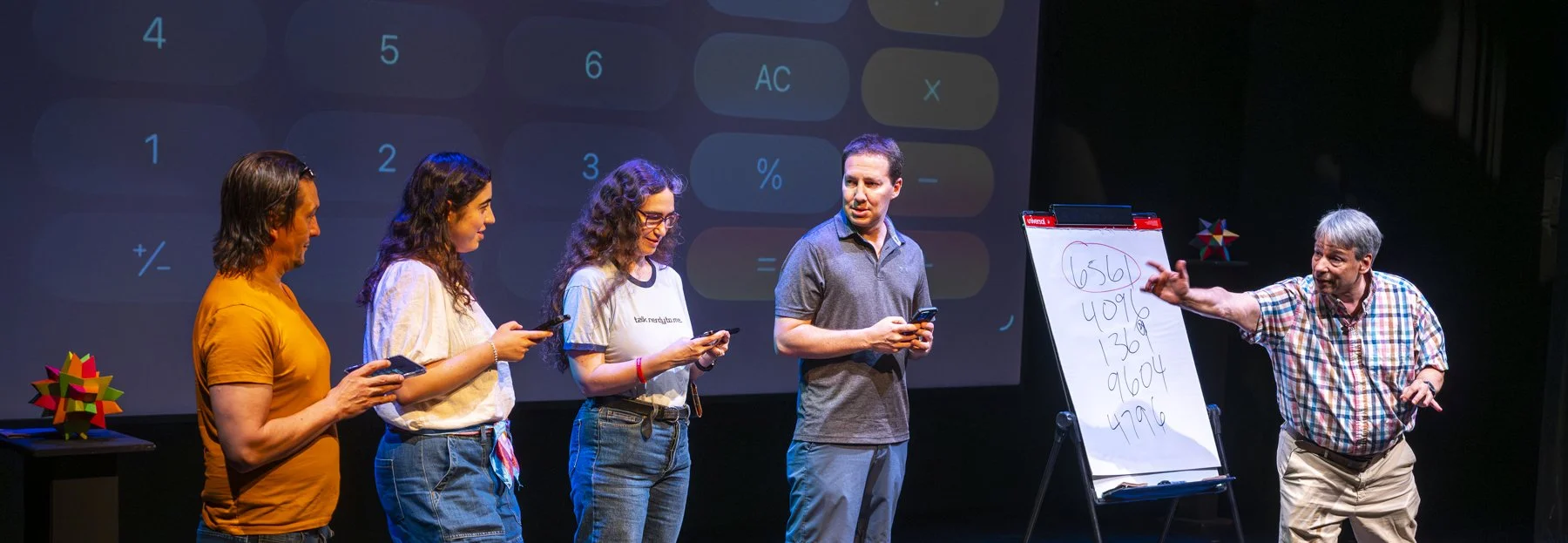
Tom Stoppard’s Arcadia exemplifies the British playwright’s gift for combining intellectual inspection of the corners of science, philosophy and history with high comedy. The wit is dry, but the plays are juicy, and Arcadia, along with Travesties and The Invention of Love, is one of his best.
Songbook series continues
The Anderson Twins will be the featured performers for Songbook Summit at 59E59 Theaters beginning Aug. 3. During the limited run, the twins, Peter (sax) and Will (clarinet), along with their sextet and singer Molly Ryan, will perform music by Cole Porter, Harold Arlen, George Gershwin and Richard Rodgers. There are four segments, each focusing on a composer: Cole Porter is the subject this week; Harold Arlen on Aug. 9: George Gershwin on Aug. 15: and Richard Rodgers on Aug. 22. A four-show package is available for $120 that includes one ticket to your choice of performance for each composer. For tickets and information, call Ticket Central at (212) 279-4200 or visit www.59e59.org.
Georgian theater focus of festival
Red Lab Productions will present a festival of new works written by playwrights from the Republic of Georgia, all translated into English, beginning July 13 at Teatro Circulo (64 East 4th St. between Second Avenue and the Bowery). The Georgian-American Theatrical Feast will feature two full productions, Navigator in Love by Lasha Gugadze, and A Toy Gun, by Tamar Bartaia, and seven free readings, none ever seen in America, along with special events, wine, and music. Produced by Red Lab Productions with support from Otar Margania, the festival will run through Aug. 6. For tickets ($18) and information, visit www.redlabproductions.org.
Hamlet
Director Sam Gold, still draped in laurels from the Broadway premiere of A Doll’s House, Part 2, is exorcising demons of cliché and supposition from Shakespeare’s most frequently staged tragedy. Gold’s Juilliard contemporary Oscar Isaac stars in this reimagined Hamlet, a revenge tragedy that is arguably the greatest drama in the language.
Measure for Measure
Measure for Measure (1604) has long been considered one of Shakespeare’s problem plays. Partly it’s because of corruptions in the printing, but also, as a purported “comedy,” it’s never fully satisfying. In the right director’s hands, though, it can be deeply intriguing and memorable.
In a Word
Words are constantly shifting and changing meaning, and common phrases take on new personas in the world of Lauren Yee’s In a Word. Yee’s play tells the story of Fiona (Laura Ramadei), whose 7-year-old, emotionally disturbed son, Tristan, has been missing for two years. She has no information on his whereabouts, and she sorts through her memories endlessly to find any clue she can about why he disappeared. As Fiona flashes back to past experiences, Yee asks the audience to let go and come along for the ride.
The Crusade of Connor Stephens
A newsreel about faith-based adoption restrictions on Jewish, Muslim and interfaith couples in the state of Texas plays somberly over a smooth jazz gospel concert at the start of The Crusade of Connor Stephens, a new play by Dewey Moss. In between the voices of newsreaders decrying the discriminatory new laws and the gospel choir, an evangelist preacher calls for us to repent our sins and come into the light of the Lord Our God. It’s enough to make a New York audience gag.
Afterglow
June is typically the month for many gay-themed plays to open, taking advantage of the influx of tourists for the annual Gay Pride Parade. Such works almost invariably feature gratuitous male nudity and forgettable plots, but S. Asher Gelman has set the bar far higher with his first play, Afterglow.
Bastard Jones
Most people going to the cell’s production of Bastard Jones have probably not encountered Henry Fielding’s hefty 18th-century novel. The odds may be greater that they’ve seen the Oscar-winning Tom Jones, a rare Best Picture comedy, but it rarely hits revival houses. That may be to the good, because Marc Acito and Amy Engelhardt’s new musical takes liberties—a lot of them—and fans of the film, scripted by John Osborne (Look Back in Anger), will find much has changed.
The Traveling Lady
Texas native Horton Foote was a contemporary of Tennessee Williams, though he outlived the Mississippi-born playwright by more than a quarter century. In a long career, Foote—like Williams—channeled voices of small-town eccentrics in dramas depicting the region where he spent his formative years. Five such eccentrics, embodied by top-flight character actors giving memorable supporting performances, rescue the otherwise anodyne revival of Foote’s The Traveling Lady, presented by Cherry Lane Theatre and La Femme Theatre Productions, and make it worth an evening’s time.
The End of Longing
Matthew Perry, renowned for an insanely successful television comedy that doesn’t even need to be named, understandably wants to stretch himself. Good actors always do: think of Jack Lemmon in Days of Wine and Roses (not inappropriate in this case) or Ralph Fiennes in The Grand Budapest Hotel. In The End of Longing, Perry does just that, both as an actor and as playwright.
Attack of the Elvis Impersonators
Attack of the Elvis Impersonators, at the Lion, has no subtitle, so here’s a helpful suggestion: The Attention Deficit Disorder Musical. Lory Lazarus, who perpetrated book, music, and lyrics, just staggers from premise to premise, seizing on some new plot point and leaving whole subplots behind to die of malnutrition. Some of them contain good ideas. More don’t.
Master
The ambitious Foundry Theatre has chosen an ideal location for its production of W. David Hancock’s two-character drama Master. The design of Brooklyn’s Irondale Center, a former worship and religious-education space in the Lafayette Avenue Presbyterian Church (a gem of 19th-century architecture), strains heavenward with worn ecclesiastical grandeur. It’s an environment likely to put arriving spectators in a reflective mood appropriate for playing their parts as tacit mourners in an immersive performance piece that depicts a memorial service and gallery retrospective honoring James Leroy Clemens.
Zero Hour
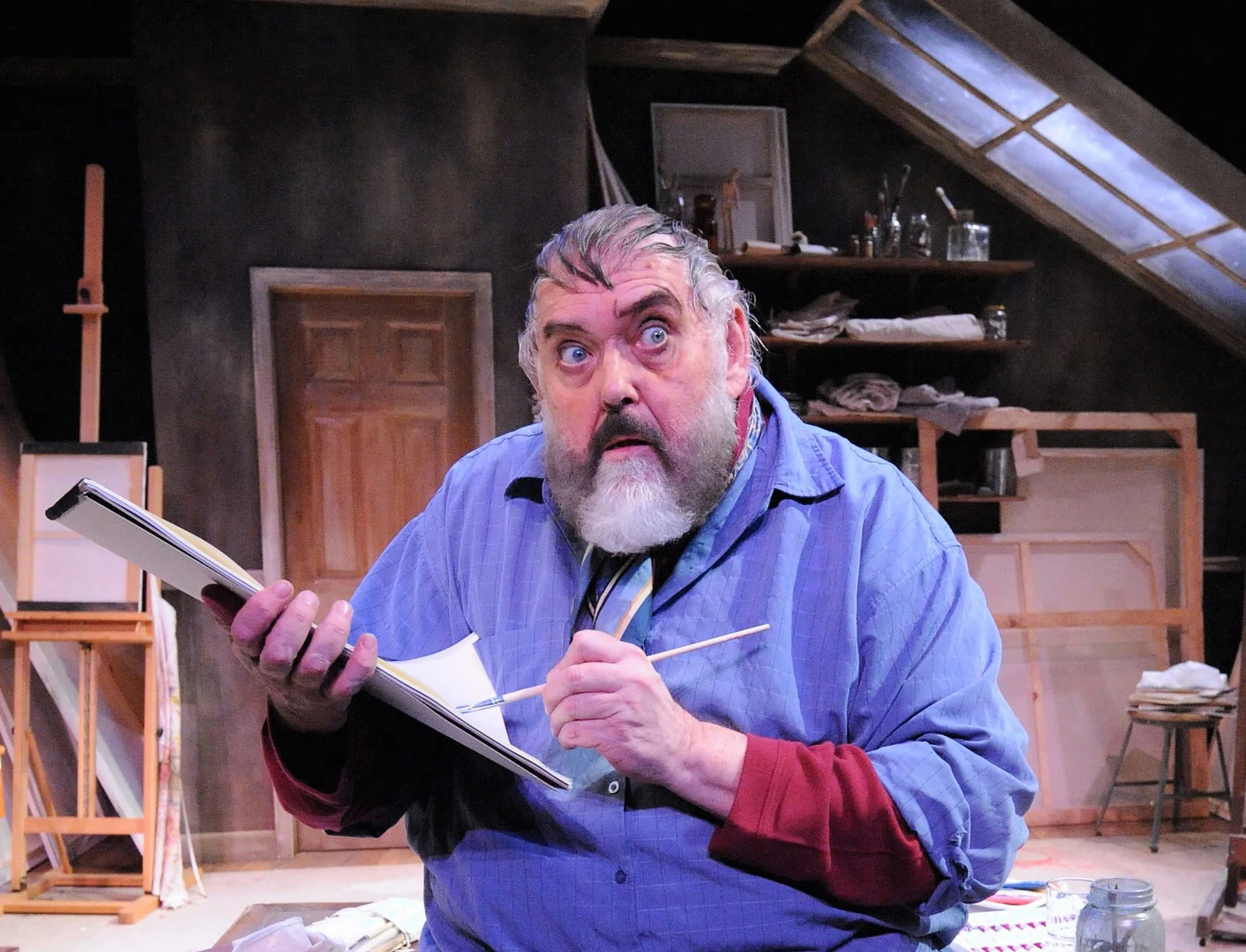
Zero’s back in town, and the town is jollier for it. That’s Zero as in Mostel, in the ursine form of Jim Brochu, who has brought his one-man biographical show, Zero Hour, back to the Theatre at St. Clement’s. It won him a Drama Desk Award back in 2010, and in this new incarnation, if anything, the author and star is more formidable, more unpredictable, more voluble—more Zero.
Bella
At the center of Kirsten Childs’ new musical, Bella: An American Tall Tale, is the title character, “a big-booty Tupelo gal.” Although the “tall tale” labeling promises lightheartedness, there isn’t any blue ox or apple-seed scattering to be found. Childs’ formula for a tall tale includes some dark material, and the tone of Bella veers from cheerfully tongue-in-cheek to just plain vulgar, from wildly inventive to hackneyed.
The Seagull
The Instigators’ adaptation of Anton Chekhov’s The Seagull, directed by Lillian Meredith, uses immersive elements to enhance and punctuate both large and small moments. Actors break the fourth wall, and the staging brings actors in line with the audience.
The Government Inspector
A classic case of mistaken identity sets a hilarious ball in motion in The Government Inspector, Nikolai Gogol’s 1836 comedy, set in a small town, a backwater of “mud and more mud.” The plot follows the mayor (the robust Michael McGrath) who has heard that a government inspector is coming to town—incognito. The mayor and his crooked cronies—the school principal (David Manis), the judge (Tom Alan Robbins) and the hospital director (Stephen DeRosa)—immediately try to clean up the mess they have made of government buildings and services.
The Whirligig
The actor-playwright Hamish Linklater, born in Great Barrington, an upscale rural community of the Berkshire hills of western Massachusetts, uses the bucolic area as the setting for The Whirligig, his new play. It’s a region with plenty of past literary associations. Edith Wharton has a crucial scene in Ethan Frome take place in Lenox, where she lived; Nathaniel Hawthorne wrote Tanglewood Tales while dwelling in the same town; and Herman Melville turned out Moby-Dick at his home in Pittsfield, the county seat. Much more recently, Lucy Thurber set her Hilltown Plays in the nearby area.