
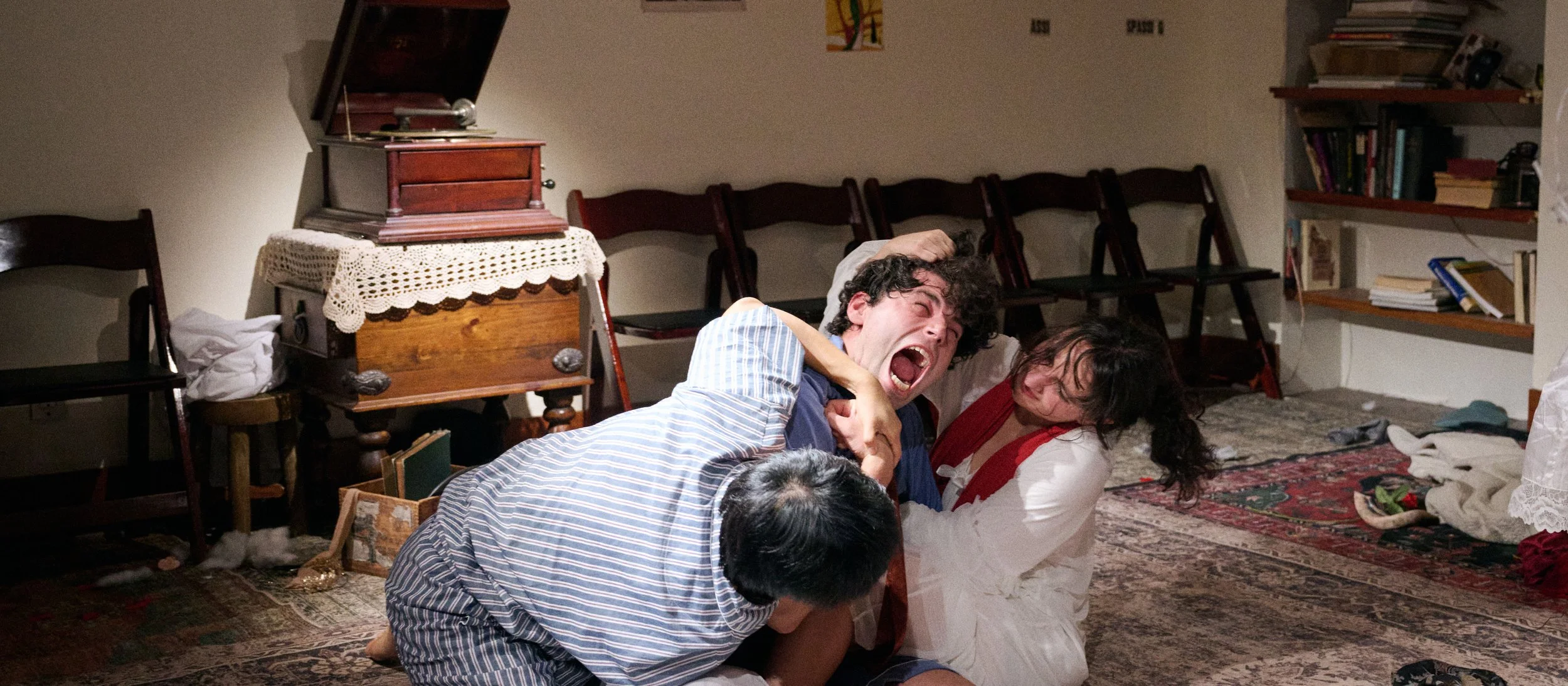

Avant-garde playwright Eugène Ionesco (1909–94) traced his love of theater to watching a Punch-and-Judy show in Paris’s Luxembourg Gardens as a child. He was enthralled by the puppets that “talked, moved, clubbed each other,” and the performances represented, he wrote, “the spectacle of the world itself . . . as if to underline its grotesque and brutal truth.” Igor Golyak’s Delirium, an adaptation of Ionesco’s 1962 play Délire à deux (Frenzy for Two), captures this signature blend of slapstick domestic squabbling while highlighting the human penchant for destruction and barbarity.
