
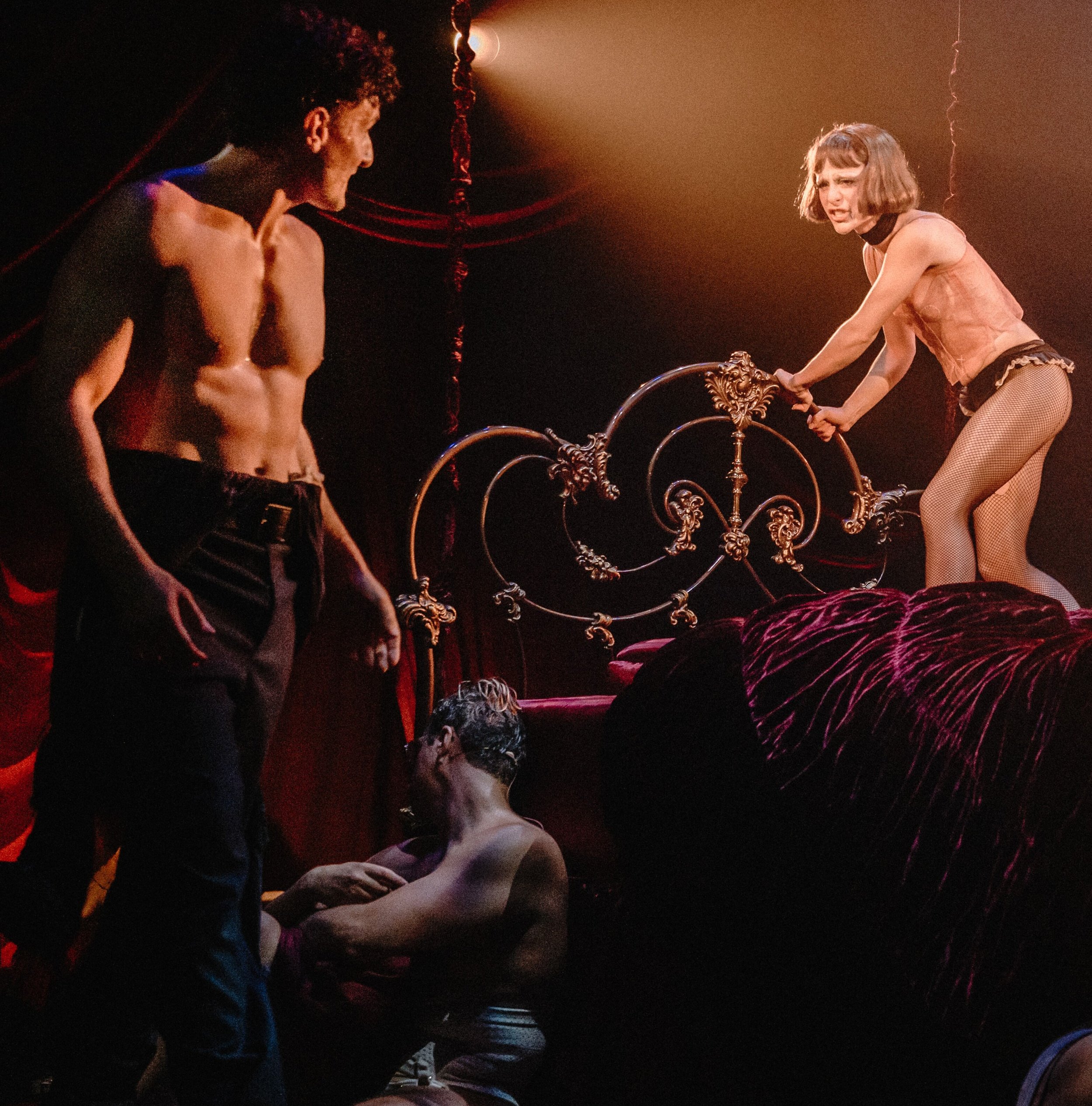
Cory Jeacoma (left) plays the conman León and Sophia Anne Caruso is the sex worker-writer Colette in Memoirs of Amorous Gentlemen.
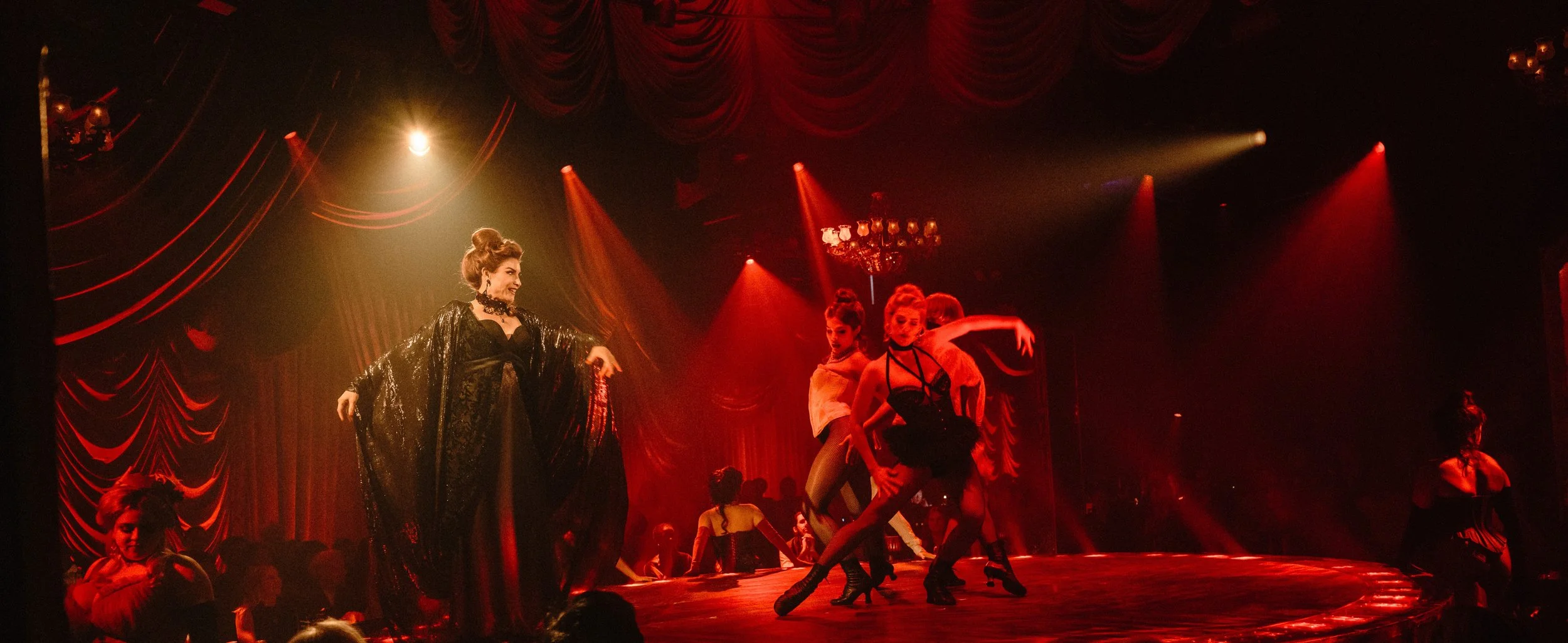
Memoirs of Amorous Gentlemen, directed and choreographed by Rob Ashford, is a visually arresting musical whose dark, decadent atmosphere proves more compelling than its book. Though the production’s inventive design draws audiences into the seedy world of a Parisian brothel, the visual experience ultimately outshines the material it serves.
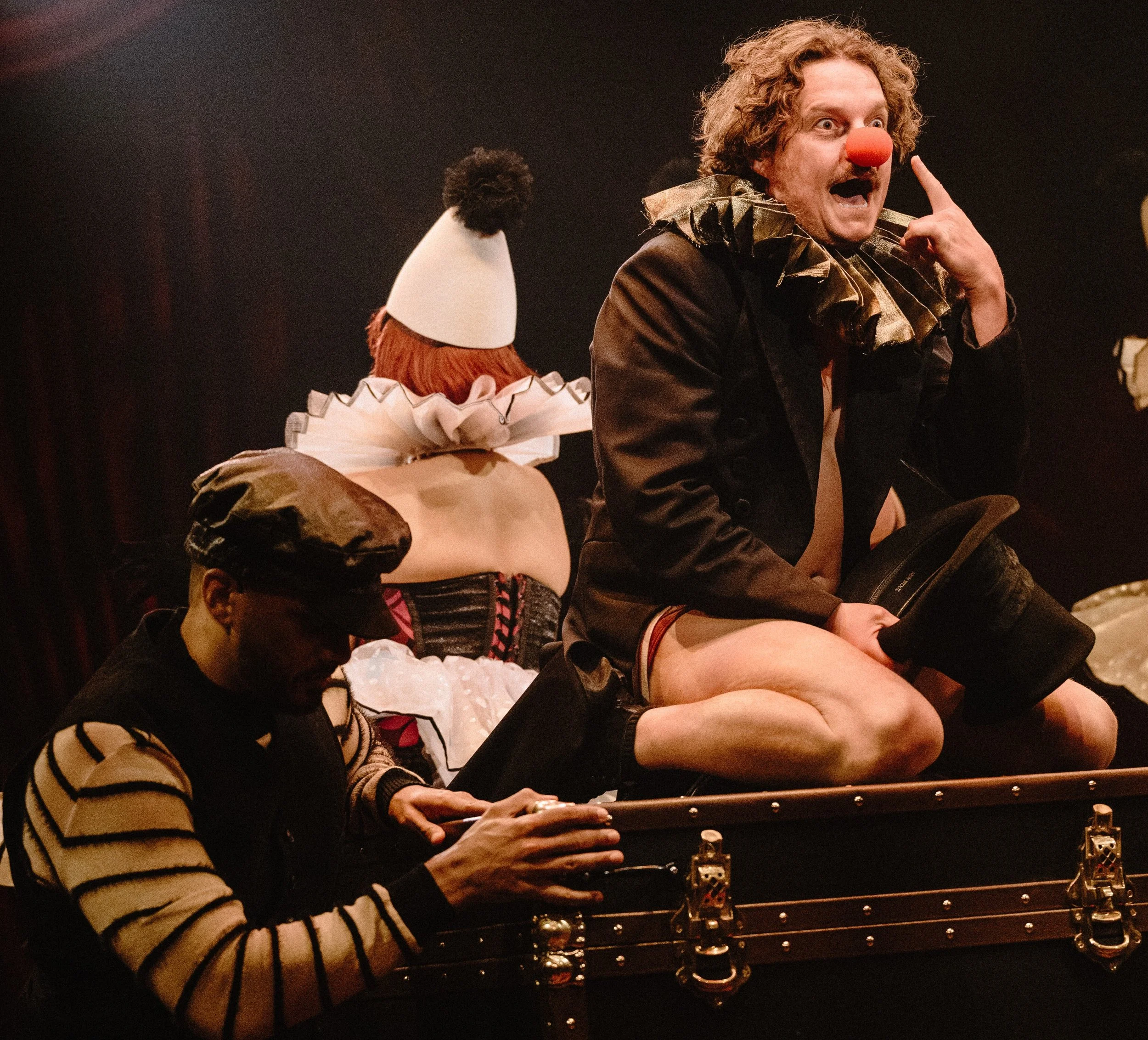
Austin Lesch portrays Émile, a client at the Night Egg brothel in early 20th-century Paris who loves the circus.
Set in early 20th-century Paris, Memoirs of Amorous Gentlemen follows Colette, a young woman working at the Night Egg, a brothel run by a calculating Madame. When Mr. Sakae, a wealthy Japanese traveler whose first novel went unpublished, offers to pay Colette to chronicle the intimate secrets and private struggles of the establishment’s clientele and staff, he hopes to mine her observations for inspiration for his next book. As writing gives Colette a measure of independence, however, she remains entangled in a destructive relationship with Léon, an unsuccessful painter whose hold on her threatens to undermine her growing self-possession.
Complications arise when Léon, whom Colette regards as her muse, arrives at the Night Egg bearing an expensive box of macarons but confessing that he has gambled away 500 francs at the horse races. Sympathetic to his plight, Colette asks the Madame for an advance on her earnings to help him out. The no-nonsense Madame, however, recognizes Léon’s self-serving ploy and warns Colette against mistaking exploitation for devotion. Her admonition gives rise to “Obvious,” an Act I song in which the Madame delivers some hard-earned advice while a chorus of sex workers harmonizes in the background:
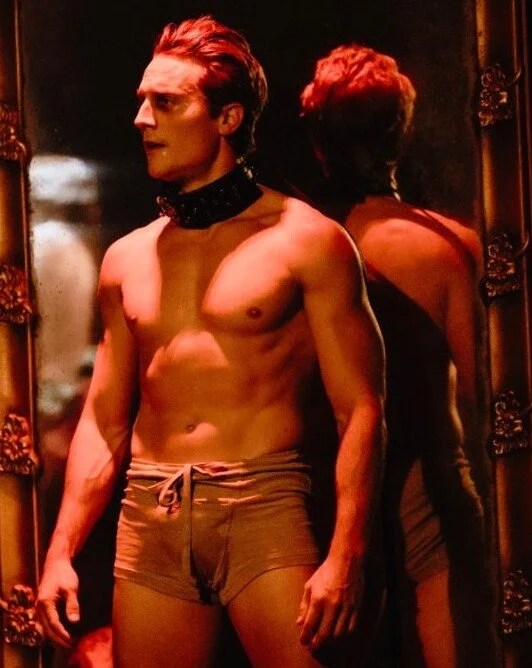
Michael Starr plays Ulysse, a client at the Night Egg who believes his true form is a dog. Photographs by Andy Henderson.
Whores will be whores
But at least get your money
When you give it all away
Something’s wrong,
Something’s funny
There’s a soul you should protect
Let alone your self-respect.
Composer and lyricist Duncan Sheik, who died of cardiac arrest on Sept. 17, just one week before rehearsals began for Memoirs of Amorous Gentlemen, is best known to theatergoers for Spring Awakening, his Tony Award–winning musical co-created with lyricist Steven Sater. In this final score, Sheik blends moody, contemporary pop-rock with electronic textures, sleek guitar interludes, and an otherworldly, ethereal quality. The music also evokes the ominous atmosphere of his work on the musical American Psycho, which premiered in London in 2013 (and arrived on Broadway in 2016). Arranged by music supervisor Or Matias, the score lends the production a palpable sense of menace.
The lyrics, however, are less consistently effective. At times, they lapse into awkward phrasing and familiar expressions, as in “Look Who’s Coming,” another Act I number in which Léon, who grew up in a working-class family, celebrates his rise from obscurity to power:
I was nothing, nothing
Until I made my play
To cheat my fate and win the day
Ain’t that something? Now I’m something
Everybody else can pay
To do exactly what I say.
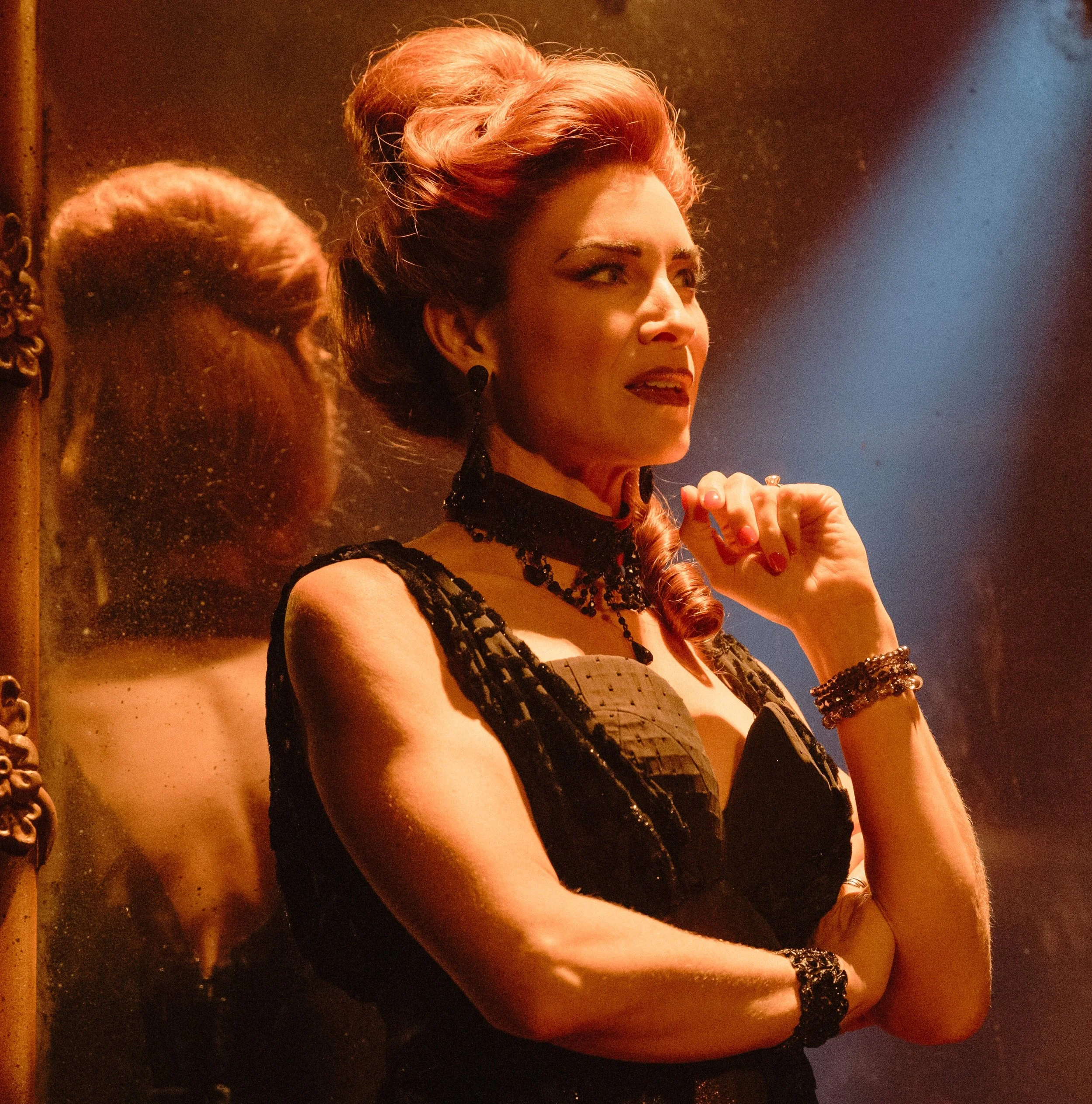
Jenny Powers is the calculating Madame at the Night Egg.
Although the lyrics are mostly lackluster, the excellent performances of the principals and supporting actors add sparkle to the musical numbers, elevating the material and making the songs soar. Two performances stand out. Sophia Anne Caruso’s Colette belts out “Immured” in an Edith Piaf–like style, delivering an emotionally intense, rafter-reaching performance on a park bench that sensationally lifts from the stage and flies high over the audience after she discovers Leon’s betrayal (“It’s the fact that I love him to death / And he may not feel the same; one thing’s for sure / I am immured”).
Equally compelling is Nkeki Obi-Melekwe’s portrayal of Nana in “On Any Given Night,” a song addressed to Colette as a dose of emotional guidance. Obi-Melekwe brings a worldly, unsentimental perspective to the number, revealing the darker, harsher realities of being a sex worker (“It’s not about love / It’s all about the money; I know it sounds cruel / But I find it quite funny”).
Ashford’s in-the-round staging dovetails effectively with Scott Pask’s immersive set, which features hefty red drapes, several full-length mirrors, and secondary platforms that extend into the audience seating area, bringing the 17-member cast “up close and personal” with theatergoers. Curiously, Ashford’s choreography eschews big, splashy dance numbers. Instead, he seems more intent on showcasing the parade of eccentric clients who wander into the brothel with their unusual fantasies: Henry, who wears a bird costume; Willy, a hairy man who enjoys being shaved; Émile, who loves the circus; and Ulysse, who believes his true form is that of a dog.
Adapted from Moyoco Anno’s graphic novel by Leah Nanko Winkler, Memoirs marks the first time a manga has been transformed into an American musical in English. While sterling performances by Caruso as Colette and Obi-Melekwe as Nana make the show watchable, the musical ultimately fails to mine the darker, more disturbing aspects of the sex workers’ lives.
Memoirs of Amorous Gentlemen plays through Jan. 3 at the Culture Club (530 W. 27th St.). Evening performances are at 7:30 p.m. Tuesday through Sunday; matinees are at 2:30 p.m. Saturday and Sunday. For tickets and more information, visit memoirsmusical.com.
Book: Leah Nanako Winkler
Lyrics & Music: Duncan Sheik
Direction: Rob Ashcroft
Scenic Design: Scott Pask
Costume Design: Catherine Zuber
Lighting Design: Brian Tovar
Sound Design: Cody Spencer
If you enjoyed this review, please click on the Like icon below.
