
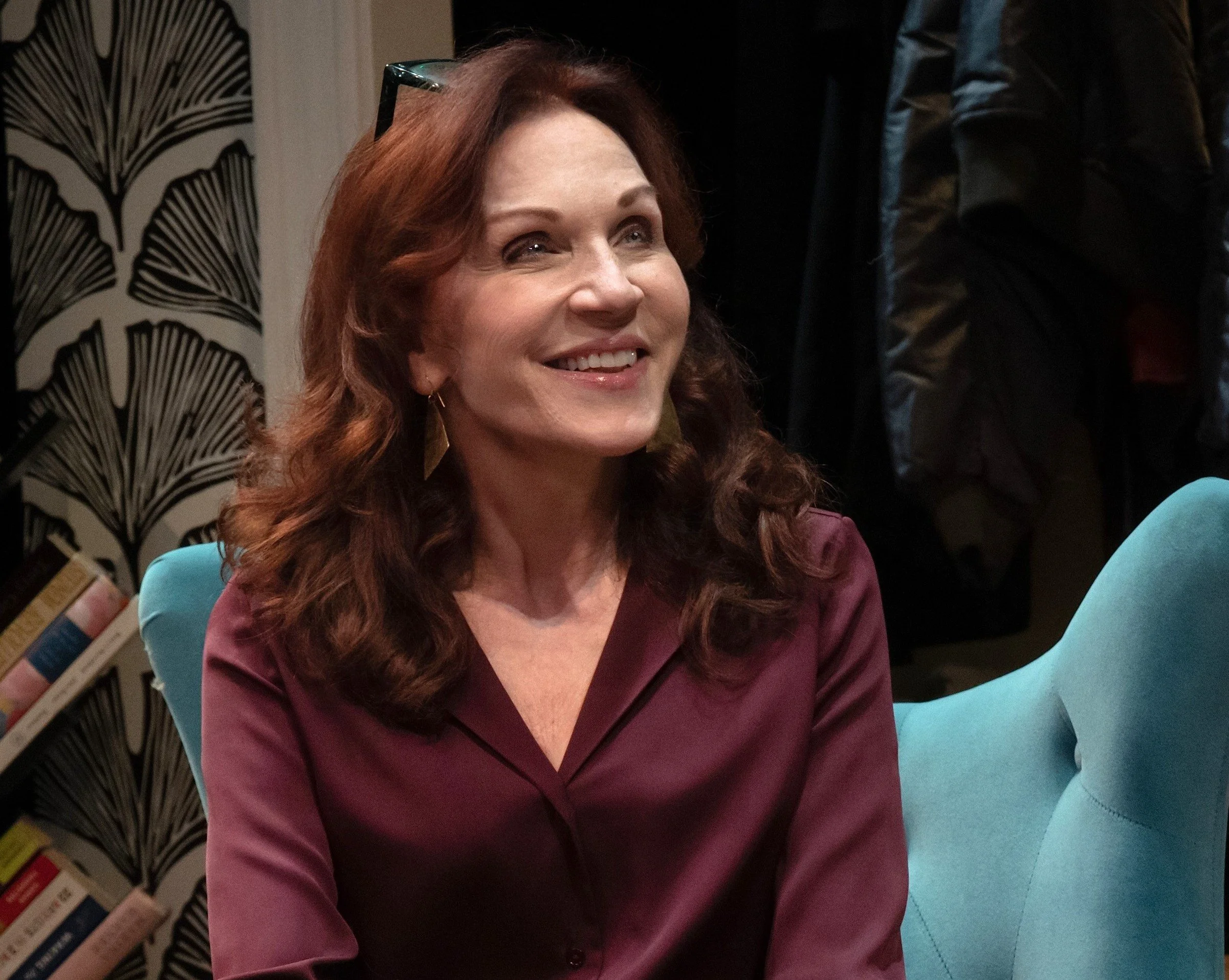
Marilu Henner plays Greta in The Ask, a two-hander by Matthew Freeman at Theater 555.
Though advertised as “a new play,” Matthew Freeman’s The Ask, now at Theater 555, premiered in New York City more than two years ago. In this drama of ideas, two strong-willed strangers clash in a mating dance essential to American charities: the solicitation of wealthy donors by career fund-raisers. Back in 2024, The Ask--expertly directed by Jessi D. Hill--packed the same wallop it does now (and even more, thanks to the superb performance of Betsy Aidem as Greta); but the original run was brief and so far Off-Broadway that it failed to create the splash that might have been expected. Now, in a more prominent venue, again directed by Hill, this substantial intermissionless drama is likely to make waves and, in due course, be seen around the country.
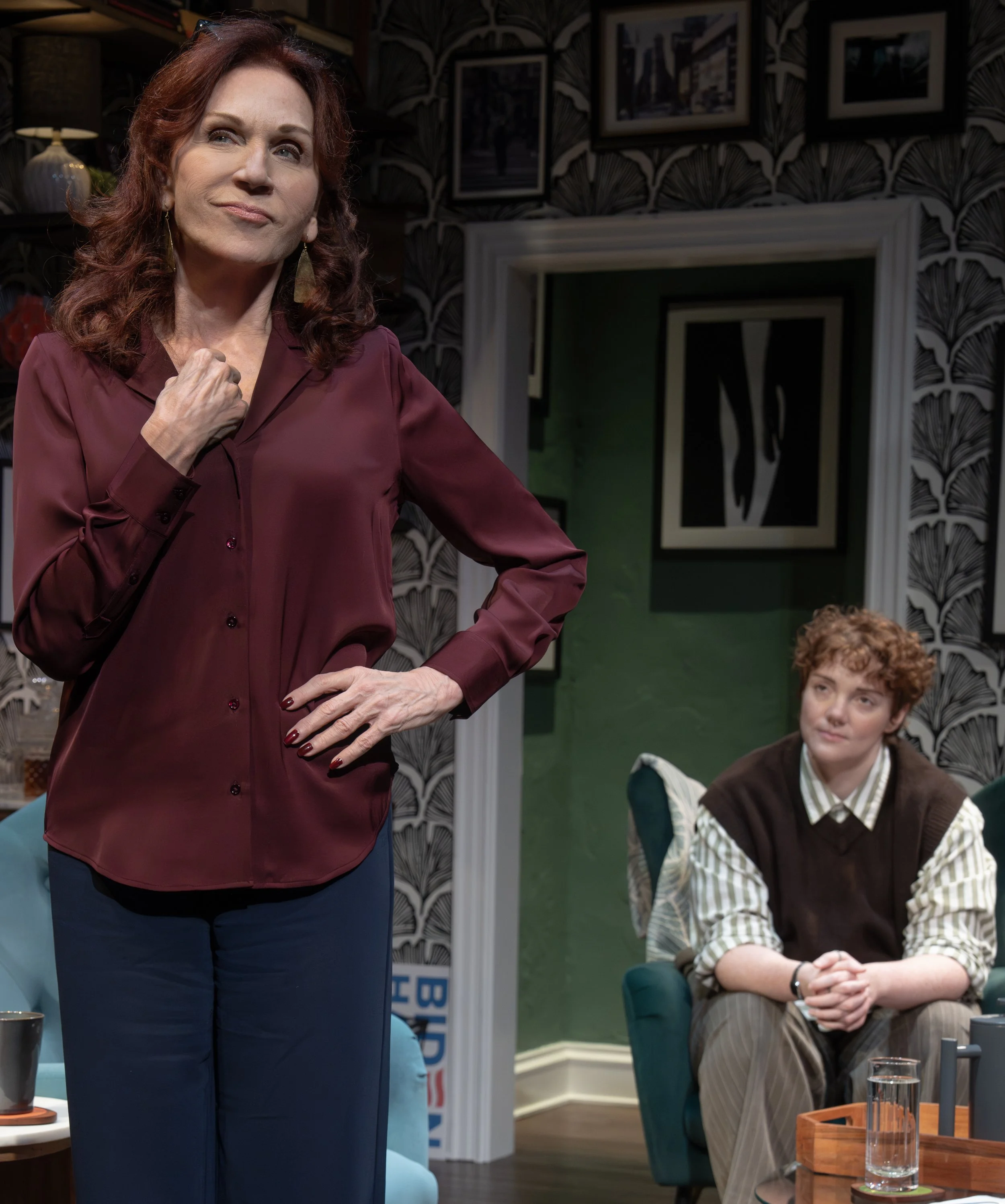
Much remains unspoken between Greta, a liberal-minded veteran of late-20th-century politics, and Tanner (Shannon Purser), the millennial gift-planning officer, yet the two do what they can to forge an understanding. Photographs by Joan Marcus.
The time is December 2022, more than 2½ years after COVID-19 ambushed the United States. A white-collar millennial known as Tanner (who’s as nondescript as that name) is making an in-person call on Greta, a photographer of note. Greta (Marilu Henner) is over 70 and affluent enough to migrate seasonally among properties she owns in New York City, Florida, and Maine. A veteran warrior of second-wave feminism, Greta is spry and fiercely opinionated (her arty photographs carry distinctive moral and political messages); but she’s sufficiently refined to keep her righteous indignation under wraps, unless really provoked.
Tanner (Shannon Purser), a tenderfoot in the field of charitable gift-planning, represents the American Civil Liberties Union (ACLU). In Greta’s luxurious Upper West Side apartment (handsome scenic design by D. Craig M. Napoliello), Tanner is a fish out of water. Communication between the two begins amiably enough, thanks to Greta’s old-fashioned manners, but the conversation never hits an easy stride. Tanner, desperate to keep the ACLU job in the midst of layoffs, strains to be deferent; but the anxieties show. Mindful that Greta made no donation in the last fiscal year, Tanner senses the omission wasn’t accidental.
As Greta hints at annoyance with the ACLU, Tanner tries to figure out the reason for her pique. The problem is that Carol, Greta’s longtime contact at the ACLU, has left the organization, presumably as a result of the widely reported downsizing. Greta feels her years of giving and the long relationship with Carol entitled her to be informed of the personnel change (preferably by Carol herself). She laments: “Getting a call … out of the blue, without any idea that I would be talking to someone [other than Carol] after years of talking to one person, that’s jarring.” But that’s only the first of Greta’s grievances. Tanner is between a rock and a hard place: argue her own passionate views or handle the potential donor with kid gloves to ensure a gift?
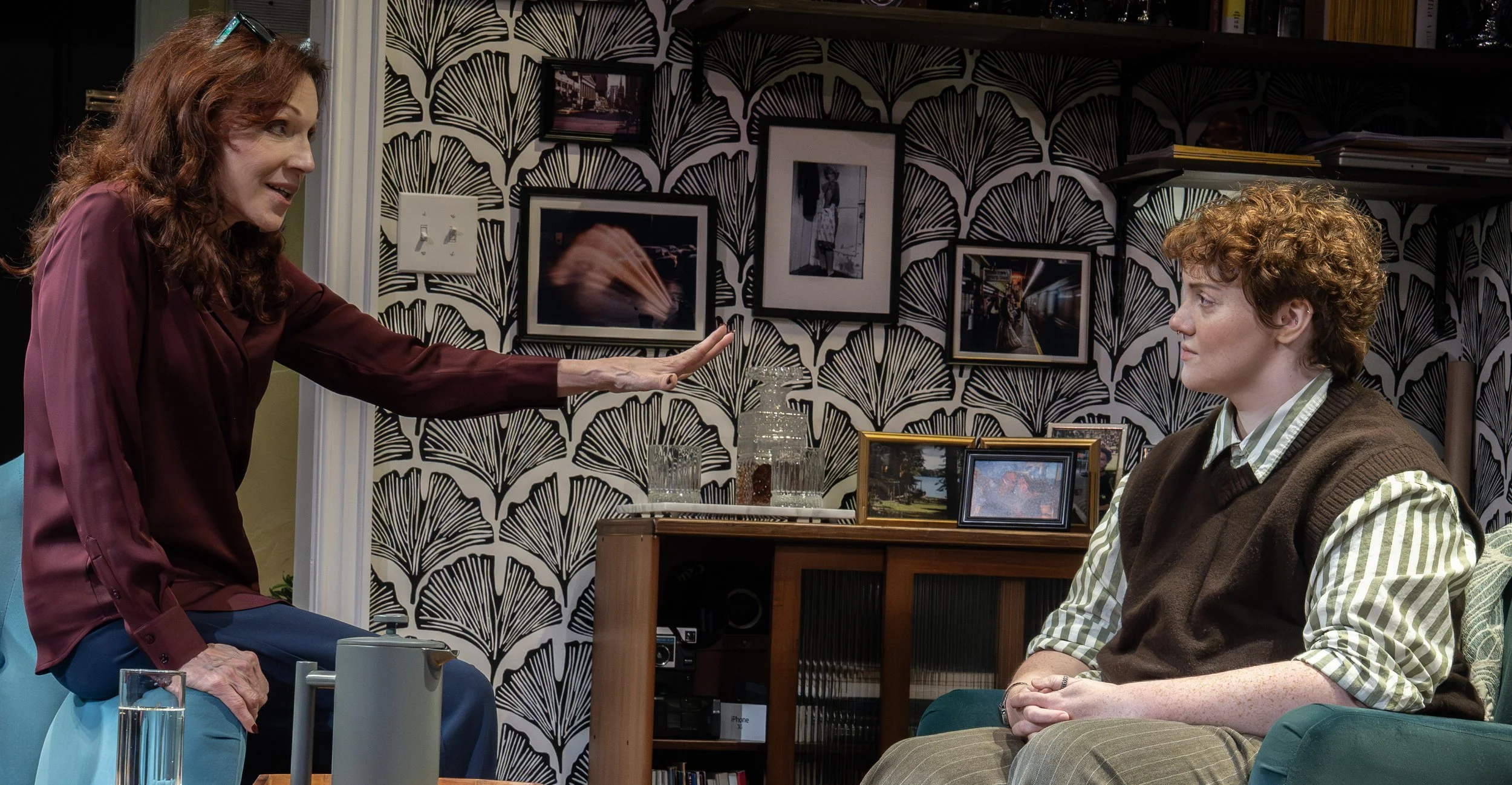
Tanner (seated) hopes Greta will come through with a sizable philanthropic gift to the ACLU, but receives something that’s more valuable in the long run.
Freeman makes this conflict a vehicle to explore the pandemic’s toll. Both Tanner and Greta have been profoundly affected by nearly three years of social distancing, Zoom communication, masks, isolation, frazzled nerves, and loneliness. True to her nature, Greta is candid about what these months have done to her; Tanner is more circumspect, saying little with the intent of protecting a secret she thinks might alienate Greta. Each, suspicious of the other, leaves a lot unspoken.
At the play’s beginning, Henner takes off like a thoroughbred seizing the lead right out of the gate at Churchill Downs. It’s a star performance that’s flashy, glib, and fun to watch. But substituting Henner for Aidem’s deeper, more serious Greta is like replacing Joseph Fiennes as Hamlet with Billy Crystal. Purser, by contrast, eases into a quiet, nuanced characterization of Tanner. As though playing tortoise to Henner’s hare, Purser seizes spectators’ attention and holds fast.
Freeman’s script provides almost everything the audience needs to know about Greta (with Henner supplying pluck and moxie that make the character likable). The text is less clear-cut respecting Tanner, leaving ample opportunity for Purcer to generate poignancy and complexity with actorly technique. The production’s most affecting moment occurs when Greta steps out of the room to handle a phone call and Purser, alone on stage, lets Tanner’s agitated emotions boil over. It’s easy to imagine that she has always lived with a shuttered heart, uncertain how to overcome that emotional reticence. The gulf between Tanner and Greta appears insurmountable, but the play’s climax is worth the wait: Freeman is a dramatist of skill and surprises.
The Ask, produced by Adam Cohen, plays through Nov. 22 at Theater 555 (555 W. 42nd St.). Evening performances are at 7 p.m. Tuesday through Thursday and at 8 p.m. Friday and Saturday; matinees are at 2 p.m. Wednesday and Saturday, and 3 p.m. Sunday. For tickets and more information, visit theater555.venuetix.com.
Playwright: Matthew Freeman
Director: Jessi D. Hill
Scenic Design: D. Craig M. Napoliello
Costume Design: Nicole Wee
Lighting Design: Venus Gulbranson
Sound Design: Ben Scheff
If you enjoyed this review, please click on the Like icon below.
