



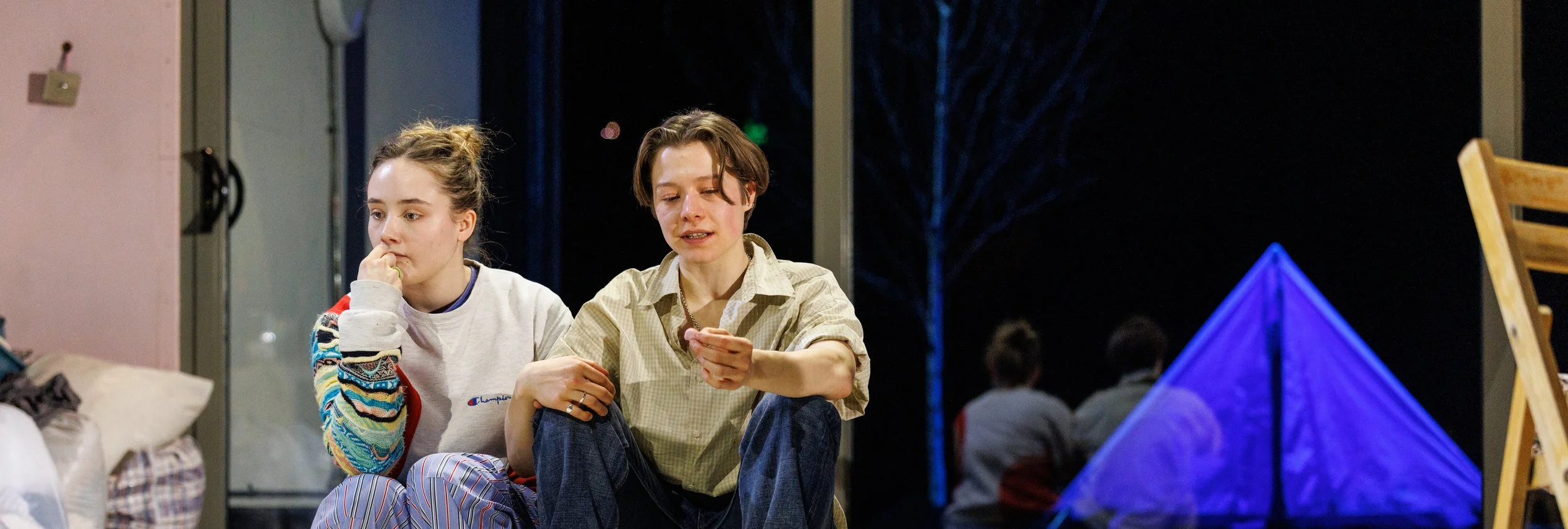
At the outset of Alexander Zeldin’s The Other Place, a funerary urn, unburied but long ignored, sets off a near-nuclear explosion of familial conflict. It’s a humdinger of a beginning; but, as this short, bleak drama proceeds, the motives of the principal characters remain obscure and the twists in the plot, though often startling, can’t conceal the script’s logical lacunae. It’s a striking weakness, since The Other Place is inspired by Sophocles’s Antigone, a compact, laser-focused tragedy that’s intellectually and emotionally satisfying.

