

They Rage Against the Dying of the Light

Pat Kinevane’s one-man performance play Forgotten reminds us that behind the walls of every nursing home live real people who once led fascinating, sometimes improbable lives and who, however physically restricted they may appear, and however ravaged by time’s cruel assaults, remain proud. Many still lead vibrant lives of the mind. Forgotten questions the way that society values, or rather devalues, its elderly charges. Forgotten speaks, with great Irish humor, for these residents and those like them, angry at the bodies that betray them, their dignity assailed daily by intrusive nurses, condescending sales clerks, officious bank tellers and ungrateful, greedy offspring. Though Kinevane’s four characters reside in separate nursing homes in Ireland, they share a fascinating interrelated history, which they gradually reveal to us through alternating narratives.

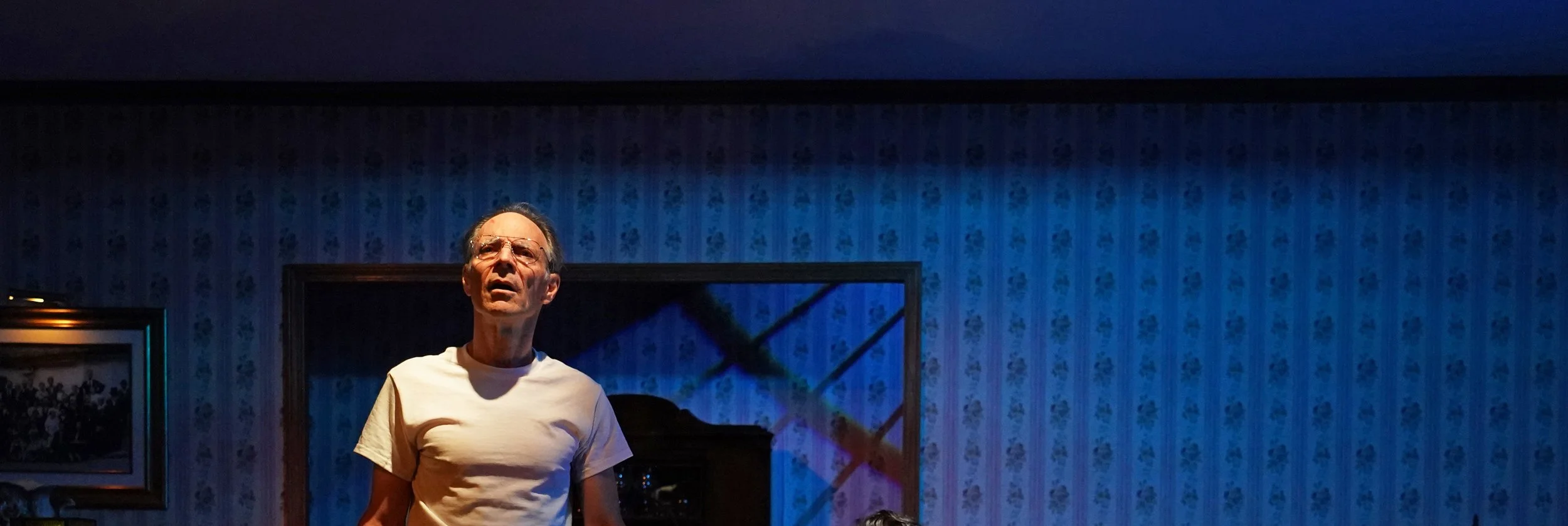
Mr. Kinevane, one of the principals of Ireland’s acclaimed Fishamble Theater Company, marvelously plays all of the endearing characters: two men and two women, each between the ages of 80 and 100. One, a man named Gustus, is physically infirm due to a stroke. Kinevane, in lithe shape and even a bit of a contortionist when necessary, comes up with a fascinating way of portraying Gustus’ infirmity by sitting in a chair with his back to the audience and wearing glasses on the back of his bald head.

Kinevane peppers his narratives with surprisingly fitting Kabuki-style introductions, providing the characters with a physical grace that their advancing age and frailties often eclipse. Among its most moving parts are the opening and closing segments, both of which use recordings and music and neither of which I want to disclose more about because their power must be experienced; they frame the performance perfectly.

Theatergoers should be prepared to listen closely and work hard to follow the meandering plot lines. They should also be prepared to miss some of the dialogue or have some of it go over their heads. Kinevane, from County Cork, sometimes employs a thick Irish brogue, colloquialisms and slang (the program includes a helpful glossary of terms), particularly with the character of Flor, a fiery former laborer with a vivid, agitated imagination that the nurses try to keep medicated, who proudly protects his physical dignity at any cost. The payoff of Kinevane’s authenticity is in the rich originality, deep humor and pathos of these characters.

Lurking in all these narratives is the advancing specter of death for these residents. One, Eucharia, even wonders about the physical position in which she’ll die. Yet, Kinevane’s material avoids becoming bleak or depressing. In fact, it’s often scandalous, randy and uproarious. These characters are still very much concerned with living, with figuring things out for themselves.

Kinevane is a first rate writer and performer who captures the essence of, and utterly inhabits, the souls of these four personalities. Ably directed by Jim Culleton, Kinevane harnesses the power of light, sound and his own physicality to tell the stories of those who find themselves in a death-struggle with their own bodies, senses and minds. His feisty characters still retain unique opinions and important tales to tell. And they’re not going anywhere until they tell them.

Click for print friendly PDF version of this blog post

BFFs, 80s Style

Carl and Shelly, Best Friends Forever, directed by Janice L. Goldberg, is a joyous romp with two misfits, both still caught up in the culture of the 1980s. Carl and Shelly entice the audience to laugh at the foibles of their day-to-day lives and to feel real empathy for their friendship’s trials and tribulations. The play is a whirlwind of silliness, at times bordering on the ridiculous, but never without a great deal of heart and spirit behind whatever nonsense the protagonists get themselves into. When we meet Carl and Shelly, they are hosting their public access program, in which they read original poetry and present their arts and crafts projects. The two are clearly not gifted artists in either field, but they make up for what they lack in technical skill with energy and enthusiasm. The titular pair are also truly "BFF's;" they love each other’s strange artistic creations and share an affinity for the same television shows, movies, and music. They take us back in time to their laundry room meeting, where they initially bonded over Punky Brewster and Alf.

The play hinges on a tiff that ensues between the two regarding Shelly's sudden artistic success - she is invited to show her work in a New York gallery - and Carl's fanmail from an admirer. This central conflict is competent and compelling, but the play's real power lies in the two performers' energy and bravado. In each role that they play, Andrea Alton and Allen Warnock give strong, hilarious performances that keep the audience tuned in and looking for more.

The main story line is interwoven with presentations of some of the other public access programs. These scenes add an extra boost of laughs, particularly the Home Prescription Pill Shopping Network, which perhaps deserves a whole future play of its own. There are also phone calls received from offstage characters, such as their respective parents, which clarify some of the character backstory and act to cover the scene transitions.

The performers do a marvelous job of jumping between characters, creating unique identities for each. These secondary personages are all quite humorous and show off the actors’ physical and vocal skills. Despite the enjoyable nature of watching these two individuals create the entirety of the world that they inhabit, the transitions are long at times and the piece could benefit from some trimming.

The set is well dressed with accoutrements appropriate to people stuck in a time gone by. The stage is scattered with DVD sets of 80s programming, snack foods, and toys that these characters should have long since outgrown. The artwork that they share is both worthy of laughter for its amateurish design and somehow intriguing in its own right.

This is not a play that tackles hard-hitting political or social concerns. It is not designed to ask serious questions or to interrogate major issues. But this seeming lack of relevance is not a problem at all; the play actually feels quite relevant due to its exuberance. It reminds its viewer to be proud of whoever you may be, and to enjoy the company of those for whom you care most deeply. Overall, this play is a fun theatrical experience. It is a play designed purely to entertain, and from this perspective, it succeeds perfectly.

Click for print friendly PDF version of this blog post

Penny for Her Thoughts (Or Sometimes, More)

Brooklyn’s Gallery Players have long held a reputation for producing some of the finest productions at any level of New York theater. Recent stagings have included Like You Like It, Once On This Island, The Who’s Tommy, Urinetown, and Yank, all of which were stellar productions that supported the Players’ mission of providing the community with professional-quality theater at an affordable cost. And yet despite such a pedigree, I couldn’t help but wonder if the Players had bit off more than they could chew with their current choice of show, Caroline, or Change. Written by Pulitzer Prize-winner Tony Kushner and Jeanine Tesori, Caroline is easily one of the most important recent contributions to the musical theater canon. Could the Gallery Players pull off a show this profound?

The answer is a resounding yes.

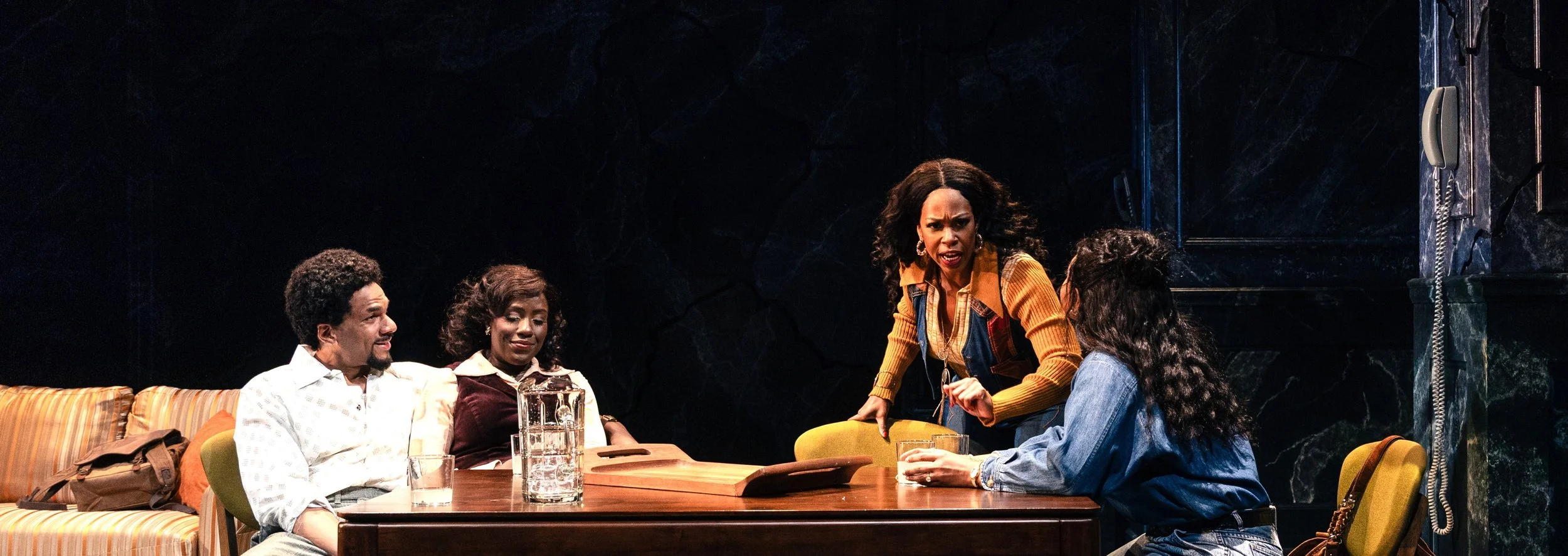
Caroline is an incredibly complex show; esoteric and elliptical. Caroline may occur during a time of revolution, but it’s a show about a one-woman kind of revolution. The plot is little more than a conceit: Long-suffering Caroline Thibodeaux (Teisha Duncan), a black maid for the Jewish Gellman family, wrestles with ethical dilemmas and responsibility against the backdrop of social unrest and the burgeoning Civil Rights movement.

And yet, at the same time, Caroline, a completely sung-through, operetta-style musical, is also a very interior show. All characters undergo major internal arcs. This certainly makes for an impressive work, but not an innately expressive one. Could the Gallery Players pull off a show this profound?

Every aspect of Jeremy Gold Kronenberg’s carefully nourished production – the first revival since Caroline’s initial, Tony-winning bow – is magnificent. First and foremost, of course, is Duncan, in a perfectly modulated performance of sustained intensity, the kind of work that bears remembering at the end of the season. And she isn’t alone in that.

Set in the fall of the 1963, Caroline takes place between two households. One is that of the Gellmans, who have relocated to Lake Charles, Lousiana, following the death of the wife and the father’s subsequent remarriage to her friend, Rose Stepnick (Eileen Tepper). The show charts the distance loved ones create and then must navigate between each other. Stuart Gellman (Peter Gantenbein), a clarinetist, is largely an absentee father, leaving Rose as both the guest and disciplinarian in her own home, trying to find an impossibly delicate balance.

We are also privy to the home life of Caroline, a divorced mother just barely able to provide for her four children, including Elyse McKay Taylor as eldest daughter Emmie. As perfectly articulated by Duncan, the 39-year-old Caroline’s life is barely above that of a prisoner, and with every upward glance and movement, the actress shows how riddled her character is with regret, both of choices made and of those which have never been made available to her.

What unites these two fronts is Caroline’s relationship with young Noah Gellman (Daniel Henri Luttway, a natural in a major role here), silently mourning the death of his mother and the recent upheaval in his family. Largely to her unwelcoming chagrin, Noah bonds with Caroline, even lighting her daily cigarette (Noah’s mother died of lung cancer).

Mostly to teach Noah a lesson but also to stave off personal guilt, Rose creates an intriguing form of punishment. She instructs Caroline to keep whatever change Noah leaves in his clothing when she does his laundry. Despite Rose’s unknowing condescension, and even though she does not want to take money away from a child, it actually makes a difference, and Caroline takes what she finds home.

This arrangement cannot abide forever, but Caroline is far too measured a show for Kushner and Tesori to let it erupt in a melodramatic way. Rather, the effects take hold in smaller, more humane ways that allow Luttway, Taylor and Teppe to shine, particularly when members of the Gellman and Thibodeaux households come together. Gael Schaefer, Bill Weeden, John Weigand make the most of their small roles as the grandparents; after a minimal amount of stage time they all feel intimately familiar.

Kronenberg’s entire ensemble is exemplary, and certain actors warrant special praise for illuminating portrayals of the household objects that have become some of Caroline’s truest companions. Marcie Henderson is wonderful as The Washing Machine, and Frank Viveros s terrific as both The Dryer and The Bus. Heather Davis, Markeisha Ensley, and Nikki Stephenson conjure the spirit of Supremes-esque ‘60s girl as The Radio. And I’d be lying if I said I was ever anything less than bewitched by Gisela Adisa as The Moon. (Bravo to Edward T. Morris’ set design, which allows the show’s action to move fluidly.)

The “change” of the title is both literal and metaphorical. For Caroline, there isn’t enough of it, and it can’t come fast enough, a sentiment echoed in Duncan's aching eleventh-hour number, "Lot's Wife." Caroline, though, is a show about the journey rather than any particular destination. And in the hands of Gallery Players, there is no greater chauffeur.

Click for print friendly PDF version of this blog post

Battle Cry

Yank!, the durable and impressive musical currently playing at midtown’s Theater at St. Peter’s in a York Theater Company production, tells two different kinds of love stories. One is a fairly familiar one, told frequently, though frustratingly, for it should be unnecessary: the love that dare not speak its name. Conceived by brothers David (who penned the book and lyrics) and Joseph Zellnik (who wrote the show’s music), Yank!, subtitled “A WWII Love Story,” is the story of Stu (Bobby Steggert), whose great awakening occurred against the backdrop of the greatest generation.

Stu reports for service in the army at the age of 18. As he narrates to the audience, he knows he feels different, and expresses awkwardness with living – including showering – in such close confines with his fellow servicemen. That includes Mitch (Ivan Hernandez), a bunkmate with far more experience than Stu in many things (but as it turns out, not everything). It doesn’t take long before Stu realizes he has romantic feelings for Mitch, and it comes as a surprise to both that Mitch feels the same way.

The other love story at play in Yank!, though, is for storytelling itself. Building off of the Zellniks’ template, director Igor Goldin has crafted a production that hearkens back to an earlier era of musicals, specifically, the Hollywood canteen style of the 1940s. The brothers pay tribute to and utilize movie and musical clichés of that bygone time period – characters quote Irving Berlin and watch movies designed to boost morale or appeal to their testosterone. Some of these choices work better than others (an eleventh-hour ballet performance, though well-choreographed, feels shoehorned in and slows down the action).

Another choice that subverts some of Yank!’s power is a change made to the show’s framing device since its earlier incarnations at the New York Musical Festival in 2005, Gallery Players in 2007 (where it took home a New York IT Award for Best Musical), and the Diversionary Theatre in San Diego in 2008. Earlier, Stu narrated the show from a senior citizens’ home in his old age.

Now, Steggert plays a young gay man in San Francisco who finds Stu’s war-time diary and reads from it to the audience, finding solidarity with a kindred spirit from 65 years ago. This decision doesn’t quite mesh with the musical’s homage to 1940s war stories. It comes off as amateurish in comparison to the rest of the play, as though the creative decided it was necessary to make Stu's parallels to modern problems overt. Also, it removes the audience from the action more than it actually moves it along.

Still, that central story will grab the heartstrings of anyone with an open mind and an open heart. When Stu’s squad goes to fight on the frontline, Stu works separately as a photographer for Yank, the magazine written by and for servicemen during the war, under the tutelage of Artie (Jeffry Denman, who does double duty here – he has also served as the show’s choreographer.) Artie is a closeted soldier who educates Stu on the war, journalism, and, presumably, no-strings sex.

Perhaps in a bid to appeal to general audiences, Goldin and the Zellniks choose to jump ahead a year in the life of Stu and his erstwhile bunkmates, thus depriving the audience of crucial development of the lead character. He goes from being a young virgin to accepting who he is as a sexually active gay male in a bracket offstage. It isn’t that the action that follows, in which Stu and Mitch reunite with disastrous effect, isn’t important, but that action is foreordained; it feels like we only get part of their story.

Hernandez is terrific as the conflicted soldier caught at a crossroads between two paths of divergent risk, and he and Steggert share believable chemistry. Steggert nails the awkwardness of a young man trying to find himself and is wonderful when Yank! calls for him to sing and dance, but in many moments, he doesn’t seem to be acting in period. He delivers Stu’s dialogue with the casual inflections of a more contemporary character. This doesn’t detract from the vulnerable emotions he displays, particularly near the show’s end, but it makes him appear less polished than the rest of this mighty ensemble; there is a hesitancy that permeates his portrayal which is absent from that of his co-stars.

Other standouts of that ensemble include Denman, who is tough and yet also envious of Stu’s feelings for Mitch. His choreography, too, is spot-on. Tally Sessions also makes the most of a less featured role.

But enough about the men. Nancy Anderson dazzles as the lone actress in Yank!, playing a variety of roles include the mothers and girlfriends left behind, female pinups, a stern (though perceptive) WAC, and several singers embodying the style of 1940s female crooners heard on the radio. Her radiant presence elevates the show. It doesn’t just preach to the choir; she provides the numbers that turn the audience into said choir. It is a star turn that in no way outshines the work.

Yank! remains a lively piece of theater with its combination of a talented cast, great musical numbers, and an important, relevant message. It’s definitely a show worth enlisting in.

Click for print friendly PDF version of this blog post

Erica Watson is One 'Fat Bitch!'

In the dimly lit basement lounge of the West Bank Café, candles sparkle in anticipation of the arrival of comedienne Erica Watson, star of her own one-woman show, Fat Bitch!. The crowd erupted into applause when Ms. Watson emerged in a cream sleeveless dress delicately cinched around the waist with a ring of black lace. She strolls, generously voluptuous, onto the stage and says, in imitation of a voice she has heard many times, “You have such a pretty. . . face.” This oft heard compliment, which makes Watson feel her beauty is “boxed” into a small space on her body, is the launching point for an evening of comic insights, one which causes incessant, abdomen-clenching fits of laughter. Luckily, the dining set-up of the Laura Beechman Theater allows the audience members to drink and eat in order to replenish the energy expelled by the constant chuckling. Several comic turns propel Watson’s comedy - for example, the character of “super mammy” who flies from one ridiculous situation to the next - each one more extreme than the one preceding it. Inspiration for the character of “super mammy” begins when the child of Watson’s friend says she looks like Iris from the Incredibles. “Is she fat too?” Watson asks. Discovering it is her hair and eyes that the children recognized as being Iris-like, Watson then muses, if she were a superhero, who could she be? “Women who look like me only play ‘mammy’ on TV!” Watson exclaims, thus arriving at the superhero named “super mammy.” Not only does Watson have a no holds-barred sense of humor, she dissects the character of “mammy,” and what it says about stereotypes of large black women throughout the history of the entertainment industry. Watson is not overly serious, however, her humor is smart and cutting and it is aided by her expert control of voice and facial expression.

Having decided on the name for the show, Ms. Watson says she feared some people would be put off. While handing out fliers, she recalls how it was often other fat women who were most offended, screaming at her “b-tch, you’re fat too!” It is clear, though, that Ms. Watson’s size and body image is not the only theme of this show; she weaves race, self-esteem, self-fulfillment and many other themes into it as well. For example, one of the these themes is “penis envy.” She says “penises love themselves; vaginas take note.” Watson does not mince words, and while she is quick and witty, she makes every effort to bare each inch of her soul. At times, Watson reveals intimate details of her sexual life. Some are unfortunate, but others are redeeming, such as the story of her first orgasm, a double “climax” within the in the structure of her routine.

Many audience members may recognize Erica Watson from the small and big screen. She has had roles on Oxygen, BET and in the movie Precious, directed by Lee Daniels. In the movie she plays a small but important role as an abusive mother of a little girl who is seen throughout the film. Watson’s penchant for both dramatic acting and comedy, her elegance and raunchiness, and her ability to be both a fat bitch and prophet for rethinking body image makes this show worth every minute.

Click for print friendly PDF version of this blog post

L'Amour en Rose

It sounds cliché to say there are so many things to love about Paris. The beautiful quality of its light of course is one, but so too the French attention to detail. I’ve experienced this trait nationale observing the aesthetic floral landscaping of a bus shelter on the Champs-Élysée; a simple plate of roasted chicken in an average café, cooked to absolute perfection; and the attentive, intense way a would-be lover might stare into one’s eyes on a warm summer’s day in the Jardin des Tuileries. Luckily for viewers, Charles Mee’s delicious Fêtes de la Nuit, now playing at the Ohio Theater, channels such personal recollection, plus many more sensual delights, via his love letter to Paris. More of a pastiche than a traditionally structured narrative, directed by Kim Weild (and the inaugural show of her non-profit WeildWorks Theater Company), Fêtes de la Nuit, (or "Celebrations of the Night") is a moveable feast of vignettes exploring the lives and loves of modern-day Parisians, communicated through dialogue, monologue, music, dance, and even sign language. The versatile set pieces, moved by the actors, quickly transform the large open space of the Ohio into familiar French settings like sidewalk café, dance floor, art studio, fashion runway, and park space. This wonderful collaboration of visual imagery, by scenic designer Brian H. Scott, includes a large screen and draped fabrics utilized for a myriad of multimedia effects by lighting designer Charles Foster, video designer C. Andrew Bauer, and film consultant Ismael Ramirez. The screen works as backdrop, wall, sky, and movie theater, and its transitions are handled artfully by the actors.

Such a reliable frame is necessary for all the configurations of action, and while the overall color scheme conveys a Valentine’s Day palette of red, white and black, the multitalented cast of 17 paints a rainbow of emotion, showing the humor, fragility, silliness, desperation, passion, confusion, and all the many shades of love and lust we mere humans are faced with. The entire company—with whom Weild shares choreography credit—dances, poses, flirts, fondles, expounds, worships, grieves, and argues its way through Mee’s text, which the playwright makes available online along with all of his other works (many of which also ruminate on the themes of love).

Another exciting component of the piece is the casting of three deaf actors: Alexandria Wailes, Jubil Khan, and John McGinty; and the inclusion of American Sign Language into the production, which adds its own passionate and expressive cadence. Many of the scenes are visceral and sensual: the art class for example, with life models Khris Lewin and Jessica Green, is beautifully executed. Green’s skill as an aerialist (and Cirque de Soliel veteran) becomes apparent, and her graceful, acrobatic movements throughout give another layer to her lovesick character Catherine.

Mee makes reference to the famous Robert Doisneau photograph, and other French iconography like the familiar Eiffel Tower, and chanteuse Edith Piaf, portrayed humorously in one scene by Greek actor Babis Gousias (also playing the lusty chef Lartigue). Other juxtapositions include classical music with mewling cat sopranos, a Greek chorus of Graces, and the sensuality of the tango, danced elegantly by Assistant Director Donnie Mather and Dramaturg Mirabelle Ordinaire. The program notes that Oridinare is the sole French representative in the entire production, so dialect coach Nova Landaeus also deserves cheers for making this difficult to detect. There are a few more classically French moments of realism, shown in a film clip, a scene discussing France’s immigrants, and Kyle Knauf’s enjoyable portrayal of the morose Jean-Francois, but overall it’s a fun romp.

My only complaint with this style of thematic rather than narrative structure is that a running time of an hour and forty-five minutes might be slightly longer than necessary to communicate its essence. A bit of tightening might help the piece err more on the side of "leave ’em wanting more," than sensory overload. But no glorification of Paris would be complete without a fashion show and hat extravaganza, and these sections certainly did not disappoint. The costume design by Lisa Renee Jordan and hats by Cigmond, with assistance by Camilla Chuvarsky, created a fun and energetic show-within-a-show, which helped enliven the pace from some of the other impressionistic scenes.

But after all, it is an American interpretation of Parisian life, so I guess it can’t help being kind of adorable that way. That’s the guilty pleasure: no one ever wants to admit visiting Disneyland Paris or McDonald’s, but even here in Mee’s world, it seems that plenty do. Alors, what else can one do but clap on a beret and hum La Vie en Rose while walking home through the slushy NYC streets? Feels a bit more romantique comme ça, non?

Click for print friendly PDF version of this blog post

FRIGID Festival Provides a Wintry Mix of Exciting Shows

There’s no way around it; winter is always a long slog. Between icy sidewalks, sludge-ridden subways, and freezing temperatures – not to mention television options like the Super Bowl, Winter Olympics and show biz award shows – it’s easy to find a reason to stay inside.

In the last few years, however, a new reason to step outside has emerged: the FRIGID Festival. Now coming upon its fourth year, the festival provides a forum for many theatrical artists to expand their audience, with no judgment based on thematic concepts or subject matter.

“Our Mission is to provide all artists, emerging and established, with the opportunity to produce their play no matter the content, form or style, and to make the event as affordable and accessible as possible to the members of the community,” said Erez Ziv of the Horse Trade Group, who is the managing director of FRIGID.

From where did the original idea of the festival arise? It emerged from a conversation Ziv had with Christina Augello, who heads the San Francisco Fringe Festival. “In the summer of 2006, Christina from EXIT Theatre came in to check out one of our venues for a show she wanted to do in NYC,” he explained, pointing out that the small world of Off-Off-Broadway is exactly what led their paths to intersect. “She was referred to Horse Trade by Elena Holy from the International Fringe Festival, who knew we would get along. As it turns out Exit and Horse Trade are very similar both in spirit and substance. We run very similar spaces and cater to similar performers and audiences.”

Once the two companies realized that they clicked, it wasn’t long before they had the makings of an exciting festival on their hands. But after deciding on the what, the next step was to decide on the when. “We figured the last thing NYC needed was another summer theater festival. It also keeps us from competing with other CAFF festivals and other USAFF (US association of Fringe Festivals) festivals,” Ziv said. David Lawson, writer and performer of Floundering About (in an age of terror), agrees that the timing of FRIGID (which, of course, gets its name from the outside temperature at this time of year) is a major boon to struggling artists.

“I work selling concessions on Broadway, so I know how dead the New York City theater scene can get in late February and early March (hence, the weeks when my tips bottom out). The FRIGID Festival is a way of acknowledging that and creating a festival in which things get HOT again.”

“FRIGID is our one chance every year to stand aside and let the artists experiment with their wildest ideas,” Ziv allows. But don’t take his word for it. The facts speak for themselves. In the past four years, FRIGID become an internationally recognized member of the independent theater world. Numerous FRIGID participants have gone on to produce their shows in other venues this year, including Martin Dockery’s last entry, The Surprise, which was selected for a special extension at the soloNova Festival and earned raves about in The New York Times.

All told, the FRIGID Festival will allow 30 theater companies to prevent their work. This allows for a diverse array of subjects, styles and genres. Lawson’s show, for example, is a serious look at coming-of-age in a post 9/11 Washington, D.C, and its attendant anthrax scares (not to mention the snipers ), while Alex Bond and David Carson’s Late Nights With the Boys adapts Bond’s novel about gay life in the leather bars of a pre-AIDS 1970s scene.

On the other hand, Dockery’s The Bike Trip is a more comedic, script-free look at the effects of LSD. 1/4 Life Crisis, for example, is a one-woman show starring Alison Lynne Ward about the challenges and disappointments faced by twentysomethings navigating their way through life. And Theatre Reverb’s Bonne Nuit Poo Poo is an experimental amalgam of text, streaming video, dance, and stream-of-consciousness humor, used to tell an unorthodox story.

While there may have been some initial hurdles in selling a non-curated festival to the press, the festival quickly took on a life of its own. “Before our first year I was worried that we might have a hard time coming up with 30 shows that wanted to participate in this brand new venture,” he said, “but we had enough submissions then to hold a lottery and have had more and more applications every year. We have seen past participants donate money to the festival and I am seeing the festival appear in more and more program bios from year to year.”
Yes, that’s right – Ziv did refer to a lottery. In addition to where it falls on the calendar, FRIGID distinguishes also itself from other local festivals – notably August’s annual Fringe – for two notable reasons. The first is the how the shows are chosen. According to Ziv, there is a fairly simple selection process: the first 15 shows get in automatically. “This year the first 15 slots were gone in two minutes,” Ziv said. Following that, the next 15 shows are determined by lottery. “The second 15 show are pulled out of a hat on Halloween. It is a totally random process and we as the producers of the festival have no way of ensuring that our favorite shows get in. FRIGID New York is a rare chance to give artists a space without gatekeepers.”

Anne Wyman, a performer in the Fancy Molasses production of pornStar, is awestuck at how quickly the festival as grown. “Audience numbers have gone up by 20% every year without fail. Last year our biggest problem was crowd control. We have found it necessary to open an offsite box office to help facilitate a quicker audience turnaround this year.”

Kristin Arnesen of Theatre Reverb appreciates FRIGID’S non-traditional spot on the theater festival spectrum. “I think FRIGID prefers…spoken word, interactive, solo, multi-media or multi-outré offerings,” she said. Since the process is non-juried, “you get in by early email entry or lottery – not a ‘panel’ that reviews your entry. Your presentation doesn’t have to be ‘theater’ in a traditional sense.” Dockery agrees, adding that FRIGID “is a place where artists have an opportunity to get their work out there without having to appeal to any one particular artistic director's taste.”

The other, more lucrative distinguishing aspect of FRIGID is that its artists keep 100% of the box office that their shows earn. “If 50 people each by a $10 ticket, then the show receives $500 for that performance,” Ziv explained. “The festival keeps no portion of the box office and no fees.” (Credit card purchases do pay a fee, but this is charged by the ticketing vendor rather than the festival and is added on top of the ticket price.)

This effect is not just financially stimulating but morale-boosting as well. According to Leslie Goshko, producer of Vodka Shoes, “That's almost unheard of. The festival says to artists, ‘Hey! You have something you want do? You have a play and need a home to do it in? Come on in, we have a spare room.’”

No. 11 Productions, which is mounting a re-telling of Medea at FRIGID, echoes the supportive vibe of the festival.. “The festival is small and personal. They really take a lot of care with each show and each performing group. Even after shows are set, they have gone out of their way to make adjustments and check in with individual artists. They let you know what will work and what won’t and have very clean and simple policies that make them easy to work with, and keep the atmosphere fun!”

Arnesen also appreciates the additional benefits of a FRIGID run. “In 2008, for the first time in our company's short existence we almost broke even financially from our production in the festival. FRIGID is probably one of the only places this is possible in Off-Off-Broadway theater where most companies pay for their own space, tech, costumes, set, marketing, and so on.

“Our participation in 2008 gave us our first review outside of ones in the Polish-language press,” she added. It was also the beginning of a continuing relationship with Brooklyn’s Galapagos Art Space. “We now have a residency there and host and perform in their weekly series, the Floating Kabarette, every Saturday night.”

For Bond, FRIGID allows her a different sense of fulfillment. “I’m too old now to march in demonstrations, so I persuade with my words,” she said. “David Carson and I have five opportunities to share my stories and to honor friends who are gone; we have five opportunities to fight intolerance.”

The festival isn’t exactly all art and no commerce, though. FRIGID New York is now an incorporated non-profit, and is in the process of applying for tax-exempt status, adopting bylaws and electing its first Board of Directors. FRIGID has also hired its first year-round staff member, Development Director Emma Katz, who will pursue funding opportunities.

Business acumen aside, though, it’s FRIGID’s indie spirit that pervades – and continues to provide for its participants. “It's a chance to produce original work in a supportive, artistic environment,” Wad says. “I think Fringe festivals are important, as they encourage fearlessness and originality in their participants. Theater, like everything else, can become very commercial – and I think it's important that we remember why we create art in the first place.”

The FRIGID Festival runs from February 24 to March. For a full list of shows, performances, and further information, go here: http://www.frigidnewyork.info/.

Click for print friendly PDF version of this blog post

Hand-Me-Down Dramatics

The White Horse Theater Company, no doubt hoping to reproduce its success with Tennessee Williams’s In the Bar of a Tokyo Hotel from 2007, has come a cropper with another Hotel play. Since its mission statement declares a focus to be “the lost works of great American playwrights that were not successfully received the first time in production,” the company’s intent to forage through flops is bound, on occasion, to confirm the deserved obscurity of some play or other. Cyndy A. Marion’s production of Clothes for a Summer Hotel doesn’t leave much doubt that Williams’s take on the golden couple of the 1920s and ’30s—F. Scott Fitzgerald and his wife, Zelda—is plain dull. Indeed, the string of late flops that so disheartened Williams—in addition to the two Hotel plays were The Red Devil Battery Sign, Small Craft Warnings, The Milk Train Doesn’t Stop Here Anymore, and Kingdom of Earth—have not lacked for attempts at rescue. On occasion, too, as with Tokyo Hotel, there’s enough to engage one’s interest. But Williams’s Clothes, which he labeled “a ghost play,” lurches from a visit by Scott Fitzgerald to Zelda’s asylum to a snapshot of their marriage to her affair with a young Frenchman to a party given by Gerald and Sara Murphy (another 1920s golden couple), at which Mrs. Patrick Campbell and the Hemingways are present.

Williams has written the play in a style akin to the surrealistic Camino Real. Early on, Zelda, encouraged by an intern to see Scott, asks, “Why should this be demanded of me now after all the other demands. I thought that obligations stopped with death!” Yet if the characters are all ghosts, what need is there to mix up the time frame with flashbacks out of sequence? Scenes seemingly fluctuate between reality and reminiscence. It's a weird conceit.

Director Marion has added bizarre flourishes. A nurse is played by a towering actor in drag, and nuns dressed in rich, burgundy cassocks and Flying Nun headdresses wear lipstick. Marion may intend those touches to indicate that some scenes are more surreal than others, yet they prove more confusing to an already strange script.

But the writing has more than structural problems. Williams reworks much that’s familiar from earlier, better plays. He flings out animal symbols heavy-handedly: there’s a salamander and a hawk here, to add his menagerie of bird, cat, nightingales and iguana in better plays. The familiar trope of the faded Southern belle and twin curses of insanity and nymphomania recur here as well, though by the time it was written (1980) Williams could have a nude scene open the second act—“except for whatever conventions of stage propriety may be in order.” (For the record, White Horse does not require the actors playing Zelda and her much younger lover to shed everything.) Still, too much feels like recycled ideas.

It doesn't help that neither of the Fitzgeralds in the production is terribly compelling. Peter J. Crosby, dapperly dressed by Adam Coffia in the summer outfit of the title, finds plenty of ego, bad temper, frustration, and pettiness in Scott, but little that one can warm to. “I had to discourage her attempts to compete with me as a writer,” Scott confesses to Gerald in the first scene, hardly an attitude to endear him to a modern, post-feminist audience. And Crosby, if he has made an attempt to find a sympathetic aspect in the character, comes up empty-handed.

Williams himself feels more warmly toward Zelda, and although Kristen Vaughan’s portrayal presents evidence of the character’s anguish and desperate need for love, which she does manage to convey, the actress herself has a habit of dropping her projection on the ends of lines, so that many of them dwindle into unintelligible burbling. Unfortunately, this adds another obstacle to figuring out what Williams is up to.

The remainder of the acting ranges from mediocre to quite accomplished—Mary Goggin is an intelligent and charming Mrs. Patrick Campbell, and Tom Cleary is a fine Gerald Murphy. Montgomery Sutton, who also plays an intern, fares pretty well as Zelda’s lover Edouard, with a precise French accent and genuine concern for her emotions as well as her reputation, although he looks too young and callow for a seasoned aviator.

Late in the play, during the Murphys’ party (on Aug. 3, 1924, the day of Joseph Conrad’s death, which distresses Scott immeasurably), Williams veers off into exploring the sexual orientation of both Fitzgerald and Hemingway. He seems convinced that Fitzgerald, stunningly handsome in real life, was a repressed homosexual enamored of Hemingway (a bullish Rod Sweitzer, dressed nattily in tweed); it is, of course, a charge also leveled at Hemingway. And it may be that Fitzgerald’s ruthless attempts to dominate Zelda were a veiled attempt to assert his masculinity, but the cat-and-mouse talk about sexuality and writers’ jealousy feels dragged in from a different play and doesn’t help this lumbering production.

Whether the ambitious White Horse has let down Williams, or vice versa, is hard to say. But although it's daring to comb through works that have failed outright (as opposed to being neglected) in hopes of finding a lost gem, the odds are probably against it.

Click for print friendly PDF version of this blog post

Comedy is a Science

Walk into Ideal Glass Gallery and you will be welcomed to a boutique of kitsch, courtesy of Los Angeles. The piece that is performed amidst all of this seemingly meaningless junk is Saint Hollywood, written by Willard Morgan and Jerrold Ziman and directed by Jim Milton. Saint Hollywood is one-part rock concert, one-part play, and one part stand-up comedy act. For fans of the live comic genre, it is a delightful one-man show about the perils and pitfalls of living and trying to make it as a performer in LA. Willard Morgon tells a metarealistic tale of the crazy, unbelievable events that occur along his journey to the stage for a benefit for colo-rectal cancer, being held for a slew of Hollywood big wigs. Morgan takes us through his experiences in a way reminiscent of 2008's Broadway musical Passing Strange. Like Stew, Passing Strange's creator and performance narrator, Morgan, uses a fourth-wall breaking audience address format, enhanced by the inclusion of expositionary as well as novelty songs. Unlike the Broadway piece, however, Morgan does not rely on an ensemble of players to embody all those he encounters. Rather, Morgan plays all of the roles himself. He even steps in and out of the action to play a secondary version of himself, one who can look upon the play's events from the outside and provide commentary.

There are many moments of great humor in this performance. Morgan is charming in the role and makes the audience root for his success. The songs are catchy and the piece benefits greatly from the surrounding projections on the three stage walls. The background film is both a supplementary realistic picture of the LA setting and an experimental and abstract reflection of each scene's larger issue or theme.

The set is absolutely superb, filling all of the theater space with any and every element of random clutter you can imagine. The message here is clear: one can fill his/her life with tons of stuff and still never be complete or fulfilled. The lighting accents this absurd reality, consistently painting with a palette of blues and pinks. We are both faced with the cruel reality of being an aspiring performer in Hollywood and subtly reminded that this, too, like much of LA and the future fame and fortune it will provide, is a fantasy.

Morgan is an enjoyable comedian, though at times the comedy sets spliced in throughout the piece seem too long and act to distance the viewer from the overall narrative. He does a magnificent job with each one of the accents he adopts; each character has a distinct voice and a unique characterization. The piece is a kind of self-indulgent fun, occasionally veering too much toward the former, but regularly balanced out by the latter.

Morgan displays how truly multi-talented he is, doing everything from hammy jokes to playing the harmonica to juggling. There is a powerful statement about the emptiness of the search for fame hidden beneath all of these comic trappings. It is a profound LA tale, though elements may be lost on some New York spectators. For anyone who is a fan of stand-up, or who is a fellow "LA survivor," this is the show to see. It is funny and compelling and an all-around good time.

Click for print friendly PDF version of this blog post

Seductive Hidden Permutations of Tosca, Downstairs

This reimagining of Rome in 1800 was first conceived by Franca Valeri in 1978, and it is part of a greater literature on Tosca, Victorien Sardou’s tragic heroine, who is famous for having said that vissi d’arte e vissi d’amore (I lived on art and I lived on love). Tosca e la Alter Due translated as Tosca and the Two Downstairs, produced by Kairos Italy Theater and The Cell refracts Sardou’s Tosca through a downstairs chance meeting of Emilia (Laura Caparrotti), a door keeper, and Iride (Marta Mondelli), a former prostitute. The setting and costuming are aesthetically pleasing, the dynamic between the actresses is good, and the history of the play is fascinating, but most of all it is the redeeming, new permutation of Tosca that is its most unique quality. As the name of the tale would suggest, all the action occurs downstairs, but the actual positioning of Tosca in this tale is more a la Rosencratz and Guildenstern are Dead, The Hours or Adaptation than anything else. As in both Sardou’s original theatrical piece and later operatic collaboration with Italian composer Giacommo Puccini, Rome is beset with the violent struggle between the old royalists and the reform minded revolutionaries. In this play one also senses the subtext of Valeri’s own life during WWII, when she and her family went into hiding during the Nazi invasion of Italy. Valeri, whose father was Jewish, remained hidden in an apartment backroom with only her mother for a year and a half of her life.

In this play, Emilia is married to a jailor named Fernando, and while she guards the door at the Palazzo Fanese she overhears and witnesses the instability of the world around her. She is most concerned with the off-stage Baron (although there are only two actors in the piece) who resides there and is the most loyal, if not crass, of subjects. Iride appears after some time, purportedly to wait for her husband, a torturer. She reveals though at a key moment that actually she has come because she is planning to leave her husband. The screams of victims heard from above helps to reinforce the audience’s understanding of the brutality of her life.

The Cell feels something like an art gallery. Its ceilings are very high and the audience sits upon plush velvet moss-colored couches standing upon a sleek oak floor. An enormous painted cloth depicting a Roman archway, created by Lucretia Moroni, hangs from the upper level and a simple table and fine cherry wood shelf occupy the stage. Emilia wears the same simple but elegant costume throughout the play: a green turban, a white muslin dress, an apron and a pair of leather healed boots. Iride is stunningly beautiful with thick black locks, a light blue empire cut dress and a sumptuously decorated bonnet with leaves, flowers and bows. The aesthetic of the play succeeds in its simplicity; there is nothing superfluous or irrelevant.

Regarding the direction of Laura Caparrotti, who also acts in the piece as Emilia, one cannot help but feel that the staging and motivations of the characters want more dynamism of emotion and occupation of the physical space. In what seems to be the climax, Iride is seized by violent intentions, but they vanish and one wonders whence they came... and why? The climax may have eluded the anglophone audience because certain slides (on this particular night) stayed too long and others went too quickly, but greater clarification, however accomplished, would benefit the production.

However, not all plays are about climax, and this play is generous with its affective qualities. The flirtations of the women with the audience and between themselves are seductive. Furthermore, whereas Tosca dies, Iride rejects tragedy by beginning a new life. Unlike Tosca, there is no great love, only prostitution. Anyone with a taste for culture will gain something from the experience of these two Italian women “downstairs.”

Click for print friendly PDF version of this blog post

The Russians are Coming?

From the moment one enters the Cabaret Theater at Theater for the New City, one is transported out of the current place and time and into the mind of a somewhat deranged man. Duet for Solo Voice, a so-called “dark comedy” written by David Scott Milton and directed by Stanley Allan Sherman, takes its audience members on the journey of Leonard Pelican, a paranoid hotel clerk. The play does a fine job of alternating between the hilariously funny and the eerily discomfiting. The piece makes for an enjoyable hour spent in the theater. The protagonist (and the only character for most of the play), Leonard, believes that he is being hunted by Vassily Chort, supposedly a noteworthy man from the Stalin regime. While performing his duties as night manager at the 43rd Street Hotel, such as procuring whores for his patrons, Leonard continuously thinks that he is being stalked by Chort and is working on a new novel about his experiences (we learn that Leonard is also a washed-up fiction writer). Most of his interactions – both with the seemingly imaginary Chort and the hotel’s guests – are extremely humorous, but the humor is often punctuated with moments of almost tangible fright. There is a particularly well-paced moment featuring Leonard about to go behind one of the hotel’s many closed doors in search of his nemesis in which the fear he is experiencing is entirely palpable.

The set and its multiple entrances and exits are both well-executed and well-utilized throughout the performance. There is a farcical quality to all of the comings and goings from the set’s main playing space of the hotel lobby. In addition, there is a truly magical sense of “how did he do that” as Jonathan Slaff, playing Leonard, exits behind the hotel counter and reenters from one of the upstage doors as Chort. The quick changes in the piece could perhaps be a tad quicker in order to intensify this startling quality and emphasize the bravado of this basically one-man show.

In the lead role, Slaff is truly brilliant. He makes Leonard seem both unassuming and completely deranged. The piece is also enhanced by the performances of “The Hotel” – portrayed by Rachel Krah and David “Zen” Mansley. The two add all of the surrounding human sounds of the hotel, notably the sighs and moans of love-making. This ambient noise goes from the absurd to the ridiculous and punctuates the play’s first half perfectly.

The play has a sense of metatheatricality, yet this theatrical self-awareness feels fresh and clever, rather than just a clichéd rehash of direct audience address or theater references. Upon entering the theater space, it seems that the work is already in progress with Leonard muttering at his desk and the hotel seemingly at its usual business. Then, suddenly, an erratic young woman storms on stage, shouting warnings that are actually the pre-show announcement. It is a simple touch that displays the coherence of Sherman’s vision and creativity. However, to tell all of the ingenious moments of the play in this review could spoil some of the joy of this piece for future spectators.

Duet for Solo Voice is a clever and original piece of theater. Slaff gives a tour-de-force performance that is worthy of commendation. Despite delivering a plethora of laughs throughout, the play’s ending leaves a distinct and meaningful impression on its viewer. Anyone who sees this play will not be sorry that they did.

Click for print friendly PDF version of this blog post

Aging of the Cool

These two guys were probably once pretty cool. Now they’re aging, and sit around till late at night on the porch talking about nothing, or about the past, or about the approaching eclipse of the moon that they may stay up all night to see. It’s all good, except when they break out of the Shepardesque to speak about their loss, their regrets, and the emotional make-up of their hollow lives. It’s at those points that Ages of the Moon, Dublin’s Abbey Theatre’s production of Sam Shepard’s new play at the Atlantic Theater, loses its cool. It’s when this play becomes “A Play” that it falls from an edgy portrait to a contrived drama, aging several decades of theater history as it falls. The good news is that this only happens toward the end of this highly competent execution of the script, with two delightful performances by Stephen Rea and Sean Mcginley. All of this demands the question - what was Shepard supposed to do, just let his characters keep talking about “minor blow jobs” and other such nothings for the entire 75 minutes of the play? In other words, how does a playwright avoid contrivances but still give his/her play substance? These questions are at the heart of the current theatrical moment in this city, and it is to his credit that Shepard does not veer away from recognizable content entirely, in an attempt to stay “cool,” as so many recent theatrical experiments here have done.

But perhaps Shepard has made it too glaringly obvious what his play is about – aging; coming closer to death as the world keeps turning and life keeps randomly ebbing and flowing around you. The characters are aging along with the playwright, and their stories are less about cars or hammers, and more about their own loneliness, the women they loved and lost, and their ongoing jealousies.

While the emotional revelations of the characters come across as tedious, director Jimmy Fay does make the most of their effects on the dynamic between the two. The strongest moment in the play, which is itself worth the price of admission, comes soon after such an outburst by Ames (Rea). After kicking his friend Byron (Mcglinley) out - whom he called in the middle of the night begging him to drive out to his cabin - he goes into the house and comes out to the porch a moment later with a rifle. The “finicky” ceiling fan that wouldn’t work ten minutes earlier is now inexplicably spinning in high speed. In a fury Ames aims (no pun intended) and fires. Sparks shoot out of the fan. He shoots again. This time the fan comes crashing to the ground smoking. Now there’s some awesome stage action.

As the night rolls on the stage gets darker, a nice touch by lighting designer Paul Keogan. Ames and Byron make up, accuse each other of weakness, drink more bourbon and finally descend into one more physical clash that leaves Byron with something resembling a heart attack. At last he reveals his ultimate secret - and his total loneliness in the world. Ames is too drunk and old to carry his friend to the car to take him to the hospital. So instead they watch the moon disappear, saying: “That,” - the earth that is, coming between the moon and the sun to bring darkness - “is us.”

Click for print friendly PDF version of this blog post

The Gassy Knoll

At the start of The Jackie Look, Karen Finley, wearing dark shades and white polyester slacks, takes the stage as an almost robotic Jacqueline Kennedy Onassis, while iconic Camelot-era and, then, assassination photos flash on a projection screen. Pacing, Finley/Jackie reaches out in futile attempts to touch her husband’s casket and her (then) very young children, John, Jr. and Caroline. These affecting gestures are unfortunately among The Jackie Look’s few inspired sparks. Soon, Jackie, shrugging off her grief, guides us through an amusing critique/riff of the JFK Presidential Library and Museum’s web site. Snarkily she attacks its online gift store for peddling assassination postcards and picks apart, for their sheer tawdriness, specials on Dealey Plaza holiday ornaments and media products like Oswald’s Ghost and Camelot: The Broadway Cast. The tour is campy and few of her jokes actually land. Finley then falters and begins grasping for material to fill out this ultimately long winded production.

Finley next spends a bit of time on the word "assassination," noting apropos to nothing much that it twice contains the word “ass” (“Onassis” has one but she omits that). She also critiques a photo taken of her prior to the Dallas assassination which shows her holding a bouquet of red roses rather than the obviously more appropriate yellow roses of Texas. When there’s no obvious punch line, Finley might just say, in her shy Jackie voice, “I just thought that was interesting.”

Karen Finley is perhaps best known as a member of the notorious “NEA Four,” a group of controversial performance artists whose funding by the National Endowment for the Arts caused a massive protest among cultural conservatives and led to Congress’ discontinuation of individual artist grants. Some may find it surprising that Finley’s Jackie seems to know quite a bit about one of Finley’s contemporaries — photographer Andres Serrano — whose notorious 1987 photograph, “Piss Christ,” depicting a crucifix submerged in a jar of urine became a lightning rod for the wrath of Senator Jesse Helms. Again, apropos of nothing, Jackie claims that a magnification of a photograph showing the rifle used to kill JFK resembles “Piss Christ.” Other than being yellowish, it has no discernible resemblance. Is this simply filler? Or a way for Finley to inject herself and her legacy into history? Is this an attempt on Finley’s part to remind us of her past as a provocateur?

In The Jackie Look, Finley alternates between Jackie as airhead and Jackie as deconstructionist theorist; yet, Kennedy Onassis was neither. On the one hand, the production is a campy send-up. On the other (and longer) hand, it’s a dreary sermon.

The disjointed The Jackie Look falls most flat in its second segment in which Jackie again returns from the afterlife to deliver a jargon-filled talk on the “gazing of trauma” to the Society of Photographic Education. Finley/Jackie’s claim that she is here to “consider transformation from trauma and to release our national images of trauma,” sounds more like a presentation to the Modern Language Association than a monologue. The piece alternates between a lecture and an interminable, indulgent, free-form poetry slam piece, in which Jackie comments on, among other topics, Mayor Daley of Chicago, Michelle Obama’s bare shoulder dresses and her own son’s plane crash. Jackie begs us to release her from our gaze and coughs up English dissertation gibberish:

“When you held your camera to hide your face to see my face—my face—I became your face. What do we do to claim infant eye attachment?”

Finley delivers occasional moments of poignancy and incisiveness but they are few and very far between. What starts out as a promising, biting comedy morphs into an unremitting Susan Sontag essay.

The venue for this production is all wrong, as well. On the evening I attended, the eating and drinking audience at the Laurie Beechman Theatre’s cabaret setting (recent home to Joan Rivers and upcoming productions with titles like Fat Bitch! and My Queer Youth) was primed to laugh. Then it was patiently waiting to laugh. Soon, it was desperate to laugh. It charitably stretched out its chuckles during the critique segment, and was clearly hoping for a reprise. The audience expected to meet the “Jackie-O” who rubbed elbows with Andy Warhol, the fashion icon Jackie with the outrageous department store bills, the Jackie with the insatiable appetite for wealth. When the lights came on, they seemed disappointed and mystified by Finley’s lumpy gruel.

Way before the end of Finley’s ultimately incoherent monologue, one becomes bored with this fictional Jackie’s whining, and her tired, pretentious content. With last summer’s death of Ted Kennedy and Caroline’s aborted Senate bid, it appears that, more than ever, the Kennedy mystique is weakening. We’re letting go. Karen Finley isn’t.

Click for print friendly PDF version of this blog post

Wonder Land

If source material goes in and out of vogue, Alice's Adventures in Wonderland, the classic nineteenth century children's novel by Lewis Carroll, is decidedly "in" this year. There's a Syfy channel miniseries with Kathy Bates (Alice), A Disney movie with Johnny Depp (Alice in Wonderland), a Japanese anime version of an already popular manga adaptation (Pandora Hearts), and a volume of poetry (Alice in Verse). Add to the list a stellar stage adaptation at the The Irondale Center in Brooklyn: alice...Alice...ALICE! The most explicitly remarkable aspect of alice... is that it roves throughout the Irondale center, a gorgeous former church which has served as home to the Ensemble since the fall of 2008. An adult adaptation of a similar British children's classic, Peter Pan, inaugurated the space, making good use of the cavernous former sanctuary in suggesting that story's most magical element, flight. Alice's story, in contrast, begins by tumbling downwards, and so this production does too. It opens with the familiar picture of a two girls (Scarlet Rivera and Elizabeth Woodbury) seated beside one another with a large book. No sooner does Terry Greiss narrate a few opening lines than a man in a bowler hat (Damen Scranton) hurries past, muttering to himself. When Alice follows him down a rabbit hole (a staircase made into a wind tunnel with the help of a fan and confetti; scenic designer Ken Rothchild imbues each scene with similar inventive whimsy), the audience does too.

Directors Jim Niesen and Barbara MacKenzie-Wood, who also conceived the production, avoid layering their script with knowing commentary or preciousness. Instead, they treat Alice and all of the creatures she encounters on her odyssey with the dignity and self-assurance which the characters themselves possess. Because the story of Alice is so deeply rooted in the popular imagination, doing so permits each of the scenes a sense of deja vu at once comforting and unnerving.

Those especially familiar with the book or any of its faithful adaptations will be delighted by the ways that the production recontextualizes scenes without altering much of Lewis Carroll's dialogue. It's a lot of fun to see how easily the Mad Hatter's tea party becomes a frat boy beer fest; Woodbury, less convincing in her later turn as the Queen of Hearts, here makes the booze infused tea party come to life as a hard partying Dormouse. A filmed sequence screened in the rafters of the theater, which transforms Alice's exchange with the Caterpillar into a psychiatric interview ("Who are you?"), is an especially terrific choice, as obvious as it is uncanny. Scranton is pitch perfect as an obfuscating analyst/caterpillar while Rivera's Alice taps into reserves of self-confidence even as her adventures leave her riddled with doubt. As the production nears its end, the adaptation takes more extreme, darker turns. Greiss is disturbing as the pitifully doddering mock turtle; so is Michael-David Gordon as the vulnerable knave of hearts caught in an unjust trial. In the courtroom, we see Alice's quest for order become more crucial than a trivial numbers game, a quest which the Irondale Ensemble, skilled in adaptation, neither sends up nor solves.

Alice in Wonderland is a story of shifting perspectives. Alice grows both larger and smaller during her odyssey in Wonderland, gaining new points of view central to the archetypal coming of age story. By making its audience reassemble for each scene, Irondale's alice... prompts the audience to shift its points of view along with the title character's. Even the filmed segment relies heavily on shifting camera angles as a source of both comedy and disquiet. The production as a whole is as dizzying as it is insightful. Don't miss it.

Click for print friendly PDF version of this blog post

Three Times the Theater

Anyone for a Classy Threesome? is an evening of three one-acts presented by Just Ask Productions. The three pieces are linked together via the fact that each incorporates some aspect of another medium, such as radio or film. These original works mix hilarious madcap humor with important and thought-provoking ideas. Each work is unique and there is at least one piece in the evening’s bill that will be suited to any type of theatergoer. The first piece, “Spinner Spirits Presents Showpiece Theater Starring Rex McDeevit,” is about a 1950s radio station and the individuals who work there. We see the radio players deal with issues as diverse as the dawn of television and racial discrimination. This short play is extremely accessible and has the kind of humor that is able to operate on multiple levels at the same time. The performers pull the piece off with comedy and charm. All of the actors do a superb job of playing the radio-actors while simultaneously portraying those actors playing their on-air alter egos. The play is a delightful short that shows off both the performers' virtuosity (one actor even fulfills the role of foley artist) and the wit of the writer, P. Case Aiken III. It captures the spirit of a time gone by, both its positive innocence and its negative ignorance. The use of little details, like old-time microphones and era-appropriate radio adverts, complete a consistent and well-rounded snapshot of a bygone moment.

The second play, “1,001 Peorian Nights,” is the weakest of the three. It focuses on a young man, Shawn, attempting to seduce a bookish Jordanian girl named Shari. When he invites her over, he is disappointed to learn that rather than wishing to engage in amorous affairs she instead wants to watch an Arabic silent film. The vignette is punctuated with funny moments, but it is the least compelling material in the evening's entertainment. The performers play youthful personas well, but are often difficult to hear. The accompanying film is enjoyable, and adds a clever touch to the piece. It is easy to tell why the scene’s protagonist becomes so easily addicted to the episodic film; it is well-paced and a subtle reflection of the world in which it is being viewed.

The third piece, entitled “Song Five, Circle Two,” is starkly different in tone from the other pieces. It is an abstract work, centering on sensual subject matter. The lead performer, Leilani Drakeford, is brilliant in her recitations of the imagistic text. The work is a kind of poetry in its own right, both in text and physicality. The performers from the preceding plays return to play a mysterious chorus in this final scene, which adds a fitting touch to the metatheatric experimental piece. The lighting accentuates the mood in each moment beautifully. The piece is at times eerie, melancholy, sexy, humorous, and moving, despite being somewhat hard to follow. It is a perfect cap to an enlightening night of theater.

Just Ask Productions has created a fine triumvirate of plays for their "classy threesome." They keep the audience engaged, entertained, and asking for more.

Click for print friendly PDF version of this blog post

Facing the Storm

In her 1935 essay “Plays,” Gertrude Stein defines four categories of time that coincide in a theatrical performance: time for the audience members, time for the actors onstage, time inside the playwright’s head, and time taking place outside her “window,” in the world the playwright observes as she writes. Young Jean Lee’s Lear makes use of these four time frames and jarring shifts among them to probe key themes from Shakespeare’s play, such as filial love, mortality, loss, and justice, updated to the realities of 21st century American experience. Lear’s plot picks up at the point in the original story following Gloucester’s being blinded and sent out to join Lear in the raging storm. Regan (April Matthis), Goneril (Okwui Okpokwasili), Edgar (Paul Lazar) and Edmund (Pete Simpson) grapple with the emotional aftermath of rejecting and essentially murdering their respective fathers, as well as the more mundane challenges of living with their own imperfections and getting along with each other. Cordelia (Amelia Workman) eventually joins them, having abandoned her failing marriage with the King of France.

Lear concludes with two much shorter segments, one consisting of a staged scene from Sesame Street in which Big Bird struggles to come to terms with Mr. Hooper’s death, and the other in which Simpson directly addresses the audience with a monologue about his (or Lee’s?) difficulty in relating to an aging parent. These free-associative juxtapositions emphasize the discomfort involved in facing the ideas the original Lear concerns.

The play is a deliberate challenge to decipher. The central conflict seems to lie between the currently popular dogma of positive thinking and the experience of a tragic reality of physical decay and psychological alienation. The characters alternate between reciting self-help mantras to cheer themselves up: “I am Cordelia and I am good and there are fine candy-spun things sweetening my dreams,” and relating revelations about how to conquer their circumstances: “I was in the storm looking for Dad, and at first I had negative thoughts but I just kept praying and soul-searching until I became almost euphoric with peace.” Whenever one of them starts to get depressed, the others jump in to chastise that one for not being optimistic enough, and urge them on towards future perfection. Edgar tells Edmund, “You have the raw material to become something great…One should whittle oneself down to one’s most worthy things and then unfurl them like petals in the sun.”

This discussion is timely, coming at a time when our country is grappling with two wars and an economic tragedy of epic proportions, even as figures such as Tony Robbins and Norman Vincent Peale continue urging us to look on the bright side. By the end of the initial Shakespeare section, it has become clear how logically and easily paralysis and self-absorption can result from this philosophy.

As an adaptation, Lear builds itself upon emotions, images, and language that were central to the original Lear, rather than plot and faithful characterization – those attending this production with hopes of seeing anything that is obviously similar to the Shakespeare version are sure to be confused and disappointed. The theatrical nature of the presentation is emphasized throughout. As is the case in a Stein play, the audience is alternately drawn into the scene onstage during dialogue portions and jolted out of it as the actors address the audience, and as the language references shift from the Shakespeare plot to the modern-day world we inhabit. Before the Sesame Street transition, Lazar challenges the audience to leave, even asking the stage manager by name to dim the lights to make it less embarassing for members to do so.

The script’s only possible flaw is that the Shakespearean portion seems to go on a bit longer than it ideally should, and starts to get tedious before the scene shifts. If five minutes or so of this material were cut, the production would most likely benefit.

The set design, by David Evans Morris, and costume design, by Roxana Ramseur, present the audience with an over-the-top opulence that interfaces well with the script and performances. The sides of the throne room are lined with dramatically flickering candles, a nice touch by lighting designer Raquel Davis. The sound design by Matt Tierney offers atmospheric storm sounds at appropriately dramatic moments, and somehow he manages to make the entire house vibrate as if shaken by nearby thunder.

The cast is uniformly stellar. The actors grapple successfully with Lee’s often challenging language and skillfully represent a wide range of emotions, from petulance to despair. The choice of black actresses for the sister roles not only allows these women a formidable opportunity to showcase their talents but also makes the production a more universal comment on modern American society.

It is delightful to see a unique, challenging script given the resources to live up to its potential. The sold-out run has already extended twice – get your tickets for the last week while you still can.

Click for print friendly PDF version of this blog post

Sad Jazz

The title of the new play from Extant Arts Company, Blue Surge, is a takeoff on “Blue Serge,” the name of a musical composition by Duke Ellington. This particular musical selection makes the play’s protagonist, Curt, feel an overwhelming and almost tangible sense of melancholy. The song’s namesake play, written by Rebecca Gilman and directed by Kat Vecchio, is a representation of some of the more unpleasant aspects of small-town life and interpersonal relationships. The play leaves its viewer with the same melancholy that Curt has faced throughout the play. Unfortunately, beyond this feeling of sadness, the piece gives its viewers little else. Rather than depicting a series of characters who are beaten down by life’s tumultuous twists and turns but who ultimately overcome their situations, the piece instead fixates on a more pessimistic view of the human condition. These characters emblematize a vision of the world as a kind of bondage in which each person is born into a certain set of binding obstacles that are nearly impossible to escape.

The play begins in a massage parlor, in which we believe two subsequent men want to solicit sex. Instead, it turns out that they are cops looking to close the place down. The women of the x-rated massage boutique each befriend their respective clients. The majority of the play focuses on these burgeoning relationships, suggesting both the potential for emotional success in light of social and economic failures and the inevitability of disappointment when attempting to link up interpersonally. We see Curt make a strong connection with the young and inexperienced Sandy, one that seems deeper and more emotionally fulfilling than any he has with his longtime fiancée Beth. On the other hand, Doug and Heather enter into what appears to be the more shallow of the two relationships, but it is also the more equal pairing; both of these two people are flawed individuals who decide to emphasize life’s pleasures over its responsibilities.

There is a lot of dialogue and monologuing that seems designed purely to present the audience with character backstory. For example, the play’s second scene takes place in the police station and gives the two men ample opportunity to share information about their lives leading up to the current moment. In general, most of the text is laden with heavy exposition, which diminishes much of the impact of the intermittent poignant phrases. The writing is for the most part satisfactory but the scenes, when put together as a whole, are relatively directionless. Additionally, the performances are fine, but the story is so slight that is hard to determine what, if anything, these people are after. This begs the larger question of the production: why tell this story?

The production elements are fine overall and the theater space is well-utilized with three principal areas designated for the various locales visited. However, the lighting is often poorly timed and the extended transitions between scenes aid in distancing the spectators from any real emotional engagement.

Throughout the play, virtual strangers talk quite candidly, but it is hard to comprehend why. They neither come to any epiphanies due to their social interactions nor do they appear any less disturbed after having divulged their secrets. The individuals presented in this play have all faced terrible situations, yet they all show little of the human capacity to overcome. They seem bound to unpleasant lives because of their parents, their jobs, their significant others, or just their own complacency. It is hard to sympathize with any of these individuals, as they all appear to have the mental capability and wherewithal to potentially escape from their personal prisons.

The play has sporadic meaningful moments, but the overall presentation is disappointing. The performances would need to be grounded in a more cohesive and relevant tale for them to have any long-lasting impact. Theater should not only be about dark confessions. A story needs something beyond just terrible, borderline unbelievable narratives in order to pack a hard-hitting emotional punch.

Blue Surge suggests that life chooses our places within it and that we can do nothing about that. What is to be learned from the experiences of these characters? Do we feel sorry for them? Feel better for ourselves because we are not them? Gilman’s play leaves its spectator asking perhaps too many questions, and not the kinds from which a lesson can be learned. It feels like an extended jazz riff on a theme of melancholy, one whose parts quite never add up.

Click for print friendly PDF version of this blog post

The Dream Lives On

Every January, we celebrate a holiday in honor of fallen leader Rev. Martin Luther King Jr. Actor-playwright Craig Alan Edwards has gone even further, creating an admirable one-man show that pays loving tribute to the man who literally gave all for his cause. Of course, by now much is known about a figure as accomplished as King, and 306 provides little information that is new to anyone familiar with the man. As a result, the 59E59 production, directed by Cheryl Katz, works better as a dramatic exercise than it does as a fresh biographical sketch.

Edwards depicts King on the last night of his life, in Room 306 at the Lorraine Motel in Memphis, Tennessee (hence the title) on April 3, 1968. King was to attend a rally advocating for sanitation workers. Edwards uses whatever means he can, including a phone call (we only witness King’s side of it) and direct address to tell his audience as much as he can about the man.

We are then privy to such details as King’s poor eating habits, his laziness, his egotism (the size of the crowds that await him matter to the man), and, of course, his seemingly habitual cheating. Edwards has King recite some of his achievements as an activist in the Civil Rights movement, even giving him a humorous aside about Rosa Parks.

There are other details that, while never revelatory, are interesting. For instance, he at various points has aspired to have a career in both baseball and opera. King had an affinity for pigeons. He struggled for his father’s approval. He even longed to marry a white waitress from the North. These facts aren’t exactly shoehorned in in checklist form, but the seams do show.

Edwards’ work, both on the page and the stage, is serviceable and heartfelt. He clearly demonstrates a great respect for his subject. But Katz cannot find anything inherently dramatic about 306. The only tension that exists at all comes from the fate we know awaits King by show’s end, and that’s steeped in history, not this work. (A discovery that one of his belongings has been wiretapped could be more shocking than it currently plays).

The actor also deserves credit for going a long way to approximate King as a figure, rather than mimic him (could that even be possible, given how visually iconic a man King was and is?). He captures the cadences of the man’s famous speaking rhythms, particularly when emulating the reverend’s sermons.

In other moments, particularly ones never witnessed by the public, Edwards excels at finding King’s emotional center. When reenacting a toast Martin Luther King Sr. delivered to his son, Edwards shows a child still desperate for parental approval. And his admission that his marriage to Coretta Scott King is as much about being a public partnership as it is a love bond is not only strikingly human, it also feels very relevant to a modern audience.

Katz’s technical elements are certainly worthy of praise, including Charlie Corcoran’s period set design of the motel room, Jessica Parks’ props, and Jill Nagle’s lighting design. Andy Cohen’s sound work integrates radio outtakes from 1968 to further the effect of taking the audience back in time.

This is an entirely honorable project. It is well-researched and well-intentioned. It’s just never quite as inspiring as its subject.

Click for print friendly PDF version of this blog post

The Clone Wars

There are some big ideas in Misha Shulman’s The Fake History of George the Last, presented at Theater for the New City and produced in association with the longest lunch theater company. Human cloning, generational repetition, predestination, and inherited violence all converge in this new play from the recent Brooklyn College Playwriting MFA program graduate. The Fake History relates the futuristic story of four generations of clones named George who go through the same family rituals and rites of passage over a 70-year period, discovering in the process the inevitability of the family history passed down to them. The play's intriguing notions, however, become mired in an overstuffed script that reads better on the page than on the stage. The lightening-fast pace of the production also prevents a clear understanding of the action and the characters. Born and raised in Jerusalem, Shulman is the 2009 winner of the Jewish Canadian Playwriting Competition and a 2010 semi-finalist for the P73 Fellowship. He is also a Writer in Residence at Crow’s Theatre in Toronto and a member of Theater for a New City’s Emerging Writers Program. In a body of work that includes 2004’s The Fist, about Israeli Army refuseniks, and last summer’s Apricots, a dark absurdist comedy about Israeli-Palestinian affairs, the theme of violence recurs.

In this absurdist dramedy, the violence is all in the family. When George Senior ultimately reveals the details of cloning himself to his son/duplicate George Junior on his 16th birthday, it sets in motion a seemingly inescapable pattern. Defiant and insistent on their individual choices, the Georges cannot evade their fates, which culminate in murder.

Staged minimally, the most outstanding feature of the set by Czerton Lim is a series of 20 picture frames that flicker to life with images of George’s “ancestors” — an assemblage of portraits of the five cast members in period dress, suggesting the passage of time. Throughout the play, these portraits remain alive, much like the magical paintings of the Harry Potter movies where the subjects speak and move.

Running a brief intermission-less 85 minutes, The Fake History moves quickly, too quickly for audience members to grasp the change from one generation of George to the next. As all the cast members each play at least two nearly identical characters who share the same name, the confusion mounts. This confusion, however, does help blur the generational lines between the Georges, which may be the intention of the director, Meghan Finn, a member of Soho Rep’s writer-director lab and a graduate of the MFA program in Directing at Brooklyn College.

The cast attacks the script with verve and vigor, although the text’s preoccupation with scatology tends to derail the dramatic intensity. Ben Jaeger-Thomas as the Georges Senior, Jared Mezzocchi as the Georges Junior, and Sarah Painter as the Janes/Mothers, are particularly compelling. Mezzocchi, also the video designer of the show, has an especially eerie moment of acting with and against himself in a recording of the aforementioned 16th birthday that accentuates the play’s theme of inherited fate and inevitability.

Although the program notes that lyrics for the musical interludes were adapted from the biblical Book of Ecclesiastes, unfortunately these passages are hard to comprehend because of uneven sound design that makes deciphering the words of the songs nearly impossible. This hinders audience members from understanding the connection of the musical score, by the playwright and Kevin Farrell, to the action of the play.

But the big ideas shine through in a production that could ultimately benefit from a bit more polish. Is mankind fated to repeat the sins of the past? Is violence between men inevitable? Is a human clone a unique being or simply a carbon copy of its original? And, by extension, what is the relationship of a father to his son? The Fake History of George the Last does not offer the answers to these questions, but it poses them provocatively.

Click for print friendly PDF version of this blog post

A Fight for Flight

The title of American Soldiers, Matt Morillo’s newest play, is perhaps misleading. This is not another work about life among troops stationed in the Gulf or in any other line of fire. Instead, and wisely, Morillo has set Soldiers back here on the American home front. It is a decision that makes the play's subject matter, while still somewhat muddled, accessible to audiences. Soldiers takes place fairly close to home – Hicksville, Long Island, to be precise. It follows a couple of important days in the life of the Coletti family, as middle child and eldest daughter Angela returns home to her politician brother, party girl sister and widowed father after returning from the war.

Angela’s tour was not without its scars, most of which are internal and emotional. She lost a fiancé and has her demons with which to contend. This is a concept her father, Carlo Sr., (Stu Richel), understands all too well; he, too, is a veteran, having served in Vietnam. Soldiers doesn’t dwell on what bonds these two, however. What drives the play is Angela’s decision to create a rift in the household by moving to Colorado and uprooting younger sister Marie (Julia Giolzetti), as well as her erstwhile bartender boyfriend, Hutch (Nick Coleman), with her.

Most of Angela’s opposition comes from the two Carlos in her family, her father as well as brother Carlo Jr. (Tom Pilutik). They want her to stay, but for different reasons. Carlo Sr. is worried about the fissure of his family unit. Carlo Jr. has a more self-serving, professional agenda, but it is not a ludicrous one. He is more rational than his reactionary sister.

Soldiers marks a departure for Morillo, who also directs this production at the Theater for the New City. His past works were lighter romantic comedies (Angry Young Women in Low Rise Jeans With High Class Issues, All Aboard the Marriage Hearse). This play feels a bit more substantial, not so much because of the subject matter, but because his scenes of conflict feel less redundant and more motivated.

In his previous plays, Morillo’s characters sometimes talked in circles around each other. They yelled at each other only to do so again later with no additional narrative gain. In Soldiers, however, these characters walk in circles around each other, as they should. They may live or spend massive amounts of time under one roof, but they have carved out their own routines and private lives long ago, and they find it virtually impossible to reconcile their disparate interests (or lack thereof) with one another.

Morillo hits on several subjects rife with dramatic potential – post-traumatic stress disorder, family politics, even local politics – but he spends the majority of the play merely referring to these topics, depending on the audience’s understanding that, yes, bad things happen in war and in households. By the time we meet this family, the most dramatic aspects of their lives have already happened; we’re only privy to the falling action.

Soldiers also lacks a central protagonist for whom to root. Angela’s choices hover somewhere between self-deluded and appropriate, but we’re never sure which way to feel. Is her choice to go west a solid one? How much should we invest in her?

Carlo Sr., meanwhile, only emerges as a principal character in the play’s second act. In the first he seems to be little more than a doddering man with an alcohol problem and frustrations with each of his three children. Is he supposed to be the voice of reason?

It is to the outstanding Richel’s credit that even when Carlo Sr. feels like a minor character, the naturalistic actor plays him with major gravitas. His disappointment and weariness as a struggling patriarch are palpable from the start. Coleman, for his part, is also not to be overlooked. He overcomes a rather thinly-drawn character (why he agrees to trek along to Colorado is never made explicit) with an effortless performance that reeks of machismo-laden inertia.

The remaining trio of actors has a harder time with the material. I’m still not quite sure what Marie wants or where her loyalty lies, and Giolzetti also seems unsure of how make sense of her. Pilutik, a charismatic presence in Morillo’s Stay Over, feels more untethered in Soldiers. He paces around too much, with body language that would be better attuned to a lighter, more comedic work.

Reilly has the toughest time of all, though. She plays Angela with plenty of integrity, but lacks the haunted -- and haunting – attributes necessary to give the character more conviction. The Colettis’ political and religious beliefs should play out as total heresy to Angela. She should be appalled by what she views as total pretension. Her desire to move plays like a sheltered daughter ready to spread her wings when it really is the fight of her life.

Yes, Soldiers needs work, but it is a play already headed in the right direction. With some tightening and an infusion of drama, Soldiers could become a solid, topical work that speaks to exactly where this country is right now.

Click for print friendly PDF version of this blog post