Musical

Brat Pack: The Next Generation

"You see us as you want to see us, in the simplest terms, in the most convenient definitions. But what we found out is that each one of us is a brain, and an athlete, and a basket case, a princess, and a criminal." --John Hughes The Breakfast Club gave us more than a memorable hit from Simple Minds and a young Emilio Estevez. The film firmly cemented once and for all the quintessential archetypes of high school into popular culture. You were a Molly, a Judd, an Emilio, an Anthony Michael, or an Ally, whether you liked it or not.

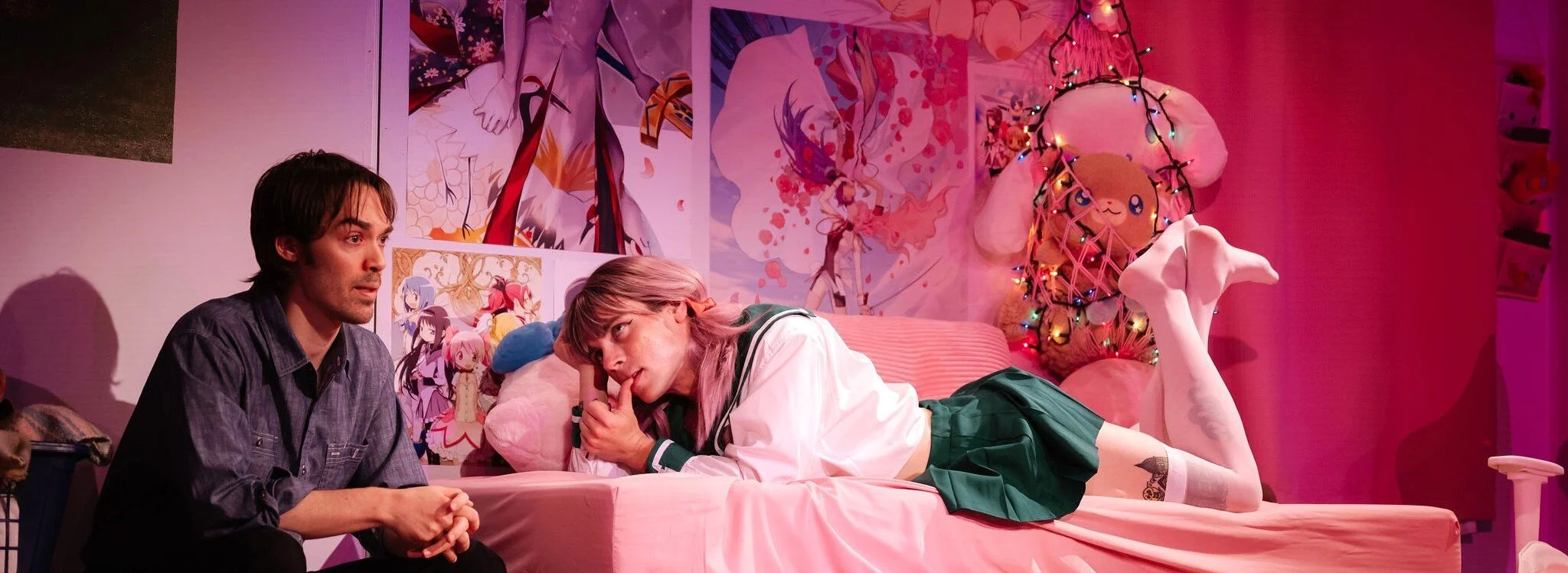
Ten years have passed since The Breakfast Club debuted, but these conventions of teenagedom are still pervasive, making Sonya Sobieski's new comedy, Commedia dell Smartass, all the more relevant. Commedia dell Smartass, produced by New Georges at the Ohio Theater in SoHo, takes these archetypal characters and flips them upside down and inside out. Her "cheerleader" is a type-A Girl Scout obsessed with her future; her "jock" is a Fencer with Machiavellian instincts; her "sensitive outcast" is a pantaloon-wearing Clown of ambiguous gender; and her "nerd" is a shlubby guy named Henry who dreams of teleporting to the moon.

Sobieski's irreverent style in this quirky commedia dell'arte pokes fun at hackneyed teenage stereotypes. Yet she does not denounce the existence of such stereotypes. As a result, she just might be the John Hughes of the post-9/11 generation. I mean this as a compliment: like Hughes, she has a clear insight into teenagers' lives, but unlike that iconic movie director of the 1980's, she avoids the pitfalls of sentimentality by employing a distinct snarkiness. At times, this snarkiness borders on pretentiousness, which may be Sobieski's goal. Not only is she riffing on pop culture archetypes, but she is also taking a shot at the presumed savvy of teenagers today, and at world that forces them to grow up too soon.

Sue Rees's simple set

Click for print friendly PDF version of this blog post

In Love and War

In a desolate Israeli cafe overlooking the Plains of Armageddon, three very strange and mysterious people find themselves bonding over beer as they overlook this eerily quiet, centuries-old battlefield in Richard Lay's promising yet disjointed social satire, Lunch at Armageddon, at the Blue Heron Arts Center. Set on the balcony of this caf

Click for print friendly PDF version of this blog post

Depression Lives

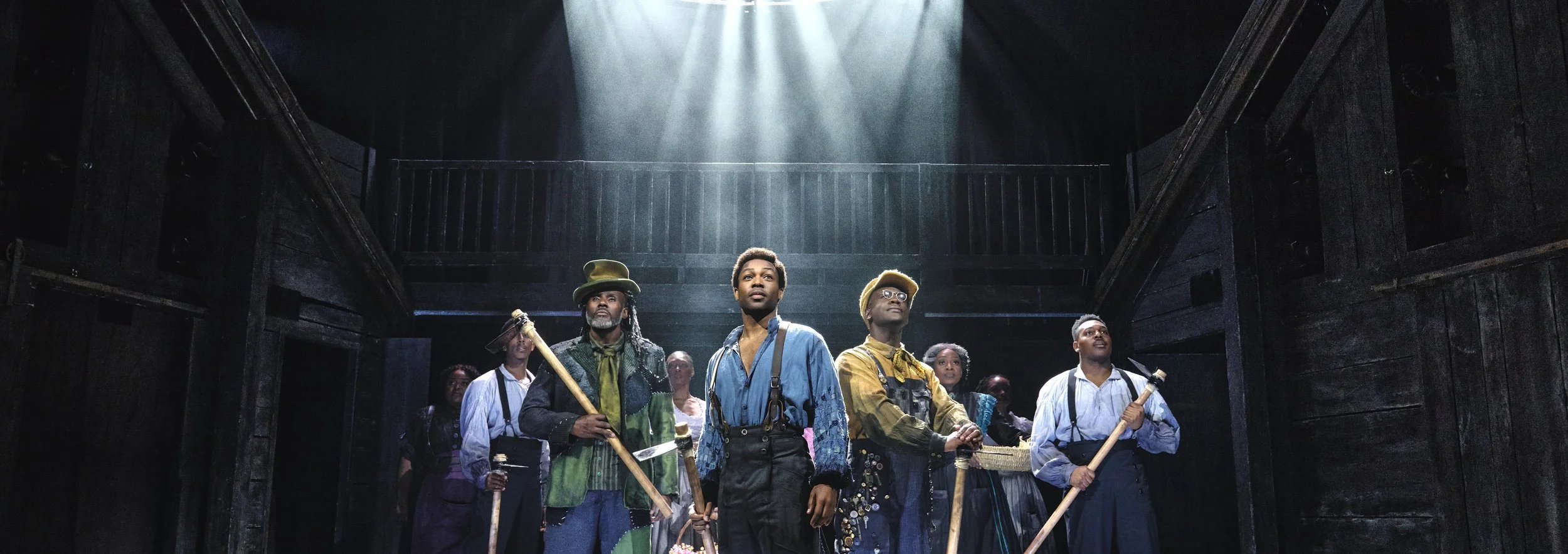
Soon of a Mornin': The Story of Gee's Bend Farms feels like the bare bones of a narrative that's wanting for more voices and more space to do it justice. After its one-hour run time has ended, your interest is piqued and you've definitely been entertained, but you feel as though you've been skimming the surface of these people's lives and could stand to go much, much deeper. Andrea Frierson-Toney has borrowed from the pages of early 20th-century American history to recount the story of Gee's Bend, Ala., and the slave-descendant quilters and farmers who lived there during the height of the Great Depression. We hear much of that story in the form of letters written by Annie Chambers (Megan Magil) and Freidberg (Fred Rose), who have been sent to Gee's Bend by the Farm Securities Administration.

Annie is a nurse whose modern practices, like sterilization and proper nutrition, are at odds with superstition and homemade remedies, while Freidberg is simply fascinated with the religious rituals and backbreaking work that he photographs. The interaction between these two outsiders and the community they've entered does not arrive fast enough or happen often enough. The play begins with their arrival at Gee's Bend by river raft, but they do not actually speak to the townspeople until several scenes later. Their arrival

Click for print friendly PDF version of this blog post

Sofa, So Good

A bar with cheap drinks, a DJ spinning techno between scenes, the self-consciously urban artwork on the walls, the 10:30 start time (9 on Tuesdays), and the $10 price all give Slant Theatre Project's newest incarnation, CouchWorks, the ambience of a fun and intimate party scene. Seven topnotch playwrights with impressive r

Click for print friendly PDF version of this blog post

Nothing Random About It

Our pets have their ways of communicating to us: a dog's whimper at the dinner table implies "Feed me!" and a cat's purring is a sign of pleasure. But what if animals really could engage with us in dialogue, not with sounds but with language? The Boomerang Theatre Company's world premiere of Francis Kuzler's new play contemplates just that. Set in the science department of an unidentified Eastern university and the expanses of the Little Delta Ranch somewhere in Texas, Giant-n-Variation tells the story of the titular twin talking bulls, a self-proclaimed "psychoevolutionary biolinguist" divorc

Click for print friendly PDF version of this blog post

The Other Woman

The Mistress Cycle, now receiving its world premiere as part of the New York Musical Theatre Festival, traces the lives of five very different women throughout history who share one common thread

Click for print friendly PDF version of this blog post

Those Wacky Ancients

Greek tragedies are a lot like daytime television, only trashier. They spill over with juicy plots and wicked details that read like a tabloid rag at the supermarket checkout. The worlds of Medea, Phaedra, Oedipus, and Electra are populated by infanticide, matricide, incest, madness, and cosmically bad luck, all of which makes them ripe for one thing: parody. The Grift, in association with Bay Bridge and Push Productions, accomplishes just that with Jason Pizzarello's spoof-tacular new play, Saving the Greeks: One Tragedy at a Time, a breezy comedy full of laugh-out-loud merriment that pays homage to the melodramatic absurdity that is Greek tragedy. The plot is pure silliness, which is perhaps why it works so well. Tired of war and death, Dialysis (Brian Reilly) and Peon (Brian Normant) set out to bring some much-needed peace to ancient Greece. Their efforts lead them to create Betterland, a city where formerly doomed tragedians can start their lives over free from the misfortunes of their previous existences. Traveling from tragedy to tragedy, Dialysis and Peon gather inhabitants for their new utopia.

Their first stop is Thebes, where they discover Oedipus (Tom Escovar) on the verge of blinding himself after having realized he has slain his father and bedded his mother. After saving Oedipus with the help of the blind soothsayer Teiresias (Alan Jestice), the tragically hip group makes its way to King Agamemnon's (Eric Forand) castle. There they successfully convince the bipolar Electra (Carrie McCrossen) not to kill the fatalistic Clytemnestra (Eva Patton).

Feminist outcast Lysistrata (Season Ogelsby) joins next, fighting her obvious sexual attraction to Dialysis, while Oedipus finds love (or at least lust) with Agamemnon's mistress, the psychotic seer Cassandra (Carey Evans). No sooner does doomsday housewife Medea (Valerie Clift) join the gang than they find themselves under attack by a neighboring city. When someone (literally) kills the messenger (Matthew DeVriendt), an infuriated Zeus (William Harper Jackson) steps off Mount Olympus to clean up the big mess.

Jason Pizzarello has written a thoroughly enjoyable script filled with droll witticisms, amusing one-liners, and groaning wordplay. He turns the Greek tragedy genre on its ear, gleefully exploiting the farcical possibilities and mining its rich comedic potential. Pizzarello's only misfire is his ill-conceived chorus. Although the chorus is an integral component of Greek tragedy, here it is extraneous and often disruptive, and its one-joke role grows tiresome.

Pizzarello's script is well matched in director Michael Kimmel. He has a firm grasp on his cast, guiding them to truly funny performances. Kimmel never takes the script too seriously, allowing the absurdities to pile up with giddy abandon. The one downside of his direction is his tendency to allow his actors to play to the audience, an off-putting choice that breaks the play's flow.

The actors are excellent. Embracing the ridiculousness of this farcical parody, the cast of 13 plays each line for all its worth. Jestice sets the self-deprecating tone with his opening monologue and keeps the action moving, delivering loads of zany zingers as Teiresias.

Reilly and Normant are sublime as Peon and Dialysis, making for a comedic dream team as they interact with a natural ease. McCrossen and Evans are effortlessly hilarious as the inexplicably British Electra and the crazy-nuts Cassandra. Forand, without ever changing costumes, plays four variations of the same role to dim-witted perfection.

Clift is a comedic gift. She morphs from the slightly off-kilter Jocasta to the oddly crazy Phaedra to the certifiably insane Medea without ever missing a beat. Oglesby, DeVriendt, Escovar, Harper Jackson, Patton, and Pete Mele lend outstanding support within this accomplished cast.

Despite a second act that drags in spots, Saving the Greeks ascends to Olympian heights. Pizzarello's clever script offers madcap adventures for these time-honored characters, and Kimmel and his first-rate cast prove this show is anything but a tragedy.


Click for print friendly PDF version of this blog post

No Holds Barred

Isobel, the ghost of a 7-year-old Portuguese child, hovers over a chain of loosely linked vignettes that depict people in extremis in the Alternate Theatre's gripping production of Canadian playwright Judith Thompson's 1990 drama A Lion in the Streets. Thompson's themes could be ripped from The Jerry Springer Show: infidelity, assisted suicide, sexual abuse in the Catholic Church, sex and the disabled. Thompson fearlessly puts her foot to the pedal and doesn't let up. In the process, her characters scream in rage, keen in despair, and attack one another physically and verbally.

In less capable hands, all this would quickly devolve into melodrama or farce. But Thompson brings such intelligence, empathy, and humor to the task that the results are often revelatory. Helped by a talented cast of young actors who juggle multiple parts, she convinces us that we are watching real people act out their primal urges, even as the unfolding events become less and less realistic.

Thus a well-heeled mother (Tracy Weller) calls a meeting of parents to hysterically blast the working-class day care provider (Amanda Boekelheide) for feeding their kids sugary foods. A man (James Ryan Caldwell) tracks down a boyhood friend (Nathan Blew) in a quest to rip out his memory of their homosexual encounter. A severely disabled woman (Boekelheide) rises from her wheelchair and performs an erotic dance with her fantasy lover (Blew) before a straitlaced reporter. A soccer mom in sweatpants (a riveting Rachel Schwartz), humiliated by her husband's public declaration of an affair, begins a striptease for him in front of his lover and their friends in a desperate ploy to win him back.

To pull off the play's whipsaw swings in mood requires a talented design team, and the group that Canadian director Kareem Fahmy has assembled rises to the task. Of particular note is the work of Andrew Lu on lighting and Andrew Papadeas's sound and music. To pack the biggest emotional punch, Fahmy has smartly coached his actors to play their roles to the hilt without ever crossing over to caricature.

It's not surprising that a play as ambitious as Lion in the Streets is imperfect. The first act is much stronger than the second, and at two hours and 40 minutes, the play is a half-hour too long. Tania Molina, a big-boned woman, has the thankless task of portraying the child Isobel, who speaks broken English and has little of interest to contribute. The play's conclusion

Click for print friendly PDF version of this blog post

Master of Disguise

Leave your cell phones on, ladies and gentlemen, but keep in mind that if that phone should ring, you will be "instantaneously put to death." So begins the preshow announcement in Hi!, Amber Martin's high-voltage, one-woman, eight-character study. Delivered in a sweet and syrupy tone and dripping with knowing sarcasm, the announcement, like the show, leaves us mildly uncomfortable, slightly amused, and wondering just what might happen next. Winner of the Portland (Ore.) Drammy Award for Best Solo Performance in 2003, Martin has taken her eccentric cast of characters on the road in a show that works as comedy, tragedy, performance art, and mockumentary. The exhilaration of Hi! lies in its complete unpredictability. Martin has woven the lives of seemingly disparate characters into one volcanic whole.

In the smart style of Christopher Guest's mockumentary films (Waiting for Guffman, Best in Show), she gives us brief glimpses into characters who are passionate about communicating who they are. And like many of Guest's films, Martin almost dares us to laugh. Beneath the easy jokes, there is an undercurrent of pathos and serious truth.

Her palette of women includes a Bible-banging Christian at a religious revival, a country music devotee at a desolate Southern burger joint, a faded rock star who has to have her voice box removed after singing like Alice Cooper, and a bitter nightclub singer at a Vegas club performing Whitney Houston covers. The characters have all fallen short of greatness; like "B" list celebrities, they are out of the limelight, a step or two (or four) away from the big time. Martin says they all "seek salvation" in their own way, and she argues for the importance of even the most peripheral of stories. She delivers honest and incandescent snapshots of each character, forcing us to focus on each individual, no matter how eccentric. It is important, she suggests, to really listen to what people have to say.

Her comic work can be likened to that of Amy Sedaris, who is similarly unafraid of contorting herself into appalling grotesques to make a statement about character. Martin makes the process behind these contortions visible by "performing" her costume changes onstage, applying makeup as she sings, hums, dances, or otherwise gyrates to a seamlessly spectacular soundtrack. The set resembles a child's dress-up closet, with coat racks full of costumes and a dressing table lined with wigs and makeup. Director Howie Baggadonutz utilizes the set and space to its full capacity as Martin turns her body into a canvas, showing us the many possible evolutions of being human.

With Martin serving as writer, producer, performer, and sound designer, Hi! is clearly a labor of love. She has an incredibly expressive, rangy voice, and she brings a jaw-dropping precision to her characters' physicality. No matter what she is doing, she is thoroughly enjoyable to watch onstage.

Still, if you are looking for traditional narration, Hi! may not be the show for you. But if you enjoy ballsy, entertaining social commentary wrapped in stunning characterization, go have a look at Martin's dazzling array of faces. When she finally takes her curtain call, she is so utterly unrecognizable from her many guises that you'll find yourself asking, "Wait a second, who is that?" And you'll definitely be glad you left that cell phone off.

Click for print friendly PDF version of this blog post

A Lover, Not a Fighter

Many periods of history have become associated in the popular imagination with a single genre of theater. For example, the medieval mystery plays, Jacobean revenge tragedy, the closet verse-drama of the Romantic era, the great naturalistic classics of the late 19th century, and the experimental plays of early Modernism. Perhaps no era, though, has been as pigeonholed as the Restoration

Click for print friendly PDF version of this blog post

Wedding Bell Blues

Marriage, at least as it is presented in Soul Searching, a new rock opera running in workshop at Theater for a New City, is a mixed bag. In "Married," one of the opening numbers, Brenda, the show's single protagonist, asks her friends, "What's it like to be married?" The responses? "All my dreams have come true / I wouldn't wish it on you." It's not exactly a ringing endorsement, but in Soul Searching it is what being married is all about. Marriage isn't necessarily happy, but happiness lies in marriage. Soul Searching, running through Oct. 2, tells the story of Brenda, a contemporary Jewish woman in New York searching for a man of faith and substance. She's looking for someone, she sings, "charming and sweet and spiritually deep." As the program notes put it, "Although she wants to share her life with someone, she also wants to share her life with an accepting community of people."

Brenda's trials unfold Friends-style as she and her girlfriends sit and gab over coffee. Her married friends Rachel, Becky, and Sara want her to find someone, and set her up with three versions of their husbands

Click for print friendly PDF version of this blog post

Anytown, USA

Much has already been said about the fast pace and short attention spans that define our modern culture. Gone are the days of Greek dramatic festivals and Noh theater, when a captivated audience would watch plays for hours on end. Even the works of Shakespeare are being edited for time, not out of sympathy for actors who would have to memorize large amounts of dialogue but out of consideration for the modern theatergoer. Against this trend, the Orphanage is presenting Anathemaville, the three-act love child of Thornton Wilder's Our Town and the best-selling Sam Walton: Made in America. With a running time of four hours (including two intermissions), Scott Venters's drama is bigger, nastier, and more politically charged than Wilder's play, but nowhere near as relevant.

The evening begins with narrator Leo Jones talking about some of the troubled denizens of this town, who all work at (and are controlled by) a fearsome one-stop-shopping mecca called UberMart. Bernard White models his conduct after the strict UberMart manual, in hopes of advancing through the ranks. David Thompson has abandoned his classics studies at college for a dead-end retail job and a twisted sexual relationship with his half-sister, the alcoholic and vitriolic Kathleen Thompson.

Warren Steuss is a suicidal closet case who secretly pines for David when not being repulsed by the affections of Verda Williams, who speaks in an unintelligible rasp due to a tongue of circus-freak proportions. Verda is so enraptured by Warren that she doesn't realize the enemy she has in Sir Galahad (aka BJ), a devotee of role-playing games who's completely surrendered to the reality of his gaming character and who sees Verda as a fierce beast in dire need of slaying. Overseeing the crew is Bob Robertson, the morbidly obese manager who loves Hostess Sno Balls and his truck Maggie.

These characters are joined in Act 2 by Carol Kennicott, the daughter of one of the chain store's founders and a revolutionary-in-training. Through her misguided manipulations, she awakens the emotionally dormant David and turns him, too, against UberMart. Their dreams of a coup, like their lives and those of their co-workers, soon unravel, and we follow the deceased David as he travels back from the afterlife to Anathemaville, trying to figure out the meaning of it all.

So why does this play come across as full of sound and fury, signifying nothing? Perhaps Venters should have looked more closely to his original source. Though Grovers Corners is full of characters, there is a focus on the immediate families of Our Town's two young lovers, George and Emily. That focus then tightens on the couple in Act 2 and on Emily in Act 3. In the town of Anathemaville, however, all ten main characters are given their own elaborate story arcs, and the duo that we're supposed to care about (David and Carol) do not actually meet until the middle of the second act.

Still, kudos must be given to the actors in this production, who have thrown themselves into their roles and admirably tackled hundreds of pages of dialogue. John Ivy, in particular, is immensely enjoyable as the scene-stealing Sir Galahad, investing equal measures of goofiness and gravity into his portrayal of what could have been an irritating one-joke character.

In a world where the Bard's plays are often restricted to 120 minutes, writing a show that clocks in at twice that length smacks of self-indulgence. And if Venters's main intention is to be heard, he makes it tough when the message is this long and unclear.

Click for print friendly PDF version of this blog post

Political Acts

Theater experiences shifts and trends. During the 1940's and 50's, it seemed every musical had either a cruise ship or a wagon in it. The 1980's brought some brilliant but mostly clich

Click for print friendly PDF version of this blog post

Crossing Cultures

Ever laughed at an eggplant? Prepare to start. Back from a sold-out engagement at last year's Fringe Festival, Negin Farsad presents her smart comic riff on Islamic culture in her one-woman show Bootleg Islam at the Tank. There are only two performances remaining, so make a date to get there and see this boldly engaging show. And trust me, she can and will make you laugh at that eggplant. Farsad has been compared to Janeane Garofalo for the sharpness of her humor, and while she is similarly blunt and incendiary, Farsad creates a style all her own. Part standup comedy, part "How I Spent My Summer Vacation" presentation (complete with PowerPoint projections), Bootleg Islam is Farsad's triumphant account of her experience straddling a cultural divide.

Farsad was raised in Palm Springs, Calif., and her experience with Iranian relatives first consisted of only brief, sporadic visits to Iran, in which she smuggled illegal American pop CDs to her cousins. In 1999, however, as a 23-year-old, more-experienced American woman, Farsad visited Iran for one month for her cousin Mahsa's wedding. It is this visit that she recounts here, complete with vibrant characters and events as well as Farsad's expanding consciousness of cultural dissonance and its ramifications.

Bootleg Islam is at its most poignant, and laugh-out-loud funny, in the parallels Farsad draws between her life and Mahsa's. They are the same age, but have been raised in completely different cultures. Farsad compares their life paths in "30-second well-crafted montages," complete with a "V-Loss Chart" (the "V" is for virginity) for each woman. Within these montages, Farsad notes the cultural differences in such areas as mobility (Farsad has lived in three countries, while Mahsa has moved around the same small part of town all her life) and sexual proclivity (Farsad engages in a vibrant sex life, while Mahsa must save herself until marriage).

As much as Farsad works to criticize Iranian culture, she is self-critical and a bit defensive as well: "If she knew the truth about me, she would consider me a total Iranian-slut-whore-hooker-prostitute. In New York, they call that a Friendster."

Farsad also adroitly juggles cultural references, embodying characters ranging from her "closeted-yet-overtly-gay-wedding-planner cousin" Amir to her Clark Gable-look-alike uncle. Particularly hilarious is an account of three old women talking at the wedding in the manner of The Golden Girls.

The eggplant

Click for print friendly PDF version of this blog post

Next!

Welcome to reality theater

Click for print friendly PDF version of this blog post

Past Is Prologue

Oscar Wilde's plays crackle with witty prose, delightful double entendres, and insightful observations about society and its classes. With his trademark pithy abandon, Wilde elevated satire to new levels, proving himself a formidable talent. His plays are an embarrassment of riches full of robust characters and delicious situations. Yet Jambalaya Productions' leaden rendition of An Ideal Husband, despite its sumptuous plot of blackmail, political corruption, and romantic intrigue, never gets off the ground. The play follows the romantic and political entanglements of the esteemed Sir Robert Chiltern (Christian Kohn); his beloved wife, Lady Chiltern (Christina Apathy); their trusted friend, Lord Goring (Trevor St. John); and the woman who stands to bring them all down, the conniving Mrs. Cheveley (Carolyn Demerice).

Mrs. Cheveley, Lady Chiltern's former rival and Lord Goring's ex-lover, arrives intent on blackmailing Sir Chiltern into using his political clout to make her a rich woman. As Mrs. Cheveley threatens to divulge information about Sir Chiltern's unethical past dealings, his secrets come to light, jeopardizing his political aspirations and social standing. Worse still is the threat to his marriage as Lady Chiltern soon realizes her "ideal" husband is flawed. When Lord Goring and Lady Chiltern team up to bring Mrs. Cheveley down, misunderstandings and a classic comedy of manners ensue.

Wilde's biting script is rendered toothless under Robert Francis Perillo's pedestrian direction. Long stretches pass where nothing happens as characters talk while confined to their seats. Wilde's words beg for more, but to no avail, as possibilities for richness and humor are squandered. Perillo flounders, mistaking satire for drama and failing his actors as they struggle to grasp Wilde's sharp repartee.

Demerice gives an energetic but off the mark performance as Mrs. Cheveley, one of the great female antagonists in the theatrical canon. Demerice settles for superficial choices (a seductive glance, a raised eyebrow), making her Mrs. Cheveley nothing more than a one-note villain.

Kohn gives an unsteady performance as Sir Robert Chiltern. His uneven take on the character alternates between bland respectability and hysterical buffoonery. As his wife, the steadfast Lady Chiltern, Apathy never settles into her role, opting for false emotion and dry tears.

There are exceptions. Lian Marie-Holmes is charmingly irreverent as Sir Chiltern's younger sister, Mabel Chiltern. She clearly understands the subtle humor of Wilde's text, scoring many laughs and even creating a believable chemistry with St. John's boorish Lord Goring.

The saving grace of An Ideal Husband is the blithe Lynne McCollough. She is an absolute joy as eccentric society doyenne Lady Markby, breathing desperately needed energy into this lifeless production. The stage comes to life each time McCollough's Lady Markby graces it; she forces the other actors to meet her head-on, raising the bar of accepted mediocrity.

Despite her performance, a great play is lost in Jambalaya Productions' clumsy rendering. With its limp direction and anemic acting, this Ideal Husband deserves a speedy annulment.

Click for print friendly PDF version of this blog post

The Absent Gardener

The characters who populate Saturday Players' new comedy, Finding Pedro, are pulled from the various strata of society with what seems like a deliberately egalitarian eye. In a single play, indeed at a single party

Click for print friendly PDF version of this blog post

Siblings in Rehearsal

The Eisteddfod accomplishes a rare feat: it leaves the audience with something to talk about long after they have left the theater. A tightly directed, two-person character study, the play combines psychological drama with dark humor, and in the process it serves up a fascinating, hourlong head trip where everything is as it seems, yet nothing is as it appears. Set within a suffocating room somewhere in Australia, The Eisteddfod tells the story of two emotionally splintered siblings, Abalone and Gerture, as they prepare to compete in the local eisteddfod (a Welsh word, which somehow found its way into the Australian lexicon, meaning "talent show"). Rehearsing scenes from Macbeth, they create and recreate scenes from their own lives. As the eisteddfod draws nearer, Abalone and Gerture confront their murky past, narrow present, and inescapable future, ever mindful of their absent parents and former lovers.

Playwright Lally Katz has created a hall of mirrors: her characters and their story reflect on themselves, distorting both reality and imagination. She also has devised an intriguing puzzle. Her play juxtaposes scenes of infectious comedy with those of disturbing depravity, then blurs the line between reality and fantasy. She makes Abalone and Gerture's rendering of Macbeth a truly awful spectacle, complete with bad Scottish accents. Yet within these very funny scenes Katz injects moments of dark reality as Gerture's insecurities manifest themselves in a past relationship with a sadistic beau, played by her brother.

Luke Mullins and Jessamy Dyer, who have been with this project since its inception in Australia, create finely detailed portraits as they bring Abalone and Gerture to vivid life. Mullins gives a measured and controlled performance as the manipulative Abalone. The more desperate he becomes for his sister's attentions, the more compelling Mullins becomes in his choices. He inhabits his character with a beguiling charm that is eccentric and, within the confines of the story, disturbing.

Jessamy Dyer gives a raw performance of overwhelming spontaneity as Gerture. She imbues her character with a haunting fragility that evokes empathy but never pity. Desperate for love, Gerture clings to scraps of it like a drowning woman caught in a whirlpool.

Director Chris Kohn confines the action to an 8-by-10-foot platform, forcing both characters to remain trapped physically, much the same way they are emotionally. It's a bold choice, one that keeps the action focused while creating an atmosphere of almost unbearable tension. Richard Varbe's claustrophobic light design produces an unsettling atmosphere of anxiety and dread, helping Kohn and Katz to realize their vision.

The Eisteddfod triumphs in its own ambiguity. As reality and fantasy converge, Abalone and Gerture are left to navigate the inevitable uncertainty of their future, while the audience must piece together the clues they have left behind.

Click for print friendly PDF version of this blog post

No Shortage of Love

Written primarily as a rebuttal to Henrik Ibsen's A Doll's House but also as a critique of the flaws in feminist thought, August Strindberg's Miss Julie is a radical piece of drama that plays out the war of the sexes between an upper-class mistress and her valet while also managing to deride religion and high society. Despite its deep-rooted and highly controversial social commentary, the play is, at heart, about the ill-fated midsummer's night affair between the two lovers. Regarding Julie and Jean, Strindberg wrote: "Because they are modern characters living in a period of transition more feverishly hysterical...I have drawn my figures vacillating, disintegrated, a blend of old and new. My souls [characters] are conglomerations of past and present stages of civilization, bits from books and newspapers, scraps of humanity, rags and tatters of fine clothing, patched together as is the human soul."

In Th

Click for print friendly PDF version of this blog post

On the Road Again

"Uh, Breaker One-Nine, this here's the Rubber Duck. You got a copy on me, Pig-Pen? C'mon." With those words began C.W. McCall's "Convoy," one of the more successful novelty songs by a one-hit wonder to top the charts. McCall was actually a pseudonym for William Dale Fries, a Midwestern ad man who faked a conversation about traffic peril at the height of the citizens band (CB) radio craze. The song gave birth to the 1978 Sam Peckinpah film and now is reincarnated in the form of Lady Convoy, BRATPAK Productions' entry into this year's New York International Fringe Festival.

Given that the song itself is only about two minutes long, the plot of both the film and the play is rather slight. A tough-talkin' lady trucker (Kelly Rauch) known by her CB handle, Rubber Duck, picks up a hitchhiker (Gene Gallerano). It doesn't take long before she and her trucker friend Love Machine (Lucy Smith) find themselves fleeing the law, embodied by a corrupt sheriff and a governor with a secret. Soon enough, Rubber Duck becomes a renegade folk hero on the CB circuit.

Admittedly, the joy of this Lady is not what it's about; it's how it goes about it. BRATPAK mined theatrical gold earlier this season with its adaptation of the John Hughes film The Breakfast Club, and it now manages to find humor from an even more obscure source. Robert Ross Parker's direction keeps the ball rolling, which is also a testament to the lack of filler in Ken Gallo's script. The show pulls the audience in and does not let go for 75 minutes.

The amazing thing is what great characters Parker's ensemble manages to create from such a thin blueprint. Smith is an absolute hoot as Love Machine, a volcano of energy waiting to erupt, but also a character full of love. Brad Thomason, as Sheriff Lyle McGee, Rubber Duck's main nemesis, delivers a devilish turn, abetted nicely by Sam Schamberg as his deputy, who steals every scene in which he appears with his subtle facial tics and tongue-in-cheek responses to Thomason. And Sean Doran proves highly amusing playing several different characters, including a reporter and one example of the many men whom Rubber Duck loves and leaves.

But Lady rests on the impressively buff shoulders of its star, and it begs a question: Is there anything Rauch can't do? Her cocky, earthy Rubber Duck is a stark contrast to her performance as Claire in The Breakfast Club, a proper, popular girl in high school who's a wholly insecure mess. In both shows, Rauch emerges as a master of physical comedy and broadly expressive facial gestures (her slow burn is so dead-on it rivals Kelsey Grammer's on Frasier).

And while Rauch effortlessly commands the stage, she seems unafraid to share it with co-stars Gallerano and Smith and is quite generous in her scenes with them. She suggests this generation's answer to the similarly versatile Julianne Moore, though if Rauch were to pursue a film career, she would leave a large void in the downtown theater scene.

Lady faced quite a few hurdles in finding its way to the stage. Based on a film that relied largely on desert location shoots and inspired by an old country-western song that few remember, it lacks the built-in audience base that so many other shows at the Fringe rely on. Instead, it earns its audience the old-fashioned way, through solid writing and performances. In other words, the kind of traditional values that would make Rubber Duck proud.

Click for print friendly PDF version of this blog post