Musical

Chekhov in Harlem

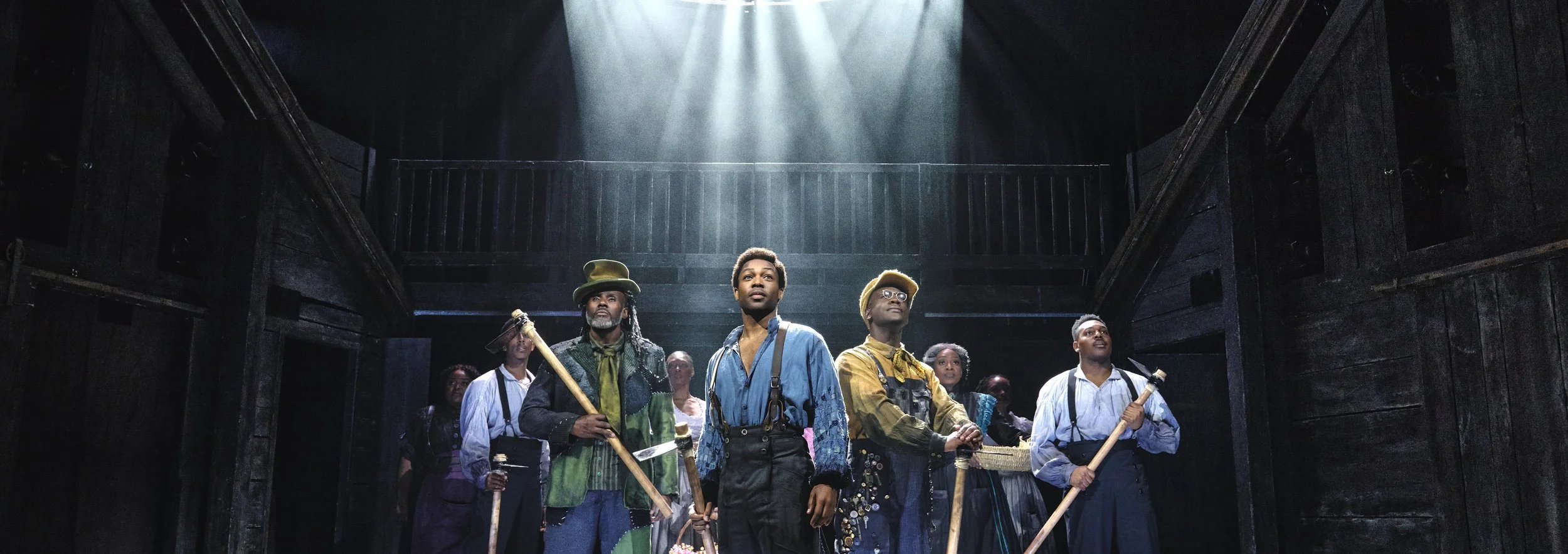
My Friday night date has come down with the flu. There goes a perfectly good night of dinner and theater. I sit there, dejected, wishing there was some creative way to use my theater tickets another time, knowing I must put my shoes on. Am I glad I got off the sofa. Duty took me to the Harlem School of the Arts, but Classical Theatre of Harlem's production of The Cherry Orchard kept me there. This cast of seasoned veterans and up-and-comers is a great reason to fight C train woes and head uptown for a great theater experience.

In Chekhov's classic 1903 play, a former "master" returns to her estate to find that the property is to be sold to pay the Renevskaya family's debts. This was a familiar situation throughout Russia after the 1861 Emancipation Declamation that freed the serfs but also changed the economy and closed the gap between the nobility and the working class. Chekhov's grandfather was himself a serf who purchased his freedom as well as his family's.

As the Renevskayas halfheartedly ponder how they might raise the money to pay their debts, Lopakhin, a family friend, suggests they chop down the orchard and lease the land in pieces by building summer cottages. The family dismisses the idea, but when the estate finally goes up for auction, Lopakhin buys it, much to the surprise and disdain of the Renevskayas and their circle. Both Lopakhin's father and grandfather had been slaves on the estate years before.

The night was full of talent. For instance, Earle Hyman played the 87-year-old servant Firs, who offers great comic relief as he shuffles into a room and mumbles his way in and out of conversations. He also represents a time that no longer exists, since he is a serf who never wants to be released.

Every choice or step Hyman makes onstage seems deliberate but not overplanned. His impressive career has found him onstage so often that it seems his body won't steer him in a bad direction or into a choice that doesn't work. The difference between Hyman and some of his younger colleagues is stage maturity. There is a serenity in one's performance when the stage is your second home and has been for over half your life.

By contrast, Chandra Thomas, who plays Anya, the youngest daughter of the estate's matriarch, Lyubov (Petronia Paley), has moments of natural grace onstage that make her easy to watch, but not every moment of her performance feels comfortable. There are times where her character is a part of the scene taking place but is not the focal point of the action. In these moments she appears over-focused. She does not pull attention from the center of the action, but there is a subtlety that is lost in her performance, a weakness that may iron itself out as she spends more time onstage.

Most impressive was Wendell Pierce as Lopakhin

Click for print friendly PDF version of this blog post

Bawdy Game Show

Everyone wants his or her 15 minutes of fame, and those desiring an hour and a half can find it at the Belt Theater in This or That! Parodying a low-budget game show, This or That! is a strange hybrid of game show, burlesque performance, and reality television. It is hosted by The Great Fredini (Fred Kahl), a wonderfully formulaic host dressed in a purple polyester leisure suit and a gaudy gold chain. Also hosting is his sidekick (Julie Atlas Muz), who plays up her significant physical assets in just a purple bustier, thong and fishnets, and whose comedic facial gestures are worth a thousand words, though she stays mostly silent. The production is clever and has great stock characters, but it's also raunchy. There is definitely an audience who will enjoy the show tremendously, even if it doesn't include this critic.

The game's gimmick is choosing real audience members. Four men and four women are plucked from the audience and told to fake an orgasm onstage. The audience then votes on the one female and one male whom they want to participate in the show. The audience vote cleverly rigs the situation, as, without fail, they choose the biggest hams.

The selected audience members are just as funny as the actual performers; these seemingly normal people morph into real characters when thrust into the spotlight. In fact, one would swear they had been planted. (They're not, but I was only sure of that after asking later.)

The audience's involvement is one of the highlights of This or That! The Belt Theater is not a large venue, but it is ideal for a show like this. The house lights stay on throughout the performance, and alcohol flows freely (you can refresh a drink during brief commercial breaks). Some competitions involve the entire audience, as Fredini promises a prize to the first person to produce a Texas quarter, a blue lipstick, or a colored condom. Theatergoing is seldom so communal an experience.

One man and a woman competed for $500 in "absolutely worthless This or That! dollars," as Fredini explained. They traded clothes onstage and picked cherries out of whipped cream using only their mouths, and the winner got to choose between the "This" or "That" curtain. Depending on which curtain they chose, either a great or awful act would come out, Fredini said. (Earlier he had admitted during a spin-the-wheel game that "where the wheel stops...makes absolutely no difference at all," acknowledging the fixed nature of much of the game despite the randomness in the audience participation.)

It was during the banana-eating contest between the two participants (both teamed with burlesque performers) that I started to feel uncomfortable. It descended into a potassium-ingesting orgy, with people putting bananas in all sorts of unmentionable places and then writhing in a heap onstage. Whereas prior acts had been in a spirit of fun, now I just felt bad for the poor souls who had somehow been seduced by the spotlight's lure into humiliating themselves so profoundly. (The production is actually taped and played on a New York City cable channel on Sunday at midnight, so the audience witnessing any humiliation is even larger then.)

In the moments when the bawdier aspects took a backseat and true burlesque talent was on display, the show really shined. The special guest performers

Click for print friendly PDF version of this blog post

Menacing Occasion

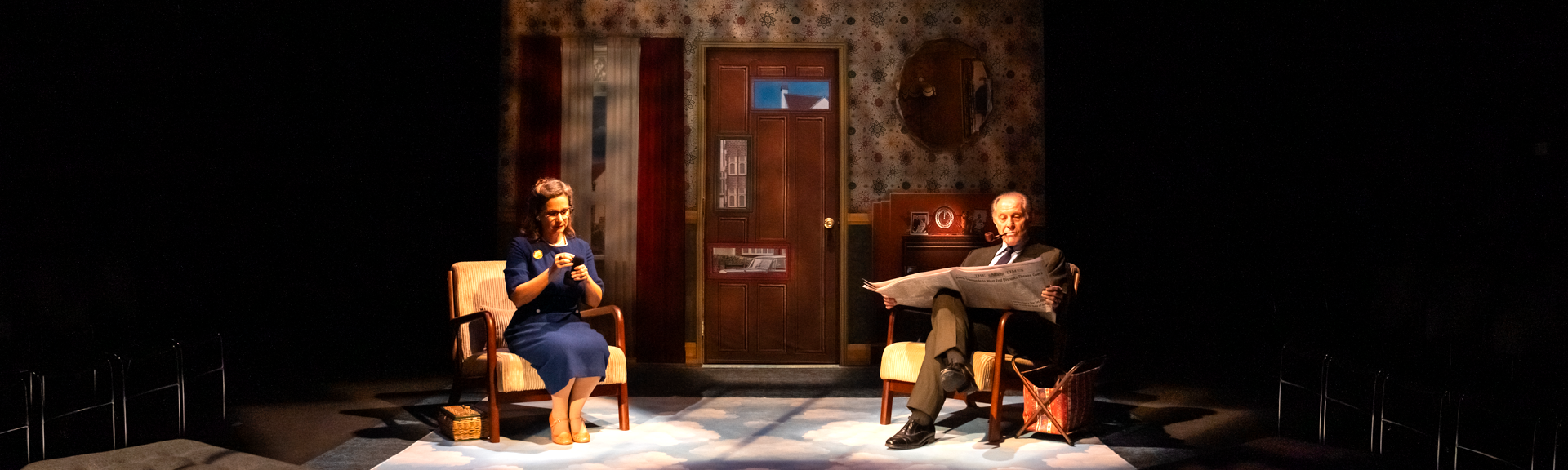
The T. Schreiber Studio's production of The Birthday Party

Click for print friendly PDF version of this blog post

Watch Out, Here She Comes

She saunters through the crowd of tightly congested tables as she makes her way to the stage, wielding a whip and flirting with select audience members. It takes just one crack of the whip to let everyone know that class is in session, and you better pay attention. Alas, this is no ordinary class, and Lisa Faith Phillips no ordinary teacher. An Evening With Dr. Faith: 7

Click for print friendly PDF version of this blog post

The Spirit of Hip-Hop

Akim Funk Buddha is a beautiful man. He radiates an inner joy, an infatuation with life, people, and movement. This energy is what he attempts to capture and present in his new show, Amazulu: Dance as a Weapon. Buddha, whose real name is Akim Ndlovu, was born in the U.S. but grew up in Zimbabwe. For the past 10 years he has been creating performances in New York City that combine multiculturalism, dance, storytelling, and music. Amazulu stays within this genre, celebrating the diverse histories of its cast while also investigating the indigenous roots of rhythm.

The show begins with a group chant that eventually blends with a freestyling rap session. This represents a theme that Buddha tries to maintain throughout the evening: that our modes of expression today are informed by our cultural histories. A video landscape behind the performers projects images ranging from African fabric patterns to objects in nature and modern graffiti, calling the audience's attention to the potential similarities in these variegated visual icons.

After Buddha informs the audience of his quest for expression (told through spoken-word poetry and a strange, robotic hip-hop dance), the other performers get their chance to shine. And what a bright glow it is, for Kazuma G. Motomura, taking the stage with his routine "Tea Time," is an absolute joy to watch. Gliding along the stage like an unearthly being, he mimes the ritual of a Japanese tea ceremony. His hands become beings that are independent of his body, like two dancers locked in a fascinating duet.

In addition to Japan, Amazulu travels to China, via Zhisheng Zhan and his sheng (Chinese mouth organ), and to childhood, via Buddha's incarnation of a toddler. In most cases, the exploration begins as a solo, then draws in the collaborators who watch from onstage, turning the piece into a medley of rap, freestyling, beat-boxing, opera, and dance. These are the moments when the show truly takes off, and the joy the cast seems to feel when uniting in song is infectious.

Also notable in Amazulu is Buddha's throat singing, which adds an otherworldly feeling to some of the songs; Pete List's subtly supportive beat-boxing; and Erika Bank's impressive operatic tones that float above the music. Buddha's many talents also include tap dancing, gymnastic hip-hop dancing, and body balancing, and his athletic body seems more suited to all of these than to the introspective movement that makes up most of the show. The grace and subtlety required for flowing movement and spoken-word recitations are better left to the other performers, as Buddha has an immensely talented cast at his disposal and doesn't need to do it all himself.

It should be noted that the performance is a work in progress, and many elements of the evening are never satisfyingly unified. The broad narrative scope, which jumps from one part of the world to another, ultimately lacks focus and feels a little random. There are also some matters of pacing that need to be cleared up. But thankfully, Buddha lets the audience in on the show's creative process and its little mishaps, rather than attempting to cover anything up.

Amazulu: Dance as a Weapon can be seen through Feb. 20 at La MaMa E.T.C. There are also Sunday shows in the early evening (starting at 5:30) to accommodate the kids in your life. Children should be wowed by some of the physical feats, and

Click for print friendly PDF version of this blog post

Out With a Bang

By now, we are all too familiar with the many stories of teen shootings and high school rampages. And though each story is as sobering as the one before it, when it comes to dramatizations of such events, audiences have now reached the point where they recognize the formula

Click for print friendly PDF version of this blog post

Southwest Shenanigans

The good news about Texas Homos is that it isn't as bad as it sounds. The bad news is that it is not even within spittin

Click for print friendly PDF version of this blog post

Culture Critic

Outside the impossibly small box office/lobby of Performance Space 122 is a swarm of hipster 30-year-olds blocking the sidewalk, trying to get in to see Mike Albo's much-anticipated third solo show, My Price Point. PS 122 is usually a draw on its own, being the historical stamping ground for solo performers like Karen Finlay and the late, great Spalding Gray. But adding to the frenzy is the critical buzz about this self-confessed "D-list" celebrity. Angry East Villagers pass remarks as they try to squeeze through the loud and shivering downtown-theater crowd. Once seated in the packed theater on the second floor, one is immediately excited by Jeremy Chernick's inspiring set. We see an urban apartment with steel file cabinets, a desk, lamps, chairs, and even a gray metal locker. Lining the back of the stage are a bunch of Adidas trainer shoes, in soldier-like rows. There are red laces in each shoe, which stretch to a single point in the center of the ceiling, looking like the crimson rays of some sort of apocalyptic sun. A "Tsunami Relief" can on one of the desks furthers the tone of impending disaster. We also see a cowboy hat perched on top of the locker, reminding us all too well of the George "Dubya" political machine.

A cheer starts to rise from the audience as a precocious-looking Albo struts purposefully to the center of the stage with a large, novelty-size book by L. Ron Hubbard, founder of Scientology. He is clad in an Adidas warm-up suit. He begins to talk to the crowd in an infomercial style: "This is your world, the way you want to see it, based on a number of studies and polls. You have 'fear,' but no Fear Factor. You prefer Taye Digs in more comedic roles. You enjoy low-cost stars like David Spade and Mariska Hargitay. I am pregnant with a tumor filled with Splenda. I feel like the entire world's set on Vibrate."

Albo proceeds to take shots at pop icons like Entertainment Tonight, Access Hollywood, and US Weekly. Also, overhyped and corporatized celebrities, ribbons for AIDS, breast cancer, "Support Our Troops," Lance Armstrong, celebrity religions, pashmina scarves, "princess shoes," trucker hats, yoga, T-Mobile, Sprint, Verizon, Cingular, chihuahuas, babies, updating your Internet profile on friend networks like Friendster, and going to tanning salons. In essence, a culture that has defined itself by its gross consumerism, celebrity obsession, and a broken moral compass. Narcissism is America's drug of choice, and Albo takes a kind of melancholy glee in being just another blissfully ignorant user.

One of the more interesting themes that he explores is a culture of being tired. Why are we always so tired? Our day could be as indulgent as going to a spa and shopping, and yet the first words out of our mouths when we run into a friend are "I'm soooo tired." Albo also addresses the trendy American pill epidemic. After he descends into a coughing fit, he apologizes, saying, "I'm sorry, I have acid reflux. I was taking Nexium and Prilosec OTC, but now I'm on something totally better."

He continues with a laundry list of over-the-counter and non-over-the-counter drugs that have become household names thanks to Pfizer and the rest of the corporate medical industry. Medical placebos are big business in a country that is riddled with self-doubt and self-obsession. Albo also discusses the razor-sharp, fast-paced New York real estate scene, with its corporate and celebrity buy-ups of all remaining affordable residential housing: "As a broker, I get money from your account every time you desire a sense of home."

But some of Albo's and co-writer Virginia Heffernan's material misses the mark. A bit about being in Maui when he heard that the tsunami hit South Asia falls flat. The tsunami could have been a very interesting way to comment on a post-9/11 landscape of international disasters that have brought the world together. Instead, this is where some of the show's stories come off a little like pages out of Albo's pink sequin-studded diary and are not as important as he thought they were when he was being passed a joint on the Maui beaches. A bit as J.Lo's personal assistant is kind of old news. Her clothing line and multiple marriages have been beaten to death at this point, and the material lacks freshness.

David Schweizer is an undoubtedly masterful director, having collaborated on Rinde Eckert's deeply moving solo show called And God Created Great Whales. Unfortunately, I did not feel the same presence in this show. It is noticeable with the transitions and musical breaks. Cary Curran's dance numbers are really fun but don't reappear as consistently as one might prefer. They are usually the show's high points, where the audience is taken on more of a journey.

One of the most important rules of solo performance of this kind is that the characters need to be distinctive. Unfortunately, most of the characters sound and act the same. Ultimately, the question arises, Is this theater? Though extremely charming and witty, Albo doesn't have the theatrical gravity of solo performers like John Leguizamo or Billy Crystal. There's no real emotional catharsis. Nor does he have the poetic storytelling delivery that put Spalding Gray on the cultural map.

My Price Point is self-referential and fun, winking at the audience about the fact that even this show was sponsored (by Adidas). But overall, the production just does not yield much fresh and thought-provoking insight, not to mention that at times the material comes off like "so five minutes ago." One wants Albo to really go for a higher lesson, but the show does not support something so dramatic. The problem is, this is the theater. That's the whole darn point.

Click for print friendly PDF version of this blog post

The Misfortunes of Being Earnest

It is the sad case that works of art that would otherwise move us are greatly reduced in their ability to do so because of their earnestness to do so. The latest example of this is the Oberon Theatre Ensemble

Click for print friendly PDF version of this blog post

Luscious, Arrogant, and Entertaining Dancing Hungarian Ghosts

We all deserve to be remembered, and Lisa D

Click for print friendly PDF version of this blog post

Simply Wasted

Wasted has a fabulous concept. There is a nameless genre of theater I am fond of, in which a show presents a condensed version of a huge topic, like the history of America or lessons in Western literature. Wasted is subtitled The History of Public Education in the United States and How It Got That Way, which heightened my expectations. I guess that was my mistake.

Playwright Michael Goodfriend, working from a concept by Jim Niesen and the Irondale Ensemble, constructed his play as a film noir. The beginning introduces us to private detective Sam Slate, who is hired to find Jimmy, a missing schoolboy, and investigate the ominous Big Red Schoolhouse.

Private detective? Missing people? Ominous? Huh?

It was a trick, you see. In the subtitle, the word "history" is crossed out, and "mystery" is substituted instead. In fact, Wasted matches the plot of Raymond Chandler's The Big Sleep pretty much point for point, right down to the retired military man who is the detective's client and the blond femme fatale.

So Sam Slate asks some questions around the Big Red Schoolhouse, which is actually a bizarre mishmash of every education figure and concept of the last century. John Dewey, founder of the University of Chicago Laboratory Schools, is there, along with teachers from segregated classrooms and the author of the "Dick and Jane" readers. Heck, there's even a phrenologist.

There are villains, too, who usually represent businessmen who have sinister intentions toward the school and mutter ominous phrases like "No child left behind!" while cackling with glee. (I couldn't tell you what their intentions are, because they're never really made clear

Click for print friendly PDF version of this blog post

Love Is All You Need?

Love, they say, is a many-splendored thing. Love is patient, love is kind. Love means never having to say you're sorry, love is as much a light as a flame. There is no shortage of definitions for love, but The Bitterness of the Meringue, the new show at La MaMa Experimental Theatre Club, proposes a few more. Love is "a tortuous word." It is a "round business," it is where "everybody loses out." It is "vertigo at the abyss." Love is also, if I understood the play right, "salt that seems sweet, sweet that seems salt

Click for print friendly PDF version of this blog post

Safety in (Musical) Numbers

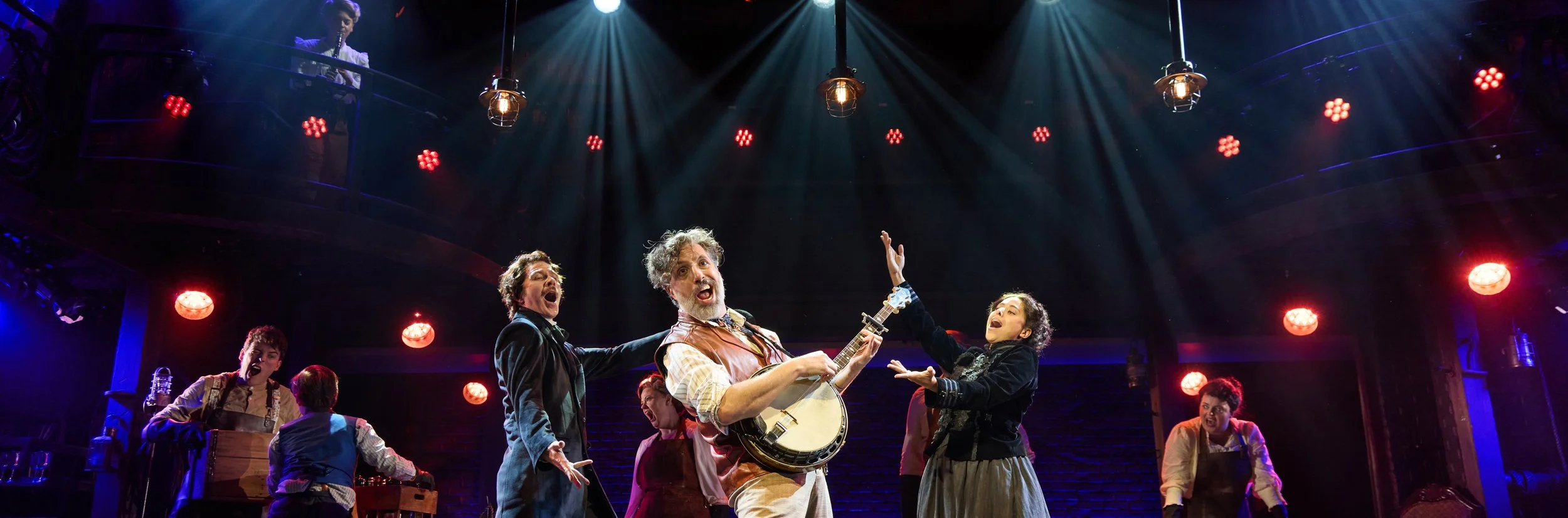
Cellphones, the new rock musical written and directed by Sesame Street veteran William Electric Black, claims that it is "the only show in town where they ask you to turn your cellphone ON!" Now strictly speaking, this is true. The performance opens with a jazzy number titled "Turn Your Cellphone On." However, this song was preceded by several emphatic announcements that the audience's cell phones should, in fact, be turned off. This contradiction exemplifies the internal struggle that forced Cellphones to waver between a merely pleasant show and a really engaging piece of theater. While the production's use of audience participation and its tongue-in-cheek approach to its topical content (the war in Iraq, the Internet, and pornography, to name but a few subjects) encouraged an unusual or even subversive theatrical experience, ultimately Cellphones was not willing to accept the risks that come with such boundary breaking.

The story is concerned with 11 strangers who show up at dawn to a new Department of Homeland Security recruiting booth opening in Central Park. They each want a job protecting our country, but for various unpatriotic reasons: a teenager is running away from home, another girl just wants to be famous, and someone else simply wants a gun. As they wait for the booth to open, the strangers "rock out" about current issues, both of the political and pop-culture variety. The songs are fun in a candy-coated way, and the music jumps adroitly between styles, from salsa to 50's to revival gospel.

The cast is wildly energetic and displays its vocal talents with great aplomb. Although some songs drag as a result of too much formulaic repetition, Black and his collaborators (Joel Diamond, music, and Matt Williams, choreography) should be commended for allowing the multifaceted cast

Click for print friendly PDF version of this blog post

Unlikely Pair

Pyretown tells the story of the romance between a divorced mother and a young man in a wheelchair. The play

Click for print friendly PDF version of this blog post

This Ace Is Wild!

They met at an open call in Las Vegas for the 80's Andrew Lloyd Webber musical Starlight Express. He was wearing a metallic cat suit and says that she was "a vision in gold lame." Twelve and a half years later, the duo has come straight from their stint as nightly performers at the Bonne Chance Lounge in the San Remo Hotel and Casino to New York to headline in A Touch of Vegas. Trent and Trudy Lee, the fictional creation of Kyle Barisich and Genna Ambateilos, are the stars of this Vegas-style parody playing at the Dominion Theater. Though the set is simple

Click for print friendly PDF version of this blog post

Que Syringe, Sera

You know you are in for a more unsettling type of comedy when the plot's kickoff is an AIDS-afflicted heroin addict jabbing a 7-year-old girl with a contaminated needle. Even more unsettling is that you find yourself laughing at this. But such is the infectious way of Jamie Linley's Dirty Works, Stiff Upper Lip's sophomore effort now playing at the Greenwich Street Theatre. In a kind of British answer to Trainspotting, Linley takes us to the heart of a London slum and a small crew of nobodies eking out their short lives through a haze of petty crime, promiscuity, and all manner of intoxicants

Click for print friendly PDF version of this blog post

Quintessential Shepard

"You know me

Click for print friendly PDF version of this blog post

Not So Magnificent

Legendary filmmaker Alfred Hitchcock once said about his craft, "Cinema is life with the dull bits cut out." Playwright Jonathan Calindas, author of The Magnificent Mr. Vincent, playing at the John Houseman Theatre Studio A, has created a play illustrating the flip side of that quote. Cuchipinoy Productions, a fresh, new theater company founded in 2002 by Rutgers graduates, has taken a great risk in producing a work that spotlights a dull character with a boring life. Their heart is in the right place, and there are real truths to be found within this jumble of random scenes, irrelevant characters, pointless monologues, and mind-numbing dialogue. You just have to look hard for it.

The main character, Vincent, is anything but magnificent. He is a Rutgers college student majoring in computer science, even though he later confesses that the thought of having a computer-related job is depressing. One day he writes a song, sings it at a college hangout, gets a standing ovation, and decides he wants to be a famous songwriter.

He does not change his major in college, does not pursue a musical career, and confesses that he's never really in the mood to write music. Yet he spends the next two years of his life obsessing over the need to write a second song as good as his first. When he graduates from college, he immediately gets a high-paying job working with computers, which, as he predicted, makes him suicidal with grief.

Here the play strikes its strongest chords of truth. Before the reality of a 9 to 5, windowless-office job sinks in, the bright-eyed college grad falls in love with his cubicle, office supplies, and company voice mail. He speaks in front of CEOs in conference rooms and is astounded to earn their respect. His best friend and former band drummer, Jack, also finds success as a businessman and gives a dead-on accurate monologue about the horrors of a New Jersey Transit commute. These are the moments where the story shines. Slowly, the college dreams of rock stardom fade away as cold reality replaces them.

But after this, the story loses its footing. Woven throughout the story is an excessive number of monologues that are wordy and unnecessary. Often they describe pivotal plot moments that should be seen in action. When Vincent matter-of-factly recounts these moments after they have happened, they do not feel important.

To make matters worse, the dialogue spoken between the characters is frustratingly bland. Vincent's conversations with friends sound like this: "How are you?" "Good. And you?" "Good." "Really?" "Yeah." "Good to hear." These slow-paced conversations, stuffed with pregnant pauses between the words, often last for an entire scene before dramatically fading to black, as if something extremely important has just been said.

The focus of this two-hour-and-20-minute play is solely on Vincent. Unfortunately, he spends his days sitting miserably in either a park or office and having idle chats with friends and co-workers. For this reason, he is not an interesting character to watch or listen to.

Even worse, he often admits to not being as passionate about making music as he is about receiving the fame and adoration that come with it. Because he is not a famous songwriter who is written about in Rolling Stone, he declares his musical pursuits worthless. His whiny, passive course of inaction cuts through the heart of this play's central conflict. If he doesn't care enough to even try for his dreams, what makes his story worth hearing?

However, this is not to say the actors and production staff did not do the best they could with the material. This troupe of young Rutgers alumni all majored in some form of theater arts and immediately started pursuing their dreams within their field upon graduation. That in itself is praiseworthy, and their effort to get this play off the ground is commendable. I hope for their success much more than I do for Mr. Vincent's.

Click for print friendly PDF version of this blog post

Choose Your Own Theater Adventure

Theater fans with a taste for the irreverent, or those merely suffering from a short attention span, may find the perfect elixir with Too Much Light Makes the Baby Go Blind, playing every weekend at the Belt Theatre. Baby, billed as the brainchild of Gregg Allen, is written, directed, and performed by the Neo-Futurists, a Chicago group represented here by a talented sextet of performers able to balance repertory and improvisatory demands on a weekly basis. They create 30 independent vignettes to be performed in the space of one hour, with the order set at the audience's discretion. There's nothing scientific or even artistic to the scene selection. The Neo-Futurists hand out a list of scenes, and audience members shout out the scene number based primarily on the titles in front of them. In 36 weeks, the cast has performed nearly 300 mini-plays.

Some scenes work better than others, which makes sense given that a number of them come and go on a weekly basis. "F****n' Hat," for example, is a surprisingly meaty scene, with Desiree Burch pontificating on negotiating love and sex. Most scenes are much lighter, however: "Small Furry Animals Present: 'Closer' " allows the cast to re-enact the current Mike Nichols movie using stuffed animals. "Deja Smurf," the scene the audience chose to follow it, had the Neo-Futurists replay the previous scene while two cast members applied blue face makeup. "Shot in the Dark" has Burch reading a name out of the phone book and questioning aloud whether that person is in the audience.

And then there are many scenes that involve no dialogue at all, presumably to ease the cast's memorization demands. "The Critique" featured Justin Tolley seated onstage wearing a pair of eye goggles while a tomato sat on a chair across the stage. Tolley waited and waited for an audience member to fling the tomato his way. Finally, someone did. This type of sketch makes for cutesy filler, but says very little. What, exactly, is the subject of the critique?

Another sketch, "Deconstruction of the 80s Family," has the cast replicating the opening credits of TV's Family Ties, with one family member at a time being removed from the picture. That's nice and nostalgic, but pretty facile material. Of course, at times Baby gets even more prurient than that; the evening also included references to male genitalia and even a flasher.

On the other hand, given its premise, there is no reason to take Baby too seriously. But one can't shake the feeling that the cast is trying way too hard to be edgy when they are far better at being tongue-in-cheek rather than hip. Sarah Levy, in particular, stands out. She is reminiscent of Six Feet Under's Lauren Ambrose (but as a brunette) and is equally mercurial. Regie Cabico demonstrates a wonderful degree of physical comedy, and while Michael Cyril Creighton and Molly Flynn lacked similar scenes in which to show off, they complemented the ensemble nicely.

It is unfair to form much of an opinion based on a single night's viewing of Baby, as its experimental nature will always make it seem like a work-in-progress. And while the Neo-Futurists provide an evening that is more diverting than truly memorable, they definitely should be given a chance to continue. The Belt Theatre becomes a restaurant in several weeks, leaving the show in need of a new home. I certainly hope that it finds one, as it would be unfair to let this light go out.

Click for print friendly PDF version of this blog post

Enjoy the Silence

I don't care how cold it is outside. You need to get onto a train and travel to Williamsburg, Brooklyn (otherwise known as the Fourth Dimension), and go see Bizarre Science Fantasy, which is playing at the Brick Theater until Feb. 5. Yes, I know the city is covered in a blanket of unforgiving snow and you can see icicles forming in your breath with every exhale. Those excuses for not leaving the house and seeing this wonderful piece of theater are not good enough. Inside the cozy, brick-lined black-box walls you will be offered a bottle of beer or a glass of whiskey before being whisked away to a place where your darkest nightmares become real.

Under the direction (and

Click for print friendly PDF version of this blog post