
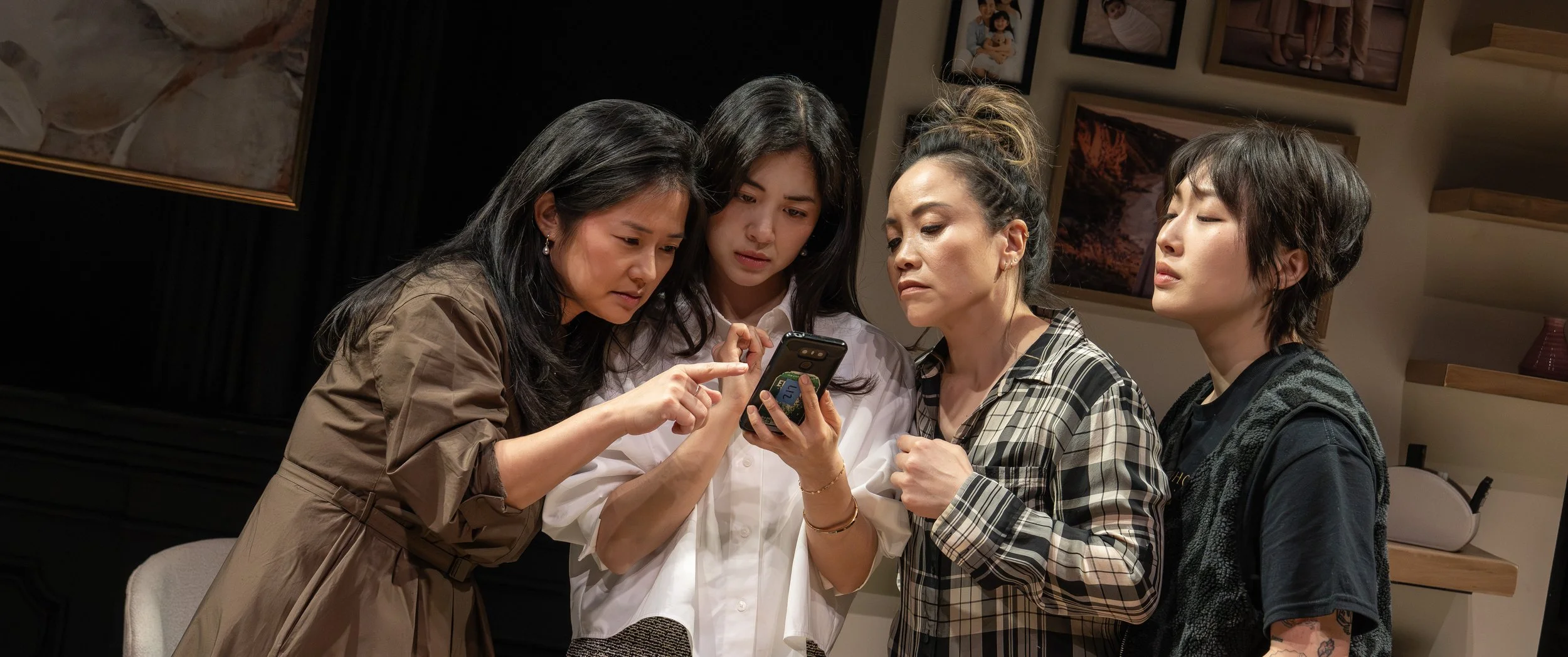
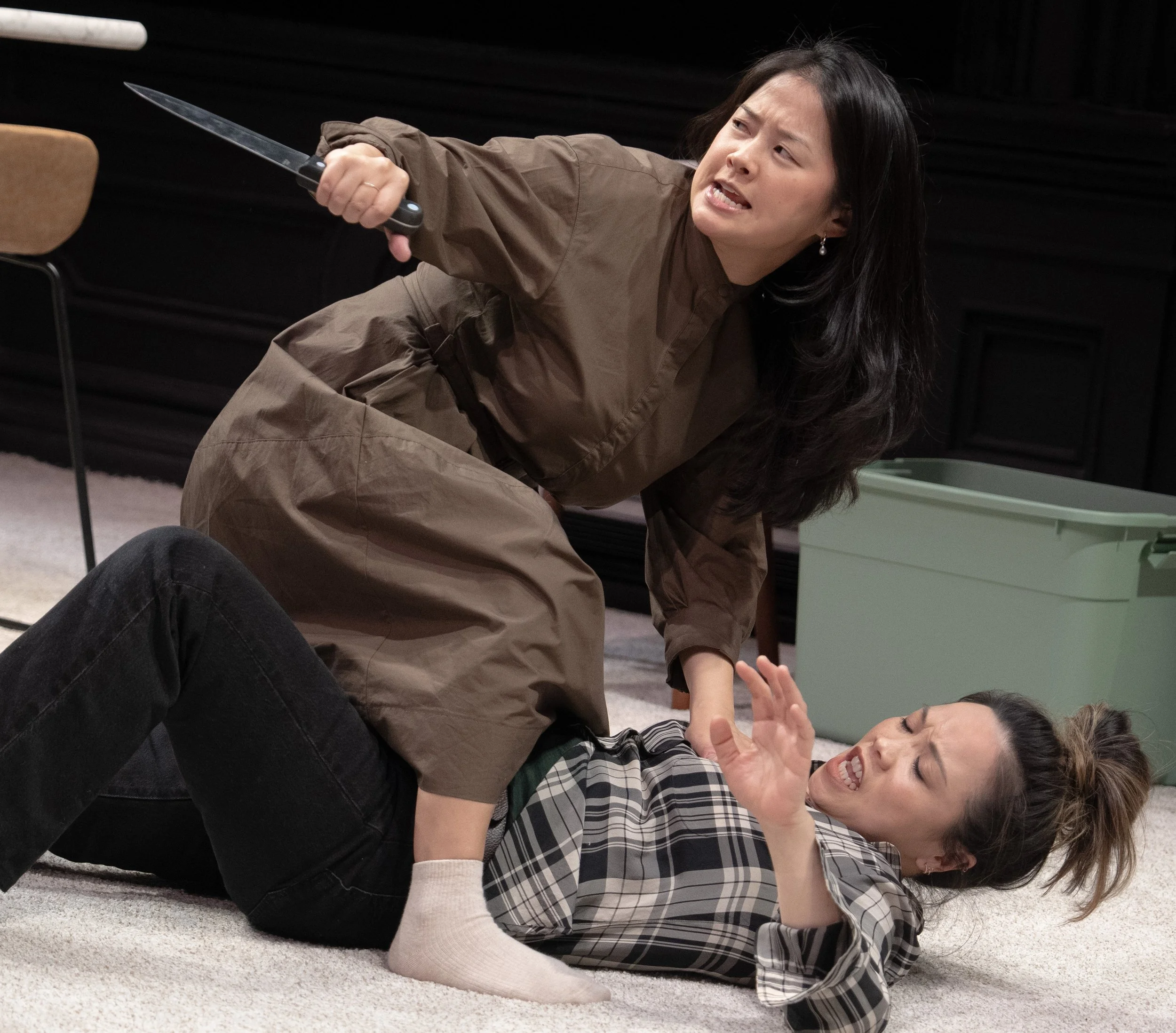
Grace (Shannon Tyo, top) fights with big sis Tina (Tina Chilip) in Jesa, a Ma-Yi Theater Company production with the Public Theater.
Jeena Yi’s Jesa is both familiar and fresh. The play revolves around a family reunion where secrets, resentments and accusations are aired—that classic motif in American drama. But Yi combines it with something rarely seen on U.S. stages: an immersion in Korean cultural traditions.
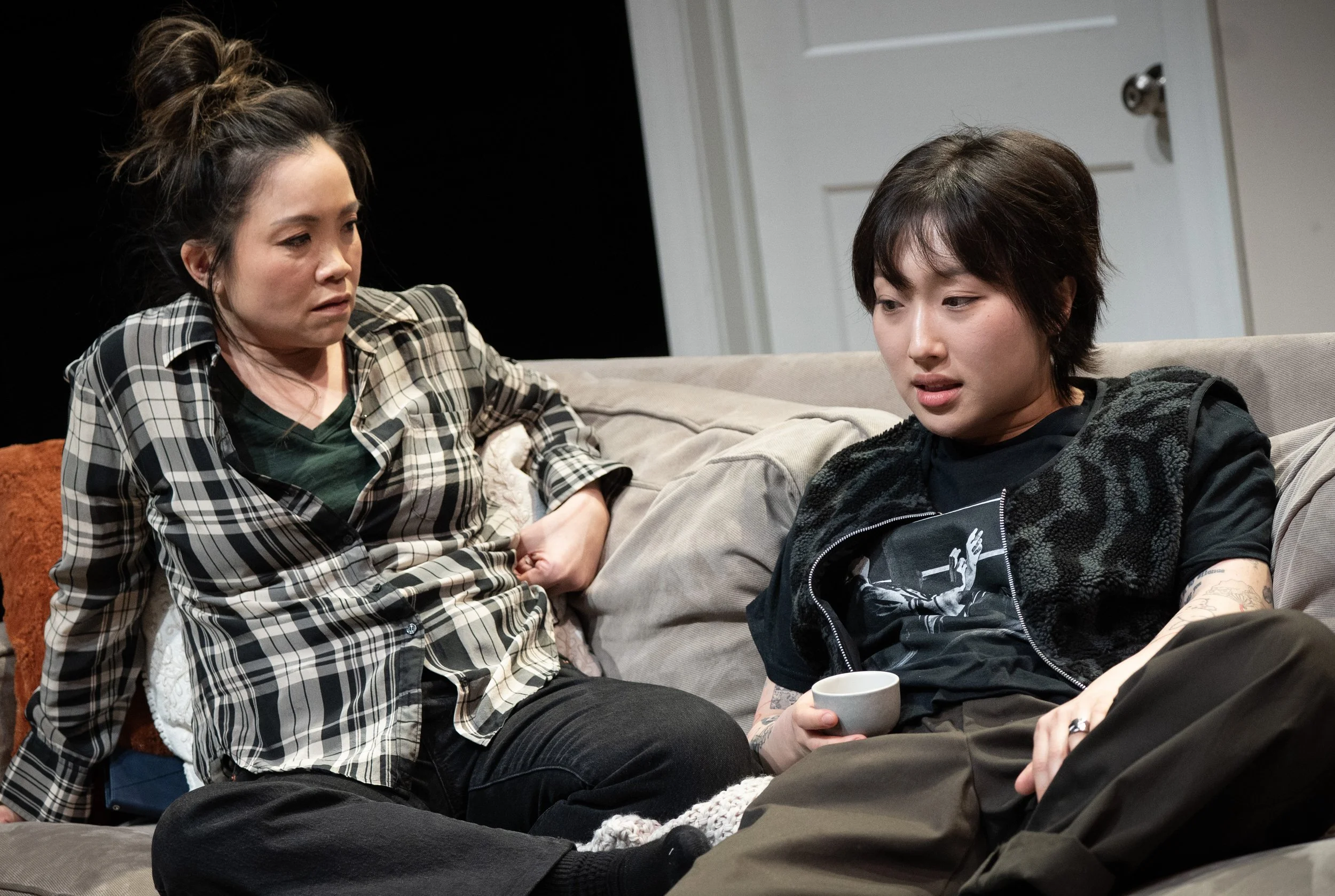
Brenda (Christine Heesun Hwang, right) confides in Tina (Chilip, left) about her professional misgivings.
The show’s title refers to a Korean ceremony honoring a late ancestor. A jesa is usually held on the anniversary of the person’s death, starting at midnight. A table is laid with an assortment of foods, including the deceased’s favorite dishes. Soju is ritualistically poured, incense and candles are burned, participants kneel on a mat and repeatedly bow at the shrine.
All of this happens in Jesa, as four sisters gather on the first anniversary of their mother’s death. Grace (Shannon Tyo), the second-oldest sibling, who’s hosting the jesa, has decided it will also serve as that year’s jesa for their father, who passed away five years ago. “Their jesas are only like a month apart, it’s easier this way,” says Grace, who’s misled her sisters about which parent they’re honoring, depending on which parent the sister favored.
“The family’s legacy of violence surfaces.”
Those mother/father battle lines account for one division among the sisters. Others stem from their differing personalities, financial standings and roles within the family (Grace, for example, is the “perfect” one). And they all come into play during Jesa, which is to say during the jesa.
Director Mei Ann Teo has cast the play well; actors Tyo, Laura Sohn, Tina Chilip and Christine Heesun Hwang each fits her role ideally in appearance and demeanor. Their sibling bond, including the frayed parts of it, feels authentic, and their performances do a lot to carry the show.
It’s also interesting—invigorating, too—just to watch four Asian American actresses enact a family drama, after all those similarly structured dramas about white families, often dominated by male characters. The tensions and secrets within Jesa’s family may not be original, but in her first effort as a playwright Yi shows promise at creating sharply drawn characters and putting them in a naturalistic yet entertaining story. (As an actress, Yi will be on Broadway this spring in The Balusters.)
Jesa takes place at Grace’s immaculate, modern home in Orange County, California—“a boring, boxy house that looks like every other house in this sterile fucking neighborhood,” according to her older sister, Tina (Chilip). Set designer You-Shin Chen has captured the “great room” style and all its conveniences, like a remote-controlled electric fireplace, that seem ubiquitous in upscale communities these days.
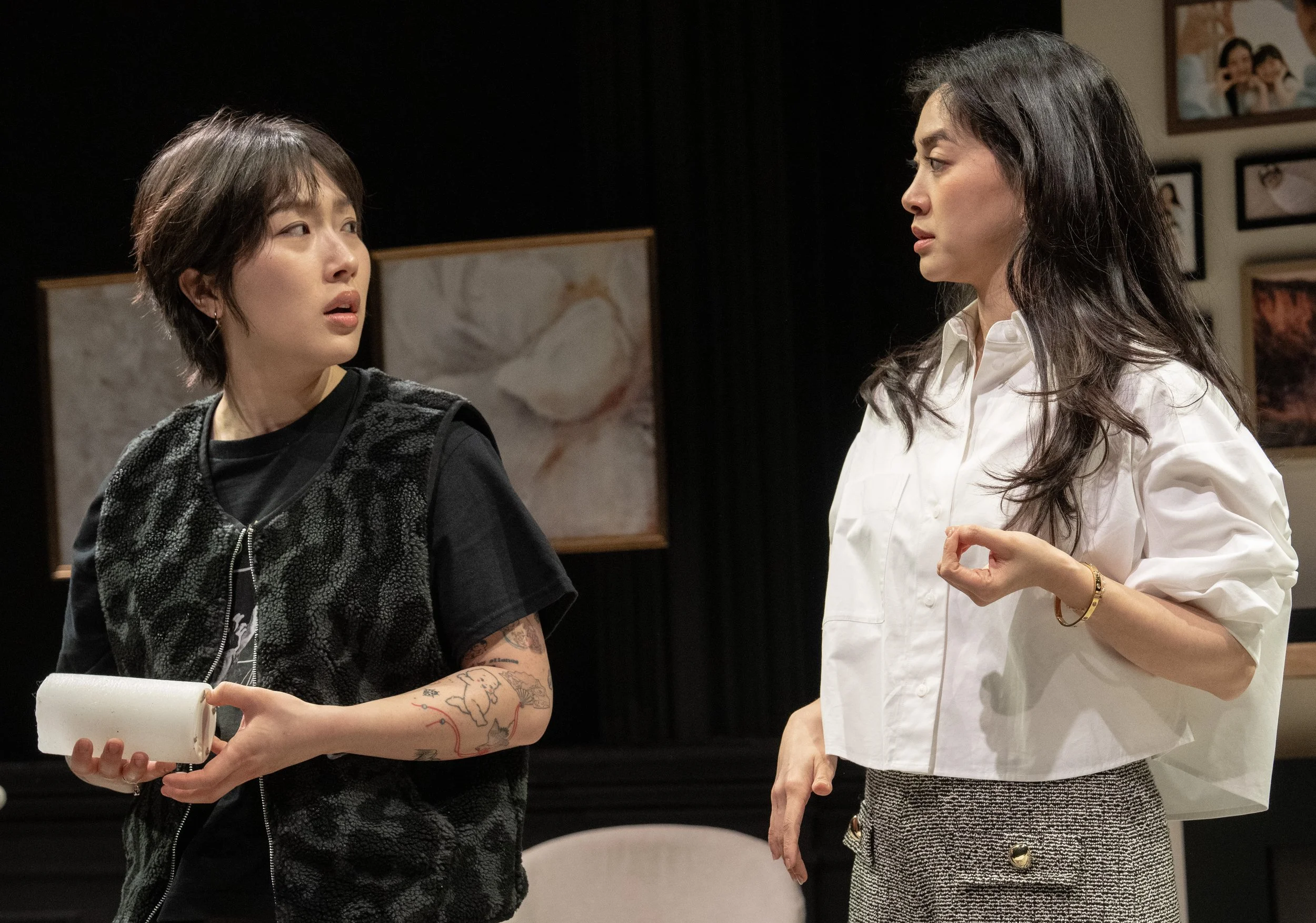
Brenda (Hwang) and Liz (Laura Sohn, right) are the two youngest sisters in Jesa’s family. Photographs by Joan Marcus.
Tina wastes almost no time after her arrival—loaded down with bottles of liquor and exclaiming, “Who’s ready for jesa, bitches?!”—needling Grace about her husband’s whereabouts (he’s supposedly on a business trip). She also goes after youngest sister Liz (Sohn), the most prosperous and prettiest of the siblings, calling her “Miss Moneybags.” Long regarded as a screwup, Tina is on best terms with sister Brenda (Hwang), the other rebel in the family, whereas Liz closes ranks with Grace.
Brenda, a theater director living in New York City, has a goth fashion sense and arms full of tattoos. To their father, she was “the son he never had,” says Grace, who has only negative memories of their father (appa in Korean). Brenda and Tina, on the other hand, feel that way about umma, or mom. “Umma had all the power,” insists Brenda, to which Grace counters, “No, Appa did. He had final say on everything.” Brenda: “You want me to acknowledge Appa’s faults? Fine, I will. He had a temper and was a mean drunk. … Yes, Umma sang us songs and worked her ass off to keep a roof over our heads. But she was also a cold, hateful and deeply unfair woman.”
At least one of the sisters inherited Appa’s alcoholism, and the family’s legacy of violence surfaces as the women engage in multiple physical fights, sometimes with kitchen knife in hand. Also showing up during the evening are the parents themselves, in ghostly form. The first haunting, when a door opens and a cassette tape starts playing on their own, makes a startling impact, due to good effects by sound designer Hao Bai and lighting designer Jeanette Oi-Suk Yew. But another supernatural episode late in the play feels too much like it’s serving an expository purpose.
Jesa isn’t entirely successful, either, with the shock value of revelations about Tina, Grace and Liz, as they’re somewhat formulaic. Still, Yi’s lessons in Korean culture, her vivid characters, and the cast’s chemistry make it an enjoyable production.
Jesa runs through April 12 at the Public Theater (425 Lafayette St.). Performances are at 7:30 p.m. Tuesday through Sunday, with matinees at 1:30 p.m. Saturday and Sunday. For tickets and more information, visit publictheater.org.
Playwright: Jeena Yi
Director: Mei Ann Teo
Sets: You-Shin Chen
Costumes: Mel Ng
Lighting: Jeanette Oi-Suk Yew
Sound: Hao Bai
