
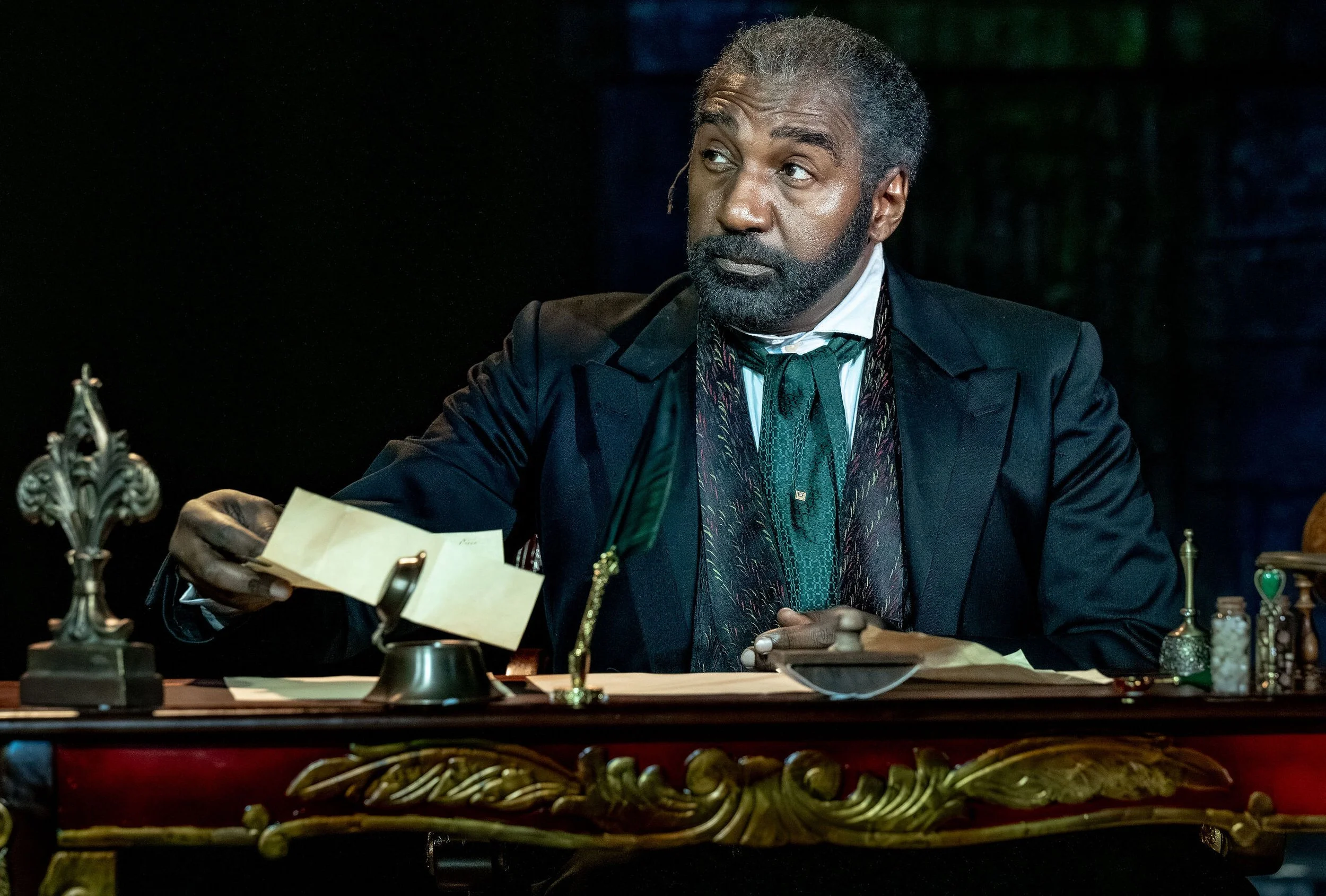
Norm Lewis plays Villefort, a deputy prosecutor torn between his familial devotion and personal morality.
Boasting a top-notch cast and a bona fide writing team, Monte Cristo, the York Theatre’s new musical, appears to be a guaranteed hit. Based on Alexandre Dumas’s classic novel The Count of Monte Cristo and Charles Fechter's play of the same name from 1848, the work seems a natural choice for musicalization. Its depictions of romantic heroism, retribution, and redemption are the core elements of other French masterpieces turned musicals, such as Les Misérables and The Phantom of the Opera. Yet, for all its pedigree, Monte Cristo is a major disappointment. It lacks the sweeping grandeur, the bombast, and the unapologetic sentimentality that have transformed its predecessors into long-running, billion-dollar enterprises.
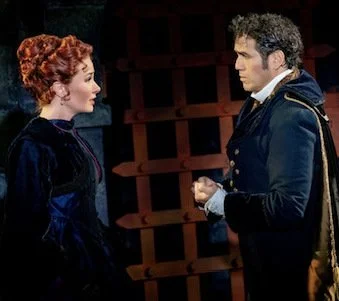
Mercedes (Sierra Boggess) appeals to her former lover Edmund Dantès (Adam Jacobs), who has become the formidable Count of Monte Cristo. Photographs by Shawn Salley.
With book and lyrics by Peter Kellogg and Stephen Weiner and direction by Peter Flynn, the musical breezes through the seminal events of Dumas’s sprawling original. In this adaptation, the show is presented mostly in flashback. Edmund Dantès (Adam Jacobs) is the first mate on a French merchant ship, and, adhering to the dying wishes of his captain, he delivers a package to the exiled Napoleon Bonaparte in Elba. His professional rival, Danglars (James Judy), and romantic rival, Fernand (Daniel Yearwood), seize upon this act to frame him for treason.
On the day he is to wed his beloved Mercedes (Sierra Boggess), Dantès is arrested and sentenced to prison by the prosecutor Villefort (Norm Lewis). As the son of a covert Bonapartist, Villefort is driven by a desperate need to bury his own family’s secrets. He justifies the cruel sentencing of the innocent sailor:
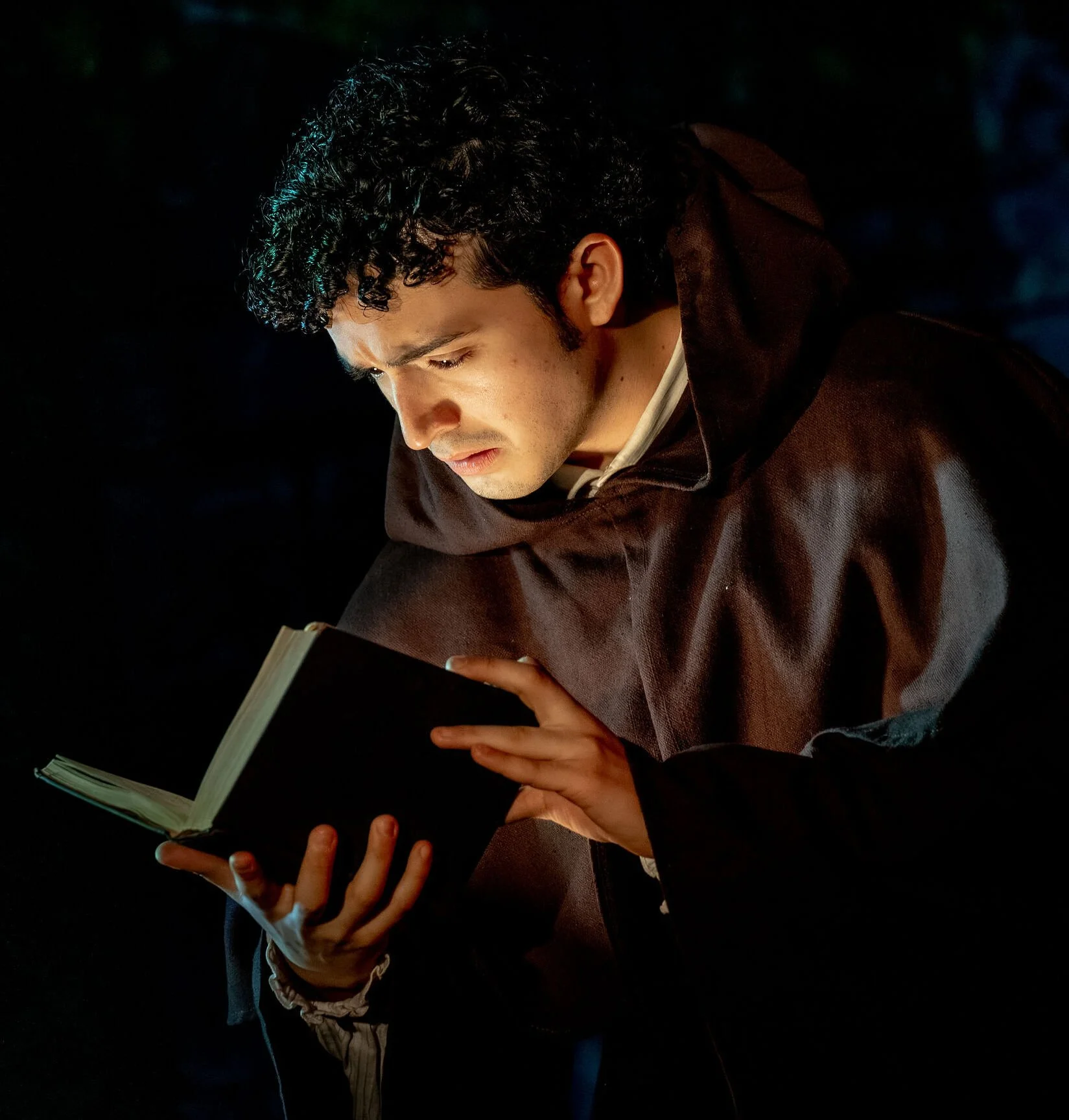
Jadon Lopez plays Albert, Mercedes’s son, and here is pictured as a younger version of the Abbé Faria, who has a vast fortune in Monte Cristo.
And what other choice do I have?
Should I act beyond all reason?
Let a boy go free I don’t even know
While my father hangs for treason?
Fernand marries Mercedes, and after amassing a fortune, the couple relocates to Paris with their son Albert (Jadon Lopez). Meanwhile, Dantès languishes in prison, where he is schooled in languages, fencing, and tactical planning by a scholarly fellow prisoner, Abbé Faria (Danny Rutigliano). The Abbé, who possesses the secret to a vast fortune hidden on the island of Monte Cristo, eventually provides Edmund with both the map to wealth and a means of escape. Reborn as the Count, Edmund begins methodical pursuit of his oppressors, only to discover that his thirst for vengeance is no match for his enduring love for Mercedes.
In addition to changing key aspects of the novel and providing an exceedingly pat and unconvincing ending, the musical fails to establish the necessary political intrigue. At the outset, the chorus sings of “dangerous times,” noting that “The country is divided / Into those we label us and them.” Unfortunately, the sides are never clearly drawn, leaving the stakes of Dantès’s plight frustratingly vague. Furthermore, his relationship with Mercedes is so hastily sketched that it becomes difficult to sympathize with his long-simmering romantic anguish. Condensing Dumas’s magnum opus into a two-hour show results in the musical equivalent of Cliffs Notes.
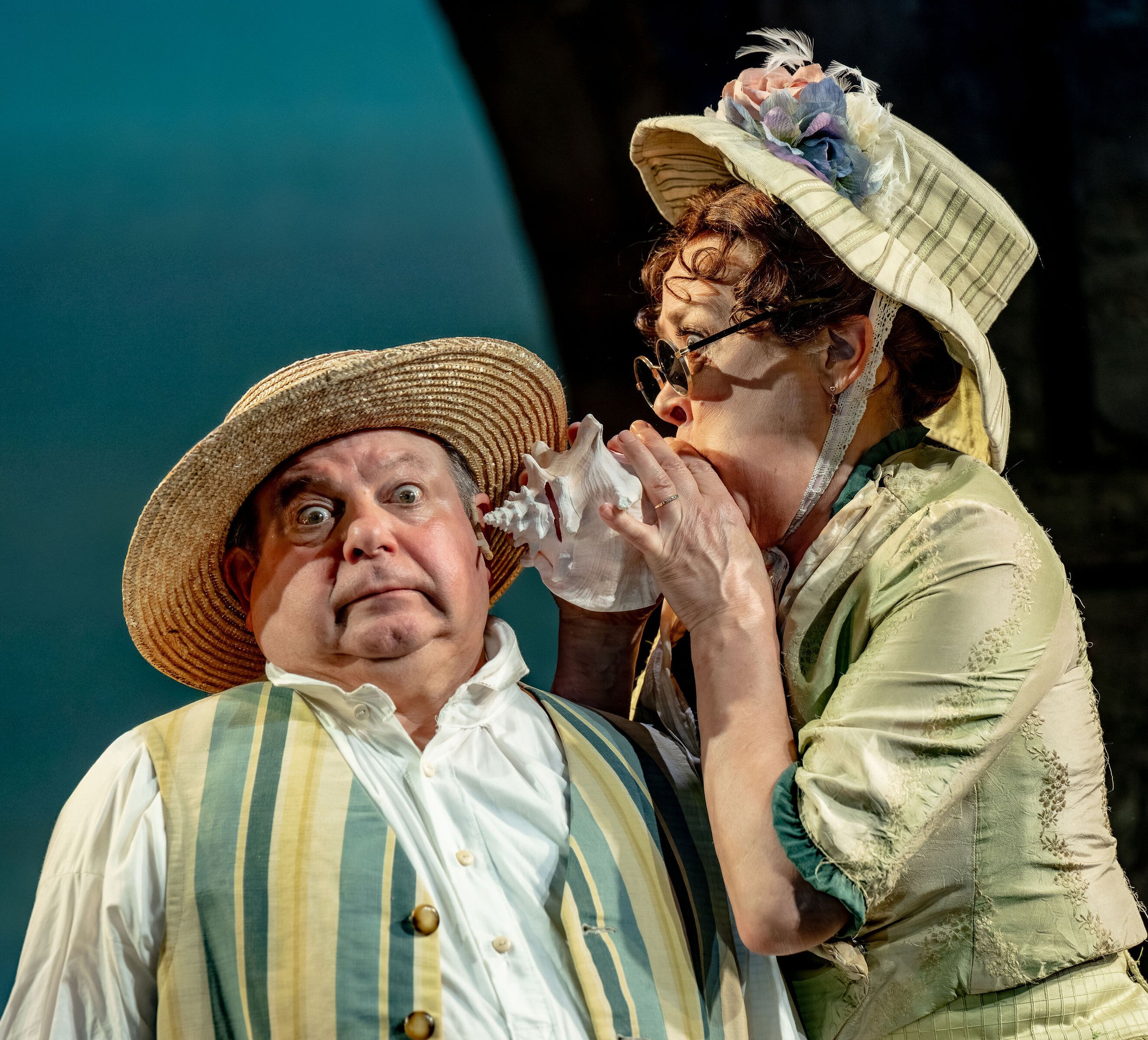
Danny Rutigliano is Caderousse, a friend of the Count of Monte Cristo, and Karen Ziemba is his practical and hen-pecking wife, Carconte.
Weiner and Kellogg’s score and lyrics are serviceable but not especially memorable. (Musical director David Hancock Turner has done admirable work with the orchestrations and vocal arrangements.) Songs like “Is Anyone There?,” “This Stupid Heart of Mine,” and “How Did I Get So Far Away?” lean into a generic pop idiom that lacks the urgency these melodramatic circumstances command.
That said, the material is beautifully served by a stellar cast. Jacobs retains the boyishness he brought to the title role of Aladdin in the first act, then persuasively evolves into a ruthless and calculating Count in the second. Boggess and Lewis—who were once an exquisite Christine and Phantom—do not have a chance to duet here, but both are in marvelous voice. (For the record, Lewis is criminally underused.) As the comic relief, Rutigliano (who plays a devoted friend to Dantès in addition to the Abbé) and Karen Ziemba, as his shrewish wife, are delightful.
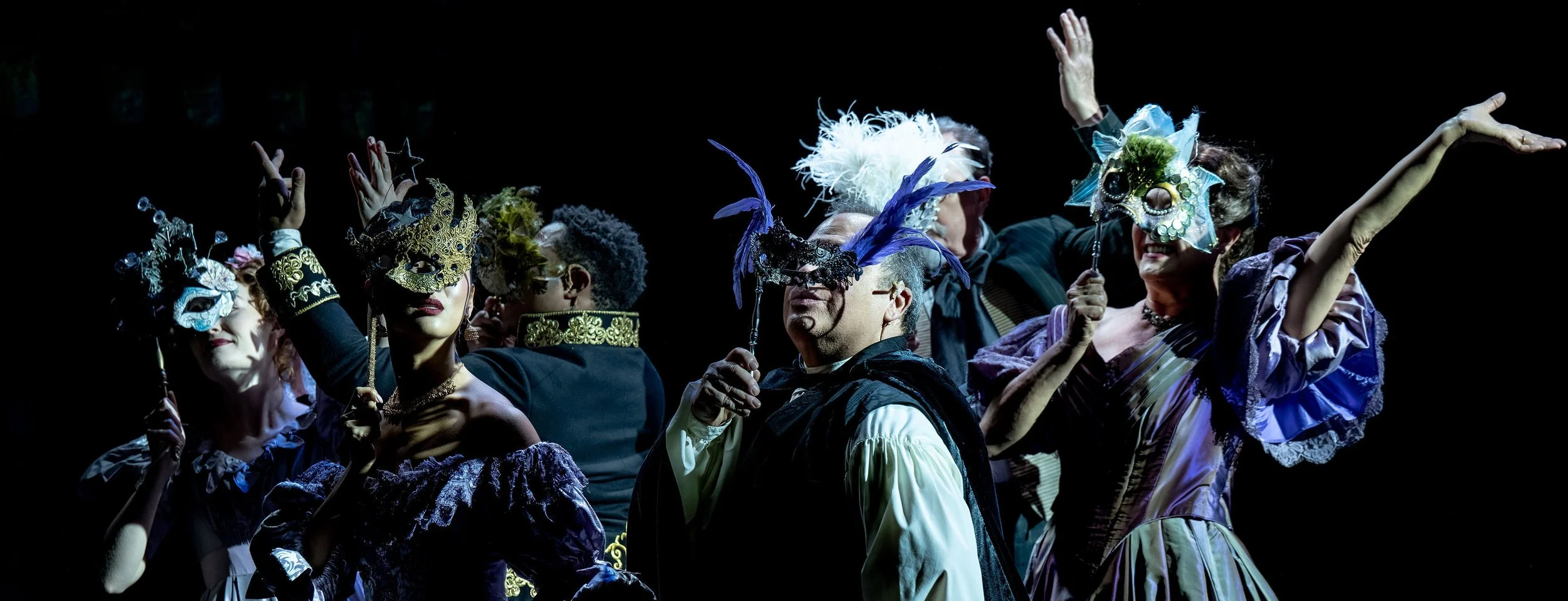
The design team cleverly uses 21st-century technology to capture 19th-century theatrical conventions. Complementing Anne Mundell’s platformed scenic design and Alan C. Edwards’s moody lighting, Shawn Duan’s striking projections potently evoke violent seas, grim jail cells, and sunny Mediterranean climes. Siena Zoë Allen and Amanda Roberge’s costumes clearly signal the changing fortunes of the characters, while Joanna Lynne Staub’s sound design is notable for creating a chilling prison echo effect.
While the design elements and this formidable company successfully channel the sweeping spirit of the 1844 novel, Monte Cristo’s truncated book and perfunctory score ultimately fail to match their effectiveness.
Monte Cristo runs through April 5 at the Theatre at St. Jean’s (150 East 76th St.). Evening performances are at 7:30 p.m. Tuesday through Saturday; matinees are 2:30 p.m. on Saturdays and Sundays. For tickets and more information, visit yorktheatre.org.
Book & Lyrics: Peter Kellogg
Music: Stephen Weiner
Director: Peter Flynn
Choreography: Marcos Santana
Scenic Design: Anne Mundell
Costume Design: Siena Zoë Allen & Amanda Roberge
Lighting Design: Alan C. Edwards
Sound Design: Joanna Lynne Staub
Projection Design: Shawn Duan
