
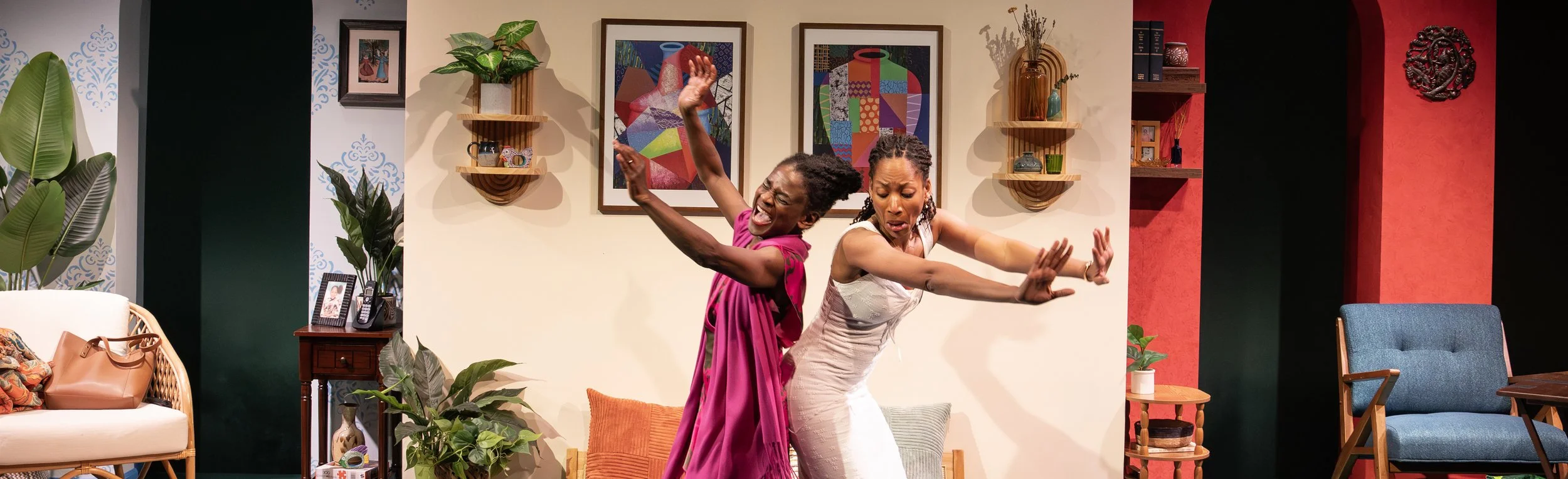
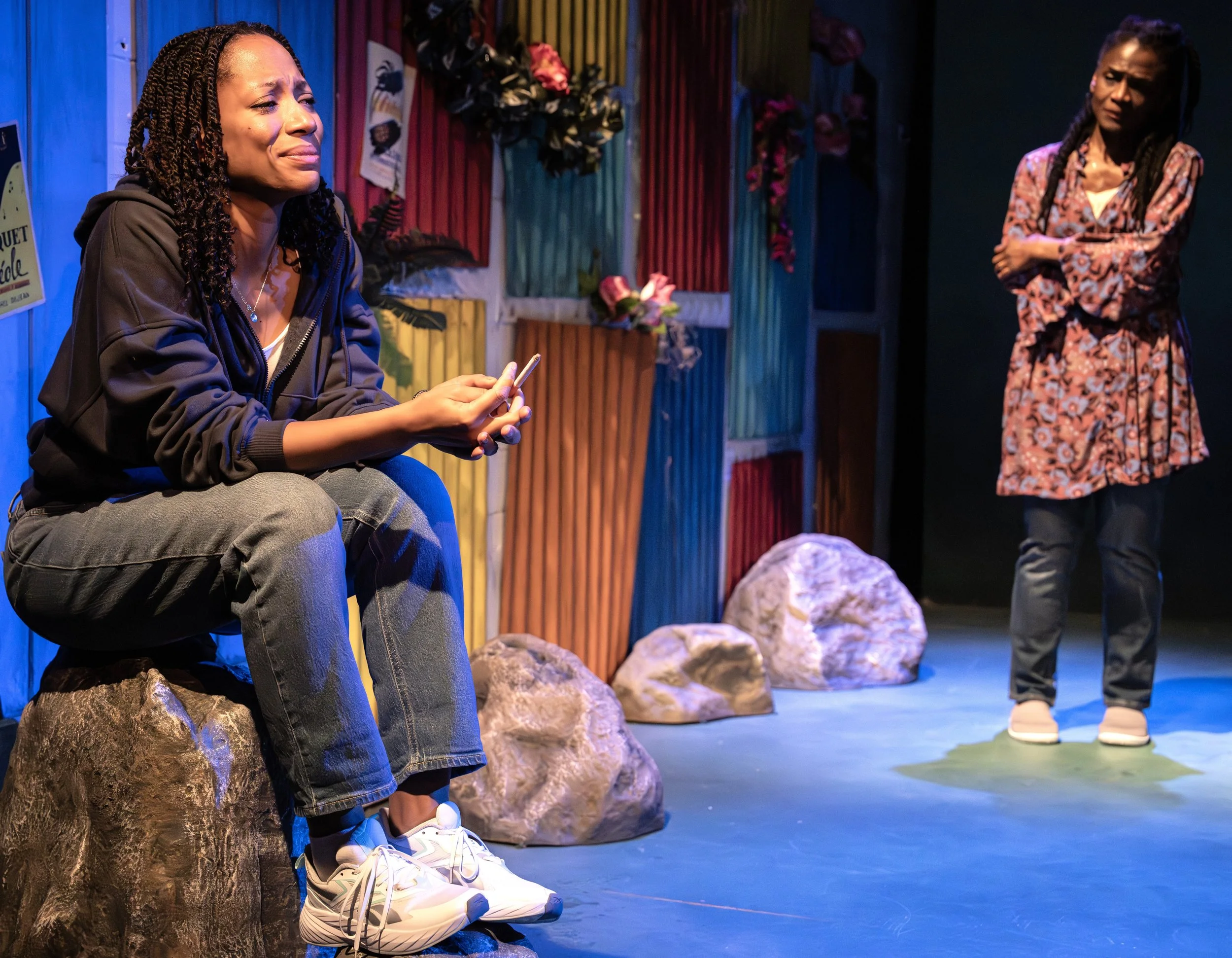
Natalie Paul (left) is Bean, the American-born daughter of Haitian immigrant Emi (Patrice Johnson Chevannes, right), in Phanésia Pharel’s The Waterfall.
The same week Haiti was represented in Winter Olympics competition for only the second time in history, WP Theater made its contribution to Haitian pride with the world premiere of The Waterfall, a Haitian American family drama written by Phanésia Pharel, the daughter of Haitian immigrants.
The first words spoken in the play—which is coproduced by the Connecticut-based company Thrown Stone—are in Creole. Later, the Haitian-born character Emi, who’s been living in central Florida for decades, says: “Nothing was like Haiti. No fruit as sweet. No water as warm. No mountains as lush. … Beautiful is too small a word for Haiti.”
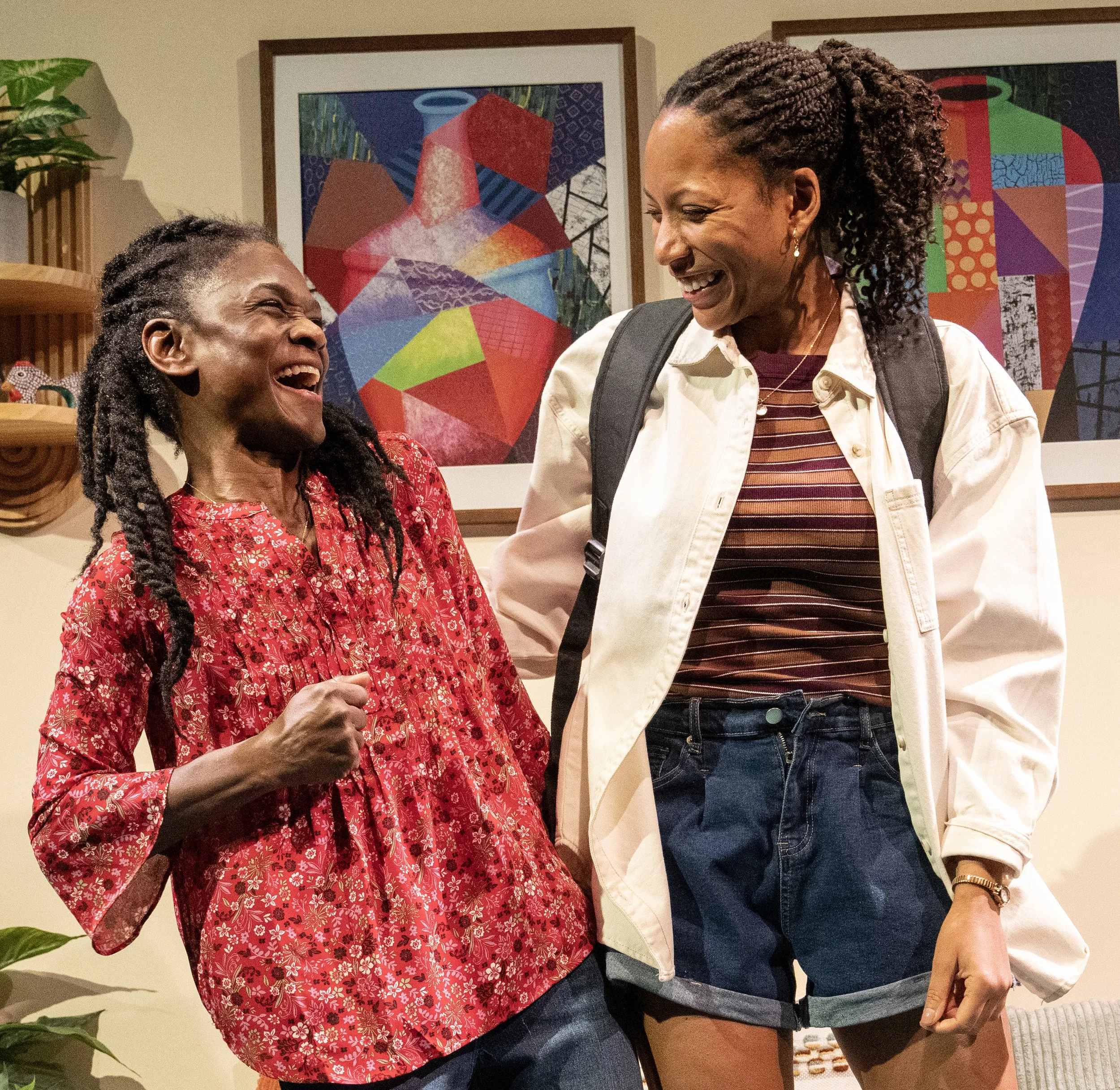
“My dream of America was not a house,” says Emi (left, with Paul). “It was someone that is the opposite of what the world expects when they think of me: my brilliant daughter, Black as me.”
Haitian artwork and metal sculpture hang on the walls in Emi’s home, the main setting of The Waterfall. The sides of the stage evoke Haiti itself, with wooden fencing, like one might see outside houses on the island, painted in vibrant colors and adorned with hibiscus, hand fans, French signage and other cultural signifiers.
The Waterfall opens with Emi—a feisty widow in her 60s, memorably portrayed by Patrice Johnson Chevannes—hospitalized after fainting. Her daughter, Bean (Natalie Paul), who lives in Miami, arrives to take Emi home. Dressed in a stylish pantsuit, continually checking her phone for messages from the law firm where she’s about to make partner, Bean looks put-together and self-assured. In reality, she’s questioning almost everything about her life: her future with longtime boyfriend Richard, her enthusiasm for her career, and her inclination, since childhood, to always be the “goody goody,” as her mother wanted.
In Haitian terms, Bean has lost her bon n’ange—literally, good angel, though Emi explains what it really means: “You aren’t in your body.” Bean stays at her mom’s to look after Emi’s health, but she ends up using her time there trying to fix her own problems and considering what has brought her to this point of uncertainty and discontent.
While The Waterfall thrives on its portrayal of the mother-daughter dynamic—Chevannes and Paul have a strong rapport—some of its plot points feel driven more by narrative convenience than believable character behavior, such as the drastic measure Bean takes because she doesn’t want children (she has alternatives) or Emi’s late revelation about her sister’s murder (which she probably would have already told Bean about, given their closeness and Emi’s frequent references to Haiti’s gang violence).
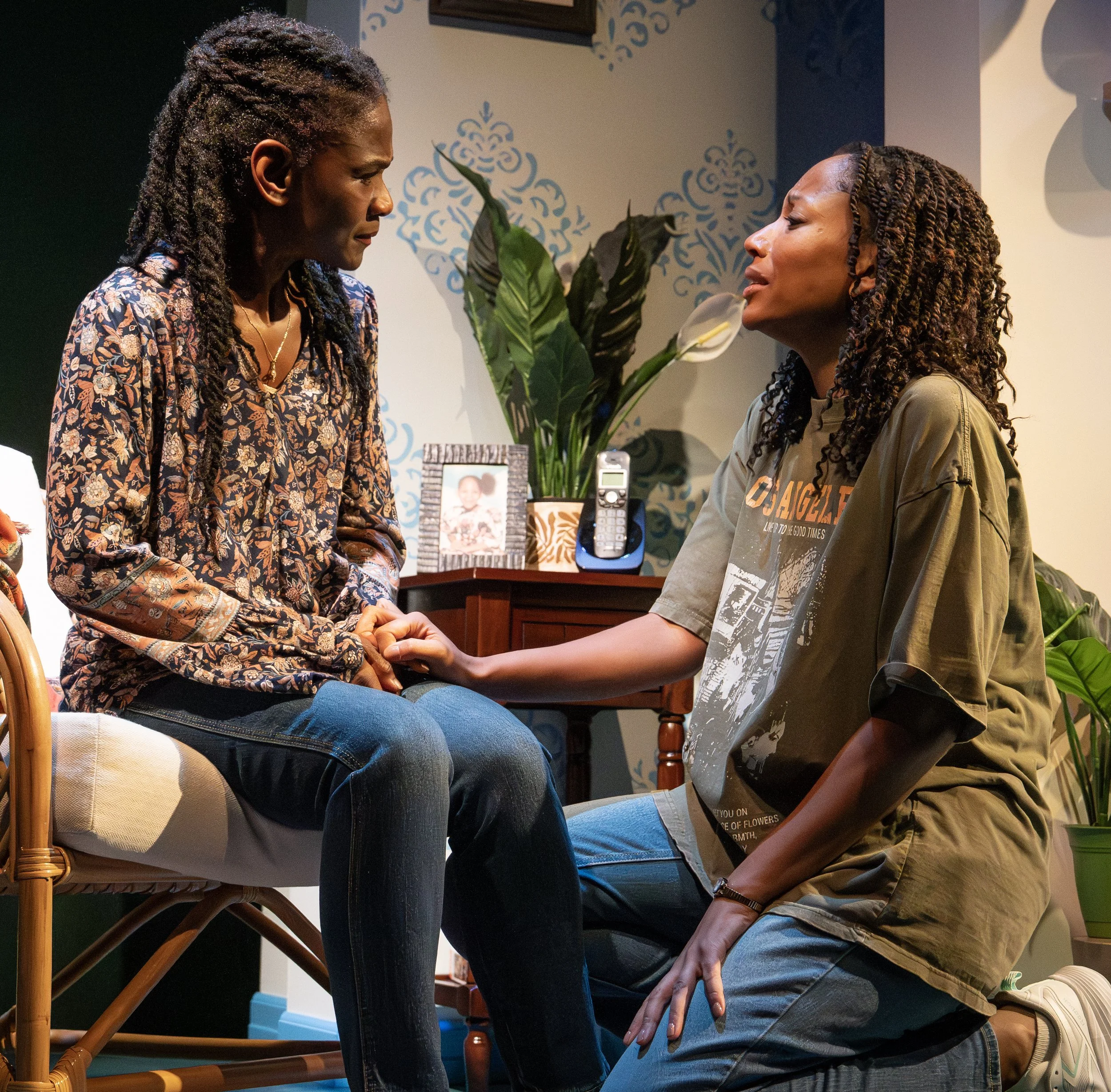
Bean (right) tries to reach an understanding with her manman (Chevannes). Photographs by Joan Marcus.
The script also lacks clarity on certain aspects of the characters’ experiences and personalities. This may be most noticeable when Bean tries to explain her dissatisfaction: “I don’t know how to make it make sense. It barely makes sense to me,” she says. “I feel empty. I feel like I put all my blood, sweat and tears to have no … I don’t know my purpose.”
Details are foggy, as well, regarding Bean’s late father. Emi has only happy memories of her husband, while Bean makes multiple negative remarks about him—“He didn’t know how to talk to me,” “Everything was about what he wants.” The playwright never reconciles this conflict, and Bean’s issues with her dad are mentioned offhandedly, not like they were formative influences on her life.
There’s also a diffuseness to the script that makes individual scenes, or portions of them, seem episodic rather than integral to the overall story. During an extended flashback to Bean’s childhood, Emi tells her 11-year-old daughter about the waterfall near her Haitian hometown where used to seek solace, and teaches her to conjure the waterfall in her mind when she has doubts and needs to envision her future. Throughout the play, Emi speaks of the imaginary waterfall as if it were something Bean relied on growing up and then, as an adult, making decisions about her life. Yet she eventually tells her mother, “It’s not real for me. … I never saw anything.”
As a result of the script’s lapses in focus and consistency, The Waterfall doesn’t hit with the emotional impact it could. There are just too many gaps in what the audience is told and shown about these two women and the defining aspects of their lives to fully appreciate—and be moved by—their journeys. The actors certainly do their part, as they approach their roles with sincerity and affection. Chevannes is a real hoot in Emi’s puckish and outspoken moments but also delivers on tenderness when the occasion arises.
Bean eventually decides to travel to Haiti, which proves to be her path toward self-discovery and toward resolution of her differences with her mother. And Haiti—as represented in the production’s set design, the script’s occasional Creole dialogue, and the characters’ heritage and memories—also proves to be the play’s most distinctive element.
The Waterfall runs through March 8 at WP Theater (2162 Broadway). Performances are at 7 p.m. Tuesday through Saturday and 2 p.m. Saturday and Sunday. For tickets and more information, visit wptheater.org.
Playwright: Phanésia Pharel
Director: Taylor Reynolds
Sets: Teresa L. Williams
Costumes: Dina El-Aziz
Lighting: Venus Gulbranson
Sound: Kaileykielle Hoga & DJ Potts
