
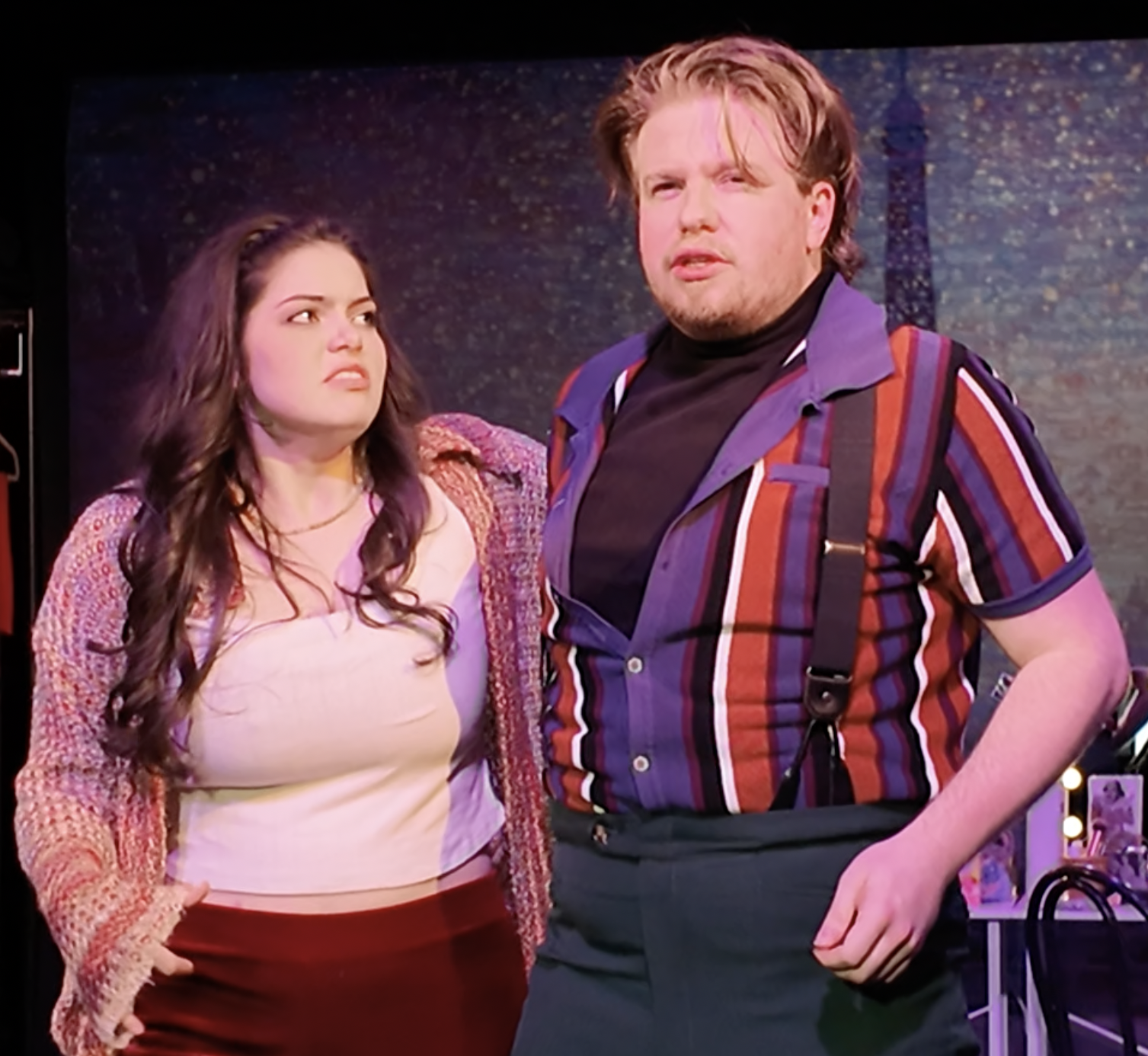
Madelyn Whitehead and Tyler Gallaher share a scene with an unexpected outcome.
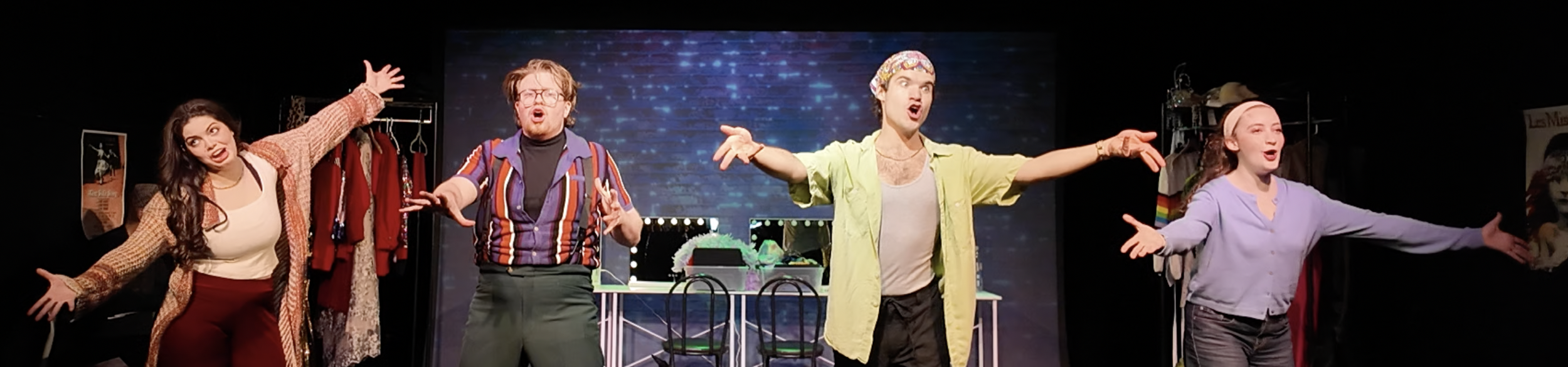
In I Wish My Life Were Like a Musical, written by Alexander S. Bermange and directed by Eamon Foley, four talented performers share their love of musicals—even though their show has just closed unexpectedly. The plucky quartet spends the ensuing 75 minutes delightfully recounting their personal reasons for loving theater while spoofing some of the most popular musicals of all time. Their commitment to the genre is infectious. And even though their love is temporarily unrequited, they wave the banner of devotion like Jean Valjean from Les Misérables, one of the many shows parodied.
The cast quickly shakes off their disappointment and sudden unemployment by resolving to make the best of their newfound free time. Their stories unfold through a libretto featuring 16 songs, delivered with Bermange’s piano accompaniment.
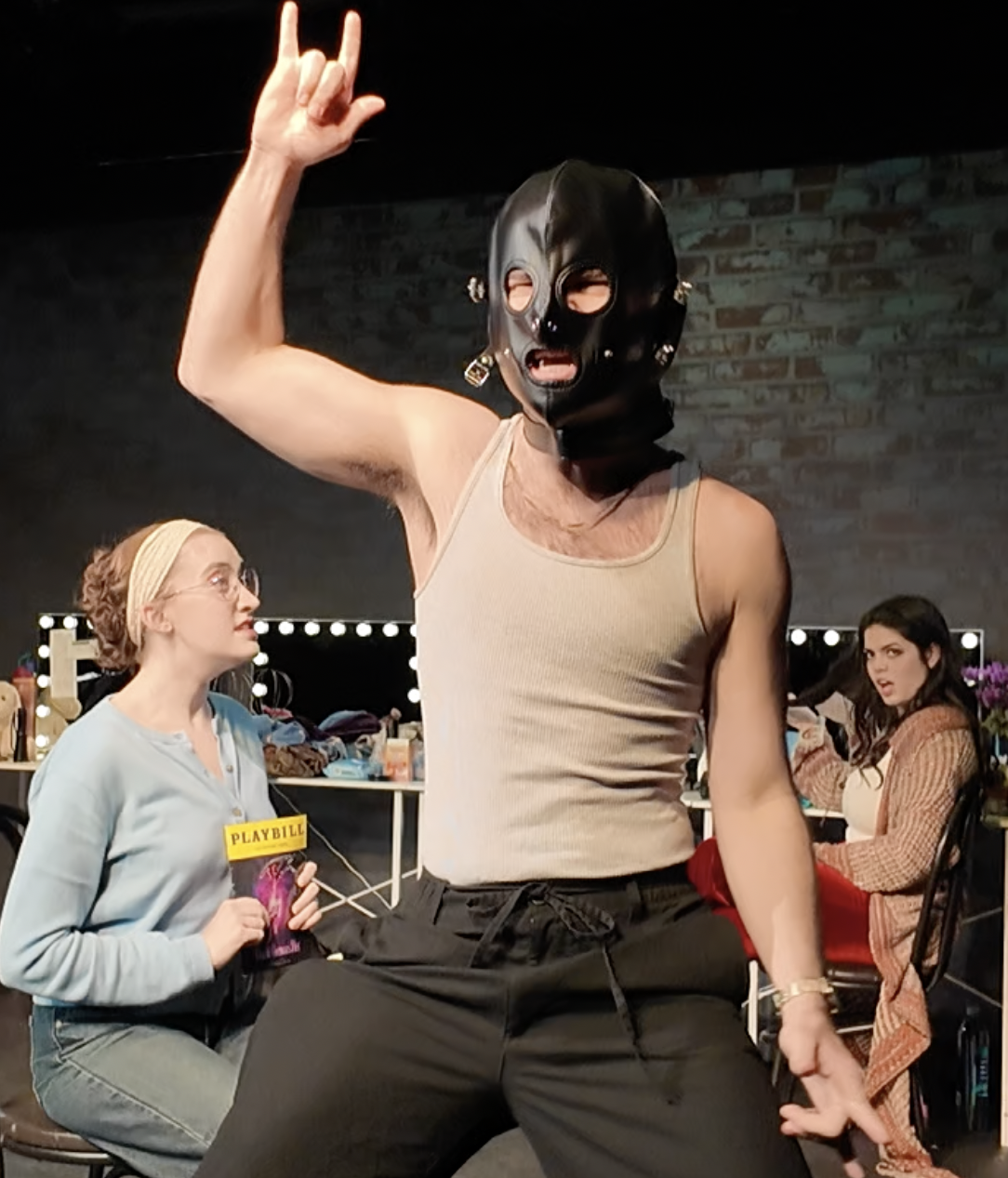
As Man No. 2, Sam Brackley (center) shows commitment while Elizabeth Mandell (left) and Madelyn Whitehead consider his choices. Photographs courtesy of SoHo Playhouse.
No deep knowledge of musicals is required of the audience because Bermange has smartl selected well-known shows to parody. The set design features posters of the spoofed productions, leaving no doubt about the sources. All the action takes place in the dressing room of the recently closed show. The design mirrors a “Let’s put on a show” spirit. For instance, two costume racks are pulled together to allow a character to make a somewhat grand entrance as if he is parting the curtains.
Each performer takes a star turn sharing personal stories, tracing a journey from recent drama school graduates to actually becoming part of a show. Interspersed throughout are parodies of popular musicals such as Les Misérables, Hamilton, Wicked, and productions featuring dancers wearing bowler hats, a signature style of director-choreographer Bob Fosse in Chicago, All That Jazz and Cabaret.
Woman No. 1 (Elizabeth Mandell) recounts the grinding, dehumanizing parade of open calls, remaining confident and hopeful for just one chance. She captures the faux camaraderie shared among aspiring actors while questioning why she continues to put herself through such trials. Despite her frustration and disappointment, she soldiers on, hoping for her big break. In a Wicked parody, Mandell absolutely nails the final note of “Defying Gravity.”
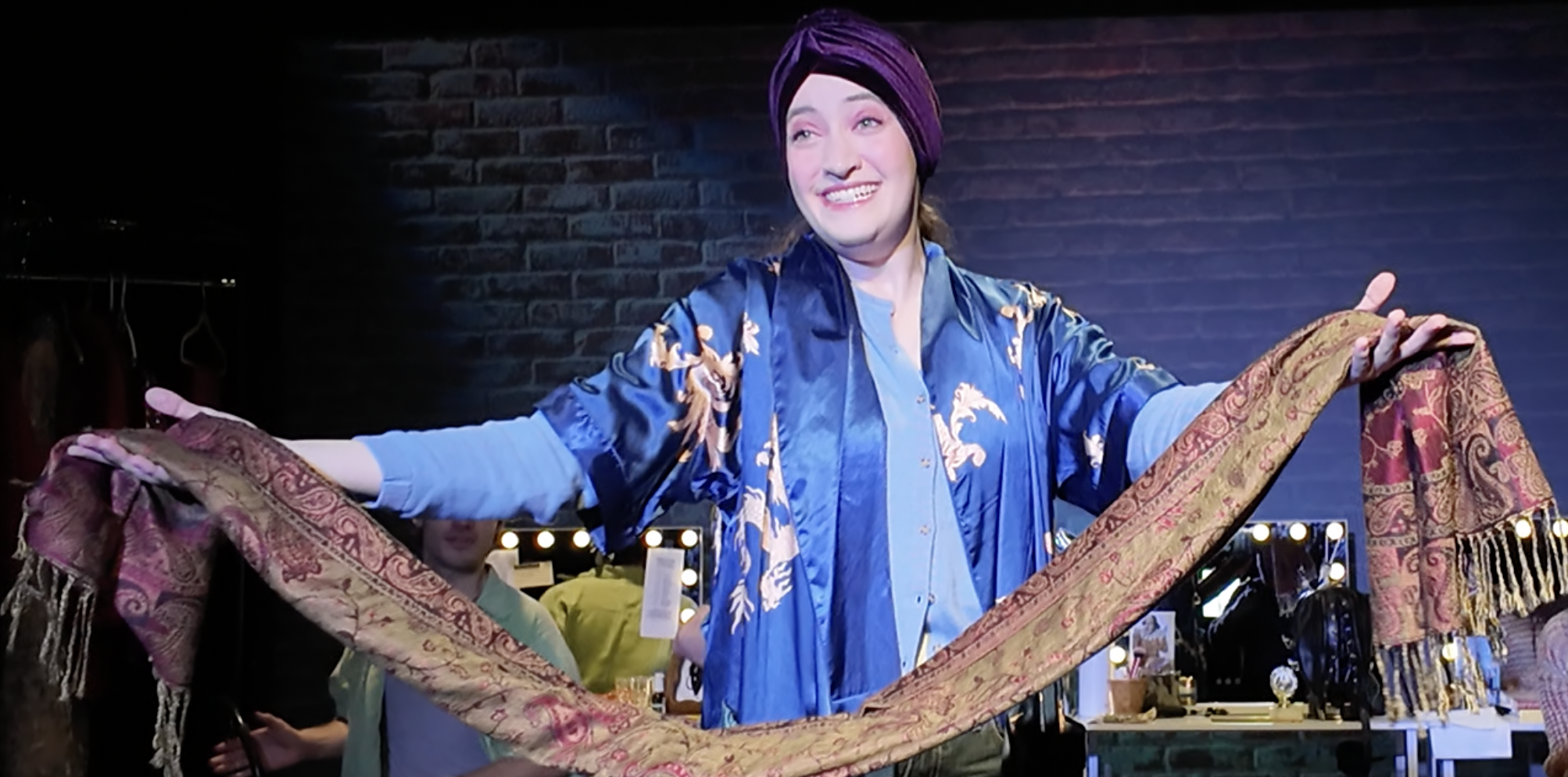
Mandell humorously shows how fading stars compensate for declining abilities.
Man No. 1 (Tyler Gallaher) details the mixed emotions of being an understudy and comically rides the roller coaster that follows when he finally gets the call to perform. It is his chance to be recognized for his talent, but he is saddened knowing that his appearance as a substitute will be met with disappointment by the audience. He resolves that he will simply have to win them over.
Man No. 2 (Sam Brackley) explains, in exhaustingly meticulous detail, his daily routine for performing in a play—hilariously filled with tasks designed to ensure his best possible performance. His preparation, including a spa visit, meditation, and stretching, would take hours—an entire afternoon—to guarantee that his single line is delivered with artistic perfection.
“The design mirrors a “Let’s put on a show” spirit.”
Woman No. 2 (Madelyn Whitehead) reveals the hierarchy within a cast. She is the Diva. Whitehead captures the complete narcissism of her over-the-top character. Her performance is a fine example of how Bermange and Foley use little-known theatrical tricks—such as loooong pauses and drawn-out song endings—to maintain the audience’s focus while she also creates fear and eye rolls among the cast and crew.
Beyond the stories and parodies, there is a constant stream of “things that go wrong” in musicals and theater: audition accompanists butchering sheet music; audience misbehavior performers can see and hear (texting, talking, arriving late, leaving early, coughing); singers expected to dance without training or flexibility; the dictum that “the director is always right,” leading to uncomfortable moments; and fading stars who stay too long in the spotlight with odd performances—off-key singing, forgotten lyrics, and unnecessary pauses that confuse the cast. Bermange cleverly captures these comic mishaps for the performers to deliver brilliantly. The comedy is broad, joyful, and insightful about the lives of musical theater actors. Through it all, the cast smiles and shines. Wishes do come true.
I Wish My Life Were a Like a Musical is presented as part of the 2026 International Fringe Encore Series at the Soho Playhouse (15 Vandam St.) through Feb. 28. Evening performances are at 7:30 p.m. Tuesday through Sunday; matinees are at 5 p.m. Saturday and Sunday. (No performance on Feb. 13). For tickets and additional information, click here.
Playwright & Librettist: Alexander S. Bermange
Director & Choreographer: Eamon Foley
